1
LR-24
BACKPACK ELECTROFISHER
Display Panel Menu Key Descriptions (Cont.)
Fig. 2.25
Fig. 2.26
Burst of Pulses
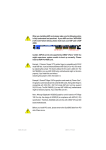
Burst of Pulses is a complex waveform wherein a lower frequency
waveform is used to turn on and off a higher frequency waveform
(fig. 2.25). The lower frequency is called the cycle frequency. The
higher frequency is called the burst frequency. For example, a burst
of 3 pulses at 400 Hz with a 12% duty cycle and a 40 Hz cycle
frequency would produce the following output:
A pulse would occur every 2.5 milliseconds, (400 Hz) and
each pulse would be 0.3 milliseconds wide, (12% of the 400
Hz). After the first 3 pulses of the 400 Hz waveform the next 7
pulses of this waveform would be skipped. Then there would be
another 3 pulses of the 400 Hz 12% duty cycle waveform. For
this waveform the bursts of pulses occur every 25 milliseconds,
(40 Hz). This pattern would repeat as long as the switch on the
anode pole was held down. For this example, the LR-24 could
not output more than 10 pulses of the 400 Hz burst because 400
Hz is only 10 times the cycle frequency of 40 Hz (fig. 2.26).
As a second example, if the LR-24 were set to produce a burst of
5 pulses at 250 Hz and 10% duty cycle at a 15 Hz cycle frequency,
the waveform would have these characteristics:
A pulse would occur every 4 milliseconds, (250 Hz), each pulse
would be 0.4 milliseconds wide, (10% of the 250 Hz). After
5 pulses of the 250 Hz waveform, the next 11 pulses of this
waveform would be skipped. Then there would be another
5 pulses of the 250 Hz 10% duty cycle waveform. For this
waveform, the bursts of pulses occur every 67 milliseconds (15
Hz). This pattern would repeat as long as the switch on the anode
pole was held down. For this example, the LR-24 could not put
out more than 16 pulses of the 250 Hz burst because 250 Hz is
only 16.67 times the cycle frequency of 15 Hz.
15
2009