Download proces-rm001 - Literature Library

Transcript
Chapter 3
System Application Recommendations
Tag and Memory Allocation
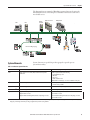
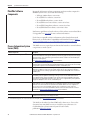
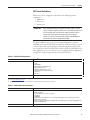
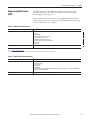
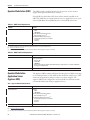
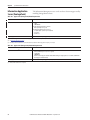
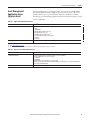
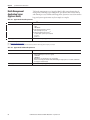
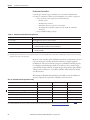
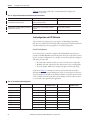
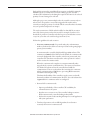
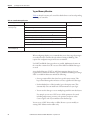
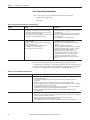
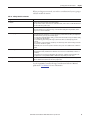
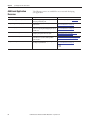
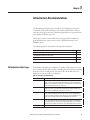
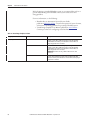
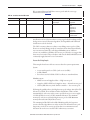
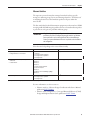
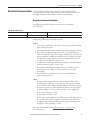
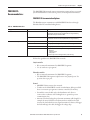
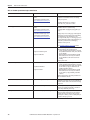
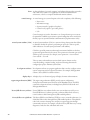
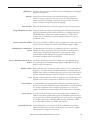
Table 20 shows the memory of a controller is divided into several areas depending
on the type of controller.
Table 20 - Controller Memory Allocation
Controller Type
Storage
Memory
1756 ControlLogix
1768 CompactLogix
I/O tags
I/O memory
Produced/consumed tags
Communication via message (MSG) instructions
Communication with workstations
Communication with polled (OPC/DDE) tags that use RSLinx software(1)
Tags other than I/O, produced, or consumed tags
Data and logic memory
Logic routines (for example, control strategies)
Communication with polled (OPC/DDE) tags that use RSLinx software(1)
UDT and Add-On Instruction definition
1769-L2x CompactLogix
1769-L3x CompactLogix
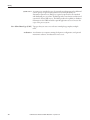
These controllers do not divide their memory. They store all of the elements in one common memory area
(1) To communicate with polled tags, the controller uses both I/O data and logic memory.
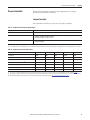
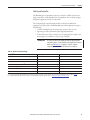
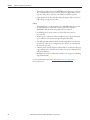
When configuring displays, we recommend that you use direct tag referencing to
access data from the controller directly without creating an HMI tag. This
requires less configuration steps and is easier to maintain.
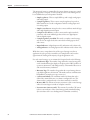
Use DINT and REAL data types whenever possible. Mathematical routines in
the controller consume less CPU resources when DINT and REAL data types
are used.
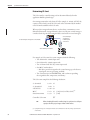
A user-defined data type (UDT) or Add-On-instruction data type lets you
organize data to match your machine or process. Additional advantages of using a
UDT or an Add-On Instruction include the following:
• One tag contains all the data related to a specific system activity. This
keeps related data together and easier to locate, regardless of its data type.
• Each individual piece of data (member) gets a descriptive name. This
automatically creates an initial level of documentation for your logic.
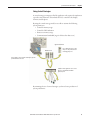
• You can use the data type to create multiple tags with the same data layout.
For example, you can use a UDT to store all the parameters for a tank,
including temperatures, pressures, valve positions, and preset values.
Create a tag for each of your tanks based on that data type.
You can create a UDT when online or offline. However, you can modify an
existing UDT definition when offline only.
42
Rockwell Automation Publication PROCES-RM001I-EN-P - September 2014