1
2.
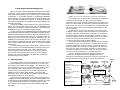
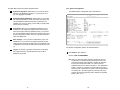
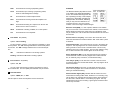
Perform a bit error rate test (BERT) using the internal V.52
generator (as described in Section 5.3), or using a separate
BER Tester. If the BER test indicates a fault, and the Local
Line Loopback test was successful for both NetLink™s, you
may have a problem with the twisted pair line connection.
To perform a V.52 test, follow these steps:
1.
Activate the local loopback or remote loopback diagnostic.
2.
Activate the test pattern. This may be done in one of two
ways:
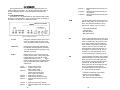
5.2.3 CSU Loop
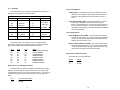
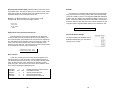
The NetLink-T1™ also responds to central office initiated loop commands. The NetLink-T1™ will implement the “loop up” command
when it recognizes the pattern “10000” in the data stream for a minimum of 5 seconds. The “loop down” command is implemented by the
pattern “100” in the data stream for a minimum of 5 seconds.
When operating in ESF framing mode, loopback commands are
issued via the Facility Data Link (FDL). The line loop message will
cause a loop back before data enters the framer portion of the CSU.
The payload loop message will cause the NetLink-T1™ to loop data
after the framer portion of the CSU.
The NetLink-T1™ will respond to Universal Loopback De-activate
to clear all central office loops.
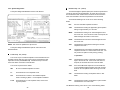
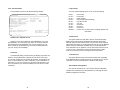
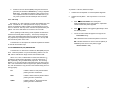
a.
Enter e Selected Pattern from the System
Diagnostics/Statistics menu and toggle the <Spacebar>
until the desired test pattern appears.
b.
Enter c Test Pattern and toggle the [Spacebar] to send
the selected pattern.
c.
One of two result codes will appear to the right of the
Test Pattern listing:
OK Indicates that the received test pattern is error-free.
BE Indicates that there are errors in the test pattern (to
deliberately insert errors in the pattern, toggle
Error Insertion to ON).
5.3 BIT ERROR RATE (V.52) DIAGNOSTICS
The NetLink-T1™ offers three V.52 Bit Error Rate (BER) test patterns. These test patterns may be invoked along with the LAL and
RDL tests to evaluate the unit(s) and the communication links.
When a 511, 2047, or QRSS test is invoked, the NetLink-T1™
20
generates a pseudo-random bit pattern of 511 bits, 2047 bits or 2
bits, respectively, using a mathematical polynomial. The receiving
NetLink- T1™ then decodes the received bits using the same polynomial. If the received bits match the agreed upon pseudo-random pattern, then the NetLink-T1™(s) and the communication link(s) are functioning properly.
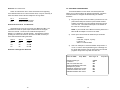
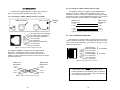
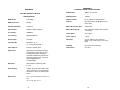
511
Initiates a built-in 511 bit pseudo-random
pattern generator and detector.
2047
Initiates a built-in 2047 bit pseudo-random
pattern generator and detector.
QRSS
Initiates a built-in 2 bit pseudo-random
pattern generator and detector.
20
39
40