1
Generic Haskell, Specifically
21
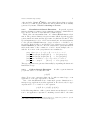
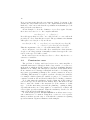
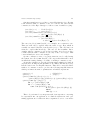
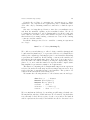
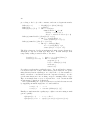
Alternatively, we could implement alphaequal using a default case, extending the original equality function, using the relaxed notion of equality only for occurrences of the Expr datatype:
alphaequal ht :: κi :: Equal h?i t t
alphaequal hti
= equal hti
alphaequal hExpr i = equal hExpr i
(normhExpr i x1 ) (normhExpr i x2 ) .
4.
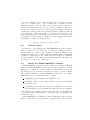
Limitations and Future Work
Although the enhancements described in this paper seem to make
Generic H SKELL suitable for practical programming, room for improvement still remains. In this section we pinpoint a few problems that will
be subject of further investigation and research.
A
(Mutually) recursive generic functions and types.
Sometimes
a generic function makes use of one or more other generic functions. We
have seen examples in the form of generic abstractions, but what about a
full-fledged generic function with multiple cases which refers to another
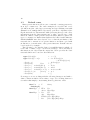
generic using a variable type argument? Consider a generic function
that collects information from a value of a generic type, which descends
further into the branch of a product case only when a certain condition
holds:
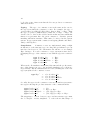
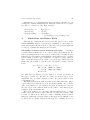
testcollecth:*:i tcA tcB (a :*: b) =
let rA = if . . . then tcA a else [ ]
rB = if . . . then tcB b else [ ]
in rA +
+ rB .
We want the test, indicated by the ellipses, to depend generically on
the types of a and of b. But since we cannot access these types on the
right-hand side, we cannot include a call to the generic function that
performs the test.
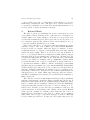
This limitation stems from the fact that we are using MPC-style, where
generic function definitions are seen as catamorphisms: the recursive
calls of the function to the children are given as parameters, but neither the types of the children itself nor the calls to other functions are
available on the right-hand side.
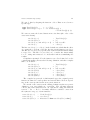
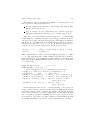
There is a solution: we can tuple different functions into a single
bundle and define them together. Instead of getting the recursive calls
for just one function, we then get a tuple containing all the required
functions. Although a tenable solution, this approach is difficult to use
by hand: the programs written in this style are confusing and error-