1
4
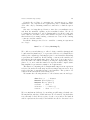
This type is called the structure type for the Haskell datatype.
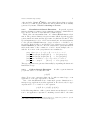
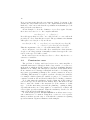
For example, the type Tree has structure type:
type Tree ◦ a
= Con Unit
:+: Con Int
:+: Con (Lab a :*: Lab (Tree a) :*: Lab (Tree a)) .
Notice that the recursive instances of Tree a are left intact. This is
because the specialisation of generic functions follows only the top-level
structure of a type, relying on recursion when processing further instances of Tree a. Base types, such as Int in our example, are unaffected
by the translation: they appear in the structure type in the same way
as in the original type.
We can write generic functions which can be specialised to all types
by giving cases for the structure type constructors (and primitive types)
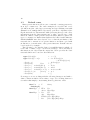
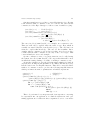
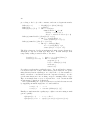
only. An example generic definition is
gmaphUniti
gmaph:+:i gmapA gmapB
gmaph:+:i gmapA gmapB
gmaph:*:i gmapA gmapB
gmaphCon ci gmapA
gmaphLab l i gmapA
Unit
(Inl a)
(Inr b)
(a :*: b)
(Con a)
(Lab a)
=
=
=
=
=
=
Unit
Inl (gmapA a)
Inr (gmapB b)
(gmapA a) :*:(gmapB b)
Con (gmapA a)
Lab (gmapA a) .
This reimplements the function map, which is predefined for lists in the
Haskell prelude, generically for all datatypes. The cases for Con and
Lab take an extra argument (c and l in the example) that is bound to
a descriptor of the constructor or label in question. These descriptors
can be used to query information about constructors and labels, such as
their names.
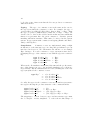
If a generic function is to be applicable to types containing primitive
types such as Int or Char or abstract types such as IO, then cases for
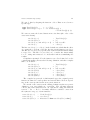
these types must be added to the function definition. The case for Int,
which is needed for gmap to work on our example Tree datatype, is given
by
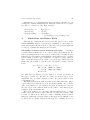
gmaphInti i = i .
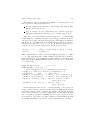
Whenever a generic function is used on a type, that type is implicitly
viewed as the corresponding structure type. Thus, in the call
gmaphTreei (+1) :: (a → b) → Tree a → Tree b ,
which could be used to increase all values in an integer tree by one, the
instance gmaphTreei is really defined over Tree ◦ . The precise details