1
The nRF8001 is a single mode peripheral chip in a 32-pin 5 by 5mm QFN package incorporating a
fully embedded radio, link controller, and host subsystem - suitable for watches, sensors, and remote
controls among other applications. To accompany the chip, and to ease the challenge of electronics
engineers designing nRF8001-based wireless connectivity, Nordic has also released the µBlue
prototype kit and µBlue Software Development Kit (SDK).
This SDK is built around Nordic’s existing nRFgo development platform that has been available for
several years to customers working with the company’s proprietary nRF24xxx 2.4GHz ULP
transceivers. nRFgo integrates hardware and software tools to provide easy control of the application
processor hardware and software through a graphical user interface in the nRFgo studio. Such tools
include handling of the data in non-volatile memory, test modes, power control, internal software
configuration and more.
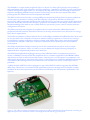
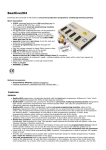
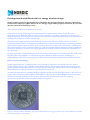
The µBlue prototype kit comprises a peripheral device based around the µBlue chipset and a
proprietary Master emulator that allows the user to develop and test their own Bluetooth low energy
Slave device applications.
The hardware platform of the peripheral device is the nRFgo motherboard (nRF6310) that can be used
for any product in the company’s transceiver families (either proprietary or Bluetooth low energy).
Consequently, existing customers will find working with µBlue chips easier as the development
environment is familiar, while new customers will benefit from a market-proven development
environment.
The nRFgo motherboard offers external access to the connected device pins as well as simple
interfaces such as buttons, LEDs, a UART or even an additional display allowing designers to
implement their targeted end-product user interfaces.
The nRF2735 daughterboard (plugged on top of the nRF6310) offers an application processor,
Nordic’s nRF8200, which executes the peripheral device customer application (the nRF8001 µBlue
chip doesn’t include an onboard microprocessor, reducing size, cost and power consumption, and
allowing the developer to select their own choice of microprocessor). While the nRF8200 is based on a
cost-effective 8051 microprocessor, manufacturers can use their own choice of microprocessor if
preferred.
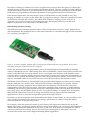
A µBlue module (nRF2731) is then plugged on top of the nRF2735 and incorporates the nRF8001
µBlue chip. The device is connected to the application processor through an SPI interface (widely
available on most microprocessors on the market and offering fast data transfer capabilities). (See
figure 2.)
Figure 2: The µBlue prototype development kit comprises an nRFgo motherboard, daughterboard (including an
application processor) and µBlue module (including Bluetooth low energy transceiver)