1
Technical Report No. 25: The WRF Greenhouse Gas Model
Biospheric CO2 fluxes - the VPRM model
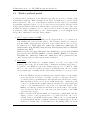
The Vegetation Photosythesis and Respiration Model (VPRM) is a diagnostic model that
calculates hourly Net Ecosystem Exchange (NEE) based on Moderate Resolution Imaging
Spectroradiometer (MODIS) satellite estimates of the Land Surface Water Index (LSWI)
and Enhanced Vegetation Index (EVI), short wave radiation and surface temperature. A
detailed description of the VPRM model is found in Mahadevan et al. [2008].
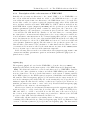
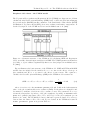
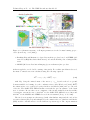
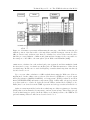
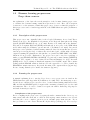
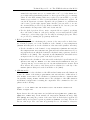
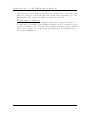
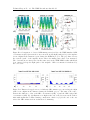
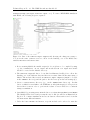
Figure 2.1: Schematic structure of the VPRM model calculating GEE and Respiration
based on satellite data and input variables from WRF. The VPRM parameters themselves
(λ, P AR0 , α, β) are validated against Eddy-flux tower data (adapted from Mahadevan et
al. [2008]).
Fig. 2.1 illustrates the basic structure of the VPRM model. LSWI and EVI from MODIS
satellite data are included in the variables Pscale to account for the effects of leaf age on
photosynthesis and Wscale to account for the effects of water stress. The equation to
calculate the Gross Ecosystem Exchange (GEE) in the VPRM model is written as:
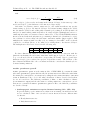
GEE = λ × Tscale × Pscale × Wscale × EV I ×
1
1+
P AR
P AR0
× P AR
(2.3)
where λ is a factor for the maximum quantum yield and P AR0 is the half-saturation
value of the photosynthetically active radiation (PAR). Both values are adjustable and
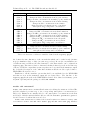
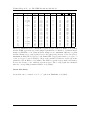
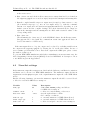
determined by analysis of data from eddy covariance towers. The parameter Tscale represents the temperature dependence of the photosynthesis, depending on minimum, maximum and optimal temperature (Tmin , Tmax and Topt ) for the photosynthesis process
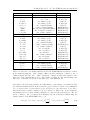
[Raich et al., 1991]. The VPRM model uses 8 different vegetation classes. For each vegetation class, the values of Tmin , Tmax and Topt are defined in the VPRM subroutine in
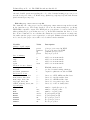
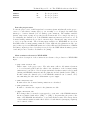
module greenhouse gases.F as given in Table 2.5.
13