1
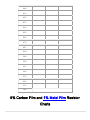
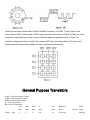
important. But since you just want to see whether the LED is on or off, the tolerance of the resistor is not going to be critical. The worst tolerance you can find on a resistor is 20%, and that would be adequate. So a common 5% resistor will work fine. Let's look at some of the other resistor specs: Material: since this is not a demanding application for a resistor, choose the most common, and lowest cost, device. That would be carbon film. Temperature Range: the supply is going to be on your bench, not in a tank. So you don't need a military temperature range, the commercial range is sufficient. Tempco: since the tolerance wasn't important in this application, then the drift in value due to temperature won't be an issue since it will have less impact than the tolerance. Physical Dimensions: once you have chosen the material, the size is mostly determined by the power rating. Form-factor: again, choose the most common, lowest cost, version: axial leads. MTBF: not a concern in this application. If the proper wattage is used, even common resistors are very reliable. Some parameters, such as size and wattage, are interrelated. Higher wattage resistors are going to be physically bigger than lower wattage resistors of the same type. But a 2 Watt wire-wound resistor may be smaller than a 1 Watt carbon film resistor. Also, the dimensions of a 100 Ohm, 1/2 Watt carbon resistor will depend on whether it has radial leads or axial leads, or is a surface mounted device with no leads. Some parameters depend on production considerations. We said to use a resistor with axial leads for that LED. The assumption was that your design was for a "one-off" project you're building by hand. If you were designing a commercial product for high-speed, high-volume production, then you would use a surface mount device. Why? Because high-speed, high-volume production is done by machines which can use surface-mount components more efficiently. IDENTIFYING KEY PARAMETERS The first step in choosing a device is to decide which parameters are crucial and which parameters are not. For the resistor example above, wattage was crucial but tolerance was not. We decided that by knowing what role that resistor had to play in the design. Now let's look at something more complicated than a resistor for an LED. Let's look at a bipolar junction transistor (BJT). If you have an Adobe reader, you can see a typical transistor data sheet at: To be able to view this document, your free copy of Acrobat Reader software from the Adobe site. Of all the parameters on a transistor data sheet, how do you identify the key parameters for your application? You do it by analyzing two things: first, what does this transistor do in the design, and second, what parameters relate to that job. While you know the role you want the transistor to play,