1
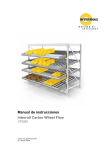
I N S P I R E D B Y E F F I C I E N C Y User manual Interroll Carton Wheel Flow CF2020 Carton Wheel Flow Version 4.2 (September 2014) EN - Translated from French Manufacturer Interroll Dynamic Storage 310, rue du Clair Bocage Zone d'Activité Beaupuy 2 85000 Mouilleron le Captif France Tel. +33 251 37 12 32 Fax +33 157 67 99 71 www.interroll.com [email protected] Copyright for this manual Interroll Dynamic Storage holds the copyright of this manual. The manual contains standards, drawings and illustrations which may not be disclosed, published, or duplicated, either fully or in part, nor used for any other purpose than the system referred to in this manual, without the prior written consent of Interroll. Manual available for download from the following address: http://www.interroll.com/en/downloads/dynamic_storage/ds_user_manual/ Version 4.2 (September 2014) EN - Translated from French Carton Wheel Flow Contents About this manual Remarks concerning the use of this manual................................................ 4 Warnings in this manual............................................................................... 5 Additional symbols ....................................................................................... 5 Safety General safety instructions .......................................................................... 6 Intended use ................................................................................................ 6 Unintended use............................................................................................ 6 Qualified personnel ...................................................................................... 7 Risks ............................................................................................................ 7 Product information Product description ...................................................................................... 8 Components................................................................................................. 8 Technical characteristics of the Carton Wheel Flow .................................. 10 Transportation and storage Transportation............................................................................................ 11 Storage ...................................................................................................... 11 Assembly and installation Warnings concerning assembly ................................................................. 12 Assembly rules........................................................................................... 12 Start-up and operation Warnings concerning operation ................................................................. 41 Checks before the initial start-up ............................................................... 42 Operation ................................................................................................... 42 Cleaning, maintenance, and repair Cleaning..................................................................................................... 44 Remark in the event of maintenance and repair ........................................ 44 List of maintenance and inspection operations.......................................... 45 Troubleshooting In the event of a failure .............................................................................. 47 Troubleshooting ......................................................................................... 47 Decommissioning and scrapping Waste disposal........................................................................................... 48 Appendix Spare parts ................................................................................................ 49 Version 4.2 (September 2014) EN - Translated from French 3 Carton Wheel Flow About this manual Remarks concerning the use of this manual Manual contents Validity of this manual This manual is an integral part of the product 4 This manual provides remarks and important information about the various operating phases of the Carton Wheel Flow: • Transport, assembly, and start-up • Safe operation, maintenance, troubleshooting, waste disposal This manual describes the Carton Wheel Flow as it is delivered by Interroll. For systems involving non-standard containers or contents, specific recommendations, specific operating modes, and all the contractual documents are supplied in addition to this manual. • To ensure safe, reliable operation and to benefit from the warranty, before using the Carton Wheel Flow you must follow the recommendations in this manual, "Assembly and installation", page 12, and the data in the order confirmation. • Keep this manual near the Carton Wheel Flow. • Give this manual to any operator or subsequent user of the Carton Wheel Flow. • Interroll shall not be held responsible for damages or failures which may result from ignoring the recommendations in this manual. • Contact Interroll Customer Service if you have any questions after reading this manual. The last page lists the details of the person to contact in your country. About this manual Version 4.2 (September 2014) EN - Translated from French Carton Wheel Flow Warnings in this manual The warnings in this manual concern dangers which may arise while using the Carton Wheel Flow. For relevant warnings, see "Safety", page 6 and the warnings at the beginning of each chapter. There are three categories of danger, indicated by the following keywords: • Danger • Warning • Caution Keyword Meaning Danger Indicates a hazardous situation which, if not avoided, may result in death or serious injury. Warning Indicates a hazardous situation which, if not avoided, may result in death or serious injury. Caution Indicates a hazardous situation which, if not avoided, may result in minor or moderate injury. Structure of warnings Danger Nature and source of the hazard Possible consequences of non-observance ► Information about how to avoid the hazard. Notice This symbol identifies possible material damages ► Information about how to avoid damage. Additional symbols This symbol displays safety instructions. This symbol marks useful and important information. ► Version 4.2 (September 2014) EN - Translated from French This symbol marks the steps that have to be carried out. About this manual 5 Carton Wheel Flow Safety General safety instructions The Carton Wheel Flow is designed according to the technical state of the art. However, certain risks may still arise. • Injury or a fatal accident to the user or a third party • Damage caused to the Carton Wheel Flow or to other material Disregarding the warnings in this manual may lead to serious injury. ► Always read this manual carefully and make sure you follow the safety instructions. ► Only qualified and specifically trained personnel may work with the Carton Wheel Flow. ► Always keep this manual at hand and make it accessible to all personnel. ► Always comply with the relevant local safety regulations in your company. ► Contact Interroll Customer Service if you have any questions after reading this manual. The last page lists the details of the person to contact in your country. Intended use The Carton Wheel Flow is reserved exclusively for industrial use in suitable environments. The installed beds are intended for dynamic (gravity-based) storage only of foreseen and previously approved isolated loads. They are reserved exclusively for storing referenced or standardized containers. Any other use is considered inappropriate. The system configurations must be applied. They are defined in the order confirmation and in this manual. All other changes concerning the components and their location in the bed are not authorised. Under no circumstances may the content exceed the maximum load defined by the container manufacturer or by the standard. Unintended use The Carton Wheel Flow may not be used to transport people. Applications which do not comply with the intended use of the Carton Wheel Flow require prior written approval from Interroll. 6 Safety Version 4.2 (September 2014) EN - Translated from French Carton Wheel Flow Qualified personnel Qualified personnel are persons who read and understand this manual and, taking national regulations into account, can completely execute the required work. Only trained and qualified personnel may work with the Carton Wheel Flow, taking the following into account: • the relevant manuals and diagrams • the warnings and safety instructions in this manual • the system-specific regulations and requirements, see "Assembly and installation", page 12 • national or local regulations and requirements for safety and accident prevention Risks The following list contains the various types of dangers or damage that may occur when installing or working with the Carton Wheel Flow. Personal injury ► The equipment may be used by qualified personnel only, in any of its operating modes. ► Comply with the technical data provided in the order confirmation. Containers must have a flat, rigid bottom, capable of bearing the load.The size ratio between the base and the height must ensure proper stability of the container. ► Follow the assembly and operating instructions. ► Use suitable forklifts only. ► Check the system and perform maintenance on a regular basis. ► Make sure that no one walks or stands underneath loads, or in the loading or unloading zones of the dynamic storage bed. Take all necessary precautions to prevent the presence of personnel inside the beds. ► Make sure that the loading and unloading areas include sufficient lighting so as not to hinder handling operations. ► Check that the loading/unloading alley has sufficient lighting for the handling operations. ► Do not lean or walk on the Carton Wheel Flow components. Rotating parts Version 4.2 (September 2014) EN - Translated from French ► Wear suitable work clothes and Personal Protective Equipment (safety shoes, gloves, etc.). ► Tie up long hair or wear a cap. ► Remove jewellery such as necklaces or bracelets. ► Do not lean or walk on the wheel tracks. Safety 7 Carton Wheel Flow Product information Product description The Carton Wheel Flow offers tailored solutions for handling and preparing orders for light loads. The product comprises wheel tracks attached to a rigid bed. The figure below shows the main components of the Carton Wheel Flow. Components Side member Wheel track clip Unloading beam Loading beam Side member end cap Beam Wheel track Side member Wheel track clip Drop out tray Loading beam End stop Side member end cap Beam 8 Wheel track Product information Drop out tray support Version 4.2 (September 2014) EN - Translated from French Carton Wheel Flow Possible configurations The Carton Wheel Flow offers several loading and unloading solutions. The figure below shows the standard possibilities offered by Interroll. • Loading FIFO LR Standard (Loading Regular) LP With loading plate LS Loading via stacker crane UR Standard (Unloading Regular) U05 Unloading with 5° drop out tray U15-400 Unloading with 15° drop out tray for 400 mm long containers U15-600 Unloading with 15° drop out tray for 600 mm long containers UAD With adjustable drop out tray LIFO LL Standard end stop • Unloading FIFO LIFO UR Standard (Unloading Regular) Version 4.2 (September 2014) EN - Translated from French U05 Unloading with 5° drop out tray Product information 9 Carton Wheel Flow Technical characteristics of the Carton Wheel Flow Gravity-based system Load Maximum 200 kg / m² Bed slope Recommended slope 3% to 4.5% for plastic containers 4% to 5.5% for cartons 5.5% to 7% for KLT containers see "Checks before the initial start-up", page 42 Forklifts Manual unless specified in the order confirmation Atmospheric conditions Ambient temperature during operation -28°C to +40°C during assembly -28°C to +40°C for transportation and storage -28°C to +80°C Relative humidity Up to max. 90%, without condensation Environment Load contents 10 The Carton Wheel Flow is not suitable for use in an environment presenting the following risks: • Oxidation (either atmospheric or by chemical attack) • Projections • Decomposition • Vibrations • Explosions • Radioactive radiation • Electromagnetic radiation Exceptions are possible: please contact Interroll. The contents of the loads and their containers must not: • Oxidise • Corrode • Decompose • Block the bed's components • Pollute the steel or plastic components • Interfere with the proper operation of any mechanism The Carton Wheel Flow must not be used in direct contact with food products. Product information Version 4.2 (September 2014) EN - Translated from French Carton Wheel Flow Transportation and storage Transportation ► Only ► Use qualified and authorized personnel can transport the equipment. appropriate lifting equipment to transport the equipment. Storage ► Store the equipment indoors. ► Never store the equipment outdoors, or in an environment exposed to dust or projections. ► Respect the ambient conditions, see "Technical characteristics of the Carton Wheel Flow", page 10. ► Do not stack additional loads on the pallets and boxes containing the Carton Wheel Flow and its components. Version 4.2 (September 2014) EN - Translated from French Transportation and storage 11 Carton Wheel Flow Assembly and installation Warnings concerning assembly Warning Risk of injury in the event of incorrect assembly ► As the Carton Wheel Flow is a subsystem of the overall system, you need to perform a risk analysis of the entire system. ► Identify the protective measures required concerning risks related to the local conditions at the site and to usage. ► Define a safety zone around the working area. ► Secure the zone and set up proper signage and appropriate protection. ► When assembling modules on the rack, refer to the safety rules concerning working at height. ► Do not lean or walk on the Carton Wheel Flow components. ► Always wear suitable Personal Protective Equipment (gloves, safety shoes, etc.) during assembly work. Assembly rules The dynamic storage beds are subsystems of a global system.They are delivered in accordance with the technical data indicated in the order confirmation. The delivery of the Carton Wheel Flow comprises pre-assembled wheel tracks and accessories. These components must be assembled, installed, and positioned on a rack. Any changes to the components or the bed cancels Interroll's responsibility, and will be considered as unintended use of the Carton Wheel Flow. Qualified personnel 12 The assembly and installation must be carried out by qualified personnel in accordance with the instructions concerning assembly and installation, and with the safety instructions. The manager of the team responsible for assembling the beds must be technically competent and trained in the following: • The products and their use. • The dangers inherent in the assembly of heavy or cumbersome components in high places. • The risks related to incorrect assembly. • The adjustments required for correct operation of the beds. Interroll can provide special training on the Carton Wheel Flow. We will send a quote on request. Assembly and installation Version 4.2 (September 2014) EN - Translated from French Carton Wheel Flow General rules ► Check the stability of components on the containers before cutting the straps. the straps have been cut, do not move the container. ► Make sure you do not damage the components during assembly. ► The size ratio between the base and the height must ensure proper stability of the container. ► Contact Interroll before attaching or hanging any equipment (such as sprinklers) in the area surrounding the dynamic storage (except for label holders or pick to light guides). ► The recommended tightening torque is between 23 and 28 Nm. ► Clean up the work site after installing. Do not leave any components or tools in the vicinity of the system. ► Leave a minimum gap of 25 mm between two containers or between the container and the frame upright. ► When using a full length guide or an entry guide, leave at least 7.5 mm between the container and the guide. Adjusting the slope: ► 3% to 4.5% for plastic containers/ 4% to 5.5% for cartons / 5.5% to 7% for KLT containers ► Perform the following tests with the lightest and heaviest loads. First, assemble a bed of each type and perform the following functional tests before assembling the rest of the system. ► Place the load on the loading side of the bed. ► Check that the load does not deviate off its axis as it descends. ► When it reaches the end stop, for both manual and automatic loading: ► Once - The contents must remain inside the container - The container must come to a stop without damaging the contents - The impact must be acceptable: it must not be abrupt and must not damage the container. Please use brake clips or adjust the slope of the beds, if necessary. ► Check that the container against the stop can be removed while other containers are in accumulation in the same bed. ► Leave a minimum free space above the container along the entire length of the lane. - plastic containers: 30 mm - cartons: 50 mm Version 4.2 (September 2014) EN - Translated from French Assembly and installation 13 14 Assembly and installation Length Qty/bed 0 Full Length Guide 6025 mm 0 Color Length Qty/bed Track code 0 Black 6060 mm X=28mm Y=42mm Z=56mm Loading Unloading Wheel color ____ ____ ___ Start Intermediate End R000 X18 ___ X054 X18 ___ -000 -1C __ Wheel Track 12 Track brake clip Qty/bed Qty/bed 6 6 if staggered R000X18X054X18-000-1C R014X18X071X18-000-1C R000X18X090X18-012-1C R000X18X072X18-026-1C 4 Equidistant intermediate beam(s) (H=66 mm) Track splice plate * 2694 mm Unloading beam 6027 mm 01/09/2009 Date Connector Universal connectors 32mm 01 N° E L P Qty/bed Back stop 150 mm 0 6128 mm Wheel Track 1 BED(S) TYPE LR UR Bed Code C 2694 A 6128 D04 A12 G A Load per Bed 650 kg M A EX Length Qty/bed Entry Guide Side member On-load beam Offer N° Contact QUOTE REF. Customer Carton Wheel Flow All the components required to assemble the bed are described in the bed drawing provided upon delivery. See the example below. Version 4.2 (September 2014) EN - Translated from French Carton Wheel Flow Step 1 - Connectors Comply with the number of connectors to be attached per bed. The number appears in the bed drawing provided upon delivery. Attach the connectors in a uniform, symmetrical manner. They must be attached at the loading and unloading sides. x2 x2 x2 Universal connector 03RON800000 03ECROUTEN8 03VISH8x20 03VISTRCC8X20 03ECROUOREILLE8 Welded connector x1 x1 x1 Direct attachment Version 4.2 (September 2014) EN - Translated from French Assembly and installation 15 Carton Wheel Flow Step 2 - Side members Attach the side members to all the connectors, so that the transversal components (the loading and unloading beams) are horizontal. Unloading UR and U05 x1 x1 x1 Overhang 200 mm max. Loading 16 Assembly and installation 500 mm max. Unloading Version 4.2 (September 2014) EN - Translated from French Carton Wheel Flow U15-400 and U15-600 unloading x3 x3 x1 x1 ► Only install three screws for the time being. x1 x1 x1 Version 4.2 (September 2014) EN - Translated from French Assembly and installation 17 Carton Wheel Flow UAD unloading tray x1 x1 x4 x4 Installing the angle beam the wrong way round may cause injury. x1 x1 x1 18 Assembly and installation Version 4.2 (September 2014) EN - Translated from French Carton Wheel Flow Step 3 - Loading beam To save time, you can attach the track clips at this stage. LR loading x1 Remember the key. The key attaches the load support. Version 4.2 (September 2014) EN - Translated from French Assembly and installation 19 Carton Wheel Flow x1 ► Insert 20 the loading beam at an angle. Assembly and installation Version 4.2 (September 2014) EN - Translated from French Carton Wheel Flow LS loading tray x1 x1 x1 Version 4.2 (September 2014) EN - Translated from French Assembly and installation 21 Carton Wheel Flow LP loading tray x1 x1 x1 Rear LL end stop x1 x1 x1 22 Assembly and installation Version 4.2 (September 2014) EN - Translated from French Carton Wheel Flow Step 4 - Intermediate beams Standard intermediate beams Comply with the number and type of beams to be installed per bed. This information is provided in the bed drawing provided upon delivery. Maintain an equal distance between each beam across the entire length of the wheel track. Version 4.2 (September 2014) EN - Translated from French Assembly and installation 23 Carton Wheel Flow Intermediate angle beam (for tracks > 4,600 mm) This intermediate angle beam is used only as a support to align the wheel track. 1 intermediate angle beam if wheel track > 4,600 mm 2 intermediate angle beams if wheel track > 7,600 mm 3 intermediate angle beams if wheel track > 9,000 mm x1 Un loa d x1 ing sid e Maintain an equal distance between each intermediate angle beam across the entire length of the wheel track. 24 Assembly and installation Version 4.2 (September 2014) EN - Translated from French Carton Wheel Flow Step 5 - Unloading beam To save time, you can attach the track clips at this stage. UR unloading tray x1 Version 4.2 (September 2014) EN - Translated from French Assembly and installation 25 Carton Wheel Flow UR unloading tray x1 x1 12 11 10 9 8 7 6 12 notches visible 5 4 3 2 1 x1 12 11 10 9 8 7 3 screws per drop out tray 6 5 4 x3 x3 26 Assembly and installation Version 4.2 (September 2014) EN - Translated from French Carton Wheel Flow U15 unloading tray x1 x1 x1 3 screws per drop out tray x3 x3 Version 4.2 (September 2014) EN - Translated from French Assembly and installation 27 Carton Wheel Flow UAD unloading tray ► Tilt the drop out tray as far as possible after having removed the screw and the wing nut. x1 "" 28 Assembly and installation Version 4.2 (September 2014) EN - Translated from French Carton Wheel Flow x1 x1 Version 4.2 (September 2014) EN - Translated from French Assembly and installation 29 Carton Wheel Flow x1 x1 ► Attach the screw and the wing nut after having adjusted the tilt of the drop out tray. x1 30 Assembly and installation Version 4.2 (September 2014) EN - Translated from French Carton Wheel Flow Step 6: Tracks, guides, and options To quickly attach the track clip, prepare a model or use the markers. Track assembly Markers • Unloading side • Loading side Marking CAUTION: track marking on loading side Version 4.2 (September 2014) EN - Translated from French Assembly and installation 31 Carton Wheel Flow • Staggered tracks The option for staggered tracks must be specified when submitting your order. Case no. 1: 3 wheel tracks per lane To identify the position and code of each wheel track, please refer to the bed drawing provided upon delivery (see the example below): Wheel Track ____ ____ ___ Start Intermediate End R016 X18 ___ X049 X18 ___ -052 -1C __ Track code Loading X=28mm Y=42mm Z=56mm Color Length Qty/bed 32 Unloading Wheel color Black 2448 mm 8 4 if staggered R016X18X049X18-052-1C R002X18X050X18-038-1C Assembly and installation Version 4.2 (September 2014) EN - Translated from French Carton Wheel Flow Case no. 2: 2 rails per lane To identify the position and code of each wheel track, please refer to the bed drawing provided upon delivery (see the example below): Wheel Track ____ ____ ___ Start Intermediate End R002 X18 ___ X054 X18 ___ -038 -1C __ Track code Loading X=28mm Y=42mm Z=56mm Color Length Qty/bed Version 4.2 (September 2014) EN - Translated from French Unloading Wheel color Black 2560 mm 6 6 if staggered R002X18X054X18-038-1C R016X18X054X18-024-1C Assembly and installation 33 Carton Wheel Flow Full length guide < 2,000 mm x2 34 Assembly and installation Version 4.2 (September 2014) EN - Translated from French Carton Wheel Flow 2-piece Version 4.2 (September 2014) EN - Translated from French continuous guide > 2,000 mm Assembly and installation 35 Carton Wheel Flow 36 Entry guide ► Screw in moderately until the guide is blocked in position. Assembly and installation Version 4.2 (September 2014) EN - Translated from French Carton Wheel Flow Attachment on the intermediate angle beams (if tracks > 4,600 mm) x2 To align, use one clip per intermediate angle beam for each guide and for each wheel track. Version 4.2 (September 2014) EN - Translated from French Assembly and installation 37 Carton Wheel Flow Splicing of the tracks Tracks To identify the position and code of each wheel track, please refer to the bed drawing provided upon delivery (see the example below): Wheel Track ____ ____ ___ Start Intermediate End R000 X18 ___ X054 X18 ___ -000 -1C __ Track code Loading Unloading X=28mm Y=42mm Z=56mm Track splice plate * Color Length Qty/bed Wheel color Black 6060 mm 12 R000X18X054X18-000-1C R000X18X090X18-012-1C Splicing of the staggered tracks To identify the position and code of each wheel track, please refer to the bed drawing provided upon delivery (see the example below): Wheel Track ____ ____ ___ Start Intermediate End R000 X18 ___ X054 X18 ___ -000 -1C __ Track code Loading X=28mm Y=42mm Z=56mm Track splice plate * 38 Color Length Qty/bed Unloading Wheel color Black 6060 mm 6 6 if staggered R000X18X054X18-000-1C R014X18X071X18-000-1C R000X18X090X18-012-1C R000X18X072X18-026-1C Assembly and installation Version 4.2 (September 2014) EN - Translated from French Carton Wheel Flow Splicing of the guides x1 x1 Splicing of the side members (if side members > 3,584 mm) x4 x4 Version 4.2 (September 2014) EN - Translated from French Assembly and installation 39 Carton Wheel Flow Brake clip Unloading side Adjust the position and quantity in order to reduce the impact of heavy containers. However, make sure that light loads reach the unloading stop. In the event of 2 wheel tracks per lane, obey the rule below to position the tracks. W/4 W/2 W/4 W = width 40 Assembly and installation Version 4.2 (September 2014) EN - Translated from French Carton Wheel Flow Start-up and operation Warnings concerning operation Warning Risk of injury in the event of improper handling ► Respect the loading direction according to the bed's operating mode (LIFO or FIFO) ► Do not insert containers in the bed if they do not enter it completely. ► If a container sticks out of the bed, remove it immediately. ► Do not load a container if pressure is required to insert it. Notice Damage in the event of improper handling Respect the following remarks. ► Load carefully so as not to damage the bed or the products stored in it. ► Never touch the wheel tracks, the bed, or the rack with the forklift. ► Do not insert a container on the unloading side if there is not enough room in the bed. ► In the event of a malfunction or if you see any signs of damage, immediately stop the bed and set up appropriate signage. ► For any damage due to impact on a rack, beds, or wheel tracks, immediately inform the company's Maintenance Department. ► If you find nuts, screws, or other components on the floor, immediately stop all levels of the bay and of the neighbouring bays. Set up appropriate signage. ► If a container is jammed, determine what is causing the blockage and remove it. If the container appears to be defective, set it aside from the storage zone. ► If the container is blocked repeatedly at the same point, inform the company's Maintenance Department so they can take appropriate action. Before starting up the system, all operations staff must be informed about: • The specific use of a dynamic storage system • All the risks inherent in a dynamic storage system, such as falling loads, moving loads, cut-offs. Version 4.2 (September 2014) EN - Translated from French Start-up and operation 41 Carton Wheel Flow Checks before the initial start-up ► When connecting the storage beds and other equipment in the warehouse, per- form a risk analysis of the entire system. that the racks and beds are not visibly damaged. ► Check that there are no foreign bodies in the working area. ► Check Before use, make sure that all the side member end caps are present. It is PROHIBITED to remove the side member end caps. ► Close down any bays with one or more missing side member end caps. ► Comply with the configuration tested when the system was received. ► Test all changes to the configuration, notably concerning the position and quantity of the brake clips. Operation Close down a bay if you observe any of the following: • Suspicious noise • A visibly worn component • A deteriorated rack • A defective attachment between the bed and the rack • Wheel tracks not held parallel • A component which has failed or which is not operating correctly Checks before each start-up ► Check that everyone present is informed and trained in the use of the system, and that no one is in danger. ► Check that there is no visible damage to the bays or the rack. ► Check that there are no foreign bodies preventing correct operation of the system. Loading a container Warning Risk of injury in the event of improper handling ► Respect the loading direction according to the bed's operating mode (LIFO or FIFO) ► Do not insert containers in the bed if they do not enter it completely. ► If a container sticks out of the bed, remove it immediately. ► Do not load a container if pressure is required to insert it. ► In the event of a blocked container, remove it and determine the cause of the blockage. 42 Start-up and operation Version 4.2 (September 2014) EN - Translated from French Carton Wheel Flow Notice Damage in the event of improper handling ► Load carefully so as not to damage the bed or the products stored in it. ► Never touch the wheel tracks, the bed, or the rack with the forklift. ► Do not insert a container on the unloading side if there is not enough room in the bed. ► Check the bottom of the container to detect possible damage or foreign bodies. Damaged containers must not be used in a dynamic bed and must be removed from the storage zone. ► Make sure that the container to be loaded is one of the containers approved during verifications prior to initial start-up, see "Checks before the initial startup", page 42. ► Make sure that the loading conditions are identical to those approved during verifications prior to initial start-up, see "Checks before the initial start-up", page 42. ► Do not stack containers without prior written authorisation from Interroll. When handling containers during loading and unloading, refer to the ergonomic standards in force. During manual loading: ► Do not place your fingers under the container ► Do not insert your hands inside the bed. ► Load the container in the axis of the lane. ► Do not let go of the load if it is not stable. ► If a container sticks out of the bed, remove it immediately. ► Do not load a container if pressure is required to insert it. ► Make sure there is enough distance to back up. During manual unloading: ► Do not place your fingers under the container ► Do not insert your hands inside the bed. ► Make sure there is enough distance to back up. ► When unloading a container, free it from the stop by pushing it rearwards, then lift it to remove it from the bed ► Respect the loading direction according to the bed's operating mode (LIFO or FIFO) Version 4.2 (September 2014) EN - Translated from French Start-up and operation 43 Carton Wheel Flow Cleaning, maintenance, and repair Cleaning Notice Damage in the event of improper cleaning ► Do not use abrasive products, pressurized jets, or products which may cause oxidation or damage the equipment. ► Clean the bed using dry cloths. Remark in the event of maintenance and repair Warning Risk of injury in the event of improper intervention ► Maintenance and repairs must be carried out by qualified personnel only, in compliance with safety and other instructions. ► Wear Personal Protective Equipment (PPE). Before any intervention, you must take into account: • Safety instructions concerning the work area, e.g. movement in the area, welding, grinding, and the duration of the maintenance operations for cold rooms. • Specifications particular to the company where the system is used. • Technical data provided in the order confirmation. • Maintenance procedures of the various products: dynamic storage beds, rack, environment, e.g. sprinklers. Preparing an intervention Performing an intervention 44 ► Define a safety zone around the working area. The safety zone covers the entire height of the bay. ► Secure the zone and set up appropriate signage, nets, etc. ► Remove everything from the lane or the bed involved in the intervention before starting. ► Make sure that the area of intervention has sufficient lighting. ► At the end of the intervention, make a visual inspection of the repaired section to ensure that you do not leave any foreign bodies or tools which may interfere with the correct operation of the system. ► Before restarting the system, check that the bed, the rack and its environment, e.g. sprinklers are in good working order. ► During an intervention, disassemble the bed by following the assembly procedure in reverse order. ► Use only components supplied by Interroll when replacing components. ► Never straighten out a defective component. Cleaning, maintenance, and repair Version 4.2 (September 2014) EN - Translated from French Carton Wheel Flow List of maintenance and inspection operations In order to keep the system in perfect working order, you must systematically replace any damaged components. Maintain a log of the checks and maintenance performed on the system. Failing which, the operator shall be held responsible in the event of an incident or an accident on the system, and cannot claim any guarantee or compensation from Interroll. Carton Wheel Flow Date: Component Tasks/Checks Work required Side member end cap Check it is positioned correctly It must not be possible to remove the side member end cap from the side member by simply pulling on it (without using a tool). If necessary, replace it with a new Interroll end cap. Side member key Check it is positioned correctly It should not be possible to remove the key from the side member by simply pulling on it (without using a tool). If necessary, check that the side member end cap is positioned correctly. Screw (except for the entry guide screw) Check the screws are tightened correctly The recommended tightening torque is between 23 and 28 Nm. If necessary, tighten the screws to the recommended torque. Wheel track clip or 2-piece continuous guide clip Check that it is present and correct Visually check that the track clip is not broken. If necessary, replace it with a new Interroll track clip. Check that the wheel track is correctly attached to the clip. Raise the wheel track slightly by hand. It must not detach from the clip. If necessary, replace it with a new Interroll track clip. Check that the track clip is correctly attached to the beams. Raise the track clip slightly by hand. It must not detach from the beam. If necessary, check that it is present and correct. If it is compliant, put it back, see "Assembly and installation", page 12 If it is non-compliant, replace it with a new Interroll track clip. Version 4.2 (September 2014) EN - Translated from French Cleaning, maintenance, and repair Performed by 45 Carton Wheel Flow Carton Wheel Flow Date: Component Tasks/Checks Work required Performed by Guide clip < 2,000 mm Check that it is present and correct Visually check that the guide clip is not broken. If necessary, replace it with a new Interroll guide clip. Check that the guide is correctly attached to the guide clip. Raise the guide slightly by hand. It must not detach from the clip. If necessary, replace it with a new Interroll guide clip. Check that the guide clip is correctly attached to the beams. Raise the guide clip slightly by hand. It must not detach from the beam. If necessary, check that it is present and correct. If it is compliant, put it back, see "Assembly and installation", page 12 If it is non-compliant, replace it with a new Interroll guide clip. Track Check that it functions correctly Check the flowability with a container approved during the start-up. If necessary, replace it with a new Interroll wheel track. Back stop Check that it functions correctly Turn by hand. It must return to its initial position. Initial position Entry guide Check that it is correctly attached to the loading beam It must not be possible to move the guide by hand.Tighten the screw if necessary. If spare parts are needed, contact Interroll for a quote. 46 Cleaning, maintenance, and repair Version 4.2 (September 2014) EN - Translated from French Carton Wheel Flow Troubleshooting In the event of a failure ► Stop using the lane and any lane which might be damaged by the failure. the area and set up appropriate signage. ► Only qualified maintenance personnel must repair the failure. ► Never try to hold back a container freed during an intervention. ► Before restarting the system, check that the bed, the rack and its environment, e.g. sprinklers are present and correct. Follow the maintenance procedures of the various products: dynamic storage beds, rack, environment. ► Secure Blocked container There may be many reasons causing a container to be blocked and preventing it from starting. This is not necessarily a defect in the system. Inserting a new container usually corrects the problem. ► If a container is blocked in the middle of a lane and/or against the rack, load another container or use a pole to free it. Content falls to the floor ► If content has fallen to the floor, you must secure the area before taking any further action. Troubleshooting Failure Cause Correction Blocked container Damaged container ► Withdraw the container from ser- vice. Container non-compliant with tests performed during start-up. ► Withdraw Foreign bodies attached to the container ► Remove the foreign bodies. Foreign bodies on the wheel track ► Remove the foreign bodies. Damaged wheel track ► Replace it with a new Interroll wheel the container from ser- vice. track. Container stops abruptly at an end stop Brake clip worn clip. Brake clip missing Version 4.2 (September 2014) EN - Translated from French ► Replace it with a new Interroll brake Troubleshooting ► Add a brake clip. 47 Carton Wheel Flow Decommissioning and scrapping Waste disposal Recommendations for protecting the environment 48 The packaging materials require no special recycling. Insofar as possible, the packaging should be disposed of in an environmentally friendly manner. Interroll can provide the component contents (type and quantity) upon request. The Carton Wheel Flow contains plastic. ► For all maintenance work and when disposing of equipment, please comply with environmental standards and use appropriate disposal methods. When disassembling for scrapping: ► Follow the assembly procedure in reverse order. ► Store the components in a suitable container to avoid falls or injury. Decommissioning and scrapping Version 4.2 (September 2014) EN - Translated from French Carton Wheel Flow Appendix Spare parts Spare parts illustrations LR-UR Standard configuration Loading beam Side member 1 Wheel track 2 Unloading beam 3 4 7 5 Side member end caps Version 4.2 (September 2014) EN - Translated from French Wheel track clip 6 Beam Appendix 49 Carton Wheel Flow Beams 8 9 10 11 Loading LP With loading plate 12 LS Loading via stacker crane 13 LL LIFO rear end stop 39 50 Appendix Version 4.2 (September 2014) EN - Translated from French Carton Wheel Flow Unloading tray 14 15 16 17 21 22 18 19 20 14 14 19 15 18 16 4 14 14 17 16 Version 4.2 (September 2014) EN - Translated from French 20 18 21 Appendix 22 51 Carton Wheel Flow Misc. components 23 24 26 27 28 30 33 29 31 34 35 39 52 25 32 36 37 38 40 Appendix Version 4.2 (September 2014) EN - Translated from French Carton Wheel Flow Spare parts list Before placing your order, have Interroll confirm the reference numbers by providing us with the machine number indicated on the rating plate. Recommended inventory status: A = Keep in stock, B = Recommended stock, C = Optional stock Machine no. No. Name Reference (1) Loading beam F07101050 C (2) Side member F07101250 C (3) Wheel track See original order A (4) Unloading beam F07101150 C (5) Side member end cap - left KX745 A (6) Side member end cap - right KX744 A (7) Track clip KX743 A (8) Beam F08011450 C (9) Beam F08011451 C (10) Beam F08011452 C (11) Beam F07101350 C (12) Loading plate F07121251 C (13) Stacker crane loading beam F07101055 C (14) End stop F07101153 C (15) 5° drop-out tray beam F07120350 C (16) Drop out tray beam F07121052 C (17) 5° and 15° drop-out tray plate - 400 F07120351 C (18) Drop out tray support A080818104 C (19) 5° and 15° drop out tray plate - 600 A080818102 C (20) Adj. drop out tray plate - 400 mm F07121152 C (21) Adjustable drop out tray support: fixed part A080818100 C (22) Adjustable drop out tray support: movable part A080818101 C (23) Loading beam F090323104 C (24) Intermediate angle beam F09030450 C (25) Splice plate for side member F090212100 C (26) Side member key F07101054 C (27) Guide clip < 2,000 mm KX750 A Version 4.2 (September 2014) EN - Translated from French Appendix Quantity Inventory status 53 Carton Wheel Flow Machine no. No. Name Reference Quantity Inventory status (28) Full length guide A08041141 B (29) 2-piece continuous guide G090430100 B (30) Entry guide G09030250 B (31) Splice plate for track A09030351 C (32) Brake clip for 28 & 42 pitches A09030150 C (33) H M8-20 screw 03VISH8x20 C (34) TRCC 8x16 screw, galvanized square collar = 1.5 mm 03VISTRCC8x16 C (35) M8 washer 03RON80000 C (36) M8 Flanged nut 03ECROUTEN8 C (37) Wing nut AC ZI M8 DIN 315 03ECROUOREILLE8 C (38) Self-tapping screw 03VISTOL6.3x19 C (39) LIFO rear end stop F090323104 C (40) 2-piece continuous guide splice plate A100217100 C These components should be replaced exclusively by qualified maintenance personnel. This table provides an indication of requirements for most users. Each user should determine the stock levels required according to their actual usage. 54 Appendix Version 4.2 (September 2014) EN - Translated from French To find your local contacts, consult: interroll.com/contacts © copyright Version 4.2 (September 2014) EN - Translated from French