1
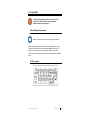
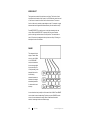
For accurate readings, follow these guidelines: The arm holding the probe should extend away from your body as far as possible without becoming uncomfortable, and the probe should point towards the energy source. Measurements in the electric field from low frequency antenna systems often require special techniques because the human body acts as a scatterer and introduces errors. The best technique to use when making measurements near antenna systems is to place the probe next to the readout on a non-metallic stand such as a wooden ladder or cardboard box. Then stand back and read it without touching it. Note: The human body does not greatly affect magnetic fields. The techniques described previously are more critical for electric fields. Scan the probe through the field to obtain a maximum reading. The protective cover on the probe should not be closer than four inches (10 cm) to the surface of the energy source; otherwise, the readings may be inaccurate. ZEROING When the readout sends a zero command, the probe must be in a zero field environment. This is because the zero command causes the multiplexer (through the processor) to perform a normal read cycle on all axis signals. This is executed for all three ranges, both E and H fields. When the processor receives all the zero-field signal values, it stores them in a special register; the values are subtracted from all subsequent measurements. Therefore, a probe which is zeroed when not in a zero field environment will give erroneous readings. Turn the readout on. A few seconds after you turn the system on it is ready for operation (measurement). The LCD displays the observed value and the units of measure. The bar graph displayed on the LCD represents an analog approximation of the measured field. Each bar graph segment represents 5% of the full scale reading in the current range. The bar graph is updated 7.6 times per second and the digital display is updated 1.9 times per second. www.ets-lindgren.com Operation 21