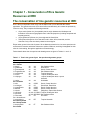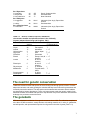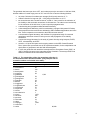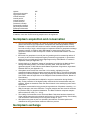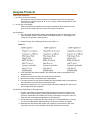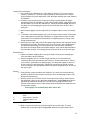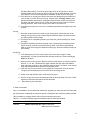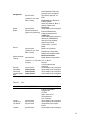
1
International Rice Genebank Operations Manual 1 Table Of Contents TABLE OF CONTENTS ....................................................................................... 1 WELCOME ........................................................................................................... 5 CHAPTER 1 - CONSERVATION OF RICE GENETIC RESOURCES AT IRRI.... 6 The conservation of rice genetic resources at IRRI ...................................................... 6 The need for genetic conservation ............................................................................... 7 The genebank .............................................................................................................. 7 Germplasm acquisition and conservation..................................................................... 9 Germplasm exchange .................................................................................................. 9 Germplasm characterization and evaluation .............................................................. 10 Data management ..................................................................................................... 10 CHAPTER 2 - SEED MULTIPLICATION OF ORYZA SATIVA AND O. GLABERRIMA GERMPLASM ........................................................................... 11 Seed multiplication of Oryza sativa and O. Glaberrima germplasm ............................ 11 Selection of planting materials ................................................................................... 11 Seeding and seedbed activities.................................................................................. 13 Field activities ............................................................................................................ 15 CHAPTER 3 - SEED CONSERVATION............................................................. 20 Introduction to seed conservation............................................................................... 20 Harvest verification..................................................................................................... 20 Seed cleaning and selection ...................................................................................... 22 Viability testing ........................................................................................................... 24 Seed health evaluation............................................................................................... 25 Final drying ................................................................................................................ 25 Packing ...................................................................................................................... 25 Duplicate storage ....................................................................................................... 27 Duplicate storage.......................................................................................................... 27 Maintenance .............................................................................................................. 28 CHAPTER 4 - GERMPLASM NURSERY SCREENHOUSES............................ 31 The germplasm nursery screenhouses ...................................................................... 31 Cultivated species...................................................................................................... 31 Wild rices ................................................................................................................... 31 2 CHAPTER 5 - GERMPLASM CHARACTERIZATION AND EVALUATION ...... 34 Introduction to germplasm characterization and evaluation ........................................ 34 Selection of Materials for Characterization ................................................................. 34 Plant Establishment ................................................................................................... 34 Morpho-Agronomic Characterization.......................................................................... 34 CHAPTER 6 - GERMPLASM EXCHANGE ........................................................ 41 Receipt of germplasm ................................................................................................ 41 Processing newly received germplasm ...................................................................... 41 Protocol for seed distribution...................................................................................... 42 IRRI’s policy on germplasm exchange ....................................................................... 44 IRRI’s Policy on Intellectual Property Rights .............................................................. 44 Protocol for requesting information............................................................................. 44 CHAPTER 7 - DOCUMENTATION AND EXCHANGE OF GERMPLASM INFORMATION................................................................................................... 46 Documentation and exchange of germplasm information........................................... 46 Background................................................................................................................ 46 System accessibility ................................................................................................... 46 System objectives ...................................................................................................... 46 System menu structure .............................................................................................. 47 Features and capabilities ........................................................................................... 47 IRCGIS User's Manual ............................................................................................... 47 Data integrity.............................................................................................................. 48 Data security.............................................................................................................. 48 Data exchange........................................................................................................... 48 System documentation............................................................................................... 48 CHAPTER 8 - MOLECULAR MARKER LABORATORY................................... 49 Molecular marker laboratory....................................................................................... 49 Protocol for DNA Sample Preparation........................................................................ 49 RAPD Protocol........................................................................................................... 51 Microsatellite Protocol ................................................................................................ 53 AFLP Protocol............................................................................................................ 57 Abbreviations/Acronyms ............................................................................................ 61 CHAPTER 9 - CONSERVATION SUPPORT ..................................................... 65 3 Conservation support ................................................................................................. 65 In vitro germination .................................................................................................... 65 Cytology..................................................................................................................... 66 Orcein ......................................................................................................................................67 APPENDICES..................................................................................................... 68 ISOZYME PROTOCOL ...................................................................................... 69 IMPORT PERMIT .................................................................................................... 72 THE DIRECTOR GENERAL, C/O IRRI ......................................................................... 72 DIRECTOR OF AGRICULTURE ................................................................................. 72 IMPORT PERMIT .................................................................................................... 72 BRITISH SOLOMON ASSOCIATION ........................................................................... 72 THE DIRECTOR ..................................................................................................... 73 JALAN MERDEKA 147 ............................................................................................. 73 BOGOR 16111 ........................................................................................................ 73 THE DIRECTOR ..................................................................................................... 73 PLANT QUARANTINE STATION ................................................................................ 73 THE HEAD ............................................................................................................. 73 INIFAP .................................................................................................................. 74 INTERNATIONAL TRAFFIC OFFICE ........................................................................... 74 DIREC. RECURSOS MATERIALES ............................................................................ 74 PLANT QUARANTINE SERVICE ................................................................................ 74 FEDERAL DEPARTMENT OF AGRICULTURE.............................................................. 74 IMPORT PERMIT .................................................................................................... 74 Table 8-6. General stock solutions for DNA extraction. .........................................................88 Table 8-8. Solutions for RAPD. ..............................................................................................92 4 Welcome The staff of the Genetic Resources Center assigned to the conservation of rice germplasm are pleased to present this revised Manual of Operations and Procedures of the International Rice Genebank. Its preparation has been an excellent example of mutual support that the staff provide. When I joined IRRI in July 1991, it took me several months not only to learn the basics about rice, the genetic resources of this important crop, and their conservation, but also how the genebank operated. Since then, the various operations and procedures of the genebank have rationalized and upgraded. Many aspects of these operations have changed significantly. The genebank was fortunate to be included in the refurbishment program of the Institute’s facilities. Our ageing storage room cooling equipment was replaced, a seed drying room installed, and laboratories remodelled. New screenhouse facilities at IRRI’s Upland Farm were added for the cultivation of the wild rices. Our data management capability was enhanced through connection of powerful personal computers to the Institute’s Local Area Network. In 1995, we also received a new name - the International Rice Genebank. This Manual describes how and why we carry out the various operations and procedures of rice genetic conservation at IRRI. Since its original compilation in 1995, several modifications have been introduced in our work activities. These are incorporated in this revised edition of the Manual. It shows how we are meeting our obligations under the Agreement signed with FAO in October 1994 to place the collection at IRRI in an International Network of Ex Situ Collections under the auspices of FAO, as well as the Convention on Biological Diversity. We hope readers of this Manual will find it informative and useful in their own conservation programs. I am grateful to the staff of the Genetic Resources Center for their hard work in drafting and producing this Manual. Our mention of tradenames is not an endorsement of any product, but only information on those we currently use in our activities. 5 Chapter 1 - Conservation of Rice Genetic Resources at IRRI The conservation of rice genetic resources at IRRI Rice is the most important cereal crop, and the staple food of more than half the world's population. The genetic resources of rice have been used effectively to increase the productivity of the rice crop. They comprise the following materials: Oryza sativa (Asian rice), that probably had its origin between the Himalayas and Indochina. It has two ecogeographic races: indica and japonica (including temperate and tropical japonica). Oryza glaberrima (African rice), that originated in West Africa. Twenty-two wild species of rice that are found in Asia, Africa, Australia, and the Americas. Only a few are closely related to the cultigens. Eleven other genera in the tribe Oryzeae. All are distantly related to rice, but some species such as Porteresia coarctata, which has tolerance to saline conditions, are being investigated for their value in rice breeding, through the application of biotechnology. Further details about the rice species and related genera are given in Tables 1-1 and 1-2. Table 1-1. Taxa in the genus Oryza: the species and genome groups. Species Sect. Oryza Ser. Sativae O. barthii O. glaberrima O. glumaepatula O. longistaminata O. meridionalis O. nivara O. rufipogon O. sativa Ser. Latifoliae O. alta O. eichingeri O. grandiglumis O. latifolia O. minuta O. officinalis O. punctata O. rhizomatis Ser. Australienses O. australiensis Sect. Brachyantha Ser. Brachyanthae O. brachyantha Sect. Padia 2n Genome Distribution 24 24 24 24 24 24 24 AA AA AA AA AA AA AA 24 AA Sub-Saharan Africa West Africa South, Central America Sub-Saharan Africa Tropical Australia Tropical, Subtropical Asia Tropical, Subtropical Asia, Tropical Australia Worldwide 48 24 48 48 48 24, 48 24, 48 24 CCDD South, Central America CC South Asia, East Africa CCDD South, Central America CCDD South, Central America BBCC Philippines, Papua New Guinea CC, BBCC Tropical, Subtropical Asia BB, BBCC Sub-Saharan Africa CC Sri Lanka 24 EE Tropical Australia 24 FF Sub-Saharan Africa 6 Ser. Meyerianae O. granulata O. meyeriana O. neocaledonica Ser. Ridleyanae O. longiglumis 24 24 24 GG GG ?? South, Southeast Asia Southeast Asia New Caledonia 48 HHJJ O. ridleyi 48 Ser. Schlechterianae O. schlechteri 48 HHJJ Indonesia (Irian Jaya), Papua New Guinea Southeast Asia HHKK Indonesia (Irian Jaya), Papua New Guinea Table 1-2. Genera, number of species, distribution, chromosome number and spikelet structure in the subfamily Oryzeae (adapted from Chang and Vaughan, 1991). Genera No. of Distribution Tropical species (T)/temperate (t) Oryza Leersia Chikusiochloa Hygroryza Porteresia Zizania 22 17 3 1 1 3 Luziola 11 Zizaniopsis 5 Rhynchoryza Maltebrunia 1 5 Prosphytochloa Potamophila 1 1 Pan-tropical Worldwide China, Japan Asia South Asia Europe, Asia, N. America N. and S. America N. and S. America S. America Tropical and S. Africa S. Africa Australia T t+T t t+T T t+T t+T t+T t T t t+T The need for genetic conservation Traditional varieties and the wild species of rice are being lost through genetic erosion. Farmers adopt new varieties, and cease growing the varieties that they have nurtured for generations and eventually lose these varieties. The wild species are threatened with extinction as their habitats are destroyed by human disturbance. Future crop improvement needs the genetic variation from traditional varieties and related wild species to cope with the many biotic and abiotic stresses that challenge rice production around the world. The genebank IRRI has maintained a collection of rice genetic resources since 1962. The collection comprises more than 107,000 accessions, mostly landrace or breeding materials of O. sativa, O. glaberrima, and wild species, and representative species from 8 genera in the tribe Oryzeae (Table 1-3). 7 The genebank has been open since 1977, and underwent a major renovation in 1993 and 1994, with the addition of a seed drying room at 15°C and 15% RH. It has the following facilities: an Active Collection for medium-term storage (20-40 years) stored at +2 °C. a Base Collection for long-term (50 - >100 years) conservation at –20 °C. two screenhouses with a combined area of >4,000 m². One is used for the cultivation of low viability or low seed stock accessions of cultivated rice. The other is used exclusively for the cultivation of the wild rices, in pots or special propagation beds. a seed testing and germplasm characterization laboratory. a data management laboratory, with four workstations, equipped with powerful Pentium microcomputers and several servers dedicated to GRC databases/applications and office files. These computers are connected to the IRRI local area network. a conservation support laboratory, with facilities for cytogenetical study of conserved germplasm; and tissue culture for embryo rescue and propagation of low viability accessions. a molecular biology laboratory for the study of genetic diversity using isozymes, RAPD, AFLP, microsatellites, and DArT. access to >10 ha of field space each cropping season on the IRRI Central Research Farm, Upland Site a protected zone of the experimental station, for the multiplication and rejuvenation of germplasm, and also field characterization. In 1983, the genebank was named the International Rice Germplasm Center (IRGC). In 1995, it changed its name to the International Rice Genebank. The acronym IRGC now stands for International Rice Genebank Collection. Table 1-3. The composition of the rice germplasm collection in the International Rice Genebank at IRRI. (Only samples with an accession number are included in the table). Number of accessions O. glaberrima O. sativa Species name Wild O. alta 6 O. australiensis 36 O. barthii 216 O. brachyantha 19 O. eichingeri 29 O. glaberrima 1,543 O. glumaepatula 54 O. grandiglumis 10 O. granulata 24 O. latifolia 40 O. longiglumis 6 O. longistaminata 204 O. meridionalis 53 O. meyeriana 11 O. minuta 64 O. neocaledonica 1 O. nivara 1,251 O. officinalis 278 O. punctata 60 O. rhizomatis 19 O. ridleyi 15 O. rufipogon 1,022 O. schlechteri 1 O. sativa 90,348 8 Hybrids Chikusichloa aquatica Hygroryza aristata Leersia hexandra Leersia perrieri Leersia tisseranti Luziola leiocarpa Porteresia coarctata Potamophila parviflora Rhynchoryza subulata Zizaniopsis villanensis Total 935 1 4 2 1 3 1 1 1 1 1 4,370 1,543 90,348 In addition, more than 10,000 incoming samples are to be registered. Germplasm acquisition and conservation The role of the IRRI genebank is to ensure the conservation and continued availability of genetic resources for rice improvement. Germplasm from the IRRI genebank is freely available on request. IRRI will continue to restore valuable germplasm which has been lost in the country of origin, and will remain an important conduit for germplasm exchange between countries. In October 1994, IRRI signed an agreement to place in trust germplasm collection under the auspices of FAO in an International Network of Ex Situ Collections. IRRI holds rice germplasm in trust for the rice-producing and rice-consuming nations of the world. It will not seek Intellectual Property Protection on germplasm, in accordance with the Policy on Intellectual Property Rights approved by IRRI's Board of Trustees in September 1994 (see Appendix 1-1). Security back-up or "blackbox" storage of germplasm is provided at the National Seed Storage Laboratory (NSSL), Fort Collins, Colorado, USA, under the terms of an agreement signed in 1993 with the United States Department of Agriculture, Agricultural Research Service (see Appendix 1-2). Germplasm stored comes from more than 110 countries, originating from joint expeditions between national program personnel and IRRI staff, or received for duplicate storage from national programs. All incoming samples are examined by the Seed Health Unit at IRRI under the supervision of the Philippine Plant Quarantine Service, Bureau of Plant Industry. Germplasm is rejuvenated and multiplied for long-term conservation during October May, for the production of the highest quality seeds under the lowest disease and pest pressure. Seeds are threshed, dried, then hand cleaned. In the seed drying room seeds equilibrate to 6% moisture content before being packed in large aluminum foil packets containing + or 500g for storage in the Active Collection. Ten-gram samples are also stored in aluminum foil packets ready for germplasm distribution. The Base Collection comprises samples with two aluminum cans (+ or - 120 g). The viability of all accessions in the Active and Base Collections has been determined. Actual viability determines the schedule and frequency of future monitoring. Seed viability of all accessions is determined prior to long-term storage at –20°C. Wild species are grown in pots in a quarantine screenhouse. Perennial species are maintained as living plants when seeds are difficult to produce. Germplasm exchange 9 Since 1973, more than 786,000 10 g packets of seeds (only 20 seeds per packet for wild species), have been distributed to rice researchers free of charge, with more than 18% to collaborators outside IRRI. To send rice germplasm outside the Philippines, an import permit is needed from the requesting country. All shipments are checked by IRRI's Seed Health Unit. A Philippine phytosanitary certificate accompanies shipments. Hot water and fumigation treatments are undertaken as prescribed by recipient authorities. Germplasm characterization and evaluation The genebank does not contain a museum collection of germplasm. The conserved materials are characterized not only to distinguish different varieties, but also to facilitate preliminary selection of germplasm by end-users. Morphological and agronomic characters are scored in small field plots during June November using a standard descriptor list. Almost all characteristics are recorded using coded qualitative scores. Passport data (country, site and location of collection) permit selection of germplasm on a geographical basis. We use a range of molecular markers (isozymes, RAPD, AFLP and microsatellites) for classification of germplasm used in diversity studies. IRRI scientists have screened thousands of accessions for pest and disease resistance, and tolerance to different abiotic stresses. Biosystematic studies of the wild species and molecular studies of genetic diversity provide data on species taxonomy and genetic relationships. Data management The International Rice Genebank Collection Information System (IRGCIS) operates under ORACLE version 8.0, and can retrieve information about origin, and morpho-agronomic and evaluation traits of germplasm, and facilitates selection based on pre-determined criteria. Information in the genebank database is freely available to users all over the world. An integrated information system links all operations associated with germplasm conservation and management. We are planning to make IRGCIS accessible through the Internet. It can currently accessed through the System-wide Information Network for Genetic Resources – SINGER at http://www.cgiar.org/singer. 10 Chapter 2 - Seed multiplication of Oryza sativa and O. Glaberrima germplasm Seed multiplication of Oryza sativa and O. Glaberrima germplasm One of the major operations of the genebank is production of high quality seeds for long-term conservation. Cost-efficiency of regeneration is maximized when the seed quantity is just sufficient to provide enough for Base Collection storage and Active Collection use before the viability drops below a given threshold. Thus the frequency of regeneration can be reduced by improved storage facilities as well as the needs for usage. It is almost impossible to predict how much seed is needed by other users, and therefore it is the task of the genebank manager to determine the optimum amount of seed that should be produced. Most genebanks follow the requirements set for specific crops. For rice, an inbreeding crop, the target number of seeds for storage should range from 1500 - 6000 seeds. The need to preserve the genetic structure of an original sample should be considered in determining the frequency of regeneration. It is ideal to store original seeds or produce them with the least number of multiplication cycles, because this prevents or minimizes the loss of less adapted or susceptible germplasm samples. The following guidelines have been adopted for the International Rice Genebank: 1. At IRRI, Los Baños, Philippines (14° N, 121° E, alt. 21 m) there are two distinct seasons: the wet season (WS) lasting from June to November, and the dry season (DS), lasting from November to May. Seed multiplication for long-term conservation is undertaken only in the DS. During this season, fewer pest and diseases problems are observed, relative humidity at harvest time is lower, and pre-harvest germination of weak or non-dormant accessions is zero to minimum. 2. Growing diverse germplasm in a single environment presents some problems with regard to some cultural practices. Therefore, it is advisable to choose fields with a good irrigation and drainage system during site/area selection. 3. Time of planting plays an important role in seed multiplication. Factors we have considered are: 1. Photosensitive materials are sown earlier, preferably during the first or second week of October so that the late vegetative stage coincides with the short days of the year, around December to February in Los Baños. Short days induce flowering of photosensitive materials. Accessions planted late are likely to remain at the vegetative stage and never flower until the following year. 2. Storage potential of japonica rice can be enhanced when grain filling coincides with the cooler environment that is prevalent in late December to early February. Therefore, early planting is also desirable. 3. If possible, areas to be used should be followed to minimize dropseed or volunteers. On the IRRI Experimental Station (ES), a fallow is practiced every other season. After space has been allocated and the schedule for the growing season decided, then planning and specific procedures follow. Selection of planting materials The type of materials included in the seed multiplication program depends upon priority and the available area. The nurseries that are usually included are initial seed increase or the post-entry quarantine planting, seed increase for long-term conservation, regeneration and special seed 11 increase for other purposes. Initial seed increase, also known as post-entry quarantine seed increase, includes all new acquisitions that need seed multiplication for the first time and all materials planted previously and that have not assigned accession number due to insufficiency of seed produced, low viability, or seed infection. Seed increases for long-term storage are the multiplication of materials that are not yet in the Base Collection. Regeneration is the seed increase of materials that have low viability during routine monitoring after a period of storage or accessions with insufficient stocks for either distribution or for long-term conservation. A special seed multiplication for accessions that are frequently requested or with special characters that breeders and researchers usually use. It also includes seed requests that need more than the standard amount the genebank normally distributes, i.e. 10 g. 1. Seed preparation and assignment of plot numbers Registered accessions Request seeds of the selected accessions. Two computer generated lists will be produced per species. - lists of accessions with prepared planting materials - lists of accessions with no planting materials but with other sources Prepare the planting materials using the following procedure. 1. Accessions with prepared planting materials, withdraw the prepared samples. 2. Accessions with no prepared planting materials a) write the accession number and the corresponding seed source on the seed envelope b) withdraw the seeds 1. c) arrange the materials by ascending number to facilitate verification or comparison with the seed file d) secure the seed file and compare the grain characters to authenticate purity and identity of materials e) select the seeds based on seedfile verification f) for O. sativa and O. glaberrima determine the number of rows based on the available seeds using the following guidelines - insufficient (with very few seeds, <5 g) - one row (5 to 10 g). - three rows (11 to 15 g) - five rows (16 to 24 g) - eight rows (>25 g) - in estimating the number of rows consider also the viability of the materials For wild species, there is no need to specify the amount since the materials are planted in pots and these are pre-germinated in petri dishes before transferring to seedboxes. g) Update the database with this information. Group the planting materials using the IRGCIS based on variety group, maturity, and country of origin. 1. Japonica or early maturing accessions (<100 days maturity) or accessions without records on maturity but are coming from Korea, Japan or China. 12 2. Other variety group or maturity between 101-125 days. 3. Late maturing or photosensitive materials with maturity greater or less than 126 days or accessions without maturity data coming from Indonesia, Malaysia, Thailand or countries that usually have late maturing varieties. Sort the materials further according to the estimated number of rows. Other sorting can be done further based on tillering, this will help determine spacing and number of entries per unit area for low tillering accessions to obtain sufficient harvest. Generate the seedlist for each group. Manually sort the prepared planting materials based on the computer generated list. Proofread the list against each envelope. Make sure the seeds are in correct order and grouping. Generate the plot numbers using the IRGCIS. The first group to be sown usually gets the first plot number, and these are continuous across all plantings including seed source and nursery area plantings. This will prevent mixing up of harvest and confusion in locating and identifying the harvest. Print seedlist with accession number and assigned plot number (sorted by plot number). Number the seed envelope with the corresponding plot number. Proofread each envelope against the seedlist. Several proofreadings are needed to check errors, because in the field, each entry will carry plot numbers only. Using rubber band, bundle the seed envelopes in fives or tens depending on the number of rows and nurseries to which they belong. This will facilitate in distributing the seed envelopes during seeding. Place the materials in ovens set at 50 ºC for 48 to 72 hours to break dormancy. Equilibrate at ambient room for at least 24 hours before seeding. Prepare seedbed labels. Eight-inch wooden pot labels can be used. To save time, effort and materials, numbering can also be done by intervals of five or ten. Generate fieldbook using IRGCIS. The field books should include plot numbers, accession and some selected basic information (e.g. variety group or eco-geographic race, origin, awn presence, awn color, apiculus color, lemma and palea color, grain length and grain width), which will help in re-identification and purification later. For initial seed increase, the origin, temporary identification number and variety names are important. Incoming materials Withdraw the prepared planting material and sort by country of origin, temporary ID and amount of seed. Sort and assign plot numbers following the procedure for the registered accession. Note: All incoming materials are hot water treated. For regeneration, there is no need for hot water treatment since conserved accessions have already passed Seed Health inspection, and at the same time low viable entries might be affected. Materials which do not pass the previous inspection, and that must be re-multiplied, should also be treated with hot water. Hot water treatment is done by dipping the materials in hot water (5257 °C) for no more than 10-15 min. Materials are then re-dried but not using high temperature to prevent caking. It is better to air dry first before redrying at no more than 35 °C. Seeding and seedbed activities Seeding method For O. sativa, the type of seedbed used is either a dry bed or modified wet bed method. In the dry bed, the seedbed area is plowed and cultivated by several passes of a machine-drawn rotovator. Beds are raised approximately 15 cm above the field level, and furrows are made on the bed using a furrower with 10 cm between rows. On the IRRI ES, a tractor draws a seedbed 13 maker with a drum furrower at the back such that beds are constructed with just one pass. In the case of a modified wet bed, the field is prepared using a standard lowland preparation. Soil is allowed to settle for 2-3 days before the beds are constructed. Beds are usually lower, at 10 cm. Furrows are also made using a wooden furrower at 10 cm between rows. The seedbed width is 0.8 m. Length is determined by the size of the field. Direct-seeding - O. glaberrima is usually directly seeded. The seeds are drilled to designated furrows and covered with soil. Irrigate and then apply pre-emergence herbicide. However, O. glaberrima entries in cases where amount of seeds for regeneration is insufficient or have relatively low viability and it will be risky to direct seed, these can also be seeded in beds or boxes and can be transplanted as in O. sativa. However, water should be drained after the seedling has been established and subsequent irrigation will depend on the need of the plants. Labeling Place pot labels at the start of the first bed, leave several rows for a border and a vacant row before the first plot number. Three-row field plots require 1-2 seedbed row while 6-8 row plots needs 4-5 seedbed rows. Count the number of rows depending on the desired number per accession, with one extra row to be left vacant to distinguish one accession or plot from another. Recheck labeling by counter-checking the number of rows with the desired entry requirement and label. Seeding and seedbed management Distribute seed envelopes by bundle as described earlier, remove the rubber band, and then distribute each envelope individually to its corresponding assigned row. Review distribution by checking the sequence of distribution and the labels. Sow the seeds evenly on the assigned rows for each accession. It will be useful to retain few seeds in the envelope and keep them. This will help in tracing any errors that might occur subsequently. This can also be used in confirming the type of seeds that were used during seeding. Cover the seedbeds with garden or topsoil. For the dry bed, use the soil from around the beds but for a modified wet bed, use well-sieved garden soil. Apply a small amount of fertilizer, about 5 g m-² of ammonium sulfate (21-0-0) or approximately 10 kg N per hectare. Apply granular insecticide, e.g. carbofuran, to control ants and crickets. This can also control nematodes. Irrigate the seedbeds with an overhead sprinkler for the dry bed and by flooding in the modified wet bed. Do not submerge the beds to avoid mixing-up of seed samples. Irrigation can be done intermittently. Record germination rate 7 days after sowing (7 DAS). The non-viable accessions will be re-seeded either in the nursery area or in the laboratory (embryo rescue) to save these accessions in time. Monitor and control any seedling pests. Pulling and pre-pulling preparation Prepare plot tags using wooden pot labels tied with G.I. wire gauge 22 or 24. This wire will also be used to tie the seedlings. Print the plot numbers on the pot label using indelible ink. Distribute and check the tags at least one day before pulling. Keep the tags of non-viable accessions for counter-checking later. Flood the seedbed, the higher the water level the better, but only to 3-5 cm above the 14 bed. This will facilitate pulling and washing off of soil from the roots. Pull the seedlings carefully and tie them with the wire of the tags. One bundle represents an accession. Note plant stand to decide what further action is needed on a particular accession. After pulling, arrange the seedlings in ascending plot numbers in seedling trays. Separate accessions with insufficient seedlings from the batch. For insufficient seedlings that can be accommodated in 1-2-row field plots, transplant on the best part of the field. Entries with less than 25 seedlings will be planted in concrete beds in the nursery area. Number the seedling trays. This will aid in the distribution of seedlings in the field. Field activities Land preparation Standard land preparation procedures for lowland rice farming (O. sativa) and upland culture (O. glaberrima) are followed. Land preparation consists of one plowing and 2-3 passes of harrow or rotovator. The final stage of land preparation is leveling for lowland culture and furrowing for upland culture. Field layout Plant spacing depends on the nursery being planted. The number of accessions to cover a given area can be computed based on the desired spacing and the number of rows needed. Some suggestions as to the plant spacing are: a. Japonica and dwarf varieties – 20 cm x 20 cm to 25 cm x 25 cm, with 8-10 rows per accession. b. Tall and medium-early or medium-late - low to medium tillering – 25 x 25 cm to 25 cm x 30 cm can be used. For low tillering accessions, increase the number of rows to obtain the needed amount of harvest. c. Photosensitive materials and high tillering – 30 cm x 30-cm spacing is required. Wider spacing is almost a necessity in this type because they tend to produce vigorous vegetative growth if not subjected to short days to induce flowering. d. For initial seed increase – a 30-cm x 30-cm spacing is advisable to be safe, as there is limited information about the materials. At the IRRI ES where the fields are divided into equal blocks of 2,500 m² (25 m x 100 m) including bunds or levees, the blocks are subdivided by constructing middle levees. The active area per sub-plot is about 99 m x 11.5 m. These subplots can allow two strips. Measure about 0.5 m from the side levees at both ends of the field. Place abaca twine to straighten the marker bamboo stakes to be placed. Place bamboo stakes to mark each plot. Using a planting guide of desired row spacing, measure the width of the plots by marking the needed number of rows. Add one extra row to serve as the divider between plots. It will be important to have vacant row in between or a safer distance of about 0.75m to minimize possible outcrossing. Although rice is considered as a self pollinating species, a study conducted by Reaño and Pham (1998) (Appendix 2-1) has shown that outcrossing can occur and as the exsertion of the stigma increases the chances of cross-pollination also increases. It should also be noted that to facilitate management of plots, materials are sorted by maturity thus chances of simultaneous flowering are high for adjacent entries. Also mark the end of the plot (about 5 m wide). Make sure all the bamboo stakes/labels face the levees. This will facilitate field observation later as the inspector/evaluator can walk on the levees. Seedling distribution 15 This operation includes transfer of seedlings from the seedbed to the field. Extra care should be done to prevent interchanging plot numbers and arrangement problems before these seedlings are transplanted. Distribute the seedlings in S-type orientation wherein lower plot numbers start from the left going to right and across strips and blocks. This technique will help in renumbering of plots in cases of lost tags. Untie the seedlings and attach the tags to the bamboo stakes to serve as the plot labels. Fix the seedlings at the base of the bamboo stake making sure that they are intact and the roots in contact with the soil to prevent further stress due to delays in transplanting. Lay-out the entries with insufficient seedlings separately in smaller plots arranged by ascending plot number. Take note of the actual layout. Missing plot numbers should be included either in the list of non-viable or insufficient seedlings. Take note also of accessions/plot that were transferred to the nursery area. If at any instance there was an interchange in the distribution, this should be noted. Transplanting/replanting Transplant the seedlings using the same guide wire or planting guides during the layout with 2-3 seedlings to reduce mortality and ensure fast recovery. Collect excess seedlings for each entry and place them near the labels. These will be used for replanting. More healthy re-planting materials can be obtained if they are divided in smaller bundles and properly placed in the paddy. Replant after about a week or two by passing through plots one by one. Look for vacant hills and use the extra seedlings to replace missing hills. This can be done two or three times. Fertilization Soil analysis is important in deciding the rate and type of fertilizer to use. It is important to follow recommendations. In the case of the IRRI ES, the recommended fertilizer rate for dry season cropping is 90-30-30 kg N-P-K ha-1. The Spad meter can also be used to determine fertilizer requirement. The first step in nutrient supplementation is by root dipping of seedlings in 4% zinc oxide prior to distribution and transplanting. During the final soil leveling, the first dose of nitrogen and all phosphorus and potassium are applied and incorporated to the soil. Split application of nitrogen is preferred, as this element is mobile and can easily be lost. a. First top dressing is done at about 21 days after transplanting (DAT) or at maximum tillering for all nurseries. This is done after first weeding at the rate of 30-0-0 kg N-PK. b. Second top dressing is done by nurseries. This is approximately at panicle initiation (PI) and since we are dealing with diverse germplasm wherein PI is not simultaneous, early maturing and japonicas should be fertilized earlier at the rate of 30-0-0 kg NPK. Other nurseries can also be fertilized but only at 20-0-0 kg NPK and the next 10 kg N applied about 10 days after on a selective basis (spot application). c. Computation of fertilizer rate: Amount of fertilizer (kg ha-1) Recommended rate (RR) (kg) = x 100 % nutrient in fertilizer Example: Recommended rate: 90-30-30 NPK Fertilizer to use: Complete (14-14-14); ammonium sulfate (21-0-0) 16 Find amount of 14-14-14 and 21-0-0 Solution: Amount of complete fertilizer = Recommended rate/% Analysis x 100 Since we only need 30 kg P & K, we will use 30 as RR, Thus, Amount of complete fertilizer = 30 kg x 100 = 2.15 x 100 = 215 kg 14% So, we need 215 kg of 14-14-14 and because 215 kg of complete fertilizer can supply 30 kg nitrogen, we will get only 60 kg N from (NH4)2SO4 which is 60 kg N/21% x 100 = 285.7 kg. Thus, we need another 285.7 kg of ammonium sulfate. Irrigation and water management As mentioned earlier, the field should have a good irrigation system and excellent drainage to permit good water control. During land preparation, the water level should be maintained to keep the soil soft prior to transplanting. Maintain 3-5 cm level of water during the early stage of crop to control early growth of weeds, unless the snail population is high. This will enhance effectivity of applied preemergence herbicides. Irrigation is done intermittently throughout the cropping season so as not to submerge all the materials. If most of the entries are already mature, and irrigation is still required to supplement the water requirement of late maturing entries in the batch, it is advisable to have flush flooding and drain system. This can be done right after the harvesting of matured entries in the batch. Use overhead rainbird or sprinkler type irrigation for O. glaberrima. Note: When O. glaberrima materials start to mature, droplets of water may shatter the grains, thus furrow irrigation is advisable. Pest Control a. Snails - This is considered as the most destructive pest in lowland rice cultivation during the early stages of crop growth. It can totally wipe out the plots overnight. To minimize the damage: If seeds are available, raise more seedlings for replanting. Apply molluscide at least a week before final soil leveling or do snail picking specially in the early morning or late afternoon when the snails are exposed. Monitor the presence of snails two days after molluscide application, and if needed re-apply molluscide or pick-up/gather the live snails. It will also important to destroy egg masses to control the growth of the population. After transplanting, and there are still snails in the area, drain the field or re-apply molluscide. Construction of small canals in the paddy/soil will help, as the snails will stay in these low-lying areas. This will also facilitate picking since these creatures will stay in these areas. If the materials are not affected by age of seedlings at transplanting as in latematuring and photosensitive materials, use older seedlings, e.g. 30-day old seedlings. b. Weeds - There are critical stages of crop growth where weeds have significant effects on yield. They should be controlled during the first three weeks after transplanting as they can compete for sunlight and fertilizer applied to rice crop. Presence of weed seeds reduces the quality of harvest. Combination of chemical, cultural, mechanical and manual 17 weed control is more practical and economical than any single method alone. These practices should be followed: Apply pre-emergence herbicide immediately after transplanting to give ample time for the seedlings to recover and grow much ahead of the weeds. This should be combined with good water control. Use rotary weeder or hand weeding at approximately 21 DAT or when the weeds start to grow. Hand weed all the remains usually at the base of the hill, at about two weeks after herbicide application. Spot weeding may also be done at a later stage. Application of post-emergence herbicide during the later stages is not advisable when dealing with germplasm because of the variation in crop stages which may affect susceptible entries. c. Insect pests and diseases - Germplasm materials are precious so that any loss due to pests should be avoided. Therefore, an intensive pest and disease control program should be implemented. Threshold levels for insect pest populations as indicated in the Integrated Pest Management (IPM) should not be used as a guide to provide control measures. It is therefore very important to monitor the field regularly all throughout the cropping season, from whorl maggots at seedling stage, hoppers and stemborers, and rice bugs at the reproductive stage. The most common diseases that occur are the viruses and leaf diseases. The virus diseases such as tungro are critical, so spread of the disease should be controlled. Eradicate the vector and rogue out and bury or burn the infected plants. Field inspection is done by Seed Health Unit to assess severity and presence of these diseases. One protocol to prevent unexpected outburst of diseases is to place all incoming materials in an isolated area or quarantine area. The quarantine officer and field inspector should also regularly inspect this. d. Rats - This pest is destructive as it attacks all stages of the rice plant. Unlike in a single variety field where the damage is easily noticed, in this type of cropping, several accessions may show no damage but other entries may have already been lost due to rat preference. It is, therefore, recommended to start the control program as early as possible. Maintain field sanitation. Clear the surroundings, the levees, and destroy possible breeding places. If the population is very high and your budget permits, construct peripheral rat fences as in the active barrier system (ABS). Place rat bait in strategic places all over the field and the surroundings. Sustained rat baiting is better. Flame throw rat holes inside and outside the field regularly. It should be at least twice a week especially during the flowering stage. e. Birds - Birds are a major problem at the start of the grain filling stage, especially when the materials flower ahead of neighboring fields. Bird preference can be easily observed among accessions and therefore, protection against birds should be implemented. Ideally bird nets are the best solution but are impractical to install throughout several hectares. Use bird nets only on small area plantings (<2,500 m²). Employ bird watchers. At IRRI, bird watching starts from 0600 and ends at about 1800 hours. Use devices to scare off the birds (e.g. scare crow, sound creating devices, striking colored materials, etc.). 18 Re-identification, roguing, and purification Before pulling, and after replanting in the field, rogue rice plants growing off the row. These are assumed to be dropseeds or volunteer seeds. At the late vegetative stage, obvious off-types should be removed unless otherwise stated in the fieldbook that the accession or variety is cultivated as mixed. Re-identify the plants by comparing the seeds with the retrieved information in the fieldbook (see section on fieldbook preparation). Remove all obvious mixtures. Note that this should be done several times as the flowering period varies among accessions. In cases where a mixture is almost 50% or there are several types, consult the seedfile. The final purification is done during seed processing. Harvesting and Post-harvest Activities At about 28-35 days after anthesis, the materials are ready for harvesting. Do not wait for full maturity, as it will affect the storage potential of the seed (Kameswara Rao and Jackson, 1996a, b, and c (Appendices 2-2, 2-3, and 2-4). Start harvesting from the nursery which flowers first, usually japonica and early-maturing entries in the morning to give time for threshing and blowing in the afternoon. Take note that early morning harvesting might not be good since dew is still present and will increase seed moisture content. For O. glaberrima delays in harvesting will result in shattering and collection of very few seeds. Extra care in handling is also needed during harvesting. Cut the panicles using a sickle and place them inside cloth bags with corresponding labels. Run-down the whole field to be able to get all the materials ready for harvest. Several passing are needed to collect all the entries as the maturity of the materials varies. Record the harvest dates and encodes them in the computer after each round of harvesting. Thresh the harvest using a Vogel-type thresher designed to be self-cleaning to minimize mechanical mixtures. Blow the harvest using Almaco blowers where air is blown out while the grains are slowly sieved through removing unfilled grains and stubble. After seed blowing, transfer the materials to smaller and finer cloth bags suited for drying. Net bags are the best as it allows flow of air freely. Immediately, after blowing, dry the materials using a slow process or by passive drying by placing them in a drying room with a temperature of approximately 15°C and 15% relative humidity to obtain higher seed storage potential. When the harvests are already dried, transfer the seeds to brown paper bags to facilitate handling and identification of the harvest. Second seed blowing is needed to further remove half-filled and light grains that were not removed during the first blowing. After the harvesting period, arrange the material by plot no. and accession no. to prepare for verification and authentication of harvest prior to processing. 19 Chapter 3 - Seed Conservation Introduction to seed conservation This is a combination of processes that enables the upgrading of seed and seed lot quality with the ultimate goal of obtaining the maximum genetic composition with maximum viability potential. This is handled by cropping season and involves the following processes: Harvest verification Seed cleaning and selection Viability testing Seed health evaluation Final drying Packing Storage Duplicate storage Maintenance Harvest verification This accounts for the success of the regeneration process. It determines whether the seed lot represents the composition of the original sample, and the sufficiency of harvest. It also provides a guide to seed cleaning and selection. Harvest verification procedure: 1. Retrieve the accession number of all the harvested materials. 2. Determine and compare the composition of the harvest with the seedfile. 3. Determine mixtures/off-types, if present. This will serve as guide during the seed cleaning process. 4. Trace back possible errors and locate other seed sources from another season if the harvest does not represent the original sample. 5. Discard the materials when the seed lot does not totally represent the original sample. 6. Update the database with information on the harvest status. Seed cleaning and selection This is done to improve the seed lot by separating weed seeds and inert matter, and eliminating poor quality seeds and off-types. In cleaning, care should be taken to minimize damage to the seed and to avoid loss of good seeds. Manual cleaning limits contamination and damage especially when the seeds are very dry. Control measures should also be implemented to check the degree of selection and to minimize errors. This is done in the seed processing room, maintained at 40-50% RH and 22 °C. Seed cleaning and selection procedure for O. sativa and O. glaberrima 20 1. Identify the crop year for cleaning/selection. 2. Generate a list of accessions in the specified crop year, the corresponding current storage status, and the recommended course of action (see Appendix 3-1) as follows: (a) (b) Initial canning - first time the seed is processed for long-term storage. Replenishment - the accession is already in the Base and Active Collections with acceptable viability but seed stocks are depleting. (c) Replacement - the accession is already in store but the viability has fallen below the acceptable limit regardless of the amount left. (d) Temporary storage - when the amount of selected samples is insufficient for longterm preservation or the viability or the seed health test falls below the acceptable limit. 3. Generate data sheets (see Appendix 3-2). 4. Pre-clean the seeds by blowing in a ventilated column to separate unfilled grains and light density materials. 5. Verify again using the seedfile. 6. Determine the selection to be done based on the recommendation during the verification process and the current storage status. 7. Examine the seeds and hand sieve with graded mesh sizes (if mixtures/off-types vary in size) to separate slender and bold grains. 8. Remove discolored, deformed, infected, soiled, immature, damaged seeds and off-types. 9. Determine the actual action to be taken based on the quantity of clean seed. (This will determine the packing system to use.) 10. Prepare and label all the necessary envelopes for use in seed testing, viability testing, temporary storage, and final drying to minimize labeling errors. 11. Submit the selected samples together with the seed file, pre-labeled envelopes and the original seed container for double checking and quality control. 12. Check the selected sample against the seed file and the pre-labeled envelopes against the original container. 13. Mix the selected samples and divide using the pre-labeled envelopes as follows: (a) For Active and Base Collections (> 120 g), O. sativa and O. glaberrima 2 x 100 grain samples for viability testing 2 x 200 grain samples for seed health evaluation 1 or 2 x 60 g sample for Base Collection 2 to 5 x 10 g samples for pre-packing 21 1 x 20 g sample for duplicate storage Bulk sample for active collection, if amount is greater than 60 g; otherwise, prepare planting materials. For the wild rices: 1 x 50 species for base collection 2-5 x 20 seeds for prepack 1 x 50 seeds for duplicate storage bulk sample for Active Collection (b) For temporary storage (insufficient seeds - 5 to 120 g and samples with viability ranging from 50 to 85% for japonica and 50 to 89% for indica) 1-60 g planting materials 1 or 2 x 100 grain sample for viability testing 1 to 5 x 10 g samples for paper pre-packs. (c) For planting -- low viable seeds (< 50% viability) - prepare 60 g planting material. (d) For embryo rescue --insufficient seeds (< 20 grains). For wild rice: hand threshing, verification, and cleaning are done at one time. Ten grain sample is taken for viability testing and the cleaned samples are transferred to paper envelopes for final drying. 14. Place the cleaned samples again in the drying room while waiting for the viability and seed health test results for the final drying. 15. Encode all related information. Seed cleaning and selection This is done to improve the seed lot by separating weed seeds and inert matter, and eliminating poor quality seeds and off-types. In cleaning, care should be taken to minimize damage to the seed and to avoid loss of good seeds. Manual cleaning limits contamination and damage especially when the seeds are very dry. Control measures should also be implemented to check the degree of selection and to minimize errors. This is done in the seed processing room, maintained at 40-50% RH and 22 °C. Seed cleaning and selection procedure for O. sativa and O. glaberrima 1. Identify the crop year for cleaning/selection. 2. Generate a list of accessions in the specified crop year, the corresponding current storage status, and the recommended course of action (see Appendix 3-1) as follows: (a) (b) Initial canning - first time the seed is processed for long-term storage. Replenishment - the accession is already in the Base and Active Collections with acceptable viability but seed stocks are depleting. (c) Replacement - the accession is already in store but the viability has fallen below the 22 acceptable limit regardless of the amount left. (d) Temporary storage - when the amount of selected samples is insufficient for longterm preservation or the viability or the seed health test falls below the acceptable limit. 3. Generate data sheets (see Appendix 3-2). 4. Pre-clean the seeds by blowing in a ventilated column to separate unfilled grains and light density materials. 5. Verify again using the seedfile. 6. Determine the selection to be done based on the recommendation during the verification process and the current storage status. 7. Examine the seeds and hand sieve with graded mesh sizes (if mixtures/off-types vary in size) to separate slender and bold grains. 8. Remove discolored, deformed, infected, soiled, immature, damaged seeds and off-types. 9. Determine the actual action to be taken based on the quantity of clean seed. (This will determine the packing system to use.) 10. Prepare and label all the necessary envelopes for use in seed testing, viability testing, temporary storage, and final drying to minimize labeling errors. 11. Submit the selected samples together with the seed file, pre-labeled envelopes and the original seed container for double checking and quality control. 12. Check the selected sample against the seed file and the pre-labeled envelopes against the original container. 13. Mix the selected samples and divide using the pre-labeled envelopes as follows: (a) For Active and Base Collections (> 120 g), O. sativa and O. glaberrima 2 x 100 grain samples for viability testing 2 x 200 grain samples for seed health evaluation 1 or 2 x 60 g sample for Base Collection 2 to 5 x 10 g samples for pre-packing 1 x 20 g sample for duplicate storage Bulk sample for active collection, if amount is greater than 60 g; otherwise, prepare planting materials. For the wild rices: 1 x 50 species for base collection 2-5 x 20 seeds for prepack 1 x 50 seeds for duplicate storage 23 bulk sample for Active Collection (b) For temporary storage (insufficient seeds - 5 to 120 g and samples with viability ranging from 50 to 85% for japonica and 50 to 89% for indica) 1-60 g planting materials 1 or 2 x 100 grain sample for viability testing 1 to 5 x 10 g samples for paper pre-packs. (c) For planting -- low viable seeds (< 50% viability) - prepare 60 g planting material. (d) For embryo rescue --insufficient seeds (< 20 grains). For wild rice: hand threshing, verification, and cleaning are done at one time. Ten grain sample is taken for viability testing and the cleaned samples are transferred to paper envelopes for final drying. 14. Place the cleaned samples again in the drying room while waiting for the viability and seed health test results for the final drying. 15. Encode all related information. Viability testing This is the most important aspect of seed quality. Viability is a measure of how many seeds are alive and can develop into normal plants. It is usually expressed as % germination. Viability is determined before the seeds are packed and placed in the storage and at regular intervals during storage. This will serve as a guide to the regeneration of an accession. Initial germination results also reflect the storage potential of the seed in a certain environment. Although all samples are tested for viability, only seeds of high viability are processed for long-term storage. Viability testing procedure: 1. Place the pre-counted samples prepared during the seed cleaning and selection in the oven set at 50 °C for 5 days to break the dormancy for O. sativa and O. glaberrima. 2. Equilibrate at room temperature (28-30 °C) for 2 to 3 days prior to germination. 3. Sow seeds in moist paper towels and place in germination chamber set with the following conditions: a 30/20 °C alternating temperature on a 12/12 h duration a 12/12 h light/dark condition 99% relative humidity 4. Count the number of normal and abnormal seedlings. Evaluation will be based on ISTA rules -- 7 days after germination and a second reading at 14 days, when necessary. 5. Prepare a third set if the difference between the two tests exceeds the maximum tolerable limits at a probability of 2.5% (see Appendix 3-3). 6. Encode related information. 24 For wild rice, only twenty seeds are germinated after breaking dormancy (see recommendation, Appendix 3-4). Although we have a set of germination protocols for wild species of rice, we also observe some considerable variation between accessions. Strong dormancy in some seeds has been observed and requires combination of dormancy treatments. Seed health evaluation Only seeds of the highest quality should be stored for long-term preservation. Seed health evaluation determines the extent to which seeds are infected with diseases. Since germplasm is distributed worldwide and every country has its own set of quarantine requirements, seed health evaluation provides information on whether the materials will be acceptable worldwide. Early determination of this information will enable the genebank staff to immediately replace infected samples. Seed health testing requires trained staff. In this case, standard routine seed health testing (Mew & Misra, 1994)[1], is done by the IRRI Seed Health Unit (refer to seed health management guidelines (see Appendix 3-5). Materials beyond the allowable limit set by the Plant Quarantine officers are stored temporarily and enlisted for the next multiplication. Necessary steps are done to avoid disease recurrence. Final drying During the cleaning process, seeds take in moisture. To attain the desired moisture level, the seeds are placed again in the drying room at 15% RH and 15 °C for 1 week while waiting for the viability and seed health results. With these pre-set conditions, it is not necessary to determine moisture level of individual accessions. Instead a fixed time to attain the desired 6% MC is predetermined. Moisture content is determined following the ISTA rules: 1. Grind the sample. 2. Weigh 5 g sample in metal container with cover. 3. Place the weighed sample in oven set at constant 130 °C for 2 hours. 4. Take out the seeds from the oven and place in dessicator for 1 hr. 5. Take the final weight. 6. Calculate the percent moisture lost using the formula % MC = Initial wt of sample - Final wt of sample x 100 Initial wt of sample Packing Seed packing is done to keep each accession separate and to prevent absorption of water from the surrounding atmosphere after drying. The packing medium is dictated by the action taken on the prepared samples. Packing materials that are impermeable to water are suitable for long-term use for the Active and Base Collections. Only O. sativa and O. glaberrima materials with viability > 90% are packed for long-term conservation, except for some materials which exhibited consistently lower viability potential, such as japonica, glutinous, and large seeded materials which have 85% viability cut off. The genebank manager makes the final decision to accept or not to accept the materials for long-term conservation. 25 For the Base Collection, moisture resistant, rust-proof aluminum cans[2] with 60 g capacity are used. Since seeds in the Active Collection are frequently retrieved and sub-sampled, specially made re-sealable laminated aluminum foil bags[3], 240 x 155 mm have been used since 1992. In this case, minimal time is consumed when opening and resealing the foil bag without any additional cost. Small packets of the same material are also used to prepare pre-pack samples that are readily available for distribution. Old seed stocks packed earlier are conserved in aluminum cans similar to the Base Collection. Packing procedure for O. sativa and O. glaberrima: For Base Collection 1. Prepare and label the aluminum cans and the lid using permanent marking pens with accession number and crop year. 2. Take few samples at a time from the drying room to minimize reabsorption of water. 3. Pour and vacuum-seal the seeds in semi-automatic can sealer with 20 PSI. 4. Check any packing deficiency. Replace, if there is any deficiency. For Active Collection 1. Prepare and label the aluminum foil packets (bulk and pre-pack) using computer generated sticky labels with the following information: accession number, variety name, crop year. 2. Take out few samples at a time from the drying room to minimize reabsorption of water. 3. Prepare the required pre-pack samples and weigh the rest for bulk storage. 4. Record the amount. 5. Place the weighed bulk samples immediately in the foil bag. Add small packet of activated silica gel with perforation pricked just before sealing to serve as check for possible air seepage during storage. 6. Seal the bag using high temperature constant heat sealer[4] with 1 cm sealing width. 7. Check for packing deficiency. Reseal or replace, if there is any deficiency. For Duplicate Storage 1. Pack duplicate samples in labelled small aluminum packets similar with pre-pack samples. Packing procedure for wild rices: 1. Prepare to 2 to 5 pre-pack samples containing 20 seeds in 8 x 5.5 cm foil bag. 2. Prepare another 2-50 seed samples, one for the base collection and the other one for duplicate storage. 3. Weigh the remaining seeds for bulk samples in Active Collection. This bulk sample may contain materials coming from one or more seasons, separately packed in coin 26 envelopes before placing in aluminum foil bags. Each season has a corresponding weight of seedstock and other related information. 4. Encode all related information. Duplicate storage Accessions held in a genebank are valuable and often represent plants which are no longer available or which are endangered in the natural environment. All samples in store should have a safety duplicate sample stored elsewhere. From IRRI, seeds are shipped once a year to the National Seed Storage Laboratory, Fort Collins, Colorado, USA based on the agreement between IRRI and the USDA-ARS (see Appendix 3-6). The materials are kept in sealed boxes in a room at –18 °C. Duplicate storage procedure: 1. Pack 20 g sample in pre-labeled small aluminum foil packets for O. sativa and O. glaberrima, 50 seeds for wild rices. 2. Accumulate the samples in the Active Collection room. 3. Request for space and documents necessary for shipping to Fort Collins, Colorado at the start of every year. 4. Forward the accumulated samples together with the temporary list to the Seed Health Unit which will handle the preparation and shipping. 5. Provide the final list of the accessions to be sent. 6. Include 10 to 12 control samples for viability testing prepared as follows: (a) Separate 10 to 12 representative samples in each crop year. (b) Take the initial viability percentage following the appropriate guidelines. (c) Prepare 12 x 100 grain samples for each accession and seal in labeled aluminum packets. 7. Prepare the packing list and the necessary documents. 8. Request the phytosanitary certificate. 9. Coordinate with the Shipping Section for the export permit and shipping. 10. Update the data files. Duplicate storage Accessions held in a genebank are valuable and often represent plants which are no longer available or which are endangered in the natural environment. All samples in store should have a safety duplicate sample stored elsewhere. From IRRI, seeds are shipped once a year to the National Seed Storage Laboratory, Fort Collins, Colorado, USA based on the agreement between IRRI and the USDA-ARS (see Appendix 3-6). The materials are kept in sealed boxes in a room at –18 °C. Duplicate storage procedure: 1. Pack 20 g sample in pre-labeled small aluminum foil packets for O. sativa and O. 27 glaberrima, 50 seeds for wild rices. 2. Accumulate the samples in the Active Collection room. 3. Request for space and documents necessary for shipping to Fort Collins, Colorado at the start of every year. 4. Forward the accumulated samples together with the temporary list to the Seed Health Unit which will handle the preparation and shipping. 5. Provide the final list of the accessions to be sent. 6. Include 10 to 12 control samples for viability testing prepared as follows: (a) Separate 10 to 12 representative samples in each crop year. (b) Take the initial viability percentage following the appropriate guidelines. (c) Prepare 12 x 100 grain samples for each accession and seal in labeled aluminum packets. 7. Prepare the packing list and the necessary documents. 8. Request the phytosanitary certificate. 9. Coordinate with the Shipping Section for the export permit and shipping. 10. Update the data files. Maintenance Maintenance is necessary to keep everything in shape at any one time. This should be done through frequent monitoring and coordination. Germplasm Unless monitoring of seed viability and amount is done, the genetic stability of a certain sample cannot be ascertained. Monitoring is necessary to determine the amount of seeds in store at any given time and if the stored seeds will germinate to produce new plants. This is necessary to decide whether or not to regenerate the sample. Seeds should be monitored at the start of the storage period and at regular intervals during storage. Viability monitoring 1. Determine which accessions require monitoring based on the last germination date performed, initial % germination, variety group and storage conditions (Table 3-1). 2. Prepare the seeds. Locate and remove the seeds in the cold storage. Allow to warm to room temperature before opening. 3. Do the germination test following the guidelines (see viability testing procedure). 4. Compare the result of this test with that of the previous test and decide whether regeneration is necessary. 5. Regenerate the accession if the % germination has declined to 85% of the initial germination. Seed availability monitoring The weight of the seed should be monitored each time seeds are removed from the storage for whatever purpose. When an accession in store is less than 60 g 28 in the Active Collection, regenerate the accession. Facilities Significant fluctuations in the environment during the handling process and storage pose some problems. These changes must be noted as soon as possible and immediate remedial measures implemented. Some control measures are: 1. Daily monitoring of temperature and relative humidity in the work area, drying room, and cold storage. 2. Digital monitor system attached to the drying room and storage areas (a chart recorder is also connected to note the fluctuation in temperature and relative humidity during night time). 3. The independent refrigeration system (back-up) running alternately on a monthly basis to ensure that it remains in good working order. 4. A time-switch defrost cycle to maintain the equipment in good shape. 5. Door interlock system in the airlock to ensure door closing (in this system the outer door cannot be opened unless the inner door is closed, and vice versa) and to control the flow of warm air into the cold stores. 6. Installation of plastic curtains to minimize flow of warm air. 7. In the drying room, an alarm signal is connected to the RH and temperature sensors. Beyond the limit, the machine will shut-off. 8. In the Base Collection - a red light signals that the door is open. 9. Provision of a standby generator specifically for the genebank aside from the generator serving the whole IRRI. A strong coordination with the Physical Plant Services Unit is necessary especially the Refrigeration and Air Conditioning Section. Contact: Physical Plant Services Unit Person-in-charge Refrigeration & Mr. Alfredo Mazaredo Airconditioning Mechanical Eng'g. & Maintenance Electrical Eng'g. & Maintenance Instrument Repair Civil Eng'g. & Maintenance Mr. Enrique delos Reyes IRRI Tel. # 6804 6803 Table 3-1. Seed viability monitoring schedule for the cultivated species. Number of years interval Indica/O. glaberrima Japonica Active Base Active Base % Viability Collection Collection Collection Collection 85-89 3 5 90-95 5 7 4 6 96-100 7 10 5 7 29 [1]Mew, T. W. and J. K. Misra. 1994. Manual on Seed Health Testing. IRRI. 113p. [2]Wall 50, 50 #19: Continental Can International, Corp. 1200, West 76th St., Chicago, Illinois 60620. Cable: Contican Chicago [3]S225/321 aluminum foil packs. Barrier Foil Products Co., CCE Business Park, Windmill Lane, Denton, Manchester M34 3QS, UK. Tel. (44) 161-337-8341; Fax (44) 161-335-9101 [4]HM 305 CTE Constant Twin Element laminate crimp sealer, supplied by Hulme-Martin Ltd., 6 Brownlow Mews, Guildford St., London WC1N 2LD. Tel. (44) 171-242-5448; Fax (44) 171-2422044. 30 Chapter 4 - Germplasm Nursery Screenhouses The germplasm nursery screenhouses The GRC Nursery has basically one main purpose: to provide and maintain an environment that will result in optimum seed production both for the hard-to-grow O. sativa and O. glaberrima accessions, as well as wild species of rice. This chapter covers: cultivated species wild rices Cultivated species For the cultivated species, seeds are germinated in flat seed boxes and transplanted to concrete beds after 21 days or when seedlings are vigorous enough and can withstand stress upon transplanting. The concrete beds are small 'field-like' lowland plots constructed inside the screenhouse, about 2.5 m wide and 11 m long. Soil preparation is done by a mechanical mini-hydrotiller after re-shoveling manually. 500 g of complete fertilizer is mixed well with the soil as basal fertilizer application before final soil leveling and lay-out. 2-3 seedlings are transplanted per hill using 25 cm spacing between hills and between rows, leaving one row vacant between entries in the lay-out. A pre-emergence herbicide is sprayed and a granular insecticide is applied a day after transplanting. Top dressing is done 30 DAT and 45 DAT with 350 g and 300 g of ammonium sulfate, respectively, for the indica and javanica types. For the japonica types, top dressing is done earlier at 10 DAT and 20 DAT because spikelet fertility is highly affected. Water level is maintained until panicle initiation. For the upland types, water is withheld 30 DAT to provide drier soil conditions. Regular monitoring of pest and disease incidence is coordinated with the IRRI ES and specific control measures are applied. For insufficient seedlings (1-3 seedlings), transplanting is done in pots to ensure the continuous growth of the plant. Additional care is extended in plant maintenance, such that daily monitoring of plant health is a necessity. Panicle harvesting is observed for easy handling and verification. Harvested panicles are dried and kept in the drying room for 2 weeks before finally hand-threshing. Wild rices Most accessions of wild rices require different cultural management practices for seed increase compared to those of the cultivated rices. Most of them are strongly photoperiod-sensitive so that the best time to grow them is during a season with short daylength to induce panicle initiation. several species such as O. meyeriana, O. granulata, O. ridleyi, and O. longiglumis grow better under partial shade, while others grow well under full sunlight. Consequently, they need to be grown in 30 cm wide-mouthed pots without holes. Wild species are also known to have stronger dormancy than the cultivated species. 1. The germinated seeds are planted, 1-2 cm apart, in a seed box containing moist, fine, clean (preferably sterilized) soil mixed well with appropriate amount of ammonium sulfate. 2. Granular insecticide (e.g. Furadan) is applied 3-4 days after planting to protect the seedlings from ants and other insects. 31 3. 4. 5. 6. 7. 8. 9. 10. 11. 12. 13. 14. 15. 16. 17. The seedlings are watered carefully with a fine spray, and grown under partial shade until a week before transplanting. The seedlings are transplanted at 30 DAS to water- tight pots with good quality soil mixed with about 5 g of complete fertilizer. Water level is maintained to at least 1 cm depth. For species of the O. meyeriana complex, the seedlings are transplanted in pots with light soil and good internal drainage to prevent water logging as they thrive best in mesophytic conditions. For the highly stoloniferous species, such as O. schlechteri and some related genera like Luziola, Leersia, and Hygroryza, a modified flat bed is constructed and used for growing and maintaining a single accession. The pots are laid-out at least 100 cm apart to provide sufficient ventilation between plants and enough space for plant management. All species of the genus Oryza grow well under full sunlight except members of the O. meyeriana complex and O. ridleyi complexes which are best maintained in partial shade. When purelines are to be developed, only 1 plant per pot is maintained and spaced widely, preferably alternating species of different complexes. If a bulk population of seeds is required, 2-3 seedlings per pot are transplanted and all the plants are maintained. Granular insecticide (e.g. Carbofuran) is applied 7 and 14 DAT to protect the plants against hoppers and defoliators. Top dressing is recommended at 30 DAT and 45 DAT with 5 g ammonium sulfate per pot. For O. meyeriana complex, 2 g of ammonium sulfate is applied weekly (for 3 weeks) 30 DAT. The plants are watered daily. Plant health is monitored regularly. Appropriate control measures are applied to specific pest and diseases once symptoms appear. Maintaining the cleanliness of plants also helps in preventing the spread of diseases. At the late vegetative stage, (about 60 DAT) the tillers are tied loosely with abaca twine to a bamboo stake (2 inch x 2m) to prevent plants from encroaching from one pot to another and later, at the late reproductive stage, to facilitate panicle bagging. Panicle bagging is necessary for handling wild rices to minimize outcrossing, to prevent seed loss due to shattering, and to prevent mixtures at harvesting. Panicles are bagged a week after full panicle emergence using nylon net bags which provides ample ventilation to facilitate anther dehiscence and prevent mold formation on glumes. For species with shorter panicles, glassine bags are a good substitute. The net bag is pinned to the bamboo pole. Prior to bagging, labels are prepared using shipping tags written with plot number and date of bagging with indelible ink. The labels are attached inside the net bags. The panicles are harvested 30 days after bagging or when most of the seeds have shattered. If sufficient seeds are obtained, the plants are discarded and disposed through burning. However, for species with low seed set like O. rufipogon and O. longistaminata, the plants are ratooned by cutting about 20-25 cm from the culm base, a little amount of ammonium sulfate is applied and maintained until next flowering to maximize seed production. After harvesting, the panicles are dried and kept inside the drying room for 2 weeks, before carefully hand-threshing and cleaning the seeds. To ensure plants do not spread by seeds or rhizomes, specific measures are followed: a. Seed multiplication of all wild rices is done inside the screenhouse in pots. b. A disposal area (a pit about 3-4 meters deep from the surface ground) is designated for burying discarded and burnt samples. c. A modified incinerator or burning facility is provided to accommodate burning activities especially during the rainy season. d. All drainage canals inside the screenhouse are covered with fine-mesh screens to further control dissemination of seeds through water. Waste materials from the canals are regularly hauled, burned, and buried. 32 e. If sufficient seeds are obtained, old plants are discarded, burned and buried into the pit. f. Excess planting materials (seeds, seedlings, rattooned tillers) are collected, burned and buried after seeding, transplanting and/or replanting. g. Discarded soil used in growing is treated with herbicide and buried in the designated area. h. Before filling up all the discarded materials, the disposal area is treated with a nonselective herbicide (e.g. glyphosate). i. Screenhouse staff are advised to change their working clothes to minimize dispersal of seeds when they leave. j. Hand threshing and seed cleaning is done in a specified room in the Seed Processing Area. All dried leaves/straws, unfilled grains, mixtures and off-types are collected, burned and buried. k. Access to GRC Screenhouse is regulated depending on the nature/importance of the visit. Modifications to these protocols are being constantly developed to determine the best conditions for individual species. The screenhouse facilties are continuously being upgraded to suit their specific needs. However, understanding plant morphology and knowledge on the natural growing habitat of the different species are significantly important in the initial seed multiplication of this germplasm. These will provide the necessary informations on how to properly manage the species. 33 Chapter 5 - Germplasm Characterization and Evaluation Introduction to germplasm characterization and evaluation Germplasm characterization is an important operation for a genebank. The value of the germplasm collection depends upon the availability of information relative to the accessions. Morphological and agronomic traits as well as reaction to biotic and abiotic stresses that are known to be in the individual accessions increase the importance of the germplasm. Moreover, systematic description leads to a more efficient use of germplasm in the collection. This chapter focuses on the morphological and agronomic characterization of the collection. Selection of Materials for Characterization The basic requirement for an accession to be included in the characterization planting is the absence of information about this collection, thus newly acquired samples almost always make it on to the list of materials for characterization. Another basis for selection of materials for characterization is the completeness of information about the accession. Materials from previous characterization plantings with incomplete morphological and agronomic data are retrieved and are included in succeeding characterization plantings. Selected materials for characterization are sorted based on the following: available database country of origin cultural type photo-period sensitivity The number of entries for wet season characterization schedule under Los Baños, Philippines condition is dependent on the number of evaluators. The type of materials can also be used as a basis in deciding the number of entries to be planted. Plant Establishment Field (O. sativa/O. glaberrima) - Refer to Section 2 on Seed Multiplication. In cases where the amount of seeds of O. glaberrima is limited, crop establishment can be done as in O. sativa except that after transplanting the field should be kept drained. Nursery (wild species) - Refer to Section 4 on Germplasm Nursery and Screenhouses. For wet season field establishment, please take note of changes in fertilizer rate, use a lower nitrogen (N) and a wider spacing (30 cm) to offset the expected increase in vegetative growth. Morpho-Agronomic Characterization Morphological and agronomic characters of plants are best scored at different growth stages of the crop, thus characterization is done at three different stages, vegetative, reproductive, and at post-harvest stages. Post-harvest characteristics are scored in the laboratory, from the panicle samples that are taken at harvest time. There are characters that are unique for particular species as shown in the sample data sheets used for characterization of O. sativa, O. glaberrima, and wild species (see Appendices 5-1, 5-2, and 5-3, respectively). Descriptor and descriptor states Accession identification International Rice Genebank Collection (IRGC) Accession no. - A unique identification 34 number assigned to a sample once it has satisfied the minimum storage requirements of the genebank. Variety name - A local or vernacular name of the sample. Former designation - Designated name given to the seed by the original source which is later renamed as cultivar by the country doing the selection. Seed source- Institute/agency which donated the seed to the genebank. It includes donor identification number. Donor code - Number assigned by the collector/donor. Country of origin - Country from which the sample originally came. Temporary ID - An identification assigned to incoming samples in lieu of accession number. Scientific name - Genus and species name. Herbarium specimens taken - Indicates presence of herbarium specimen. Date germinated (dd/mm/yy) - Actual date of seed germination. Re-identified name - Verified name given a particular species after full characterization. Seed File Information. This information will guide the evaluator to authenticate the sample being characterized. Population composition - (1) homogeneous (2) heterogeneous. Lemma and palea color - Color of the lemma and palea of mature grains is assessed as: (010) white, (020) straw, (042) gold and gold furrows, (052) brown (tawny), (053) brown spots, (054) brown furrows , (080) purple, (082) reddish to light purple, (090) purple spots, (091) purple furrows, (100) black, (999) mixture. Lemma and palea pubescence - Ocular inspection of mature grains using hand lens and classified as: (1) glabrous, (2) hairs on lemma keel, (3) hairs on upper portion, (4) short hairs, (5) long hairs(velvety), (999) mixture. Sterile lemma length - Measurement is made on each of the two sterile lemmas. Six classes are recognized on the basis of 5-grain samples: (1) short (not longer than 1.5 mm), (3) medium (1.6-2.5 mm), (5) long (>2.5 mm but shorter than the lemma), (7) extra long (> the lemma), (9) asymmetrical and (999) mixture. Vegetative stage Seedling height - Ten seedlings are measured for height at the 5-leaf stage (20 DAS). Height is taken from the base of the shoot to the tip of the tallest leaf blade using a coded measuring instrument as follows: (1) short (<30 cm), (2) intermediate (30-59 cm), (3) tall (>59 cm) and (999) mixture. Blade pubescence - Aside from ocular inspection at late vegetative stage, rub fingers from the tip down on the leaf surface. Presence of hairs on the blade surfaces are classified as (1) glabrous (smooth) including ciliated margins, (2) intermediate, (3) pubescent, or (999) mixture. Blade color - Eight broad classes of blade color are recognized at late vegetative stage: (060) green, (061) light green, (063) dark green, (080) purple (full), (085) purple margins, (086) purple tips, (089) purple blotch (purple mixed with green), and (999) mixture. Leaf (blade) texture - Based on ocular inspection at late vegetative stage, texture is classified as: (1) herbaceous (having little or no woody tissues; soft), (2) coriaceous (leatherlike in appearance; tough, hard), (999) mixture. Basal leaf sheath color - Color of the outer surface of the leafsheath at early to late vegetative stage is classified as (060) green, (080) purple, (081) light purple, (084) purple lines, and (999) mixture. Leaf angle (1-9, 999) - The angle of openness of the blade tip is measured against the culm on the leaf below the flagleaf at late vegetative stage: (1) erect, (5) horizontal, (9) drooping, and (999) mixture. Ligule shape - Five classes are taken at late vegetative stage for O. sativa/O. glaberrima 35 and at early reproductive stage for the wild species: (0) absent, (1) acute to acuminate, (2) 2cleft, (3) truncate, and (999) mixture. Ligule color - Five classes of ligule colors are recognized at late vegetative stage: (000) absent (liguleless), (011) whitish, (080) purple, (084) purple lines, and (999) mixture. Collar color - Collar color at late vegetative stage is (000) absent (collarless), (060) green, (061) light green, or (080) purple, and (999) mixture. Auricle color - Auricles at late vegetative stage are: (000) absent (auricleless), (061) light green, (080) purple, and (999) mixture. Reproductive stage Number of days from effective seeding date to 80% heading - For wetland culture, use the date on which sowing on a wet seedbed or soaking of seed was made. For direct-seeded rice, use the effective seeding date to indicate the date when rain or other moisture become available to the seed for germination. For the wild species, the number of days to first flushing of flowers are observed. Culm angle (1-9, 999) - Culm angle readings are based on plants grown in the entire plot and taken after flowering. Six broad classes are recognized: (1) erect - the angle is less than 30° from the perpendicular, (3) intermediate - the angle is about 45°, (5) open - the angle is about 60°, (7) spreading - the angle is more than 60° but the culms do not rest on the ground, (9) procumbent - the culm or its lower part rests on ground surface, and (999) mixture. Culm number - Culm number is recorded after full heading as the total number of grainbearing and non-bearing tillers after flowering: (1) sparse (<10 culms), (2) medium (10-20 culms), (3) prolific (>20 culms). Culm length - Culm length is measured in centimeters from ground level to the base of the panicle using a coded measuring instrument after flowering: (1) <51 cm, (2) 51-70 cm, (3) 7190 cm, (4) 91-110 cm (5) 111-130cm, (6) 131-150 cm (7) >150 cm. For the wild species, actual measurements are taken from 5 samples. Culm strength (lodging resistance) - Culm strength is first rated after panicle emergence by gently pushing the tillers back and forth a few times. This test gives some indication of culm stiffness and resilience. Final observation at maturity is made to record standing position of plants. Plants in the plots are classified as (1) strong (no lodging), (3) moderately strong (most plants leaning), (5) intermediate (most plants moderately lodged), (7) weak (most plants nearly flat), and (9) very weak (all plants flat), (999) mixture. Culm diameter - Measured in millimeters and measurement is done from the outer diameter at the mid-portion of the culm during flowering or at late reproductive stage and classified as: (1) thin (<5 mm), (2) thick (>=5 mm). Internode color - The outer surface of the internodes on the culm is recorded as (041) light gold, (060) green, (084) purple lines, (080) purple, and (999) mixture. Taken after flowering, the best time is at ripening stage. Node color - The solid portion of the culm is classified as (041) light gold, (060) green, (080) purple, (081) light purple, and (999) mixture. Taken after flowering, or at ripening stage. Flag leaf angle - Leaf angle is measured near the collar as the angle of attachment between the flag leaf blade and the main panicle axis after flowering, or after the pollen dehiscence. Five classes are recognized: (1) erect, (3) intermediate, (5) horizontal, (7) descending, and (999) mixture. Panicle type (1-9, 999) - Panicles at near maturity stage are classified according to their mode of branching, angle of primary branches, and spikelet density at near maturity: (1) compact, (5) intermediate, (9) open, and (999) mixture. Secondary branching - Secondary branches bearing the spikelets may be (0) absent, (1) light, (2) heavy, (3) clustering, and (999) mixture. This can be scored anytime after flowering Panicle exsertion (1-9, 999) - The exsertion of the panicle above the flag leaf sheath after anthesis is classified as: (1) well exserted - the panicle base appears way above the collar of 36 the flag leaf blade, (3) moderately well exserted - the panicle base is above the collar of the flag leaf, (5) just exserted - the panicle base coincides with the collar of the flag leaf, (7) partly exserted - the panicle base is slightly beneath the collar of the flag leaf blade, (9) enclosed the panicle is partly or entirely enclosed within the leaf sheath of the flag leaf. Rating is based on the majority of plants in the plot, and (999) mixture. Panicle axis - The panicle axis can be (1) straight, or (2) droopy at maturity, and (999) mixture. This can be recorded anytime from grain filling to maturity. Texture of panicle axis - Data are taken when panicles have fully exserted. (1) increasingly hispid-scabrous towards tip (pubescence of the axis, covered with hairs - stiff, rough or minute), (2) not increasingly hispid-scabrous towards tip, (999) mixture. Panicle length - Five panicle lengths are measured in centimeters from the base to the tip of the panicle using a coded measuring instrument at near maturity as follows: (1) very short (<11 cm), (2) short (11-20 cm), (3) medium (21-30 cm), (4) long (31-40 cm), (5) extra long (>40 cm). For the wild species, actual measurements are taken at early reproductive stage, while for cultivated accessions, this trait can be measured at post-harvest. Distance from panicle base to 1st spikelet insertion - Actual measurements in mm from 5 samples taken when panicle has fully exserted. Awning - The awning character is recorded after full flowering as: (0) absent, (1) short and partly awned, (5) short and fully awned, (7) long and partly awned, (9) long and fully awned, and (999) mixture. Awn color - The color of awns is recorded at flowering as: (000) awnless, (020) straw, (040) gold, (052) brown (tawny), (070) red, (080) purple, (100) black, and (999) mixture. Awn length - Exact measurements in mm from 10 spikelet samples. Apiculus color - Apiculus color is classified at flowering and at maturity into 8 classes: (010) white, (020) straw, (052) brown or tawny, (070) red, (071) red apex, (080) purple, (087) purple apex, (100) black, and (999) mixture. Sterile lemma color - When the terminal spikelets are approaching maturity, the color of sterile lemmas is classified into five classes: (020) straw, (040) gold, (070) red, (080) purple, and (999) mixture. Lemma and palea color - For the wild species, data are taken at early reproductive stage because it turns black at maturity. Eleven colors are recognized: (012) green-striped white, (044) green-striped gold, (053) brown spots, (054) brown furrows, (056) blackish brown, (060) green, (062) yellowish green, (083) purple shade, (090) purple spots, (100) black, and (999) mixture. For the O. sativa/O. glaberrima species, 12 colors of lemma and palea are observed when the terminal spikelets are ripened: (010) white (A1), (020) straw, (042) gold and/or gold furrows on straw background, (052) brown (tawny), (053) brown spots on straw, (054) brown furrows on straw, (082) reddish to light purple, (090) purple spots on straw, (091) purple furrows on straw , (080) purple, (100) black, and (999) mixture. Stigma color - Color of stigma is classified as: (010) white, (030) yellow, (051) light green, (080) purple, (081) light purple, and (999) mixture. Stigma color is determined at flowering (between 9 a.m. and 2 p.m.) with the aid of a hand lens. Anther length - Exact measurements in mm from 5 samples taken at flowering. Chromosome number - Determined through pollen samples taken at booting stage or from the root tip of germinating seedlings. Leaf length - Five leaf lengths are measured in centimeters from the topmost leaf blade below the flag leaf on the main culm using a coded measuring instrument: (1) very short (<21 cm), (2) short (21-40 cm), (3) intermediate (41-60 cm), (4) long (61-80 cm), extra long (>80 cm). This is taken at reproductive stage. For the wild species, actual measurements in cm are taken from 5 leaf samples. Leaf width - Width is measured at the widest portion of the blade on the leaf below the flag leaf using a coded measuring instrument at late vegetative stage: (1) narrow (<1 cm), (2) intermediate (1-2 cm), (3) broad (>2 cm). For the wild species, actual measurements in cm 37 are taken from 5 leaf samples. Ligule length - Actual measurements in mm from 5 samples. Ligule pubescence - Based on ocular inspection using hand lens and classified as: (1) glabrous, (2) hirsute in specific places, (3) generally hirsute and (999) mixture. Variety group - Classification of accessions into variety groups is based mainly on the morphological features of the adult plant, and, to a certain extent, on grain appearance. Four major groups are recognized: (1) indica, (2) sinica (japonica), (3) javanica, and (4) intermediates (hybrids). Since the variation in morphological features among varieties is continuous, it is sometimes difficult to make an accurate classification. Population - Six types are observed: (1) homogeneous, (2) mixed with other glaberrima plants, (3) mixed with sativa plants, (4) mixed with other glaberrima/sativa plants, (5) mixed with barthii plants, (6) mixed with other glaberrima, sativa and barthii plants. Harvest/Postharvest stage Rhizome and stolon formation - Observed when the plants are ready for harvest. Six classes are recognized: (1) vegetative crown, (2) vegetative crown and stolon, (3) vegetative crown and weak rhizomes, (4) vegetative crown, stolon and weak rhizomes, (5) strong rhizomes and no tubers, (6) strong rhizomes with tubers and (999) mixture. Leaf senescence (1-9, 999)- The leaves below the flagleaf are observed at the time of harvest for their retention of greenness. Four classes are recognized: (1) late and slow senescence - two or more leaves retain their green color at maturity, (5) intermediate, (9) early and fast senescence - leaves are dead when the grains have become fully ripened, and (999) mixture. Spikelet fertility - Spikelet fertility readings are obtained from counts of well-developed spikelets in proportion to total number of spikelets on five panicles. Six classes are recognized: (1) highly fertile (90%), (3) fertile (75-90%), (5) partly sterile (50-74%), (7) highly sterile ( 50% to trace), (9) completely sterile (0%) and (999) mixture. Panicle shattering - The extent to which grains have shattered from the panicle at maturity is described as (1) very low (less than 1%), (3) low (1-5%), (5) moderate (6-25%), (7) moderately high (26-50%), and (9) high (more than 50%) and (999) mixture. This is recorded at maturity just before getting the panicle samples for post-harvest characterization. Panicle threshability (1-9, 999)- The matured panicle is grasped by the hand and a slight rolling pressure is applied with the palm and the fingers. Based on the extent of grain removal, four categories are recognized: (1) difficult - few or no grains removed, (5) intermediate - 25-50% of grains removed, (9) easy - more than 50% of grains removed, and (999) mixture. Lemma and palea pubescence - Pubescence of the hull is classified as: (1) glabrous, (2) hairs on lemma keel, (3) hairs on upper portion, (4) short hairs, (5) long hairs (velvety), and (999) mixture. Sterile lemma shape - Five classes are observed: (0) absent, (1) linear (long and slender), (2) linear/lanceolate (tapering to a point at the apex or sometimes at the base, (3) subulate or setaceous (linear and tapering to a fine point, set with or consisting of bristles), (4) very small and triangular and (999) mixture. Sterile lemma length - Measurement is made on each of the two sterile lemmas. Six classes are recognized on the basis of 5-grain samples: (0) absent, (1) short (not longer than 1.5 mm), (3) medium (1.6-2.5 mm), (5) long (longer than 2.5 mm but shorter than the lemma), (7) extra long (equal to or longer than the lemma), (9) asymmetrical, and (999) mixture. 100-grain weight - A random sample of l00 well-developed, whole grains dried to l3% moisture content is weighed on a precision balance to give the 100-grain weight. 10-grain weight - Ten grain samples are taken specifically for wild rices due to its low seed production. Grain length - Ten grain length is measured in mm as the distance from the base of the lowermost sterile lemma to the tip (apiculus) of the fertile lemma or palea, whichever is 38 longer. In the case of awned varieties, the grain is measured to a point comparable to the tip of the apiculus. Grain width - Ten grain width is measured in mm as the distance across the fertile lemma and the palea at the widest point. A modified photo-enlarger is used for measuring grain dimensions. Grain thickness - Ten grain thickness is measured in mm using calipers. Seed coat (bran) color - Brown rice (dehulled grains) is classified into: (010) white, (050) brown, (051) light brown, (055) speckled brown, (070) red, (080) purple, (088) variable purple, and (999) mixture. Endosperm type - The starchy endosperm is classified as: (1) non-glutinous or common (non-waxy), or (2) glutinous (waxy), (3) indeterminate, and (999) mixture. Classification is based on the staining reaction of the cut surface of endosperm (n = 5) to weak KI-I solution. Waxy starch stains brown: non-waxy, blue black. Maturity (date) - This is recorded as the date (mm/dd) when more than 80% of the grains on the panicles are fully ripened. The duration can also be estimated by adding 30 days to the duration from seeding to full heading. Life cycle - The completeness of the plant growth in a growing season is observed: (1) annual, (2) perennial, (3) intermediate, (999) mixture. Numbers in the parenthesis preceeding the character trait are the character code in use. Note: Numbers and letters in the parenthesis after the traits corresponds to the color based on the Methuen Handbook of Colours (see Reference). Reference: Kornerup and J. H. Wanscher. Methuen Handbook of Colours. Second Ed. 1967. Methuen and Co. Ltd. CODE COLOR 10 11 20 White Whitish Straw 30 40 41 50 Yellow Gold Light Gold Brown 51 52 56 60 61 62 63 70 Light Brown Brown (Tawny) Blackish Brown Green Light green Yellowish Green Dark Green Red 80 81 Purple Light Purple 82 Reddish to Light Purple Purple Shade Black 83 100 METHUEN HANDBOOK OF COLOUR (COLOR CODES) A1 1-3 A2 2A2-3 3A2-3 1B8 3-4AB8 3A6-7 5E7-8 6-7E6-7 5-6CD6-8 6-7DE7-8 6F5-8 27-28CD 28-29ABC7-8 30AB7-8 28 EF 9-10AB7-8 11 AB7-8 10-14 DEF7-8 10-12 BCD4-5 13-14ABC3-5 10-14 AB4-6 10-14A2-3 F1 39 40 Chapter 6 - Germplasm Exchange Receipt of germplasm Incoming materials originate from direct collection by genebank staff in collaboration with national counterparts or donation from other public and private institutions, farmers and private individuals, and processed following the guidelines below: 1. Record date of receipt, donor and origin of seed package. 2. Bring seed package to Seed Health Unit (SHU) to open the box and for post entry inspection. 3. Check the contents of the package for the accompanying papers such as seedlist, passport data, phytosanitary certificate and import permit. Check the seeds and compare the names on seed packets with those in the accompanying seedlist (GRC and SHU staff). 4. Note discrepancies and missing samples if there is any. 5. Send acknowledgment letter stating status of seeds as early as possible and/or request for clarification for any discrepancy from donor. 6. Release seeds and documents to GRC with recommendation on appropriate health protocol by SHU. 7. Pass on seed list and passport data to staff of data management section for documentation and assignment of batch ID for the incoming batch of seeds. 8. File a copy of the seedlist and other accompanying documents (by the seed exchange staff). 9. Turn over to staff in-charge of seed conservation seed samples and a copy of the seedlist. 10. Test the initial viability. The number of seeds to be used depends on the quantity of seeds received. If viability is very low, advance the planting to the best possible time. Note: All foreign incoming seeds should be accompanied by a phytosanitary certificate and a Philippine import permit. Processing newly received germplasm 1. Classify the incoming germplasm based on accompanying paper. This will guide the curator on what steps lie ahead. The newly received materials are classified by species as O. sativa, O. glaberrima or wild species, or if the sample is a landrace or a breeding line. This information is usually included in the passport data. Wild rices are handled differently from the cultivated materials. Only promising and advanced breeding lines are accepted in the genebank. 2. Check probable duplications. This is done to check whether the received sample(s) already exist in the genebank. Comparison is done against existing accessions, previous batches not yet registered/or assigned accession number or within the batch. 41 Procedure: a. A computer-generated list of probable duplicates is provided by data management based on variety names, species name, donor code and previous name. b. Compare the donor code and the country of origin of the incoming materials and the probable duplicate. c. Compare the seeds, taking note of the grain characters. d. If the seed characters are different, the sample will be accepted in the genebank. e. If the seed characters, donor code, and country of origin are the same, mark the sample as probable duplicate. f. If the seed characters are the same and the donor code and country of origin are different, plant the seeds in the field side by side with the probable duplicate(s) and compare the plant characters. If the plant characters are the same mark the incoming as probable duplicate. Otherwise the sample will be accepted in the genebank. 3. Note if the sample is a population or a mixed variety. 4. Prepare seedfile - a representative sample of seeds of the original genetic composition placed in pre-labeled small packets for use in verification purposes. 5. Process the seeds for storage and assign an accession number if the amount is sufficient and viability is acceptable; otherwise separate seeds for planting. 6. Take note of the amount of seeds left after taking the planting materials. This information is needed in case replanting is required. 7. Encode all pertinent information. 8. Update the donor on the status of the materials received. Protocol for seed distribution All germplasm for distribution is pre-packed in aluminum foil envelopes (10 g sample for O. sativa and O. glaberrima; 20 seeds for wild rices). Processing of seed requests is on a first-come first-served basis. Requests for germplasm can be made electronically using the IRGC Information System, or by e-mail to GRC. Requests for germplasm to be sent to collaborators abroad should be referred to the Head of the Genetic Resources Center. Receipt of request Record seed requests received from IRRI staff and scientists from different universities/institutions and National Programs, and assign an IRGC request number. For general requests, search the appropriate germplasm from IRGCIS, databases, references, or request scientist concerned for nomination. For specific requests, verify accession number. Generate appropriate list of germplasm accessions. Refer request to the appropriate scientist and/or Division if the requested germplasm is not available in the genebank. 42 Process initial verification of seed status (whether seeds are available or not). Inform requestor about the Material Transfer Agreement (MTA) that will go with the seeds and get feedback before processing the request (see Appendix 6-1). Submit the request by using the IRGCIS. Input all accessions requested and information about the requester. Process seed requests using the IRGCIS from selection of source for distribution, printing of verified list, labels to be stuck to pre-packed seeds, application for Phytosanitary Certificate, MTA, and updating of seed stocks. Processing of seed requests and preparation of seeds Follow the step by step procedures below for specific requests to be processed. Retrieve batch to be processed. Print all accessions requested. Pick source for distribution. Pre-packed seeds is the first priority to be selected for distribution depending on purpose and viability. Generate the verified list (with selected sources for distribution) Manual check/withdraw seeds from storage room based on the selected source. If there is no available pre-packed seed sample, prepack 10 g sample for distribution for O. sativa and O. glaberrima and 20 seeds for wild species and pre-pack the remaining amount if seed is from cans. If the source is in bulk, prepare another 2 pre-packs for storage. Edit/deselect seed source for distribution if there are sources to be changed. Print proof list of final selected sources. Proofread selected sources with the label on the seed packet. Update database with newly prepared packed seeds and seedstock. Print labels for newly prepared pre-pack samples. Label newly prepared seed sample. Print Phytosanitary Certificate Application Form for seeds to be sent abroad. Print final seedlist. Print the Material Transfer Agreement (MTA) for FAO-designated germplasm for all seed requests at IRRI or outside (Appendix 6-1). No MTA is used for restoration of germplasm to national collections. Release seed and seed list to requesting scientist in IRRI. Submit seeds, seedlist, accompanying letters, Import Permit and phytosanitary certification application together with the Material Transfer Agreement, to Seed Health Unit for seed certification if seeds are to be sent abroad. Include procedures for growing wild taxa if there are wild rices in the batch. Dispatch seeds by airmail, air parcel or airfreight, or handcarry. Send covering letters, and copy furnish requester if request was channeled through another scientist at IRRI. Generate weekly summary of seed dispatched for information and review of GRC head. File letters, documents and acknowledgment. Seed requests of IRRI staff for sending abroad GRC processes requests of IRRI collaborators in accordance with the arrangement between IRRI and FAO. For safe germplasm transfer, seed requests for sending abroad must pass through the Seed health Unit for quarantine certification. Processing of seeds, seed health inspection and quarantine certification may take from two to three weeks depending upon the volume of samples requested. 43 Basic information accompanying the seed IRGC request number Name and address of recipient Total number of accessions supplied IRGC number Crop Year when sample was planted/harvested Viability (%) Scientific name Variety name (for cultivated rice) Source country Sample Category Location where the seeds were multiplied Documents needed for sending seeds abroad Seedlist Phytosanitary Certificate - issued by the Quarantine Office of the Bureau of Plant Industry, Department of Agriculture, Philippines (BPI Q Form 11), upon application (BPI Form 10). Import Permit - some countries require an Import Permit to be attached to the seed package (Table 6-1). RSHT results for seed lot above 100 g and to be sent to India. MTA IRRI’s policy on germplasm exchange Germplasm is freely available on request to bona fide researchers in both public and private sector institutions, to NGOs, and farmers. Since 1973, we have distributed over 786,000 10 g packets of seeds (for wild species just 20 seeds per packet), > 20% to collaborators outside IRRI, free of charge. We require an import permit from the requesting country (see Table 6-1). All seeds are checked by IRRI’s Seed Health Unit before shipment, to ensure safe exchange of rice germplasm world wide. A Philippine Phytosanitary Certificate accompanies each shipment. Fumigation, hot-water and other treatments as prescribed by the Philippine Plant Quarantine and recipient authorities are undertaken. IRRI uses a Material Transfer Agreement (MTA) for all germplasm designated to FAO under the terms of the agreement signed in October 1994. IRRI’s Policy on Intellectual Property Rights Under IRRI’s Policy on Intellectual Property Rights (see Appendix 1-1), approved by the Board of Trustees in September 1994, the institute will not seek intellectual property protection on any of the germplasm it holds in trust, and provides germplasm on the understanding that a recipient of germplasm from the International Rice Genebank will not take any steps to apply intellectual property rights to these materials. Protocol for requesting information 1. Send a request either thru: a. letter addressed to Dr. Nigel Ruaraidh Sackville Hamilton, Head, Genetic Resources Center, IRRI, DAPO Box 7777 Metro Manila, Philippines; 44 b. electronic mail to Dr. N. Ruaraidh Sackville Hamilton ([email protected]) or 2. Access germplasm information directly thru the System-wide Information Network for Genetic Resources (SINGER) website (http://www.cgiar.org/singer). An MTA must also accompany all germplasm given to staff at IRRI. 45 Chapter 7 - Documentation and Exchange of Germplasm Information Documentation and exchange of germplasm information The data of all the rice germplasm conserved at IRRI are efficiently managed and maintained by an information system known as The International Rice Genebank Collection Information System (IRGCIS). Background IRGCIS is a comprehensive information system developed jointly by the staff of the Genetic Resources Center (GRC) and Computer Services (CS) at IRRI. The data are managed in Oracle8 and its application was developed in Oracle Developer2000. System accessibility The system is available in a client-server environment. Oracle client software is installed in the workstation. The system is accessible to genebank staff for their daily activities. Major data (i.e. Passport, morpho-agronomic and evaluation data) of the entire collection are accessible to germplasm users thru IRRI Intranet using either of the following web page address: http://genebank.irri.cgiar.org:81/irrihome/irgcishome.html http://grcsvr4/irgc/main.htm A data subset of all the accessions in the collection is also accessible through The System-wide Information Network for Genetic Resources (SINGER), a system that provides access to CGIAR center germplasm databases through the Internet on the World Wide Web (WWW). The webpage address is http://www.cgiar.org/singer. System objectives IRGCIS is designed to manage the genebank operations more efficiently. It aims to: Assist the genebank staff in day-to-day activities. Facilitate data recording, storage, and maintenance of germplasm data. Allows to request the desired seeds and provide direct access to information pertaining to accessions in the genebank such as: 1. Passport data – refer to accession ID and the data recorded when the sample was originally collected. (i.e. accession number, scientific name, cultivar name, collecting number, collecting date, name of collector, and place and date of collection, etc.) 2. Morpho-agronomic data – refer to the morphological and agronomic description of an accession. Examples: panicle length, seedcoat color, maturity, awn color, leaf blade color, etc.). 3. Evaluation data – information on the reaction of an accession to different insect pests (e.g. stemborer, leafhopper) and diseases (e.g. Blast, bacterial blight) and physio-chemical stresses (e.g. drought, flood, etc.). It also includes data on grain quality (e.g. amylose and protein contents, etc.). 46 System menu structure IRGCIS has 5 main menu options (see Appendix 7-1): 1. Acquisition – handles the activities related to the acquisition of samples and manages the passport data. It covers the registration of samples, assigning of temporary Ids, until samples are assigned IRGC accession number for inclusion to world collection. 2. Multiplication – handles the activities related to seed multiplication/rejuvenation. 3. Characterization – handles the activities related to the characterization of the morphoagronomic traits and manages the characterization data. 4. Seed management – handles the activities related to the management of seeds in the storage and distribution of seeds to the users. It manages the seed data pertaining to seed stocks and viability, duplicate storage in USA, and seed request and dispatch. 5. System administration – maintains the common files used by different modules. It provides system tools such as granting access to selected menu options and monitoring of user’s log-in and data processes. Features and capabilities The system automates several tasks, for example: Generation of Batch ID and Temporary ID for easy identification of incoming samples prior to assigning of IRG accession number. Checking of incoming samples for probable duplicates based mainly on the sources country and soundex code of variety name. Selection of materials for seed increase and rejuvenation based mainly on the seed stocks and viability. Selection of materials for morpho-agronomic characterization based mainly on the availability of the characterization data. Generation of plot number (unique within a cropyear) for each material selected for planting and generation of the corresponding field books, datasheets, and labels. This facilitates the identification and monitoring of the materials planted in different locations. Identification of qualified incoming samples for long-term storage. Generation of on-date summary reports on the status of different genebank activities. Selection of materials to be designated under the auspices of FAO. Screening of qualified accessions for seed distribution. Inquiry on the status of the seed request. Generation of needed document/agreement regarding germplasm exchange. Selection of seed sources for distribution, planting, and for viability monitoring. Generation of different summary reports on all germplasm dispatched and stored. There are other tasks automated by the system. These are all explained and illustrated in detailed in the IRGCIS User’s Manual. IRCGIS User's Manual A separate user’s manual for the operation of IRGCIS is being developed. The manual aims to: Provide the user a step-by-step procedure on how to log-on and use the system. Assist the genebank staff in carrying out each genebank operation. Aid the germplasm users on how to request the desired germplasm and related information. Serve as a guide to refer back at a later stage, especially when some clarifications are 47 needed or when problems are encountered during the operation. For a beginner, it is essential that the User’s Guide be read before using the system to have a better understanding of the task to perform. Data integrity The IRGCIS incorporates the validation rules for all traits described for each sample in the collection. Through this mechanism, encoding errors are automatically intercepted and the user is warned that an invalid value has been entered. A prooflist is also provided by the system to verify the encoded data against the original data. Data security The system takes into account the list of authorized users, specifically genebank staff, who can access the different options. Access to Genebank Activities options (where updating of data is being performed) is restricted to person in-charge of the operation. Hence, data is secured from unauthorized modifications and deletions. The daily scheduling program automatically creates a dump file of the database. Information Technology Services (ITS) is performing a daily backup copy of the file in 80GB DLTtapeIV cartridge tape including the system application. This protects the system against potential disasters. Data exchange The output generated by the system is mostly in ASCII file format, which facilitates reading and conversion by most commercial software packages. System documentation The system is documented to serve as a reference source for any future modifications. A copy of the documentation is readily available in the GRC Data Management Room. 48 Chapter 8 - Molecular Marker Laboratory Molecular marker laboratory Located in the second floor of the Klaus Lampe Laboratory, the Molecular Marker Laboratory (MML) analyzes plant isozymes and molecular markers. Isozymes are multiple forms of an enzyme. This polymorphism revealed through enzyme electrophoresis is (1) useful in genetic diversity studies, (2) helpful in determining F1 hybrids as it is controlled by co-dominant alleles, and (3) important in designating germplasm to the various isozyme classification groups. Molecular markers are inherited DNA sequences that can be monitored. Some of these markers are Random Amplified Polymorphic DNA (RAPD), Microsatellite DNA, and Amplified Fragment Length Polymorphism (AFLP). All three are polymerase chain reaction (PCR) based. Their reaction products are separated by electrophoresis, visualized by different staining procedures, and are used in genetic diversity studies of rice. This chapter includes the different protocols for isozyme, DNA sample preparation, RAPD, microsatellites, and AFLP (DarT protocol will be added in this chapter in the 3rd edition). Protocol for DNA Sample Preparation Leaf Grinding 1. Small scale Grind to a fine powder 20 mg leaf samples (clean and uninfected) with a pellet pestle o into a 1.5 ml microcentrifuge tube while suspended in liquid nitrogen. Store in -80 C until further use. 2. Large scale Grind 5-8 g leaf samples (clean and uninfected) using a mortal and pestle with enough liquid nitrogen. Transfer ground samples in a 50 ml centrifuge tube. Store at o –80 C until further use. DNA Extraction Method 1 (based on Gawel and Jarret, Plant Mol. Biol. Rep., 9:262-266) 1. In a 14 ml tube aliquot 10 ml extraction buffer (see Table 8-5) and add 10 µl BME (this is good for 12 extractions) o 2. Warm extraction buffer in a 65 C water bath for 30 min. 3. Add 700 µl extraction buffer in 20 mg of homogenized leaf sample in a 1.5 ml centrifuge tube. o 4. Incubate for at least 1 h at 65 C in a water bath. Mix by inversion once in a while. 5. Remove tubes from water bath and allow to cool down for 4-5 min. Add 600 µl chloroform:isoamyl alcohol (24:1). Mix by inversion for 5 min. 6. Centrifuge at 13,000 rpm for 5 min. 7. Pipette out 500 µl supernatant and transfer to a new tube. o 8. Add 500 µl ice cold isopropanol (can leave overnight at –20 C). Mix by inversion. Centrifuge at 13,000 rpm for 5 min. 9. Pour off isopropanol and stand tube upside-down on a paper towel for a few minutes. 10. Add 300 µl of 70% EtOH and centrifuge at 13,000 rpm for 5 min. 49 11. Pour off EtOH and stand tubes upside-down for a few minutes. With a piece of ® Kimwipes , ensure that any film of EtOH is removed from the neck of each tube. 12. Dry the DNA pellet in a vacuum dessicator for at least 20 min. o 13. Take up DNA pellet in a 100 µl supH2O. Incubate at 37 C for 2 h. o 14. To remove RNA from the sample add 1 µl RNAse A (pre-boiled at 100 C for 5 min) o (see Table 8-5). Incubate at 37 C for 30 to 60 min. 15. Centrifuge at 10,000 rpm for 10 min. 16. Take out 90 µl of the supernatant and transfer to a new tube. Method 2 o 1. Add 20 ml 1.5x CTAB (preheated at 65 C for 30 min) (see Table 8-5) to 5-8 g homogenized leaf sample in a 50 ml centrifuge tube. o 2. Warm in a water bath at 56 C for 20 min with mild shaking. 3. Remove tubes from water bath and allow to cool down for 4-5 min. Add 20 ml chloroform:isoamyl alcohol (24:1). 4. Incubate for 20 min at room temperature with mild shaking. 5. Centrifuge at 2,800 rpm for 20 min. Use a refrigerated centrifuge. 6. Collect the supernatant and transfer to a new tube. 7. Add 2 ml 10% CTAB (see Table 8-6) and mix. 8. Add 20 ml chloroform:isoamyl alcohol (24:1). Mix by shaking at room temperature for 20 min. 9. Centrifuge at 2,800 rpm for 30 min. 10. Collect the upper layer and transfer to a new 50 ml centrifuge tube. 11. Add 20 ml CTAB precipitation buffer (see Table 8-5) and shake the tube until DNA precipitate forms. 12. Centrifuge at 2,800 rpm for 20 min. Discard the supernatant. 13. Add 5 ml 1 M NaCl. o 14. Add 5 µl RNAse A (pre-boiled at 100 C for 5 min) (see Table 8-5) and incubate in o water bath at 56 C for 2-3 h or until the DNA dissolves. 15. Add 10 ml 99.5% ice cold EtOH. 16. Using a sterile pasteur pipette, collect the DNA by swirling the pipette until the DNA adheres to the tip. 17. Wash the DNA three times as follows: immerse DNA in 500 µl 70% EtOH for 7 min, transfer DNA to another tube with 500 µl 70% EtOH for another 7 min, and transfer DNA to another tube with 500 µl 99.5% EtOH for 5 min. 18. Pour off EtOH and air dry DNA pellet for about 1-2 min. o 19. Add 300 µl TE buffer pH 8.0 and store at 4 C. Method 3 (based on Murray, M.G and Thompson, W.F, 1980, Nucleic Acid Res. 8, 4321.) 1. Add 5 ml lysis buffer (see Table 8-5) to 3 to 5 g homogenized leaf sample in a 50 ml polypropylene tube. 2. Add 5 ml of phenol:chloroform (1:1) and mix well by inversion. 3. Centrifuge at 4000 x g for 5 min. Remove all aqueous layer (top layer containing DNA) and transfer in a new 50 ml polypropylene tube. 4. Add 5 ml of chloroform and mix well by inversion. 5. Centrifuge at 4000 x g for 5 min. Remove the aqueous layer (top layer containing DNA) and transfer to a new 50 ml centrifuge tube. 50 6. 7. 8. 9. Add 2.5 volumes of 95% EtOH and mix well by inversion to precipitate the DNA. Centrifuge sample at 4000 x g for 5 min and discard liquid. Rinse the pellet with 1 ml of 70% ethanol and dry the pellet. Re-suspend the pellet in 50 µl TE buffer (see Table 8-5). DNA Quantification 1. Prepare a 0.7% agarose gel by weighing 1.75 g agarose. Transfer this to a 500 ml Erlenmeyer flask. Add 250 ml 0.5x TBE (see Table 8-7) and boil in a microwave oven for 6 min. o 2. Allow to cool to 55-60 C. 3. Get a gel mold and seal both ends with 1” masking tape. Place in a level platform and attach a comb. 4. Pour agarose unto the gel mold and allow to solidify. 5. Pour 0.5 x TBE buffer into the electrode tank. Remove masking tape from the ends of the gel mold. Mount the gel mold on to the electrode tank with the comb oriented towards the cathodal end. Make sure there are no bubbles in between the tank surface and the gel mold. 6. Gently remove the comb. 7. Load 10 µl 1 Kb ladder (see Table 8-7) on the first well and load 10 µl each of the 4 different concentrations of lambda DNA (500, 250, 100, 50 ng/10µl) (see Table 8-7) on the next 4 wells. The concentration of the lambda DNA can be varied depending upon the harvested DNA. 8. Apply a series of 3 µl drop of 10x loading buffer (see Table 8-7) on to the surface along the width of the parafilm. Follow this up with a series of 10 µl DNA samples exactly on the same spots of the loading buffer. Mix by pumping the pipettor’s plunger a few times without lifting the pipette tip from the surface of the parafilm. Load the mixtures in the succeeding wells. 9. Close the tank and attach the electrodes to the power supply. Run at 70 V for 1.5 h. 10. After the 1.5 h run, turn off the electric current and remove the gel mold from the tank. Transfer the gel in a staining tray with 100 µl of EtBr solution (see Table 8-7) in a 1000 ml dH2O. Stain for 15-20 min. 11. Photograph the gel under UV light and estimate each DNA sample by comparing with the lambda DNA. RAPD Protocol Preparation of reaction mixture 1. Prepare core buffer in a 1.5 ml microtube (enough for 100 reactions): 20 µl 250 µl 125 µl 355 µl 750 µl dNTP’s, 100 mM NH4 rxn buffer, 10x MgCl2, 50 mM SupH2O total volume Mix by inversion and spin to collect solution. 2. Prepare the cocktail in a 1.5 ml microtube (enough for 10 reactions, adjust amount according to need). Cocktail should be prepared just before use. 51 2 µl 10 µl 138 µl 150 µl Taq polymerase, 5 u/µl Primer, 10 µM supH2O total volume Mix by inversion and spin to collect solution. 3. Prepare the reaction mixture by mixing the following components in a PCR tube: 7.5 µl 15.0 µl 2.5 µl 25.0 µl Core buffer Cocktail DNA sample total volume Flick the bottom of PCR tubes and spin to collect the mixture. Overlay the mixture with 1 drop of mineral oil. Stock and final concentrations per 25 µl of reaction mixture: Components Stock Concentration dNTPs 100 mM NH4 rxn 10x buffer MgCl2 50 mM Taq 5 u/µl Primer 10 µM supH2O DNA 2 ng/µl Final Concentration 0.8 mM 1x 2.5 mM 1 u/rxn 0.4 µM 5 ng/µl Vol/Rxn 0.2 µl 2.5 µl 1.25 µl 0.2 µl 1.0 µl 17.35 µl 2.5 µl DNA amplification 1. Place PCR tubes in a thermal cycler. Amplify using the following temperature profile: Temperature o ( C) 94 Time 2 min 1 94 37 72 30 sec 1 min 2 min 2 94 35 72 30 sec 1 min 2 min 2 93 35 72 30 sec 1 min 2 min 41 72 5 min 1 No. of cycles o Hold temperature: 25 C Note: Conditions optimized for Hybaid OmniGene thermalcycler. 2. After amplification remove the PCR tubes from the thermal cycler. Add 3 µl of 10x 52 loading buffer (see Table 8-8) to each tube. Mix by flicking the bottom of the tube and spin to collect the mixture. The mixture is now ready for loading in the agarose gel. Electrophoresis 1. Get a gel mold and seal both edges with 1” masking tape. Place in a level platform and attach combs. 2. Prepare 1.4% agarose by weighing 3.5 g agarose. Transfer this to a 500 ml flask and add 250 ml 0.5x TBE buffer (see Table 8-8). o 3. Boil for 6 min in a microwave. Allow the solution to cool to 60 C. 4. Pour agarose unto the gel mold and allow to solidify. 5. Fill the electrode tank with 0.5x TBE buffer. 6. Remove masking tape from both ends of the gel mold. Mount the gel mold on to the electrode tank making sure no bubbles form beneath the mold. 7. Gently remove the comb. 8. Load 10 µl of 1 Kb DNA ladder (see Table 8-7) on the first well and 10 µl of each reaction mixture in the succeeding wells making sure no oil is pipetted out with the mixture. A gel can accommodate 54 samples in 2 comb positions. 9. Close tank and attach electrode wires to the power supply. Run for 3 h at 150 V. Staining and documentation 1. After electrophoresis, switch off the power supply and remove the tank cover. 2. Remove the gel from the molder and transfer in a tray with EtBr staining solution (see Table 8-8) in a 1000 ml H2O. Stain for 20 min. EtBr staining solution can be reused but staining time should be for an hour. 3. After staining rinse with dH2O. 4. Photograph the gel under UV light. Scoring and analysis 1. Designate a name or a number for each RAPD marker based on the molecular size and primer used. 3. 2. Score RAPD bands using a binary system of 0 (in the absence of the band) and 1 ( if the band is present). Data is now ready for analysis. Microsatellite Protocol Preparation of reaction mixture 1. Dilute primers to 10 µM by adding 200 µl 1x TE buffer (see Table 8-9). Each primer in the Rice Map Pairs set from Research Genetics is supplied at 200 µl of 20 µM in 1x TE buffer (pH 8). 2. Aliquot 5 µl of the genomic DNA (1.25 ng/µl) in each of the 40 properly labeled 0.5 ml PCR tubes or plate wells. 3. Prepare the cocktail for 40 reactions in 1.5 ml microtube (see Table 8-9 for preparation of MgCl2 and dNTP mix). Component supH2O Stock Volume Concentratio (µl) n 14.1 Final Volume/40 Concentratio rxn (µl) n 564 53 PCR buffer MgCl2 dNTP mix Primer-reverse Primer-forward Commercial Taq Polymerase 10x 15 mM 5 mM 10 µM 10 µM 5u/µl 2.5 1.7 0.5 0.5 0.5 0.2 1x 1.0 mM 0.1 mM 0.2 µM 0.2 µM 1u 100 68 20 20 20 8 Note: Homemade Taq Polymerase of 1 unit final concentration can be used. Mix the cocktail by flicking the tube and spin down to collect the mixture. 4. Add 20 µl of cocktail to the genomic DNA and mix gently by flicking the tube. 5. Overlay the mixture with 1 drop (10 µl) mineral oil. Spin down to collect the mixture (for tubes only). 10x PCR buffer Stock Concentration Final Concentration Tris-HCl, 1 M 100 mM KCL, 2 M 500 mM Gelatine, 2% 0.1% Amount 2.5 ml 6.25 ml 1.25 ml Amplification 1. Place tubes/plate in a thermal cycler and allow amplification to proceed with the following temperature profile: o Temperature ( C) Time (min) 94 5 94 1 55 1 72 2 72 5 o Hold temperature: 4 C No. of cycles 1 35 1 2. After amplification remove tubes/plate from thermal cycler and add 12.5 µl 3x STR o loading buffer (see Table 8-9). Store at 4 C for further use. Note: PCR conditions for microsatellite markers will vary depending on the individual PCR machine and the actual primer used. Annealing and denaturation temperatures and MgCl2 should be adjusted in order to obtain amplified products. Assembling the glass plate sandwich ® (Adapted from Sequi-Gen GT Nucleic Acid Electrophoresis Cell – Instructional Manual.) ® 1. Thoroughly clean both Sequi-Gen GT integral plate chamber (IPC) glass plate and outer glass plate with liquid soap. Rinse plates with dH2O. Always wear gloves while handling the glass plates. Fingerprints will cause bubbles to form during gel casting. 2. Place the outer glass plate flat on a lab table. Wipe the entire surface of the outer ® glass plate with fresh binding solution (see Table 8-9). Spread evenly with Kimwipe tissue. Allow to dry for 5 min. 3. Place the IPC flat on the lab table with the glass plate facing upward. Apply 1 ml of ® ® Sigmacote . Spread evenly over the entire surface of the glass plate with Kimwipe tissue. Allow to dry. 54 4. Position one 0.4 mm side spacer along each edge of the IPC glass plate. The bottom edges of the spacer and the IPC glass plate should be flush and the long edge of the spacer should be next to the plastic lip of the IPC panel. 5. Place the front of the outer plate on to the IPC and spacers with the coated surface facing down. 6. With both hands, stand the IPC/outer glass plate sandwich on the lab table with the outer glass plate facing away from you. 7. Slide the clamps over the sides of the IPC assembly. The lever of the clamp should be on the IPC panel side of the assembly and facing away from the unit and perpendicular to the IPC panel for the clamps to slide easily onto the assembly. Secure the clamps to the IPC/outer glass plate sandwich by moving the levers towards the IPC panel. 8. Place the assembly in a flat surface with the IPC panel facing up. Check if the glass plates and the spacers are flush. 9. Place the precision caster base on the lab table with the open cavity facing up. Place the gray precision gasket into the base. The cam pegs in the precision caster must be pulled out to accommodate the apparatus. 10. Place bottom edge of the IPC assembly into the precision caster base with the bottom edge of the assembly resting against the gray gasket of the precision caster base. 11. Once resting on the gasket, use the cam pegs to connect the base to the clamps. Push each cam peg into the corresponding hole on the clamp with the lever in the up position. Slight downward pressure applied to the top of the IPC assemble may be required to engage each cam peg. 12. Lay the IPC assembly flat on the lab table with the drain port facing up and the precision caster base facing towards you. Make sure that the assembly is level to prevent gel leakage. Gel preparation 1. Prepare the gel by mixing 100 ml 6% acrylamide solution, 50 µl TEMED, and 600 µl 10% APS. Mix gently by swirling. 2. Fill a 100 ml syringe slowly with the solution and attach the tubing assembly. Remove the bubbles from the syringe by forcing some of the gel out. 3. When all the bubbles are removed from the tubing, place the luer taper into the injection port of the precision caster base. Slowly inject the gel solution on to the glass plate sandwich. Do not remove the tubing until the gel has polymerized. 4. Insert the flat edge of a sharktooth comb 5 mm past the edge of the outer glass plate. Clamp it with a large metal binder to hold it in place. 5. Let the gel polymerize for 30-60 min. Remove the tubing and the precision caster base from the assembly. Clean the caster base and gasket of polymerized gel solution with tap H2O, followed by a dH2O rinse. Pre- electrophoresis 1. Fill the lower buffer chamber with 350-500 ml 1x TBE buffer (see Table 8-9). 2. Gently lower the gel assembly to the universal base. Insert the stabilizer bar. 3. Fill the upper buffer chamber with 1400 ml 1x TBE buffer. The level of the buffer should be about 1 cm from the top of the fill spout at all times during the run. Gel 55 o electrophoresis buffer can be heated to 50 C in a microwave oven before adding buffer into the upper buffer chamber. This will reduced the time needed to bring the gel to the appropriate run temperature before sample loading, and will greatly reduced pre-electrophoresis run time. 4. Remove the comb from between the glass plates. Clean the well area using a syringe. Make sure to remove air bubbles and unpolymerized acrylamide. 5. Adhere a gel temperature indicator onto the outside of the outer glass plate, somewhere near the center to monitor the gel temperature during electrophoresis. 6. Attach the top and bottom safety covers. Attach electrode wires to the power supply and pre-run the gel at 120 W to achieve a gel surface temperature of approximately o 45-50 C. Pre-electrophoresis prior to sample loading will create a uniform gel temperature and bring the gel temperature to the recommended run temperature. This will help eliminate any smile pattern from developing early in the run. Loading the DNA samples and gel electrophoresis o 1. Denature DNA samples by heating in a thermal cycler at 95 C for 5 min and immediate chilling on ice. 2. After the pre-run turn off the power supply and remove the top safety cover. Clean the well area again. 3. Carefully insert the teeth of the sharktooth comb into the gel .5-1 mm deep. 4. Load 6 µl for 46 wells or 4 µl for 72 wells of each sample into the wells. Loading of samples should not exceed 20 min to prevent cooling of the gel and to maintain the denatured state of DNA. 5. Attach top safety cover. Turn on power supply and run the gel at 120 W maintaining o the tempearture at 50 C for 1 h. Running time would vary depending upon the primer used. Generally, stop the run after the bromphenol blue (leading dye) reaches the bottom of the gel. Disassembly 1. After electrophoresis, turn off the power supply and remove both safety covers. 2. The upper buffer chamber can be partially emptied by inserting the drain port connector into the drain port on the IPC. Buffer should drain immediately from the IPC. 3. After the upper chamber is emptied to the level of the drain port, pull out the stabilizer bar and remove the IPC assembly. Blot the bottom edge of the IPC assembly onto absorbent paper. 4. Carefully pour the remaining upper buffer out of the IPC assembly into a container. Also, carefully drain the lower buffer from the universal base into a container. Never store buffers in an IPC. Never add buffer to an IPC unless the clamps are in place. 5. Remove the clamps from the IPC assembly by first pulling the levers away from the IPC and then sliding the clamps off the IPC assembly. 6. Lay the IPC assembly flat on a lab table with the outer glass plate facing up. Carefully separate the glass plate by pulling up gently near the top of the outer plate. The gel should come apart from the IPC and become strongly affixed to the outer glass plate. Remove the comb and side spacers. Staining ® (Adapted from Promega’s Silver Sequence DNA Sequencing System Technical Manual Rev. 8/96) 1. Place outer glass plate with the gel in a plexiglass tray with the fix/stop solution (see Table 8-9) for 20 min with continuous shaking. Do not discard the fix/stop solution. Do this step inside a fume hood. 56 2. Wash the gel thrice for 2 min each in a tray with upH2O with continuous shaking. 3. Stain the gel with silver stain solution (see Table 8-9) for 30 min in a tray with continuous shaking. 4. Rinse the gel in a tray with upH2O for 10 sec. o 5. Transfer the gel to a tray with developer solution (pre cooled to 4-10 C ) (see Table 8-9) for 2-5 min (or as soon as the bands appear) with shaking. 6. Return the gel to the fix/stop solution for 5-6 min. 7. Rinse the gel in a tray with upH2O for 2-3 min and allow the gel to dry at room o temperature or at 50 C. Documentation 1. In a dark room with a red safelight place the gel on a light box. The light box should have a white bulb. 2. Position the Promega APC film with the emulsion side down over the gel. 3. Turn on the lightbox and expose the film for 10 sec. Film exposure may vary with different lightboxes or with different batches of APC Film. Make test exposures first by exposing small strips of film at varying times. 4. Develop the film in the following solutions (see Table 8-9 for developer and fixer solutions): Time 1-3 min* 1 min 3 min 1 min Solution ® Kodak GBX Developer distilled water ® Kodak GBX Fixer distilled water *will vary depending on exposure conditions. 5. Air dry the APC film. This is now ready for scoring. AFLP Protocol (Adapted from AFLP™ Analysis System II/AFLP Small Genome Primer Kit, Instructional Manual, GIBCOBRL, Life Technologies.) Restriction digestion of DNA 1. Add the following in a 1.5 ml microtube (enough for 10 reactions, adjust amount according to need): 248 µl 80 µl 32 µl 360 µl AFLP grade H2O reaction buffer enzyme (EcoR1/Mse1) total volume 2. 3. Mix gently by flicking the bottom of the tube and spin to collect the solution. Aliquot 36 µl of the mixture in each of the 10 properly labeled 0.5 ml microtubes. Add a 4 µl DNA sample to each tube. Stock and final concentrations per 40 µl mixture: Component AFLP grade H2O Reaction buffer Enzyme (EcoR1/Mse1) Stock Conc. Final Conc. 5x 1x 10 u/µg DNA Vol/40 µl 24.8 µl 8.0 µl 3.2 µl 57 DNA sample total volume 4. 5. 6. 7. 8. 100 ng 250 ng 4.0 µl 40.0 µl Mix gently by flicking the bottom of each tube and spin to collect the solution. Overlay with a drop of mineral oil. o o Incubate the mixture for 2 h at 37 C and 15 min at 70 C using a thermal cycler. This is now digested DNA. After incubation remove the tubes from the thermal cycler. Place tubes in ice and spin to collect the solution. Transfer 25 µl of each digested DNA to properly labeled 0.5 ml new tubes for ligation of adapters. The remaining 15 µl of the digested DNA will be used for digestion check. Restriction digestion check 1. Add 3 µl 10x loading buffer in each of the 15 µl digested DNA. Mix gently by flicking the bottom of the each tube and spin to collect the solution. This is now ready for loading in the gel. 2. Prepare a 1.2% agarose gel. Refer to the electrophoresis section in the RAPD protocol for procedure in gel preparation. 3. Load 10 µl of 1 Kb DNA ladder on the first well of the gel. Load 10 µl of each digested DNA in the succeeding wells making sure no oil is pipetted out with the mixture. 4. Close the tank and attach electrode wires to the power supply. Run for 1 h at 100 V. 5. After electrophoresis, switch off the power supply and remove the tank cover. 6. Remove the gel from the molder and transfer in a tray with EtBr staining solution. Stain for 20 min. 7. After staining rinse the gel with dH2O. 8. Photograph the gel under UV light. 9. If the DNA samples were properly digested proceed to ligation of adapters. Digested DNA appears as a smear with a fragment size of 100 to 500 bp. Ligation of adapters 1. Add the following in a 1.5 ml microtube (enough for 10 reactions, adjust amount according to need): 240 µl 10 µl 250 µl adapter ligation solution T4 DNA ligase total volume 2. 3. Add 25 µl of the mixture to each of the tubes with 25 µl of digested DNA. Mix gently by flicking the bottom of the each tube and spin to collect the solution. Overlay with a drop of mineral oil. o 4. Incubate at 20 C for 2 h in a thermal cycler. This mixture is now the ligated DNA. 5. After incubation transfer 10 µl of each of the ligated DNA to a properly labeled 0.5 ml o new tubes. Store the remaining 40 ul ligated DNA at –20 C. 6. Add 90 µl of TE buffer to each of the 10 µl of the ligated DNA to make a 1:10 dilution. This is now diluted ligated DNA. Mix gently by flicking the bottom of each tube and spin to collect the solution. Pre-amplification reactions 58 Transfer 5 µl of each of the diluted ligated DNA to properly labeled new 0.5 ml o tubes. Store the remaining 95 µl diluted ligated DNA portion at –20 C. 2. Prepare the following in a 1.5 ml microtube (enough for 10 reactions): 1. 400 µl 50 µl 10 µl 460 µl pre-amplification primer mix 10x PCR buffer for AFLP plus Mg Taq polymerase total volume 3. 4. 5. Mix gently by flicking the bottom of each tube and spin to collect the solution. Add 46 µl of the mixture to each of the 5 µl diluted ligated DNA. Mix gently by flicking the bottom of each tube and spin to collect the solution. Overlay with 1 drop mineral oil. 6. Place the tubes in a thermal cycler. Amplify using the following temperature profile: Time No. of cycles 30 sec 1 min 1 min 1 Temperature o ( C) 94 56 72 o Hold temperature 4 C 7. After pre-amplification remove the tubes from the thermal cycler. This is now preamplified DNA. 8. Divide the pre-amplified DNA in the following manner: a. Transfer 3 µl of each of the pre-amplified DNA to properly labeled new 0.5 ml tubes. Add 147 µl TE buffer to make a 1:50 dilution. Mix gently by flicking the bottom of each tube and spin to collect the solution. This is diluted preamplified DNA. This will be used in the selective amplification. b. Transfer 33 µl of each of the pre-amplified DNA to properly labeled new 0.5 ml o tubes and store at –20 C. c. Add 3 µl 10x loading buffer to the remaining 15 µl pre-amplified DNA. Mix gently by flicking the bottom of each tube and spin to collect the solution. This will be use for pre-amplification check. 9. Check the pre-amplified DNA by running the sample through a 1.2% agarose gel. Follow the procedure in the restriction digestion check. Selective amplification 1. Prepare "Mix 1" by adding the following components in a 1.5 ml microtube (enough for 10 reactions): 5 µl 45 µl 50 µl EcoR1 primer Mse1 primer total volume Mix gently by flicking the bottom of each tube and spin to collect the solution. 2. Prepare "Mix 2" by adding the following components in a 1.5 ml microtube (enough 59 for 10 reactions): 79 µl 20 µl 1 µl 100 µl dH2O 10x PCR buffer plus Mg Taq total volume Mix gently by flicking the bottom of each tube and spin to collect the solution. 3. 5 µl 5 µl 10 µl 20 µl Prepare the AFLP amplification by combining the following components in 0.5 ml microtubes: diluted pre-amplified DNA Mix 1 Mix 2 total volume Mix gently by flicking the bottom of each tube and spin to collect the solution. Overlay with 1 drop of mineral oil. 4. Place PCR tubes in a thermal cycler. Amplify using the following temperature profile: Time No. of cycles 94 65 72 30 sec 30 sec 1 min 1 94 64 72 30 sec 30 sec 1 min 1 94 63 72 30 sec 30 sec 1 min 1 94 62 72 30 sec 30 sec 1 min 1 94 61 72 30 sec 30 sec 1 min 1 94 60 72 30 sec 30 sec 1 min 1 94 59 30 sec 30 sec 1 Temperature o ( C) 60 72 1 min 94 58 72 30 sec 30 sec 1 min 1 94 57 72 30 sec 30 sec 1 min 1 94 56 72 30 sec 30 sec 1 min 1 94 55 72 30 sec 30 sec 1 min 20 94 72 30 sec 1 min 10 o Hold temperature: 4 C 2. After amplification remove the PCR tubes from the thermal cycler. Gel analysis 1. Follow the procedure in the microsatellite protocol beginning from the step assembling the glass plate sandwich to staining. 2. Score the AFLP bands. Abbreviations/Acronyms Acp acid phosphatase, E.C. 3.1.3.2 AFLP amplified fragment length polymorphism Adh alcohol dehydrogenase, E.C. 1.1.1.1. AgNO3 silver nitrate ALAP aminopeptidase alanine substrate Amp aminopeptidase, E.C. 3.4.11.1 APS ammonium persulfate ARAP aminopeptidase arginine substrate BME ß-mercaptoethanol o degree Celsius C 61 CaCl2 calcium chloride Cat catalase, E.C. 1.11.1.6 CTAB hexadecyltrimethyl ammonium bromide cm centimeter(s) dATP deoxyadenosine 5'-triphosphate dCTP deoxycytidine 5'-triphosphate dH2O distilled water DNA deoxyribose nucleic acid dNTP deoxynucleoside 5'-triphosphate; dNTP mix dGTP deoxyguanosine 5'-triphosphate dTTP deoxythymidine 5'-triphosphate EDTA (Na)2 ethylenediaminetetraacetic acid, disodium salt Enp endopeptidase, E.C. 3.4.21-24 Est estesterase, E.C. 3.1.1.- EtBr ethidium bromide EtOH ethanol g gram(s) GOT glutamate oxaloacetate transaminase, E.C. 2.6.1.1 G-6-PD glucose-6-phosphate dehydrogenase h hour(s) H2O water HCl hydrochloric acid H2CO formaldehyde H2O2 hydrogen peroxide Icd isocitrate dehydrogenase, E.C. 1.1.1.42 IPC integral plate chamber KCl potassium chloride Kb kilobase 62 KH2PO4 potassium phosphate monobasic KI potassium iodide LAP aminopeptidase leucine substrate M molar mA milliampere(s) Mdh malate dehydrogenase, E.C. 1.1.1.37 ME malic enzyme, E.C. 1.1.1.40 mg milligram(s) Mg magnesium MgCl2 magnesium chloride MgCl26H2O magnesium chloride-6-hydrate min minute(s) ml milliliter(s) mm millimeter(s) mM millimolar(s) MTT 3-[4,5-dimethylthiazol-2-yl]-2,5- diphenyltetrazolium bromide, Thiazolyl blue MW molecular weight NaCl sodium chloride Na2CO3 sodium carbonate NAD nicotinamide adenine dinucleotide NADH nicotinamide adenine dinucleotide, reduced form NADP nicotinamide adenine dinucleotide phosphate Na2HPO7H2O sodium phosphate, dibasic, 7-hydrate NaOH sodium hydroxide Na2S2O5HO sodium thiosulfate ng nanogram(s); 10 g NH4 ammonium -9 63 PCR polymerase chain reaction Pgd posphogluconate dehydrogenase, E.C. 1.1.1.43 Pgi phosphoglucose isomerase, E.C. 5.3.1.9 PMS phenazine methosulfate POX peroxidase, E.C. 1.11.1.7 PVP polyvinylpyrrolidone RAPD random amplified polymorphic DNA RNA ribonucleic acid rpm revolution per minute rxn reaction(s) Sdh shikimate dehydrogenase, E.C. 1.1.1.25 sec second(s) supH2O sterile ultrapure water Taq Thermophilus aquaticus TBE tris-borate EDTA TE tris-EDTA TEMED N, N, N', N'-tetramethylethylenediamine tris tris(hydroxymethyl)aminomethane UV ultraviolet µg microgram(s); 10 g µl microliter(s); 10 l µM micromolar upH2O ultrapure water V volt(s) W Watt(s) -6 -6 64 Chapter 9 - Conservation Support Conservation support The Conservation Support Laboratory is located in the basement of the NC Brady Laboratory. There are facilities for cytological studies, including meiotic analysis and chromosome number determination of wild rice accessions and the tissue culture of low seed stock or low viability accessions. Post-harvest morphological characterization of materials for biosystematic studies is also conducted in this laboratory. In vitro germination Preparing the seeds 1. 1. Break the dormancy of the seeds by the following procedures: a. For Oryza sativa - stabilize the seeds from the medium-term storage at room temperature for 2 days. Put the seeds in small packets and place them inside the oven at 50 °C for 3-5 days. Take the seeds out of the oven and stabilize at room temperature for 2 days. Remove the seeds hulls. b. For the other Oryza species - stabilize the seeds from the medium term storage at room temperature for 2 days. Follow the dormancy breaking protocols in Section 3 of this manual. Seeding on agar medium (All steps in this section should be done inside a laminar flow.) 1. Transfer the seeds from each packet to properly labeled 4” x 1” (l x d) tubes. 2. Pour enough 70% ethanol to immerse the seeds in each tube and wash the seeds by shaking the tube several times. Pour off ethanol in a container. 3. 3. Pour 20% sodium hypochlorite (NaOCl) into each tube. Leave this for 15 min to sterilize the seeds. Shake the tubes occasionally. After 15 min, pour off the sodium hypochlorite in a container. 4. Pour sterile distilled water into each tube. Wash the seeds by shaking the tubes several times. Pour off the water into a container. Do this step 3 times. 5. Transfer the seeds from each tube to petri dishes lined with sterile filter paper to blot dry them. 6. Plant the seeds in 5” x 1” or 8” x 1” (l x d) test tubes with agar media (see Table 9-2 for media preparation; see Table 9-1 for stock solution of culture media). First, remove the tube’s cover and flame the rim of the tube. For accessions with more than 20 seeds, use a 125 ml Erlenmeyer flask. The tube or the flask should be properly labeled with the accession number. 7. With a sterile spatula, take a seed from the petri dish. Put this seed on to the surface of the agar media. Do this for the rest of the seeds. For accessions with more than 20 seeds, transfer 10-15 seeds per flask. 8. Flame the rim of the tube and the cover’s underside before sealing it again. 9. Do steps 6-8 for all accessions. Plant establishment 1. Stand the tubes with the seeds in a test tube rack and put them inside a dark cabinet in the culture room until the shoot and root emergence. Inspect the tubes occasionally to find out if the seeds have germinated. 2. Transfer the tubes with seedlings into the lighted shelves in the culture room. The 65 shelves should have a 12/12 h light and dark cycle. 3. Let the seedlings grow until they are about 8 cm long. These are now ready for transferring to the culture solution. 4. Label each hole of a 9” x 12” styropor with the accession number of the seedlings. 5. Put the styropor in an 11” x 14” tray filled with distilled water. 6. Remove each seedling by scooping out the agar media with a spatula. 7. Wash the roots of the seedling with distilled water in a tray to remove all the agar media adhering to it . Do this very carefully to avoid damaging the roots. 8. Sandwich the lower portion of the stem (1 cm from the base) of each seedling with a 0.5” x 2” foam. Insert the foam with the seedling into the corresponding hole of the styropor. 9. Transport the seedlings to the Phytotron. Replace the distilled water in the tray with culture solution (see Table 9-4 for culture solution preparation and Table 9-3 for the stock solution). Allow the seedling to grow inside the glass chamber (21/29 °C, 70% RH) or an indoor growth cabinet (21/29 °C, 70% RH, 12 h light at 900 µ¨m-2s-2) for 2-3 weeks or until the seedlings are at the 2-3 tiller stage. 10. Maintain the pH of the culture solution daily. It should remain at pH 5.5. 11. Replace the culture solution twice a week. 12. Transplant the seedlings to pots in the nursery. Cytology Pollen Mother Cells Fixation and Staining 1. Fix panicles in fresh fixative, 6:3:1 ethanol: chloroform: acetic acid with 0.25g ferrous chloride per 100 ml fixative for 24 h at 4 C. 2. Store in 70% ethanol at 4 C. 3. Prior to staining, wash spikelets in 70% ethanol at least three times and blot with paper towel. Transfer to clean vials with sufficient amount of snow carmine to submerse the spikelets. Incubate in an oven at 50 C for 24 h. 4. Keep at room temperature for at least 3 d before squashing. Slide preparation 1. Remove anthers with fine forceps and add one drop of 45% acetic acid. 2. Squash gently with a fine needle and remove debris. 3. Place cover slip and heat slide gently. 4. Apply enough pressure to flatten cells. 5. For temporary mounting, add Hoeyer’s solution to one side of coverslip and let dry for an hour at room temperature. Do the same for other side. Microscopic observation, analysis, and recording 1. Examine slides using binocular microscope first under low power objectives, then shift to high power objective adding oil for oil immersion objectives. 2. 3. Perform meiotic analysis using appropriate form (see Appendix 9-1). Take photomicrographs of noteworthy materials. 66 Root tips Germination, pre-treatment, and staining 1. Germinate seeds in sterilized Petri dishes lined with moist filter paper at 30 C in an incubator. 2. Harvest 1 to 2 mm root tips and pre-treat with 002 M hydroxyquinoline for 3 h. Protect from light. (Pre-treatment is best started at about 9:00 A.M.). 3. Fix with fresh 3:1 ethanol:acetic acid for 24 h at 4 C. 4. Store in 70% ethanol at 4 C. 5. For staining, submerse roots in 2% aceto orcein and store at room temperature for at least 5 days before squashing. Slide preparation 1. Transfer one root tip to a clean slide and remove root cap. Cut off a small piece and add a drop of 45% acetic acid. 2. Place a cover slip with edge raised on top of a razor blade to allow for cell movement during squashing. 3. Squash gently with the tip of a rod and remove the razor blade gently when cells are sufficiently squashed. 4. Apply enough pressure to flatten cells. 5. Temporarily seal slides with Hoeyer’s solution. Stains and reagents Snow carmine 4 g carmine 15 ml distilled water 1 ml HCL 95 ml 85% ethanol 1. 2. 3. 4. Mix 4 g carmine, 15 ml distilled water, and 1 ml HCL. Stir boil gently for 10 min. Cool and add 95 ml 85% ethanol. Filter. Orcein 2 g orcein 100 ml 45% acetic acid 1. 2. 3. Add 2 g orcein to 100 ml 45% acetic acid. Stir boil gently for 10 min. Cool and filter. 67 Hoeyer’s solution 30 ml distilled water 3 g gum arabic 25 g chloral hydrate 3 ml glycerin 1. 2. 3. 4. Dissolve 3 g of gum arabic in 30 ml distilled water for 24 h. Add 25 g chloral hydrate and dissolve for 24 h. Add 3 ml glycerin. Mix thoroughly and filter through cloth. Pre-treating agent –2 8-hydroxyquinoline: .002 M solution in water (0.29 g l ) -bromo-napthalene: used as saturated solution in water or 1% aqueous solution of stock solution of 1 ml bromonapthalene dissolved in 100 ml absolute ethanol for 30 min. Fixative: Fixative should be freshly prepared for each fixation. It consists of: absolute ethanol chloroform glacial acetic acid 6 parts 3 parts 1 part absolute ethanol glacial acetic acid 3 parts 1 part or Appendices Appendix 1-1.doc Appendix 1-2.pdf Appendix 2-1.pdf Appendix 2-2.pdf Appendix 2-3.pdf Appendix 3-1.doc Appendix 3-2.doc Appendix 3-3; 3-5.doc Appendix 3-4.pdf Appendix 5-1.pdf Appendix 5-2.pdf Appendix 5-3.pdf Appendix 6-1.doc Appendix 6-1A.doc Appendix 7-1.pdf Appendix 9-1.pdf 6. GERMPLASM EXCHANGE 68 Isozyme Protocol Leaf Sample Preparation 1. for five to ten day old seedlings: Germinate the seeds of each accession in petri dishes lined with moist filter paper. o Place these in a growth cabinet at 30 C for 5-10 days. These seedlings will be used for the crude extract. 2. for forty day old seedlings: Collect needle-like leaf samples from 40-day old seedlings. Wrap samples in moist paper towel and keep inside an ice chest until ready for extraction. Gel Preparation 1. Get 3 gel molds and seal their anodal and cathodal ends with 2” masking tape. Label each one Buffer System I, Buffer System II and Buffer System III. Then apply a thin coating of 50% glycerol to each gel mold. 2. Prepare the gels in the following manners (see Table 8-1): Table 8-1 3. Cover the flasks with rubber stoppers. Stir and preheat using a hot platestirrer until the gels thicken. 4. Transfer these into a microwave oven and heat until they boil. 5. Deaerate the solution in each flask with a tap aspirator. 6. Pour each solution into the properly labeled gel molds prepared earlier. Solid particles and air bubbles can be quickly removed with forceps. 7. Allow them to solidify and cool. Cover each gel with plastic wrapping film. Gels can be left overnight inside the refrigerator. Crude Extract Preparation for Electrophoresis 1. Prepare a spot plate by labeling each depression with an accession number of the sample. Get 10 young leaves (5-10 day old seedlings) of each rice accession in the petri dish. Needle-like leaf samples from 40-day old seedlings can also be used. Put these into their corresponding depressions in the spot plate. 2. Cut the leaves into small pieces and add 2 drops of ice cold distilled water or 2 drops of 0.01% mercaptoethanol. Mercaptoethanol can prevent oxidation of samples. 3. Macerate each leaf sample with a glass rod to produce a crude extract. After each maceration, be sure to rinse the glass rod tip with distilled water and dry it. 69 Loading the Crude Extract 1. Put 6 small strips of Whatman No. 3 filter paper (2 pieces 15 x 5 mm per strip for System I, 2 pieces 12 x 5 mm per strip for System II, and 2 pieces 10 x 5 mm per strip for System III) in each depression of the spot plate and allow the crude extract to be absorbed. 2. Prepare the gel insertion points in each gel mold by first pulling back the plastic wrapping film from the cathodal end. Then, using a sharp scalpel, make a slit across the gel’s width 5.0 cm from the cathodal end. This slit is called the origin. Be sure to cut gently to avoid damaging the gel and the mold’s bottom. Also do this to the 2 other gels. 3. With a Pasteur pipette, line the origin with 1% bromphenol blue to serve as tracking dye. 4. To load the crude extract samples, use a pair of forceps to take 2 strips of filter paper from a depression in the spot plate. Blot these on a paper towel to remove excess crude extract. This will prevent contamination of neighboring lanes in the gel mold during electrophoresis. 5. Gently open the origin and insert the filter paper strips side by side, starting at the left side working to the right. Then make sure to rinse the forceps’ tips in distilled water and dry before proceeding to the next depression in the spot plate. Repeat this procedure until all strips have been aligned along the origin, which should be able to accommodate 30 strips. This loading procedure will also be done for the other gels. Electrophoresis 1. Replace the plastic wrapping film on the gel’s surface. Remove the masking tape from both ends of the gel mold tray. o 2. Inside a refrigerator at 4-5 C mount the gel mold tray on to 2 electrode trays containing electrode buffer solution (see Table 8-1). Connect this set-up to a direct current source, preferably a DC power supply. Turn the power supply on and run a 50 mA current for 4 hours through it. Review the connections and make sure the current is flowing in the right direction before closing the refrigerator door. Do this for the other 2 gels. Staining 1. Using the stain recipes provided (see Tables 8-2, 8-3 and 8-4 for stock solutions), prepare the stains for each enzyme to be tested. Pour each staining solution in the appropriate staining trays. 2. After the 4-hour run, turn off the electric current and remove the gel mold tray from the refrigerator. Remove all of the plastic wrapping film. The gel slab should have a light blue line towards the anodal end. This line is the tracking dye that moved because of the electric current, and the table below describes these respective lines for each buffer system. Tracking Dye Line Characteristics After 4-hour Run Buffer System Line Characteristics I Diffused, about 2 cm thick. II Solid, about 1 mm thin. III Diffused, about 2 cm thick. 3. Make a second cut across the gel slab’s width 9 cm from the origin. The area between this cut and the origin is the gel slice, where the isozyme bands can be 70 visualized after staining. Trim off the upper right corner of the gel slice to orient it. Carefully detach this slice from the gel mold tray by running water between it and the tray’s bottom. The rest of the slab may be discarded. Do this for the 2 other gels. 4. Place this slice on a slicing bed. Draw a thin steel wire through the gel’s thickness to come up with 1 mm-thin slices for scoring. Transfer these “scoring” slices to their appropriate plastic staining trays, making sure their trimmed corners are oriented in the upper right sides. Do this for the 2 other gels. Each enzyme will have a distinct staining procedure. Refer to the recipes (see Table 8-2) for each one. 5. Incubate the scoring slices in an oven. Incubating temperatures will depend upon the enzyme. Scoring 1. When the isozyme bands are visible in each scoring slice, discard the stain in the staining tray by pouring it into a plastic bag for hazardous waste. Carefully wash the gel with tap water. Avoid tearing it. 2. Pour about 50 ml of destaining solution (see Table 8-4) into the staining tray. Stand overnight. 3. Discard the destaining solution by pouring it into a plastic bag for hazardous waste. Again, carefully wash the scoring slice with tap water. Then add enough distilled water to cover the scoring slice within the staining tray. Score the bands according to their mobility. Gel Drying 1. In the staining trays, trim the scoring slices some more with a scalpel, cutting approximately 1 cm above and below their isozyme band lines. These trimmed gel strips will be dried. 2. Open the cover of the gel dryer. Remove the thick plastic sheet. Line the dryer with a sheet of 7” x 12” No. 3 Whatman filter paper. Moisten the filter paper with distilled water. Align the gel strips on top of the filter paper at about 7 per sheet. Cover the gel strips with cellopahane and replace the thick plastic sheet. o 3. Close the dryer’s cover and turn it on by setting its control to 80 C for 40 minutes. The gel dryer automatically shuts off at the end of the drying period. 4. Switch on the tap aspirator that is connected to the dryer. 5. After the drying, first remove the filter paper with the dried gel strips. Then turn off the aspirator to avoid back flow which can wet the strips. 6. Store these as part of the data. 3. Seed conservation This is a combination of processes that enables the upgrading of seed and seed lot quality with the ultimate goal of obtaining the maximum genetic composition with maximum viability potential. This is handled by cropping season and involves the following processes: Table 6-1. Countries requiring import permit/labels and their authorized channel. COUNTRY Angola Australia REQUIREMENTS AUTHORIZED CHANNEL Import Permit As provided by the consignee Without Import Permit Shipment should be addressed to the Australian 71 Plant Quarantine Office as provided by the consignee Bangladesh Import Permit (valid for 3 mos. from date of issue) Benin Brazil Brunei British Solomon Islands Burundi Cambodia Cameroon Central African Rep. Import Permit Import Permit label (green and yellow tag) The Director General, c/o IRRI Bangladesh Rice Research Institute (BRRI) House 39, Road 23, Block J Banani, Dhaka 1212, Bangladesh As provided by the consignee Empresa Brasileira de Pesquisa Agropecuaria (EMBRAPA) Centro Nacional de Recursos Geneticos (CENARGEN) Setor de Areas Isoladas Norte-Parque Rural Caixa Postal – 10-2372 Brazil Import Permit (valid for 6 mos. from date of issue) Director of Agriculture Import Permit British Solomon Association Department of Agriculture Bandar Seri Begawan 2059 Brunei Darussalam (valid for 1 yr. from date G. P. O. Box 5 of issue) Honiara or as provided by the consignee Import Permit As provided by the consignee Import Permit As provided by the consignee Import Permit As provided by the consignee Import Permit As provided by the consignee Table 6-1. con’t COUNTRY Colombia REQUIREMENTS Import Permit Congo Costa Rica Fiji Islands Import Permit Import Permit Import Permit Guyana Import Permit AUTHORIZED CHANNEL Instituto Colombiano Agropecuario c/o CIAT Apdo. Aereo 6713 Zona Aduanera Cali, Colombia As provided by the consignee As provided by the consignee As specified in the Import Permit As provided by the consignee 72 India Import Permit The Director National Bureau of Plant Genetic Resources (NBPGR) Indian Agricultural Res. Institute Pusa Campus New Delhi 110012 India Indonesia Import Permit c/o IRRI Liaison Scientist Cooperative DEPAGRI-IRRI Program Jalan Merdeka 147 Bogor 16111 Italy Japan Kenya Import Permit Import Permit – yellow tag (for rough rice) No Import Permit if dehulled Import Permit Indonesia As provided by the consignee Through Quarantine Station printed in the Import Permit label tag Yokohama Plant Protection Station Ministry of Agriculture Forestry and Fisheries Japan Direct to recipient if seeds are dehulled The Director Plant Quarantine Station Kenya Agricultural Research Institute (KARI) P. O. Box 30148 Nairobi, Kenya or As provided by the consignee Table 6-1. con’t COUNTRY Liberia Madagascar Malawi REQUIREMENTS Import Permit Import Permit Import Permit AUTHORIZED CHANNEL As provided by the consignee As provided by the consignee The Head Plant Protection Services Ministry of Agriculture Bvumbwe Agricultural Research Station P. O. Box 5748 Limbe 73 Malaysia Import Permit Mali Mauritania Mexico Import Permit Import Permit Import Permit Malawi (East Africa) or as specified in the Import Permit As specified in the Import Permit As provided by the consignee As provided by the consignee INIFAP International Traffic Office Direc. Recursos Materiales Mozambique Namibia Niger Nigeria Pakistan Attn: Mr. Joaquin Rodriguez Garcia, Insurgentes Sor No. 694-80, Piso, Mexico, D.F., CP. 03100 or as specified in the Import Permit As provided by the consignee As provided by the consignee As provided by the consignee Import Permit Import Permit Import Permit Green and white Plant Quarantine Service address label (seed shipment has to be sent Federal Department of via DHL) Agriculture Import Permit Moor Plantation, PMB 5672 Ibadan, Nigeria or as specified in the Import Permit tag As specified by the Director of Plant Protection Table 6-1. con’t COUNTRY Papua New Guinea Philippines Somalia South Africa (Pretoria) Switzerland Tanzania Thailand REQUIREMENTS Import Permit AUTHORIZED CHANNEL As specified in the Import Permit Import Permit Central Post Entry Quarantine Station, Los Baños, Laguna or Seed Health Unit, IRRI (with SHU, valid for 6 months from date of issue) Import Permit Import Permit Import Permit Import Permit Import Permit As provided by consignee Director, Directorate of Plant and Quality Control, Private Bag X258, Pretoria 0001, South Africa or as provided in the Import Permit As provided by consignee As provided by consignee c/o IRRI Cooperative Project of the Ministry of Agriculture & Coperatives, P.O. Box 9- 74 Togo Turkey USA Vanuatu Zaire Zambia Zimbabwe 159, Bangkhen, Bangkok 10900, Thailand As provided by consignee As provided by consignee Import Permit Import Permit Import Permit --green & Plant Germplasm Quarantine yellow tag for cultivated; Center, USDA red & white tag for wild Bldg. 320, BARC-E species Beltsville, MD 20705, USA or as specified in the permit tag Import Permit As provided by the consignee Import Permit As provided by consignee Import Permit As specified in the Import Permit As provided by the Import Permit consignee Table 1-1. Taxa in the genus Oryza: the species and genome groups. Species Sect. Oryza Ser. Sativae O. barthii O. glaberrima O. glumaepatula O. longistaminata O. meridionalis O. nivara O. rufipogon O. sativa Ser. Latifoliae O. alta O. eichingeri O. grandiglumis O. latifolia O. minuta O. officinalis O. punctata O. rhizomatis Ser. Australienses O. australiensis Sect. Brachyantha Ser. Brachyanthae O. brachyantha Sect. Padia Ser. Meyerianae O. granulata O. meyeriana O. neocaledonica Ser. Ridleyanae O. longiglumis 2n Genome Distribution 24 24 24 24 24 24 24 AA AA AA AA AA AA AA 24 AA Sub-Saharan Africa West Africa South, Central America Sub-Saharan Africa Tropical Australia Tropical, Subtropical Asia Tropical, Subtropical Asia, Tropical Australia Worldwide 48 24 48 48 48 24, 48 24, 48 24 CCDD South, Central America CC South Asia, East Africa CCDD South, Central America CCDD South, Central America BBCC Philippines, Papua New Guinea CC, BBCC Tropical, Subtropical Asia BB, BBCC Sub-Saharan Africa CC Sri Lanka 24 EE Tropical Australia 24 FF Sub-Saharan Africa 24 24 24 GG GG ?? South, Southeast Asia Southeast Asia New Caledonia 48 HHJJ Indonesia (Irian Jaya), Papua New 75 O. ridleyi 48 Ser. Schlechterianae O. schlechteri 48 HHJJ HHKK Guinea Southeast Asia Indonesia (Irian Jaya), Papua New Guinea Table 1-2. Genera, number of species, distribution, chromosome number and spikelet structure in the subfamily Oryzeae (adapted from Chang and Vaughan, 1991). Genera No. of Distribution Tropical species (T)/temperate (t) Oryza Leersia Chikusiochloa Hygroryza Porteresia Zizania 22 17 3 1 1 3 Luziola 11 Zizaniopsis 5 Rhynchoryza Maltebrunia 1 5 Prosphytochloa Potamophila 1 1 Pan-tropical Worldwide China, Japan Asia South Asia Europe, Asia, N. America N. and S. America N. and S. America S. America Tropical and S. Africa S. Africa Australia T t+T t t+T T t+T t+T t+T t T t t+T Table 1-3. The composition of the rice germplasm collection in the International Rice Genebank at IRRI. (Only samples with an accession number are included in the table). Number of accessions Species name Wild O. glaberrima O. sativa O. alta 6 O. australiensis 36 O. barthii 216 O. brachyantha 19 O. eichingeri 29 O. glaberrima 1,543 O. glumaepatula 54 O. grandiglumis 10 O. granulata 24 O. latifolia 40 O. longiglumis 6 O. longistaminata 204 O. meridionalis 53 O. meyeriana 11 O. minuta 64 O. neocaledonica 1 76 O. nivara O. officinalis O. punctata O. rhizomatis O. ridleyi O. rufipogon O. schlechteri O. sativa Hybrids Chikusichloa aquatica Hygroryza aristata Leersia hexandra Leersia perrieri Leersia tisseranti Luziola leiocarpa Porteresia coarctata Potamophila parviflora Rhynchoryza subulata Zizaniopsis villanensis Total 1,251 278 60 19 15 1,022 1 90,348 935 1 4 2 1 3 1 1 1 1 1 4,370 1,543 90,348 In addition, more than 10,000 incoming samples are to be registered. Table 8-1. Buffer systems for electrophoresis. Enzyme Amp, Cat, Enp, Est, Icd, Sdh Gel buffer Buffer Chemical system composition Amt (g) -1 0.5 l Electrode buffer Chemical Amt (g) -1 composition 0.5 l I Trizma base 10.4 Trizma base 24.23 Histidine-HCl 9.6 Citric acid 11.08 Distilled water Acp, Adh, II Got, ME, Pgd, Pgi, Pox Trizma base Citric acid Distilled water 46.05 5.85 Distilled water Mdh III Sodium hydroxide 1.2 Boric acid 9.28 Distilled water Trizma base 2.6 Trizma base 16.25 Histidine-HCl 9.6 Citric acid 11.08 Distilled water Distilled water Gel buffer system I and III concentration = 20x Gel buffer system II concentration = 10x 77 Table 8-2. Stain recipes. Enzyme Acid phosphatase (Acp) Stain Composition Amount -naphthyl acid phosphate Acetate buffer, 1 M 4.65 50 mg pH 10 ml MgCl2, 0.1 M 1 ml Fast Garnet GBC salt 25 mg Distilled water 39 ml o Incubate at 40 C. Some bands appear quickly; some will need overnight incubation. Alanine aminopeptidase (Alap) DL-alanyl-naphthylamide 10 mg l -1 5 ml Fast black K salt 15 mg Tris-maleate buffer, 0.2 M pH 3.3 45 ml Incubate for 20 min at 50 C. o Alcohol dehydrogenase Ethanol, absolute (Adh) Tris-HCl buffer, 0.5 M pH 8.5 NAD 1 ml 5 ml -1 10 mg ml Distilled water 1 ml 41 ml Just before use add: MTT PMS -1 1 ml - 1 ml 10 mg ml 1 1 mg ml o Protect from light. Incubate for 10 min at 50 C. 78 Table 8-2. con’t. Enzyme Arginine aminopeptidase (Arap) Stain Composition Amount -1 L-arginyl--naphthylamide 5 mg ml 5 ml Fast black K salt 15 mg Tris-maleate buffer, 0.2 M pH 3.3 45 ml Incubate for 15 min at 50 C o Catalase (Cat) Endopeptidase (Enp) 0.7% H2O2 solution Pour on to the gel and wait for bubbles to appear and rinse. 50 ml 1.5 % KI solution – Pour on to the gel. Bands appear as white on a blue background. Score quickly because they disappear after a few minutes. 50 ml -1 N--benzoyl-DL-arginine- 5 mg ml -naphthylamide 5 ml Fast black K salt 15 mg Tris-maleate buffer, 0.2 M pH 3.3 45 ml o Incubate 20 min at 50 C. Esterase (Est) -naphthyl acetate + naphthyl acetate in acetone Phosphate buffer, 0.1 M 1 ml 50 ml 79 pH 6.5 Fast garnet GBC salt 15 mg o Incubate at 50 C until first band appears. Remove from oven and wait for the other bands to appear. Table 8-2. con’t. Enzyme Glutamate oxaloacetate Transaminase (Got) Stain Composition Amount DL-aspartic acid 100 mg -ketoglutaric acid 50 mg Tris-HCl buffer, 0.5 M pH 8.5 Pyridoxal-5-phosphate 20 ml -1 1 mg ml 1 ml Distilled water 36 ml Just before use add: Fast Blue BB salt 40 mg o Protect from light. Incubate 15 min at 50 C. Isocitrate dehydrogenase (Icd) DL-isocitric acid - 100 mg ml 1 Tris-HCl buffer, 0.5 M pH 8.5 NADP 1 ml 10 ml -1 1 ml 5 mg ml Distilled water 36 ml Just before use add: MTT PMS -1 1 ml - 1 ml 10 mg ml 1 1 mg ml o Protect from light. Incubate for 10 min at 50 C. Leucine -1 L-leucyl--naphthylamide 5 mg ml 5 ml 80 aminopeptidase (Lap) Fast black K salt 15 mg Tris-maleate buffer, 0.2 M pH 3.3 45 ml Incubate for 15 min at 50 C. o Table 8-2. con’t. Enzyme Stain Composition Amount -1 Malate dehydrogenase NAD 25 mg ml (Mdh) Maleate buffer, 1 M pH 6.0 2 ml 5 ml Tris-HCl buffer, 0.5 M pH 8.5 10 ml Distilled water 29 ml Just before use add: MTT PMS -1 2 ml - 2 ml 10 mg ml 1 1 mg ml o Protect from light. Incubate for 10 min at 50 C. Malic enzyme (Mal) DL-malic acid 250 mg Tris-HCl buffer, 0.5 M pH 8.5 20 ml MgCl2, 0.1 M NADP 1 ml -1 5 mg ml Distilled water 2.5 ml 25 ml Just before use add: MTT -1 10 mg ml 1 ml 81 PMS 1 ml 1 mg -1 ml o Protect from light. Incubate for 20 min at 50 C. Table 8-2. con’t. Enzyme Stain Composition Peroxidase (Pox) Amount 3-amino-ethyl carbazole 20 mg N, N-dimethyl-formamide 2.5 ml Acetate buffer, 1 M pH 4.65 5 ml CaCl2 solution, 0.1 M 1 ml Distilled water 42 ml Just before use add: 0.7% H2O2 solution 1 ml Leave for 60 minutes Phosphogluconate dehydrogenase (Pgd) Phosphogluconic acid -1 10 mg ml 1 ml Tris-HCl buffer, 0.5 M pH 8.5 10 ml MgCl2 2 ml 0.1 M NADP -1 1 ml 5 mg ml Distilled water 34 ml Just before use add: MTT PMS -1 1 ml - 1 ml 10 mg ml 1 1 mg ml Protect from light. Incubate for 25 min o at 50 C. Table 8-2. con’t. 82 Enzyme Phosphoglucose isomerase (Pgi) Stain Composition Amount Fructose-6-phosphate 50 mg Tris-HCl buffer, 0.5 M pH 8.5 20 ml MgCl2, 0.1 M 2 ml -1 NADP 5 mg ml 1 ml Glucose-6-phosphate dehydrogenase 10 units 1 ml Just before mixing with agar solution: MTT PMS -1 10 mg ml 1 ml 1 mg 1 ml -1 ml Mix with 25 ml 2% agar (0.5 g/25 ml dH20) o formerly brought to 80 C (boiling and kept at o 60 C. Immediately pour into the stain box. The starch gel is later placed on the agar layer. Protect from light. Incubate for 25 min at room temperature. Shikimate dehydrogenase (Sdh) Shikimic acid -1 25 mg ml Tris-HCl buffer, 0.5 M pH 8.5 NADP 1 ml 10 ml -1 5 mg ml 1 ml Distilled water 36 ml Just before use add: MTT PMS -1 10 mg ml 1 ml 1 mg 1 ml -1 ml 83 Protect from light. Incubate for 30 min o at 50 C. Reference: Glaszmann, J.C., B.G. de los Reyes, and G.S. Khush. 1988. Electrophoretic variation of isozymes in plumules of rice (Oryza sativa L.) – a key to the identification of 76 alleles at 24 loci. IRRI Res. Pap. Ser. 134. Table 8-3. Substrate, staining salt, and co-factor stock solutions. Stock solution 3-[4,5-dimethylthiazol-2-yl]-2,5diphenyltetra zolium bromide; thiazolyl blue (MTT) -2 -2 Qty mg ml Qty 25 ml dH2O dH2O mg g 10 250 10 250 0.250 Glucose-6-phosphate dehydrogenase (G-6PDH) units units DL-isocitric acid 100 2500 -naphthyl acetate* 50 1250 1.250 in acetone in acetone in acetone 25 625 0.625 -naphthyl acetate* -nicotinamide adenine dinucleotide 10 (NAD) -nicotinamide adenine dinucleotide 25 (NAD) for Mdh 2.500 250 0.250 625 0.625 Nicotinamide adenine dinucleotide reduced form (NADH) 6 150 0.150 Nicotinamide adenine dinucleotide phosphate (NADP) 5 125 0.125 Phenazine methosulfate (PMS) 1 25 0.025 Phosphogluconic acid 10 250 0.250 Shikimic acid 25 625 0.625 Stock solution Qty -2 mg ml dH2O Qty 50 ml dH2O mg g -2 84 DL-alanyl--naphthylamide 10 500 0.500 L-arginyl--naphthylamide 5 250 0.250 L-leucyl--naphthylamide 5 250 0.250 N--benzoyl-DL-arginine-naphthylamide 5 250 0.250 *combine o Store all stock solutions at 4 C Table 8-4. Stain buffers and other stock solutions. Solution Acetate buffer, 1 M pH 4.65 - Chemical composition Amount 500ml Sodium hydroxide pellets (NaOH) 8g 2 Acetic acid, glacial 30 ml Distilled water Malate buffer, 1 M pH 6.0 DL-Malic acid 67 g Sodium carbonate (Na3CO3) 53 g Distilled water Phosphate buffer, 0.1 M pH 6.5 Sodium phosphate, dibasic, ·7H2O (Na2HPO4·7H2O) 1.52 g Potassium phosphate, Monobasic (KH2PO4) 3.88 g Distilled water Tris-HCl buffer, 0.5 M pH 8.5 Trizma base Hydrochloric acid (HCl) 30.3 g 6.75 ml Distilled water 85 Tris-Maleate buffer, 0.2 M 3.3 pH Trizma base 6.05 g Maleic acid 5.8 g Sodium hydroxide (NaOH) 0.8 g Distilled water Calcium chloride, 0.1 M Calcium chloride (CaCl2) 5.55 g Distilled water Table 8-4. con’t. - Solution Chemical composition Amount 500ml Hydrogen peroxide, 0.7% Hydrogen peroxide 10 ml (H2O2), 30% 2 Distilled water Magnesium chloride solution 0.1 M Magnesium chloride 6-hydrate (MgCl2·6H2O ) 10.16 g Distilled water Potassium iodide solution 1.5% Potassium iodide (KI) 7.5 g Distilled water Destaining solution 5:5:1 Distilled water 250 ml Methanol 250 ml Acetic acid, glacial 50 ml Table 8-5. Extraction and suspension buffers and RNAse A solution. 86 Stock Concentration Final Concentration Amount Solution CTAB, 1.5x CTAB 15% 15 g Tris-HCl, 1 M pH 8 75 mM 75 ml EDTA, 0.5 M pH 8 15 mM 30 ml NaCl 1.05 M 61.4 g supH2O, volume to 1000 ml o Mix Tris-HCl, NaCl, and H2O. Heat to 65 C and add CTAB. Stir until CTAB dissolves. CTAB precipitate buffer CTAB 1% 10 g Tris-HCl, 1 M pH 8 50 mM 50 ml EDTA, 0.5 M pH 8 10 mM 20 ml supH2O, volume to 1000 ml o Mix Tris-HCl, NaCl, and H2O. Heat to 65 C and add CTAB Stir until CTAB dissolves. Extraction buffer (for method 1) Tris-HCl, 1 M pH 8 100 mM 10 ml NaCl, 5 M 1.4 M 28 ml EDTA, 0.5 M 20 mM 4 ml CTAB 4% 4g BME 14.4 mM 0.1 ml supH2O, volume to 100 ml o Mix Tris-HCl, NaCl, and H2O. Heat to 65 C and add CTAB. Stir until CTAB dissolves. Add BME just before using. Table 8-5. con’t. Stock Concentration Final Concentration Amount 87 Solution Lysis buffer Tris-HCl, 1 M pH 8 10 mM 1 ml NaCl, 5M 1.4 M 28 ml EDTA, 0.5 M 20 mM 4 ml BME 350 mM 2.4 ml CTAB 1% 1g PVP 5% 5g supH2O, volume to 100 ml o Mix Tris-HCl, NaCl, and H2O. Heat to 65 C and add CTAB. Stir until CTAB dissolves. Add BME just before using. RNAse A, 10 mg/ml Ribonuclease A Type II-A 0.1 g Tris-HCl, 0.5 M 10 mM 200 µl NaCl, 5 M 0.5 mM 30 µl supH2O 9.77 ml Heat in boiling water for 15 min. Allow to cool slowly to room temperature. Dispense into 1 ml aliquot and store at –20 o C. o Working stock maybe stored at 4 C. TE buffer, pH 7.8 Tris, 500 mM 5 mM 1 ml EDTA, 50 mM 0.5 mM 1 ml supH2O, volume to 100 ml Autoclave Table 8-6. General stock solutions for DNA extraction. Solution Chemical Composition Amount 88 Chloroform-isoamyl alcohol (24:1) CTAB, 10% Chloroform 480 ml Isoamyl alcohol 20 ml CTAB 100 g NaCl 40.95 g supH2O, volume to 1000 ml o Mix NaCl, and H2O. Heat to 65 C and add CTAB. Stir until CTAB dissolves. EDTA, 0.5 M EDTA 93.05 g NaOH pellet 10 g upH2O, volume to 500 ml Stir vigorously on a magnetic stirrer. The disodium salt of EDTA will not go into solution until the pH of the solution is adjusted to 8.0 by the addition of NaOH. Autoclave. EtOH, 70 % EtOH, 95% EtOH, 99.5% NaCl, 1 M EtOH, absolute 70 ml supH2O 30 ml EtOH, absolute 95 ml supH2O 5 ml EtOH, absolute 99.5 ml supH2O 0.5 ml NaCl 29.22 g upH2O, volume to 500 ml Autoclave Table 8-6. con’t. Solution Chemical Composition Amount 89 NaCl, 5 M NaCl 146.1 g upH2O, volume to 500 ml Autoclave Phenol:chloroform, 1:1 Phenol 50 ml Chloroform 50 ml Equilibrate the mixture by extracting several times with 0.1 M Tris-Cl (pH 7.6). Store the equilibrated mixture under an equal volume of 0.01 M o Tris-Cl (pH 7.6) at 4 C in dark glass bottles. Tris-HCl, 1 M Tris 60.55 g HCl 21 ml upH2O, volume to 500 ml Autoclave Table 8-7. Solutions for DNA quantification. Solution Chemical Composition Amount Agarose, 0.7% Agarose 1.75 g TBE, 0.5x 250 ml DNA ladder, 1 Kb (1000 µg) 50 µl Loading buffer, 10x 150 µl supH2O 800 µl Ethidium bromide 250 mg upH2O 50 ml DNA ladder, 1Kb EtBr staining solution Stir on a magnetic stirrer for several hours to ensure that the dye has dissolved. Transfer the 90 solution to a dark bottle and store at room temperature. Lamda DNA 500 ng/10 µl Lamda DNA 250 ng/10 µl Lamda DNA, stock of 0.25 µg/µl 200 µl TE buffer 480 µl Loading buffer, 10x 320 µl Lamda DNA, 500 ng/10 500 µl µl TE buffer 300 µl Loading buffer, 10x 200 µl Lamda DNA, stock of 0.25 µg/µl 40 µl TE buffer 576 µl Loading buffer, 10x 384 µl Solution Chemical Composition Amount Lamda DNA 50 ng /10 µl Lamda DNA, 100 ng /10 500 µl µl Lamda DNA 100 ng /10 µl Table 8-7. con’t. Loading buffer, 10x TBE buffer, 10x TE buffer 300 µl Loading buffer, 10x 200 µl Ficoll 40 g EDTA (Na)2, 0.2 M 75 ml Bromphenol blue 200 mg supH2O 84.8 ml Tris 108 g EDTA (Na)2 9.3 g Boric acid 55 g upH2O, volume to 1000 ml 91 TBE buffer, 1x TBE buffer, 0.5x TBE buffer, 10x 200 ml upH2O, volume to 1800 ml TBE buffer, 1x 1000 ml upH2O 1000 ml Table 8-8. Solutions for RAPD. Solution Chemical Composition Amount Agarose, 1.4% Agarose 3.5 g TBE, 0.5x 250 ml dATP, 100 mM 100 µl dTTP, 100 mM 100 µl dCTP, 100 mM 100 µl dGTP, 100 mM 100 µl dNTP mix, 100 mM Mix together and dispense into aliquot. EtBr staining solution Ethidium bromide 250 mg upH2O 50 ml Stir on a magnetic stirrer for several hours to ensure that the dye has dissolved. Transfer the solution to a dark bottle and store at room temperature. Loading buffer, 10x TBE buffer, 10x Ficoll 40 g EDTA (Na)2, 0.2 M 75 ml Bromphenol blue 200 mg supH2O 84.8 ml Tris 108 g EDTA (Na)2 9.3 g 92 Boric acid 55 g upH2O, volume to 1000 ml Solution Chemical Composition Amount TBE buffer, 1x TBE buffer, 10x 200 ml upH2O, volume to 1800 ml TBE buffer, 1x 1000 ml upH2O 1000 ml Table 8-8. con’t. TBE buffer, 0.5x Table 8-9. Solutions for microsatellite. Solution Chemical Composition Acrylamide gel solution, 6% Acrylamid/bisacrylamide, 40% Amount 150 ml Urea 420 g 5x TBE 200 ml upH2O, volume to 1000 ml Store in dark bottle. Acrylamide/bis-acrylamide, 40 % Acrylamide 190 g Bis-acrylamide 10 g upH2O, volume to 500 ml Store in dark bottle. APS, 10% Ammonium persulfate 1g upH2O, volume to 10 ml 93 Store in dark bottle. Binding solution EtOH, 95% 1 ml Acetic ccid 5 µl Bind silane Developer solution for Promega APC film ® 3 µl ® Kodak GBX developer 200 ml dH2O 800 ml Store in dark bottle. Table 8-9. con’t. Solution Chemical Composition Developer solution for polyacrylamide gel ® (Promega kit) Na2 CO3 60 g Dissolve in 2000 ml upH20 and cool at 4°C dNTP mix, 100 mM Amount Add before use: H2CO 3 ml Na2S2O5HO, 10 mg/ml 400 µl dATP, 100 mM 100 µl dTTP, 100 mM 100 µl dCTP, 100 mM 100 µl dGTP, 100 mM 100 µl Mix together and dispense into aliquot. dNTP mix, 25 mM dNTP mix, 100 mM 125 µl supH2O 375 µl Mix together and dispense into aliquot. dNTP mix, 5 mM dNTP mix, 25 mM 100 µl supH2O 400 µl Mix together and dispense into aliquot. Fixing solution for Promega APC film ® Kodak GBX Fixer 200 ml 94 upH2O 800 ml Store in dark bottle. Fix/stop solution for polyacrylamide gel Glacial acetic acid 200 ml upH2O 1800 ml Solution Chemical Composition Amount KCl, 2 M KCl 74.55 g upH2O, volume to 500 ml MgCl2 2.54 g supH2O, volume to 25 ml MgCl2, 500 mM 0.75 ml supH2O, volume to 25 ml NaOH 100 g upH2O, volume to 500 ml AgNO3 2g H2CO, 37% 3 ml upH2O 2000 ml NaOH, 5 M 0.2 ml Formamide 95 ml Bromphenol blue 50 mg Xylene cynole FF 50 mg upH2O, volume to 100 ml Tris 108 g EDTA (Na)2 9.3 g Boric acid 55 g upH2O, volume to 1000 ml Table 8-9. con’t. MgCl2, 500 mM MgCl2, 15 mM NaOH, 5 M Silver stain solution ® (Promega kit) STR loading buffer, 3x TBE buffer, 10x 95 Table 8-9. con’t. Solution Chemical Composition Amount TBE buffer, 1x TBE buffer, 10x 200 ml upH2O, volume to 1800 ml TBE buffer, 1x 1000 ml upH2O 1000 ml Tris, 500 mM 1 ml EDTA, 50 mM 1 ml supH2O, volume to 100 ml TE bufer, 10x 10 ml upH2O, volume to 90 ml Trizma base 60.55 g HCl 21 ml upH2O, volume to 500 ml TBE buffer, 0.5x TE buffer, pH7.8, 10x TE buffer, 1x Tris-HCl, 1M Table 9-1. Stock solutions for culture media. Solution Chemical Components Amount A Ammonium nitrate (NH4NO3) Potassium nitrate (KNO3) Potassium phosphate (KH2PO4) dH2O, volume to 8.250 g 9.500 g 0.850 g 500 ml B Calcium chloride 2-hydrate (CaCl2·2H2O) dH2O, volume to 2.200 g C Magnesium sulfate 7-hydrate (MgSO4·7H2O) dH2O, volume to 500 ml 1.850 g 500 ml 96 D Potassium iodide (KI) Sodium molybdate 2-hydrate (NaMoO42H2O) dH2O, volume to 0.415 g 0.125 g 500 ml E Cupric sulfate 5-hydrate (CuSO4·5H2O) 0.125 g Cobalt chloride 6-hydrate (CoCl2·6H2O) 0.125 g dH2O, volume to 500 ml F Boric acid (H3BO3) Manganese sulfate 4-hydrate (MnSO4·4H2O) Zinc sulfate 4-hydrate (ZnSO4·4H2O) Solution D Solution E dH2O, volume to 0.310 g 1.115 g 0.430 g 50 ml 5 ml 500 ml Table 9-1. con't. Solution Chemical Components Amount G EDTA, disodium (EDTA-Na2) Ferrous sulfate 7-hydrate (FeSO4·7H2O) dH2O, volume to 1.865 g 1.390 g 500 ml H Glycine Nicotinic acid Pyridoxine HCl Thiamine HCl dH2O, volume to 0.100 g 0.025 g 0.025 g 0.005 500 ml I Myo-inositol dH2O, volume to 5.0 g 500 ml Table 9-2. Amount of stock solution per liter of culture media. Stock Solution A B C F G H I Sucrose Agar Amount per liter solution Full Strength 1/2 Strength 1/4 Strength 25 ml 25 ml 25 ml 10 ml 10 ml 10 ml 10 ml 20 g 6g 6.25 ml 6.25 ml 6.25 ml 2.5 ml 2.5 ml 2.5 ml 2.5 ml 5g 6g 12.5 ml 12.5 ml 12.5 ml 5 ml 5 ml 5 ml 5 ml 10 g 6g 97 Preparation of culture media 1. Dissolve sucrose in 300 ml distilled water in a 1 liter volumetric flask. 2. Add stock solution A, B, C, F, G, H, and I and fill to 1 liter volume with distilled water 3. Transfer the mixture to a 2 l beaker and add 6 g agar. Mix using a hotplate stirrer. 4. Boil until solution is clear. 5. Allow the solution to cool to 50 C. 6. Adjust the pH of the solution to 5.8 7. Dispense at 20 ml per 5” x 1” or 8” x 1” (l x d) test tubes or 30 ml per 125 ml o Erlenmeyer flask 8. Autoclave for 20 minutes. Table 9-3. Stock solution for culture solution. Solution Composition A Amonium nitrate (NH4NO3) dH2O, volume to Amount 91.4 g 1000 ml B Sodium phoshate 2-hydrate (NaH2PO4 2H20) dH2O, volume to 40.3 g 1000 ml C Potassium sulfate (K2SO4) dH2O, volume to 71.4 g 1000 ml D Calcium chloride (CaCl2) dH2O, volume to 88.60 g 1000 ml E Magnesium sulfate 7-hydrate (MgSO4·7H2O) dH2O, volume to 324 g 1000 ml F Manganous chloride 4-hydrate (MnCl2·4H2O) Ammonium molybdate 4-hydrate (NH4)6Mo7O244H2O) Boric acid (H3BO3) Zinc sulfate 7-hydrate (ZnSO4·7H2O) Cupric sulfate 5-hydrate (CuSO4·5H2O) Iron chloride 6-hydrate (FeCl3·6H2O) Citric acid monohydrate Dissolve each separately in 50 ml dH2O in beakers then combine. Add concentrated sulfuric acid (H2SO4). dH2O, volume to 1.500 g 0.074 g 0.934 g 0.035 g 0.031 g 7.700 g 11.900 g 50 ml 1000 ml Yoshida et al., 1976, Laboratory Manual for Physiological Studies of Rice, IRRI. 98 Table 9-4. Amount of stock solution to take per preparation. Stock Solution A B C D E F Amount (ml) per 4 liter solution per 20 liter solution per 60 liter solution 5 5 5 5 5 5 75 75 75 75 75 75 25 25 25 25 25 25 Adjust pH to 5 99 Index 0 0.01 drops ......................................................................................................................................... 77 0.1 M .............................................................................................................................................. 85 0.25g.............................................................................................................................................. 74 0.5 M .............................................................................................................................................. 85 0.5 M pH ....................................................................................................................................... 85 0.5x ................................................................................................................................................ 85 0.5x TBE.................................................................................................................................. 56, 58 0.7 Prepare...................................................................................................................................... 56 0.75m............................................................................................................................................. 17 1 1.2 Prepare...................................................................................................................................... 64 1.5x ................................................................................................................................................ 85 1.5x CTAB..................................................................................................................................... 56 1.75 g agarose.............................................................................................................................. 56 weighing.................................................................................................................................... 56 10 upH2O ....................................................................................................................................... 60 10 mg/ml ........................................................................................................................................ 85 100 Fill .............................................................................................................................................. 60 g orcein ..................................................................................................................................... 74 mixing........................................................................................................................................ 60 100 mM.................................................................................................................................... 58, 85 100 ng............................................................................................................................................ 85 100-grain....................................................................................................................................... 39 10-14A2-3...................................................................................................................................... 39 10-grain......................................................................................................................................... 39 10x ............................................................................................................................... 56, 58, 60, 85 l 58 10x PCR .................................................................................................................................. 60, 64 111-130cm .................................................................................................................................... 39 113p............................................................................................................................................... 31 12 h................................................................................................................................................ 73 121° E ............................................................................................................................................ 13 125 use ............................................................................................................................................. 73 1-2-row .......................................................................................................................................... 15 13-14ABC3-5................................................................................................................................. 39 15 remaining .................................................................................................................................. 64 15 mM............................................................................................................................................ 85 15°C........................................................................................................................................... 8, 17 15-20 min ...................................................................................................................................... 56 Stain .......................................................................................................................................... 56 1996a............................................................................................................................................. 17 1B8 ................................................................................................................................................ 39 100 1Kb ................................................................................................................................................ 85 1M .................................................................................................................................................. 85 1st spikelet ................................................................................................................................... 39 1x ................................................................................................................................. 58, 60, 64, 85 1x TBE........................................................................................................................................... 60 1x TE ............................................................................................................................................. 60 2 2 500 m²........................................................................................................................................ 17 blocks .................................................................................................................................... 17 5-diphenyltetra ........................................................................................................................... 85 20 containing ................................................................................................................................. 28 l 60 20 min ............................................................................................................................... 56, 58, 64 oC .............................................................................................................................................. 56 Stain .................................................................................................................................... 58, 64 20°C............................................................................................................................................... 10 200 adding ....................................................................................................................................... 60 20x ................................................................................................................................................. 85 2-3 settle.......................................................................................................................................... 15 2-3 h .............................................................................................................................................. 56 56oC .......................................................................................................................................... 56 2-3 min .......................................................................................................................................... 60 upH2O ....................................................................................................................................... 60 24 h................................................................................................................................................ 74 C 74 dissolve..................................................................................................................................... 74 water.......................................................................................................................................... 74 27-28CD ........................................................................................................................................ 39 28-29ABC7-8................................................................................................................................. 39 2A2-3 ............................................................................................................................................. 39 2-cleft ............................................................................................................................................ 39 2-hydrate...................................................................................................................................... 104 2m.................................................................................................................................................. 35 2n............................................................................................................................................... 7, 83 2SO4.............................................................................................................................................. 17 3 3.5 g agarose................................................................................................................................ 58 weighing.................................................................................................................................... 58 30 adding ....................................................................................................................................... 39 oC .............................................................................................................................................. 56 30 min ........................................................................................................................................... 56 oC .............................................................................................................................................. 56 30-0-0 rate............................................................................................................................................. 17 30AB7-8 ........................................................................................................................................ 39 30-cm ............................................................................................................................................ 17 30-day ........................................................................................................................................... 17 3-4AB8 .......................................................................................................................................... 39 101 3-5 C 73 3A2-3 ............................................................................................................................................. 39 3A6-7 ............................................................................................................................................. 39 3-amino-ethyl carbazole ................................................................................................................ 85 3rd ................................................................................................................................................. 56 3x ................................................................................................................................................... 85 4 4 5-dimethylthiazol-2-yl ........................................................................................................ 68, 85 4°C................................................................................................................................................. 85 40-day ........................................................................................................................................... 77 45 drop ........................................................................................................................................... 74 46 l 60 48 C 14 4-hour............................................................................................................................................ 77 4-hydrate...................................................................................................................................... 104 5 50 coating ...................................................................................................................................... 77 50 mA ............................................................................................................................................ 77 run ............................................................................................................................................. 77 50 mM...................................................................................................................................... 58, 85 50 oC ..................................................................................................................................... 60, 104 cool........................................................................................................................................... 104 heated........................................................................................................................................ 60 500 mM.......................................................................................................................................... 85 500 ng/10....................................................................................................................................... 85 500g............................................................................................................................................... 10 5-10 oC .............................................................................................................................................. 77 5-6CD6-8 ....................................................................................................................................... 39 56oC .............................................................................................................................................. 56 2-3 h........................................................................................................................................... 56 5E7-8 ............................................................................................................................................. 39 5-grain........................................................................................................................................... 39 5-hydrate...................................................................................................................................... 104 5-leaf ............................................................................................................................................. 39 5M .................................................................................................................................................. 85 5u/µl............................................................................................................................................... 60 5x ................................................................................................................................................... 64 5x TBE ........................................................................................................................................... 85 6 60 Leave ......................................................................................................................................... 85 60 oC ............................................................................................................................................. 58 cool ............................................................................................................................................ 58 60oC .............................................................................................................................................. 85 65 oC ............................................................................................................................................. 85 102 Heat............................................................................................................................................ 85 6-7DE7-8 ....................................................................................................................................... 39 6-7E6-7 .......................................................................................................................................... 39 6F5-8 ............................................................................................................................................. 39 6-hydrate................................................................................................................................ 85, 104 6Mo7O244H2O............................................................................................................................ 104 7 70 Add 300 µl ................................................................................................................................. 56 72 l 60 7H2O ............................................................................................................................................. 85 7-hydrate............................................................................................................................... 68, 104 8 80 oC ............................................................................................................................................. 77 control ....................................................................................................................................... 77 80GB DLTtapeIV........................................................................................................................... 54 80oC ........................................................................................................................................ 56, 85 8-hydroxyquinoline ..................................................................................................................... 74 9 9 73 9-10AB7-8 ..................................................................................................................................... 39 A A1 .................................................................................................................................................. 39 A2 .................................................................................................................................................. 39 AA.............................................................................................................................................. 7, 83 AB4-6 ............................................................................................................................................ 39 AB7-8 ............................................................................................................................................ 39 Abaca ............................................................................................................................................ 35 Abbreviations/Acronyms ............................................................................................................ 68 Abiotic................................................................................................................................. 8, 11, 39 A-bromo-napthalene ................................................................................................................... 74 ABS ............................................................................................................................................... 17 Access .............................................................................................................................. 35, 52, 54 CGIAR........................................................................................................................................ 52 Genebank Activities................................................................................................................. 54 GRC Screenhouse ................................................................................................................... 35 Access germplasm ...................................................................................................................... 49 Accessions/plot ........................................................................................................................... 17 Accompanying ............................................................................................................................. 46 seedlist...................................................................................................................................... 46 Acetic ccid...................................................................................................................................... 85 Aceto orcein ................................................................................................................................. 74 Acid phosphatase .......................................................................................................................... 85 Acp .......................................................................................................................................... 68, 85 Acrylamid/bis-acrylamide............................................................................................................... 85 Acrylamide ............................................................................................................................. 60, 85 Acrylamide/bis-acrylamide............................................................................................................. 85 Active .......................................................................................................................... 10, 23, 25, 28 use ............................................................................................................................................. 28 Active Collection.................................................................................. 8, 10, 13, 23, 25, 28, 30, 31 103 sample................................................................................................................................. 23, 25 Actual ............................................................................................................................................ 39 Add 147 µl TE ............................................................................................................................... 64 Add 20 µl....................................................................................................................................... 60 Add 25 µl....................................................................................................................................... 64 Add 25 g........................................................................................................................................ 74 Add 300 µl..................................................................................................................................... 56 70 ............................................................................................................................................... 56 Add 300 µl TE ............................................................................................................................... 56 Add 46 µl....................................................................................................................................... 64 Add 500 µl..................................................................................................................................... 56 Add 600 µl..................................................................................................................................... 56 Add 700 µl..................................................................................................................................... 56 Add 90 µl....................................................................................................................................... 64 TE............................................................................................................................................... 64 Add BME........................................................................................................................................ 85 Adding .................................................................................................................................... 39, 60 200 ............................................................................................................................................. 60 30 ............................................................................................................................................... 39 Addressed .............................................................................................................................. 49, 79 Australian Plant Quarantine Office............................................................................................. 79 Dr ............................................................................................................................................... 49 Adh .......................................................................................................................................... 68, 85 Adjust........................................................................................................................................... 104 pH............................................................................................................................................. 104 Adjust pH ..................................................................................................................................... 104 Adopted ........................................................................................................................................ 13 International Rice Genebank .................................................................................................. 13 Aereo 6713 .................................................................................................................................... 79 AFLP ....................................................................................................................... 8, 11, 56, 64, 68 Prepare...................................................................................................................................... 64 Score ......................................................................................................................................... 64 AFLP Protocol.............................................................................................................................. 64 AFLP™ Analysis System II/AFLP Small Genome Primer Kit .................................................. 64 Africa......................................................................................................................................... 7, 83 African ............................................................................................................................................ 7 After 15 min .................................................................................................................................. 73 After electrophoresis ...................................................................................................... 58, 60, 64 After pre-amplification ................................................................................................................ 64 Agarose ...................................................................................................................... 56, 58, 64, 85 AgNO3..................................................................................................................................... 68, 85 Agreement ...................................................................................................................................... 5 Agricultural Research Service ................................................................................................... 10 Agriculture........................................................................................................................ 10, 47, 79 Department ............................................................................................................................... 47 Federal Department ................................................................................................................... 79 United States Department ....................................................................................................... 10 Aid ................................................................................................................................................. 53 germplasm ................................................................................................................................ 53 Air Conditioning Section ............................................................................................................ 31 A-ketoglutaric................................................................................................................................. 85 Alanine aminopeptidase ................................................................................................................ 85 ALAP ....................................................................................................................................... 68, 85 Alcohol dehydrogenase ................................................................................................................. 85 Alfredo Mazaredo......................................................................................................................... 31 Aliquot 36 µl ................................................................................................................................. 64 104 All germplasm .............................................................................................................................. 47 Almaco.......................................................................................................................................... 17 Alta ........................................................................................................................................ 7, 8, 83 Alta................................................................................................................................................. 83 America..................................................................................................................................... 7, 83 Americas......................................................................................................................................... 7 Aminomethane............................................................................................................................. 68 Aminopeptidase........................................................................................................................... 68 Aminopeptidase alanine ............................................................................................................. 68 Aminopeptidase arginine............................................................................................................ 68 Aminopeptidase leucine ............................................................................................................. 68 Ammonium molybdate 4-hydrate................................................................................................. 104 Ammonium persulfate.................................................................................................................... 85 Amonium...................................................................................................................................... 104 Amount 500ml-2 ............................................................................................................................ 85 Amp Cat.............................................................................................................................................. 85 Amplified Fragment Length Polymorphism.............................................................................. 56 Amt ................................................................................................................................................ 85 Analysis ........................................................................................................................................ 17 A-naphthyl...................................................................................................................................... 85 And/or ............................................................................................................................... 35, 39, 46 And/or Division ............................................................................................................................ 47 Angola............................................................................................................................................ 79 Anthesis.................................................................................................................................. 17, 39 APC ............................................................................................................................................... 60 dry.............................................................................................................................................. 60 APC Film....................................................................................................................................... 60 Apdo .............................................................................................................................................. 79 Apiculus.................................................................................................................................. 14, 39 Appendices .................................................................................................................................. 76 Appendices 5-1 ............................................................................................................................ 39 Appendix .................................................................................................................... 28, 49, 52, 74 Appendix 3-1 .......................................................................................................................... 23, 25 Appendix 3-2 .......................................................................................................................... 23, 25 Appendix 3-3 ................................................................................................................................ 27 Appendix 3-4 ................................................................................................................................ 27 Appendix 3-6 ................................................................................................................................ 30 Appendix 6-1 ................................................................................................................................ 47 Apply molluscide ......................................................................................................................... 17 APS ................................................................................................................................... 60, 68, 85 Arabic............................................................................................................................................ 74 ARAP....................................................................................................................................... 68, 85 Areas Isoladas Norte-Parque Rural............................................................................................... 79 Arginine aminopeptidase ............................................................................................................... 85 ASCII file ....................................................................................................................................... 54 Asia ........................................................................................................................................... 7, 83 Asian ............................................................................................................................................... 7 Aside ............................................................................................................................................. 39 Assigning ............................................................................................................................... 47, 53 IRG ............................................................................................................................................. 53 IRGC .......................................................................................................................................... 47 Assignment .................................................................................................................................. 14 plot numbers ............................................................................................................................ 14 Assist ...................................................................................................................................... 52, 53 genebank ............................................................................................................................ 52, 53 105 Attn ................................................................................................................................................ 79 Auricleless.................................................................................................................................... 39 Auricles......................................................................................................................................... 39 Australia ............................................................................................................................. 7, 79, 83 Australian Plant Quarantine Office ................................................................................................ 79 addressed .................................................................................................................................. 79 Australienses ........................................................................................................................... 7, 83 Australiensis ........................................................................................................................ 7, 8, 83 Authorized Channel ....................................................................................................................... 79 B B 14, 17, 23, 25, 30, 64, 104 B.G................................................................................................................................................. 85 Background.................................................................................................................................. 52 Banani............................................................................................................................................ 79 Bandar Seri Begawan 2059........................................................................................................... 79 Bangkok 10900.............................................................................................................................. 79 Bangladesh.................................................................................................................................... 79 Bangladesh Rice Research Institute ............................................................................................. 79 BARC-E ......................................................................................................................................... 79 Barrier Foil Products Co ............................................................................................................. 31 Barthii ............................................................................................................................. 7, 8, 39, 83 Barthii............................................................................................................................................. 83 Base ........................................................................................................................................ 23, 25 Base Collection.......................................................................................... 8, 10, 13, 23, 25, 28, 31 Based ............................................................................................................................................ 39 Batch ID ........................................................................................................................................ 53 BB.............................................................................................................................................. 7, 83 BBCC ........................................................................................................................................ 7, 83 BCD4-5.......................................................................................................................................... 39 Bearing ......................................................................................................................................... 39 spikelets.................................................................................................................................... 39 Beltsville......................................................................................................................................... 79 Benin.............................................................................................................................................. 79 Bind silane®................................................................................................................................... 85 Biol ................................................................................................................................................ 56 Biosystematic ........................................................................................................................ 11, 73 Birds - Birds ................................................................................................................................. 17 Bis-acrylamide ............................................................................................................................... 85 Blackbox....................................................................................................................................... 10 Blackish Brown............................................................................................................................ 39 Bldg................................................................................................................................................ 79 Block J ........................................................................................................................................... 79 Blocks ........................................................................................................................................... 17 2 500 m² .................................................................................................................................... 17 BME......................................................................................................................................... 68, 85 B-naphthyl...................................................................................................................................... 85 B-naphthylamide............................................................................................................................ 85 B-nicotinamide ............................................................................................................................... 85 Board ............................................................................................................................................ 49 Trustees .................................................................................................................................... 49 Bogor 16111 .................................................................................................................................. 79 Box 9-159 Bangkhen ................................................................................................................................... 79 Bp .................................................................................................................................................. 64 106 BPI Form 10.................................................................................................................................. 47 BPI Q Form 11 .............................................................................................................................. 47 Brachyantha ......................................................................................................................... 7, 8, 83 Brachyantha................................................................................................................................... 83 Brachyanthae ........................................................................................................................... 7, 83 Brated ............................................................................................................................................ 85 British Solomon Association .......................................................................................................... 79 British Solomon Islands ................................................................................................................. 79 Bromonapthalene ........................................................................................................................ 74 Bromphenol...................................................................................................................... 60, 77, 85 Brown............................................................................................................................................ 39 Brownlow Mews........................................................................................................................... 31 BRRI .............................................................................................................................................. 79 Brunei ............................................................................................................................................ 79 Brunei Darussalam ........................................................................................................................ 79 Buffer ............................................................................................................................................ 60 IPC ............................................................................................................................................. 60 Buffer System .............................................................................................................................. 77 Buffer System II ........................................................................................................................... 77 Buffer System III .......................................................................................................................... 77 Bunds............................................................................................................................................ 17 including ................................................................................................................................... 17 Bureau .................................................................................................................................... 10, 47 Plant Industry ........................................................................................................................... 10 Quarantine Office ..................................................................................................................... 47 Burundi .......................................................................................................................................... 79 Bvumbwe Agricultural Research Station ....................................................................................... 79 C C 8, 14, 17, 23, 25, 27, 28, 30, 64, 73, 74, 104 24 h ............................................................................................................................................ 74 3-5 .............................................................................................................................................. 73 48 ............................................................................................................................................... 14 C/o CIAT ........................................................................................................................................ 79 C/o IRRI ......................................................................................................................................... 79 C/o IRRI Cooperative Project ........................................................................................................ 79 Ministry....................................................................................................................................... 79 C/o IRRI Liaison Scientist .............................................................................................................. 79 CaCl2............................................................................................................................... 68, 85, 104 CaCl2·2H2O ................................................................................................................................ 104 Caixa Postal................................................................................................................................... 79 Cali................................................................................................................................................. 79 Cambodia ...................................................................................................................................... 79 Cameroon ...................................................................................................................................... 79 Capabilities................................................................................................................................... 53 Carbofuran ............................................................................................................................. 15, 35 Catalase .................................................................................................................................. 68, 85 Cathodal ................................................................................................................................. 56, 77 CC.............................................................................................................................................. 7, 83 CCDD ........................................................................................................................................ 7, 83 CCE Business Park ..................................................................................................................... 31 Cellopahane ................................................................................................................................. 77 Celsius .......................................................................................................................................... 68 CENARGEN .................................................................................................................................. 79 Central African Rep ....................................................................................................................... 79 Central Post Entry Quarantine Station .......................................................................................... 79 107 Centro Nacional ............................................................................................................................. 79 CGIAR ........................................................................................................................................... 52 access ....................................................................................................................................... 52 Chang........................................................................................................................................ 7, 83 Characteristics............................................................................................................................. 11 Characterization..................................................................................................... 8, 39, 52, 53, 73 manages.................................................................................................................................... 52 morpho-agronomic .................................................................................................................. 52 O 39 succeeding ............................................................................................................................... 39 Chemical Components ................................................................................................................ 104 Chemical Composition................................................................................................................... 85 Chicago......................................................................................................................................... 31 Chikusichloa aquatica............................................................................................................. 8, 83 Chikusiochloa .......................................................................................................................... 7, 83 China ............................................................................................................................................. 14 Japan..................................................................................................................................... 7, 83 Chloride-6-hydrate....................................................................................................................... 68 Chloroform-isoamyl........................................................................................................................ 85 Civil Eng'g .................................................................................................................................... 31 Classification ............................................................................................................................... 39 Cleaning/selection ................................................................................................................. 23, 25 Close ............................................................................................................................................. 77 dryer’s ....................................................................................................................................... 77 Co .................................................................................................................................................. 39 Coating ......................................................................................................................................... 77 50 ............................................................................................................................................... 77 CoCl2·6H2O ................................................................................................................................ 104 CODE ............................................................................................................................................ 39 Collar............................................................................................................................................. 39 Collect........................................................................................................................................... 56 DNA ........................................................................................................................................... 56 Collector/donor ............................................................................................................................ 39 Colombia........................................................................................................................................ 79 Color ............................................................................................................................................. 39 COLOR CODES ............................................................................................................................ 39 Colorado ................................................................................................................................. 10, 30 Colours ......................................................................................................................................... 39 Methuen Handbook.................................................................................................................. 39 Commercial Taq........................................................................................................................... 60 Computer Services ...................................................................................................................... 52 Computer-generated list ............................................................................................................. 46 Con’t .............................................................................................................................................. 85 Congo ............................................................................................................................................ 79 Conservation............................................................................................................................ 7, 10 rice genetic resources ............................................................................................................... 7 Conservation support ................................................................................................................. 73 Conservation Support Laboratory ............................................................................................. 73 Consult ......................................................................................................................................... 17 seedfile...................................................................................................................................... 17 Con't............................................................................................................................................. 104 Containing .............................................................................................................................. 28, 56 20 ............................................................................................................................................... 28 DNA ........................................................................................................................................... 56 Contican Chicago ........................................................................................................................ 31 Continental Can International .................................................................................................... 31 108 Control .......................................................................................................................................... 77 80 oC ......................................................................................................................................... 77 Convention on Biological Diversity ............................................................................................. 5 Cool ....................................................................................................................................... 58, 104 50 oC........................................................................................................................................ 104 60 oC ......................................................................................................................................... 58 Cooperative DEPAGRI-IRRI Program........................................................................................... 79 Coperatives.................................................................................................................................... 79 Copy .............................................................................................................................................. 46 seedlist...................................................................................................................................... 46 Coriaceous ................................................................................................................................... 39 Corp .............................................................................................................................................. 31 Costa Rica ..................................................................................................................................... 79 Cost-efficiency ............................................................................................................................. 13 Country ......................................................................................................................................... 39 Cover’s.......................................................................................................................................... 73 Coverslip ...................................................................................................................................... 74 CP .................................................................................................................................................. 79 Crop Year...................................................................................................................................... 47 Cropyear ....................................................................................................................................... 53 Cross-pollination ......................................................................................................................... 17 Crude Extract ............................................................................................................................... 77 Loading ..................................................................................................................................... 77 Crude Extract Preparation .......................................................................................................... 77 Electrophoresis ........................................................................................................................ 77 CS .................................................................................................................................................. 52 CTAB ................................................................................................................................. 56, 68, 85 Culm ........................................................................................................................................ 35, 39 portion....................................................................................................................................... 39 Culms ............................................................................................................................................ 39 Cultigens ........................................................................................................................................ 7 Cultivar ................................................................................................................................... 39, 52 Cultivated species ....................................................................................................................... 35 CuSO4·5H2O............................................................................................................................... 104 Cytogenetical ................................................................................................................................. 8 Cytology ....................................................................................................................................... 74 D D 14, 23, 25, 73, 74, 104 D.F ................................................................................................................................................. 79 DAPO Box 7777 Metro Manila .................................................................................................... 49 Dark Green ................................................................................................................................... 39 DarT........................................................................................................................................... 8, 56 DAS ................................................................................................................................... 15, 35, 39 DAT ......................................................................................................................................... 17, 35 Data ............................................................................................................................................... 39 Data exchange ............................................................................................................................. 54 Data integrity................................................................................................................................ 54 Data management........................................................................................................................ 11 Data security ................................................................................................................................ 54 Datasheets.................................................................................................................................... 53 DATP ....................................................................................................................................... 68, 85 Daylength ..................................................................................................................................... 35 DC.................................................................................................................................................. 77 DCTP ....................................................................................................................................... 68, 85 Dd/mm/yy...................................................................................................................................... 39 109 Deaerate........................................................................................................................................ 77 December ..................................................................................................................................... 13 February.................................................................................................................................... 13 Dedicated........................................................................................................................................ 8 GRC databases/applications .................................................................................................... 8 DEF7-8 .......................................................................................................................................... 39 Dehulled.................................................................................................................................. 39, 79 Dehydrogenase...................................................................................................................... 68, 85 Denaturation................................................................................................................................. 60 Denature DNA .............................................................................................................................. 60 Denton .......................................................................................................................................... 31 Deoxyadenosine 5'-triphosphate ............................................................................................... 68 Deoxycytidine 5'-triphosphate ................................................................................................... 68 Deoxyguanosine 5'-triphosphate ............................................................................................... 68 Deoxynucleoside 5'-triphosphate .............................................................................................. 68 Deoxyribose ................................................................................................................................. 68 Deoxythymidine 5'-triphosphate ................................................................................................ 68 Department................................................................................................................................... 47 Agriculture ................................................................................................................................ 47 Depending .................................................................................................................................... 35 nature/importance.................................................................................................................... 35 Designating ............................................................................................................................ 39, 56 germplasm ................................................................................................................................ 56 Dessicator .............................................................................................................................. 28, 56 Destaining .............................................................................................................................. 77, 85 Discard ...................................................................................................................................... 77 Determine mixtures/off-types..................................................................................................... 23 Determining............................................................................................................................ 39, 56 F1 ............................................................................................................................................... 56 DGTP....................................................................................................................................... 68, 85 DH20.............................................................................................................................................. 85 DH2O ....................................................................................................... 56, 58, 60, 64, 68, 85, 104 Dhaka 1212 ................................................................................................................................... 79 DHL................................................................................................................................................ 79 Digested DNA............................................................................................................................... 64 Dinucleotide ........................................................................................................................... 68, 85 Diphenyltetrazolium .................................................................................................................... 68 Direc .............................................................................................................................................. 79 Director .......................................................................................................................................... 79 Directorate.................................................................................................................................. 79 Plant ....................................................................................................................................... 79 Plant Protection.......................................................................................................................... 79 Director General ............................................................................................................................ 79 Discard.................................................................................................................................... 60, 77 destaining ................................................................................................................................. 77 fix/stop ...................................................................................................................................... 60 Disodium ........................................................................................................................ 68, 85, 104 Dissolve ........................................................................................................................................ 74 24 h ............................................................................................................................................ 74 DL-alanyl-b-naphthylamide............................................................................................................ 85 DL-aspartic .................................................................................................................................... 85 DL-isocitric ..................................................................................................................................... 85 DL-malic......................................................................................................................................... 85 DNA ................................................................................................................. 56, 58, 60, 64, 68, 85 collect........................................................................................................................................ 56 containing ................................................................................................................................. 56 110 Dry ............................................................................................................................................. 56 Loading ..................................................................................................................................... 60 state........................................................................................................................................... 60 Wash.......................................................................................................................................... 56 DNA Extraction ............................................................................................................................ 56 DNA Quantification...................................................................................................................... 56 DNA Sample Preparation ............................................................................................................ 56 Protocol..................................................................................................................................... 56 DNTP ................................................................................................................................. 60, 68, 85 DNTP’s .......................................................................................................................................... 58 DNTPs ........................................................................................................................................... 58 Document/agreement .................................................................................................................. 53 Documentation............................................................................................................................. 52 Documents ................................................................................................................................... 46 GRC ........................................................................................................................................... 46 Dr ................................................................................................................................................... 49 addressed ................................................................................................................................. 49 Drop ........................................................................................................................................ 74, 77 0.01 ............................................................................................................................................ 77 45 ............................................................................................................................................... 74 Dropseed ...................................................................................................................................... 13 Dropseeds .................................................................................................................................... 17 Dry ........................................................................................................................................... 56, 60 APC............................................................................................................................................ 60 DNA ........................................................................................................................................... 56 Dryer’s .......................................................................................................................................... 77 Close ......................................................................................................................................... 77 DS .................................................................................................................................................. 13 DTTP ....................................................................................................................................... 68, 85 Duplicate Storage .................................................................................................................. 28, 30 During ................................................................................................................... 10, 11, 13, 60, 77 electrophoresis .................................................................................................................. 60, 77 June........................................................................................................................................... 11 October ..................................................................................................................................... 10 site/area..................................................................................................................................... 13 Dye Line Characteristics After 4-hour Run ............................................................................... 77 Tracking .................................................................................................................................... 77 E E 14, 104 E.C. ................................................................................................................................................ 68 East Africa .......................................................................................................................... 7, 79, 83 Ecogeographic............................................................................................................................... 7 Eco-geographic............................................................................................................................ 14 EcoR1............................................................................................................................................ 64 EcoR1/Mse1.................................................................................................................................. 64 Edge .............................................................................................................................................. 60 IPC ............................................................................................................................................. 60 sharktooth................................................................................................................................. 60 Edit/deselect................................................................................................................................. 47 EDTA ............................................................................................................................... 68, 85, 104 EDTA-Na2 ................................................................................................................................... 104 EE .............................................................................................................................................. 7, 83 EF .................................................................................................................................................. 39 Eichingeri ............................................................................................................................. 7, 8, 83 Electrical Eng'g ............................................................................................................................ 31 111 Electrophoresis.............................................................................................. 56, 58, 60, 64, 77, 85 Crude Extract Preparation ...................................................................................................... 77 during .................................................................................................................................. 60, 77 Refer .......................................................................................................................................... 64 Electrophoretic............................................................................................................................... 85 E-mail ............................................................................................................................................ 47 GRC ........................................................................................................................................... 47 EMBRAPA ..................................................................................................................................... 79 Empresa Brasileira ........................................................................................................................ 79 Enable ........................................................................................................................................... 28 genebank .................................................................................................................................. 28 Endopeptidase ....................................................................................................................... 68, 85 Enp .......................................................................................................................................... 68, 85 Enrique delos Reyes ................................................................................................................... 31 Equili .............................................................................................................................................. 85 Store........................................................................................................................................... 85 Erlenmeyer ..................................................................................................................... 56, 73, 104 ES .................................................................................................................................................. 13 Est ........................................................................................................................................... 68, 85 Estesterase................................................................................................................................... 68 EtBr ....................................................................................................................... 56, 58, 64, 68, 85 l 56 Ethidium ................................................................................................................................. 68, 85 Ethylenediaminetetraacetic ........................................................................................................ 68 EtOH .................................................................................................................................. 56, 68, 85 Europe ...................................................................................................................................... 7, 83 Evaluation......................................................................................................................... 11, 39, 52 Ex Situ Collections .................................................................................................................. 5, 10 International Network .......................................................................................................... 5, 10 Exact ............................................................................................................................................. 39 Exchange...................................................................................................................................... 52 germplasm information ........................................................................................................... 52 Exserted........................................................................................................................................ 39 Exsertion ................................................................................................................................ 17, 39 F F 14, 104 F1............................................................................................................................................. 39, 56 determining............................................................................................................................... 56 FAO ......................................................................................................................... 5, 10, 47, 49, 53 FAO-designated germplasm....................................................................................................... 47 Fast Blue BB.................................................................................................................................. 85 Fast Garnet GBC ........................................................................................................................... 85 Fax................................................................................................................................................. 31 Features........................................................................................................................................ 53 February ....................................................................................................................................... 13 December.................................................................................................................................. 13 FeCl3·6H2O................................................................................................................................. 104 Federal Department....................................................................................................................... 79 Agriculture .................................................................................................................................. 79 FeSO4·7H2O ............................................................................................................................... 104 FF .............................................................................................................................................. 7, 83 Ficoll .............................................................................................................................................. 85 Field activities .............................................................................................................................. 17 Fieldbook...................................................................................................................................... 17 Fiji Islands...................................................................................................................................... 79 112 Fill.................................................................................................................................................. 60 100 ............................................................................................................................................. 60 Final .............................................................................................................................................. 28 Final Conc .................................................................................................................................... 64 Final Concentration ......................................................................................................... 58, 60, 85 Fisheries ........................................................................................................................................ 79 Fix/stop ................................................................................................................................... 60, 85 discard ...................................................................................................................................... 60 Flagleaf ......................................................................................................................................... 39 Following ...................................................................................................................................... 28 ISTA ........................................................................................................................................... 28 Forceps’........................................................................................................................................ 77 Formamide..................................................................................................................................... 85 Fort Collins............................................................................................................................. 10, 30 shipping .................................................................................................................................... 30 Fructose-6-phosphate ................................................................................................................... 85 Full Strength ................................................................................................................................ 104 Furadan......................................................................................................................................... 35 Furrower ....................................................................................................................................... 15 G G 10, 13, 14, 23, 25, 28, 31, 35, 47, 49, 56, 68, 74, 79, 85, 104 G l .................................................................................................................................................. 74 G m-² ............................................................................................................................................. 15 G orcein ........................................................................................................................................ 74 100 ............................................................................................................................................. 74 G.I. ................................................................................................................................................. 15 G.S................................................................................................................................................. 85 G/µl ................................................................................................................................................ 85 G/25 ............................................................................................................................................... 85 G-6-PD........................................................................................................................................... 68 G-6PDH ......................................................................................................................................... 85 Gawel ............................................................................................................................................ 56 GBC ............................................................................................................................................... 85 Gel Drying..................................................................................................................................... 77 Gel electrophoresis ..................................................................................................................... 60 Gel Preparation ............................................................................................................................ 77 Gel’s .............................................................................................................................................. 77 Gelatine......................................................................................................................................... 60 Genebank ................................................................. 5, 8, 11, 13, 28, 30, 31, 39, 46, 47, 52, 53, 54 Assist .................................................................................................................................. 52, 53 enable........................................................................................................................................ 28 manage...................................................................................................................................... 52 Genebank Activities .................................................................................................................... 54 Access....................................................................................................................................... 54 Generate ....................................................................................................................................... 14 seedlist...................................................................................................................................... 14 Generate fieldbook ...................................................................................................................... 14 Genetic conservation .................................................................................................................... 8 need............................................................................................................................................. 8 Genetic Resources .......................................................................................................... 11, 49, 52 System-wide Information Network ......................................................................................... 11 The System-wide Information Network ................................................................................. 52 Genetic Resources Center.......................................................................................... 5, 47, 49, 52 Genome .................................................................................................................................... 7, 83 Genomic DNA............................................................................................................................... 60 113 l 60 Genus............................................................................................................................................ 39 Germplasm .............................................5, 8, 10, 11, 13, 17, 31, 35, 39, 46, 47, 49, 52, 53, 56, 83 Aid ............................................................................................................................................. 53 designating ............................................................................................................................... 56 ready.......................................................................................................................................... 10 Receipt ...................................................................................................................................... 46 Requests ................................................................................................................................... 47 use ............................................................................................................................................. 39 value .......................................................................................................................................... 39 Germplasm acquisition ............................................................................................................... 10 Germplasm characterization ............................................................................................ 8, 11, 39 Introduction .............................................................................................................................. 39 GERMPLASM EXCHANGE.................................................................................................... 10, 76 Germplasm information .............................................................................................................. 52 exchange................................................................................................................................... 52 Germplasm Nursery .................................................................................................................... 39 Germplasm nursery screenhouses ........................................................................................... 35 GG ............................................................................................................................................. 7, 83 GIBCOBRL.................................................................................................................................... 64 Glaberrima..............................................7, 8, 14, 15, 17, 23, 25, 27, 28, 30, 31, 35, 39, 46, 47, 83 Glaberrima germplasm ............................................................................................................... 13 Glaberrima/sativa ........................................................................................................................ 39 Glabrous ....................................................................................................................................... 39 Glaszmann..................................................................................................................................... 85 Glucose-6-phosphate .................................................................................................................... 85 Glucose-6-phosphate dehydrogenase ................................................................................ 68, 85 Glumaepatula ....................................................................................................................... 7, 8, 83 Glumaepatula ................................................................................................................................ 83 Glumes.......................................................................................................................................... 35 Glutamate oxaloacetate................................................................................................................. 85 Glycine......................................................................................................................................... 104 Glyphosate ................................................................................................................................... 35 Got ME .............................................................................................................................................. 85 GOT ............................................................................................................................................... 68 Grandiglumis........................................................................................................................ 7, 8, 83 Granulata ........................................................................................................................ 7, 8, 35, 83 Granulata ....................................................................................................................................... 83 GRC ................................................................................................................................... 46, 47, 52 documents ................................................................................................................................ 46 e-mail......................................................................................................................................... 47 review ........................................................................................................................................ 47 GRC Data Management Room.................................................................................................... 54 GRC databases/applications ........................................................................................................ 8 dedicated .................................................................................................................................... 8 GRC Nursery ................................................................................................................................ 35 GRC Screenhouse ....................................................................................................................... 35 Access....................................................................................................................................... 35 Grind 5-8 g.................................................................................................................................... 56 Guildford St .................................................................................................................................. 31 Guyana .......................................................................................................................................... 79 H H 27, 39, 56, 58, 60, 64, 68, 73, 74, 104 H light/dark ................................................................................................................................... 27 114 H2CO ....................................................................................................................................... 68, 85 H2O ....................................................................................................................... 58, 60, 64, 68, 85 H2O2 ....................................................................................................................................... 68, 85 H2SO4 ......................................................................................................................................... 104 H3BO3 ......................................................................................................................................... 104 Ha-1 ............................................................................................................................................... 17 Handcarry ..................................................................................................................................... 47 Harvest verification ..................................................................................................................... 23 Harvest/Postharvest .................................................................................................................... 39 HCL ................................................................................................................................... 68, 74, 85 Head .................................................................................................................................. 47, 49, 79 referred...................................................................................................................................... 47 Heated..................................................................................................................................... 60, 85 50 oC ......................................................................................................................................... 60 65 oC.......................................................................................................................................... 85 Hexadecyltrimethyl...................................................................................................................... 68 HHJJ.......................................................................................................................................... 7, 83 HHKK ........................................................................................................................................ 7, 83 Himalayas ....................................................................................................................................... 7 Hispid-scabrous........................................................................................................................... 39 Histidine-HCl.................................................................................................................................. 85 HM 305 CTE Constant Twin Element ......................................................................................... 31 Hoeyer’s........................................................................................................................................ 74 Hole ............................................................................................................................................... 73 9 73 Homemade Taq Polymerase....................................................................................................... 60 Honiara .......................................................................................................................................... 79 Hotplate ....................................................................................................................................... 104 House 39 Road 23...................................................................................................................................... 79 However O 15 Hulme-Martin Ltd ......................................................................................................................... 31 Hybaid OmniGene thermalcycler ............................................................................................... 58 Hydroxymethyl............................................................................................................................. 68 Hygroryza ........................................................................................................................... 7, 35, 83 Hygroryza aristata ................................................................................................................... 8, 83 Hypochlorite................................................................................................................................. 73 I Ibadan............................................................................................................................................ 79 Icd............................................................................................................................................ 68, 85 ID ....................................................................................................................................... 14, 46, 52 Ids.................................................................................................................................................. 52 II 77, 85 III 77, 85 Illinois 60620 ................................................................................................................................ 31 Import Permit ......................................................................................................................... 47, 79 require ....................................................................................................................................... 47 Import permit/labels ....................................................................................................................... 79 Including....................................................................................................................................... 17 bunds ........................................................................................................................................ 17 Incubate 15 min ............................................................................................................................. 85 Incubate 20 min ............................................................................................................................. 85 India ........................................................................................................................................ 47, 79 Indian Agricultural Res .................................................................................................................. 79 115 Indica ...................................................................................................................... 7, 23, 25, 35, 39 Indica/O......................................................................................................................................... 31 Indicates ....................................................................................................................................... 39 Indochina........................................................................................................................................ 7 Indonesia ...................................................................................................................... 7, 14, 79, 83 Inform requestor .......................................................................................................................... 47 Information ................................................................................................................................... 49 Information Technology Services.............................................................................................. 54 INIFAP ........................................................................................................................................... 79 Inspector/evaluator ..................................................................................................................... 17 Institute/agency ........................................................................................................................... 39 Institute’s........................................................................................................................................ 5 program....................................................................................................................................... 5 Institute’s Local Area Network ..................................................................................................... 5 Instituto Colombiano Agropecuario ............................................................................................... 79 Instructional Manual.............................................................................................................. 60, 64 Instrument Repair ........................................................................................................................ 31 Insurgentes Sor No........................................................................................................................ 79 Integrated Pest Management...................................................................................................... 17 Intellectual Property Protection on germplasm ....................................................................... 10 International Network.............................................................................................................. 5, 10 Ex Situ Collections .............................................................................................................. 5, 10 International Rice Genebank .................................................................................. 5, 8, 13, 49, 83 adopted ..................................................................................................................................... 13 name............................................................................................................................................ 8 Procedures ................................................................................................................................. 5 International Rice Genebank Collection ............................................................................... 8, 39 stands.......................................................................................................................................... 8 International Rice Genebank Collection Information System................................................. 11 International Rice Germplasm Center ......................................................................................... 8 named.......................................................................................................................................... 8 International Traffic Office ............................................................................................................. 79 Internet.................................................................................................................................... 11, 52 World Wide Web....................................................................................................................... 52 Introduction............................................................................................................................ 23, 39 germplasm characterization ................................................................................................... 39 seed conservation ................................................................................................................... 23 IPC ........................................................................................................................................... 60, 68 buffer ......................................................................................................................................... 60 edge........................................................................................................................................... 60 Place.......................................................................................................................................... 60 remove ...................................................................................................................................... 60 IPC/outer....................................................................................................................................... 60 stand.......................................................................................................................................... 60 IPM ................................................................................................................................................ 17 IRCGIS User's Manual ................................................................................................................. 53 IRG ................................................................................................................................................ 53 assigning .................................................................................................................................. 53 IRGC .............................................................................................................................. 8, 39, 47, 52 assign........................................................................................................................................ 47 IRGC Information System ........................................................................................................... 47 IRGCIS ............................................................................................................ 11, 14, 47, 52, 53, 54 IRGCIS User’s Manual................................................................................................................. 53 Irian Jaya .................................................................................................................................. 7, 83 IRRI...................................................................... 5, 7, 8, 10, 11, 13, 17, 30, 31, 47, 49, 52, 79, 104 requests .................................................................................................................................... 47 116 IRRI Central Research Farm ......................................................................................................... 8 IRRI ES.............................................................................................................................. 15, 17, 35 IRRI Experimental Station........................................................................................................... 13 IRRI genebank.............................................................................................................................. 10 IRRI Res ........................................................................................................................................ 85 IRRI Seed Health Unit ............................................................................................................ 10, 28 IRRI Tel ......................................................................................................................................... 31 IRRI................................................................................................................................................ 83 IRRI’s policy on germplasm exchange...................................................................................... 49 IRRI’s Policy on Intellectual Property Rights ........................................................................... 49 IRRI’s Seed Health Unit ............................................................................................................... 49 IRRI’s Upland Farm ....................................................................................................................... 5 IRRI's Board ................................................................................................................................. 10 Trustees .................................................................................................................................... 10 Isoamyl ................................................................................................................................... 56, 85 Isocitrate dehydrogenase ..................................................................................................... 68, 85 Isopropanol .................................................................................................................................. 56 Isozyme................................................................................................................................... 56, 77 Isozyme Protocol ......................................................................................................................... 77 Isozymes....................................................................................................................... 8, 11, 56, 85 ISTA......................................................................................................................................... 27, 28 following ................................................................................................................................... 28 Italy ................................................................................................................................................ 79 ITS ................................................................................................................................................. 54 J J 31, 39 J.C ................................................................................................................................................. 85 Jackson ........................................................................................................................................ 17 Jalan Merdeka 147 ........................................................................................................................ 79 Japan ............................................................................................................................................ 14 Japonicas ..................................................................................................................................... 17 Jarret ............................................................................................................................................. 56 Javanica.................................................................................................................................. 35, 39 Joaquin Rodriguez Garcia ............................................................................................................. 79 July 1991......................................................................................................................................... 5 June ........................................................................................................................................ 11, 13 during ........................................................................................................................................ 11 November.................................................................................................................................. 13 K K 17, 31, 85 K2SO4 ......................................................................................................................................... 104 Kameswara Rao ........................................................................................................................... 17 KARI .............................................................................................................................................. 79 Kb ...................................................................................................................................... 56, 68, 85 Kb DNA ................................................................................................................................... 58, 64 KCl..................................................................................................................................... 60, 68, 85 Keep .............................................................................................................................................. 31 necessary.................................................................................................................................. 31 Kenya............................................................................................................................................. 79 Kenya............................................................................................................................................. 79 Kenya Agricultural Research Institute ........................................................................................... 79 KH2PO4 .......................................................................................................................... 68, 85, 104 Khush............................................................................................................................................. 85 117 KI ..................................................................................................................................... 68, 85, 104 KI-I ................................................................................................................................................. 39 Kilobase........................................................................................................................................ 68 Kimwipe® ..................................................................................................................................... 60 Kimwipes® ................................................................................................................................... 56 piece .......................................................................................................................................... 56 Klaus Lampe Laboratory ............................................................................................................ 56 KNO3 ........................................................................................................................................... 104 Kodak GBX® ................................................................................................................................. 85 Kodak GBX® Fixer ........................................................................................................................ 85 Kodak® GBX Developer.............................................................................................................. 60 Kodak® GBX Fixer....................................................................................................................... 60 Korea............................................................................................................................................. 14 Kornerup....................................................................................................................................... 39 L L 56, 58, 60, 64, 68, 73, 85, 104 10x ............................................................................................................................................. 58 20 ............................................................................................................................................... 60 46 ............................................................................................................................................... 60 72 ............................................................................................................................................... 60 EtBr............................................................................................................................................ 56 genomic DNA............................................................................................................................ 60 L 10................................................................................................................................................ 60 L 10x.............................................................................................................................................. 64 L 1x TE .......................................................................................................................................... 60 L 3x STR ....................................................................................................................................... 60 L 70................................................................................................................................................ 56 L 99.5............................................................................................................................................. 56 L BME............................................................................................................................................ 56 L DNA...................................................................................................................................... 56, 64 L RNAse........................................................................................................................................ 56 L supH2O...................................................................................................................................... 56 L TE ............................................................................................................................................... 56 L TEMED ....................................................................................................................................... 60 L00................................................................................................................................................. 39 sample....................................................................................................................................... 39 L-1.................................................................................................................................................. 85 L3................................................................................................................................................... 39 Laboratory Manual....................................................................................................................... 104 Physiological Studies ............................................................................................................... 104 Laguna........................................................................................................................................... 79 Lamda DNA ................................................................................................................................... 85 Lamda DNA 250 ng/10 ................................................................................................................. 85 Lamda DNA 100 ng ....................................................................................................................... 85 Lamda DNA 50 ng ......................................................................................................................... 85 Lamda DNA 500 ng/10 .................................................................................................................. 85 Landrace................................................................................................................................... 8, 46 LAP................................................................................................................................................ 68 L-arginyl-b-naphthylamide ............................................................................................................. 85 Latifolia ................................................................................................................................. 7, 8, 83 Latifoliae ................................................................................................................................... 7, 83 Leaf ............................................................................................................................................... 39 Leaf Grinding ............................................................................................................................... 56 Leaf Sample Preparation ............................................................................................................ 77 Leafsheath.................................................................................................................................... 39 118 surface ...................................................................................................................................... 39 Leave ............................................................................................................................................. 85 60 ............................................................................................................................................... 85 Leaves/straws .............................................................................................................................. 35 Leersia ................................................................................................................................ 7, 35, 83 Leersia hexandra ..................................................................................................................... 8, 83 Leersia perrieri......................................................................................................................... 8, 83 Leersia tisseranti ..................................................................................................................... 8, 83 Leucine aminopeptidase................................................................................................................ 85 Liberia ............................................................................................................................................ 79 Life Technologies ........................................................................................................................ 64 Light Brown.................................................................................................................................. 39 Light Gold..................................................................................................................................... 39 Light Purple.................................................................................................................................. 39 Lightbox........................................................................................................................................ 60 Lightboxes.................................................................................................................................... 60 Ligule ............................................................................................................................................ 39 Liguleless ..................................................................................................................................... 39 Limbe ............................................................................................................................................. 79 Line Characteristics .................................................................................................................... 77 Linear/lanceolate ......................................................................................................................... 39 L-leucyl-b-naphthylamide .............................................................................................................. 85 Load 10 µl ......................................................................................................................... 56, 58, 64 Loading................................................................................................................................... 60, 77 Crude Extract............................................................................................................................ 77 DNA ........................................................................................................................................... 60 London WC1N 2LD ...................................................................................................................... 31 Longiglumis ................................................................................................................... 7, 8, 35, 83 Longistaminata .............................................................................................................. 7, 8, 35, 83 Longistaminata .............................................................................................................................. 83 Los Baños ........................................................................................................................ 13, 39, 79 Los Reyes...................................................................................................................................... 85 Ltd ................................................................................................................................................. 39 Luer ............................................................................................................................................... 60 Luziola ................................................................................................................................ 7, 35, 83 Luziola leiocarpa...................................................................................................................... 8, 83 Lysis........................................................................................................................................ 56, 85 M M 13, 15, 17, 35, 58, 60, 68, 74, 85 M pH 3.3 ..................................................................................................................................... 85 M pH 4.65 ................................................................................................................................... 85 M pH 6.0 ...................................................................................................................................... 85 M pH 6.5 ...................................................................................................................................... 85 M pH 8.5 ...................................................................................................................................... 85 M pH ............................................................................................................................................. 85 M hydroxyquinoline..................................................................................................................... 74 M NaCl........................................................................................................................................... 56 M Tris-Cl ........................................................................................................................................ 85 M.G ................................................................................................................................................ 56 M²............................................................................................................................................... 8, 17 M-2s-2 ........................................................................................................................................... 73 MA ................................................................................................................................................. 68 Madagascar ................................................................................................................................... 79 Maintain ........................................................................................................................................ 73 pH .............................................................................................................................................. 73 119 Maintenance Maintenance .......................................................................................................... 31 Mal ................................................................................................................................................. 85 Malate ............................................................................................................................................ 85 Malate dehydrogenase .......................................................................................................... 68, 85 Malawi............................................................................................................................................ 79 Malaysia.................................................................................................................................. 14, 79 Maleate .......................................................................................................................................... 85 Maleic ............................................................................................................................................ 85 Mali ................................................................................................................................................ 79 Malic........................................................................................................................................ 68, 85 Maltebrunia............................................................................................................................... 7, 83 Manage ......................................................................................................................................... 52 characterization........................................................................................................................ 52 genebank .................................................................................................................................. 52 Manchester M34 3QS .................................................................................................................. 31 Manganous .................................................................................................................................. 104 Manual ............................................................................................................................................ 5 Operations .................................................................................................................................. 5 Manual check/withdraw .............................................................................................................. 47 Material Transfer Agreement................................................................................................ 47, 49 Print ........................................................................................................................................... 47 Materials ................................................................................................................................. 13, 39 Selection ................................................................................................................................... 39 Mauritania ...................................................................................................................................... 79 May November.................................................................................................................................. 13 MC ................................................................................................................................................. 28 MD 20705 ...................................................................................................................................... 79 Mdh ......................................................................................................................................... 68, 85 ME ................................................................................................................................................. 68 Measured ...................................................................................................................................... 39 Measurement................................................................................................................................ 39 Mechanical Eng'g ........................................................................................................................ 31 Mercaptoethanol .......................................................................................................................... 77 Meridionalis.......................................................................................................................... 7, 8, 83 Meridionalis.................................................................................................................................... 83 Mesophytic ................................................................................................................................... 35 Methuen ........................................................................................................................................ 39 Methuen Handbook ..................................................................................................................... 39 Colours...................................................................................................................................... 39 METHUEN HANDBOOK OF COLOUR ........................................................................................ 39 Mew & Misra ................................................................................................................................. 28 Mexico ........................................................................................................................................... 79 Meyeriana ....................................................................................................................... 7, 8, 35, 83 Meyeriana ...................................................................................................................................... 83 Meyerianae ............................................................................................................................... 7, 83 Mg.................................................................................................................................................. 64 Mg/ml ............................................................................................................................................. 85 MgCl2 .......................................................................................................................... 58, 60, 68, 85 MgCl2 0.1 M ............................................................................................................................... 85 MgCl2·6H2O .................................................................................................................................. 85 MgCl26H2O................................................................................................................................... 68 MgSO4·7H2O .............................................................................................................................. 104 Microcentrifuge............................................................................................................................ 56 Microliter....................................................................................................................................... 68 Micromolar ................................................................................................................................... 68 120 Microsatellite.................................................................................................................... 60, 64, 85 Microsatellite DNA ....................................................................................................................... 56 Microsatellite Protocol ................................................................................................................ 60 Microsatellites.................................................................................................................... 8, 11, 56 Microtube.......................................................................................................................... 58, 60, 64 Microtubes.................................................................................................................................... 64 Millimolar ...................................................................................................................................... 68 Min................................................................................................. 14, 56, 58, 60, 64, 68, 73, 74, 85 Mini-hydrotiller............................................................................................................................. 35 Ministry .......................................................................................................................................... 79 c/o IRRI Cooperative Project ..................................................................................................... 79 Minuta ................................................................................................................................... 7, 8, 83 Minuta ............................................................................................................................................ 83 Misra ............................................................................................................................................. 31 Mix NaCl ........................................................................................................................................ 85 Mix Tris-HCl ................................................................................................................................... 85 Mixing ........................................................................................................................................... 60 100 ............................................................................................................................................. 60 Mixtures/off-types.................................................................................................................. 23, 25 Ml-1 ................................................................................................................................................ 85 Ml-2 ................................................................................................................................................ 85 Ml-2 dH2O ..................................................................................................................................... 85 MM ............................................................................................................................... 58, 60, 68, 85 Mm/dd ........................................................................................................................................... 39 MML............................................................................................................................................... 56 MnCl2·4H2O ................................................................................................................................ 104 MnSO4·4H2O .............................................................................................................................. 104 Mold’s ........................................................................................................................................... 77 Molecular marker laboratory ...................................................................................................... 56 Molluscide .................................................................................................................................... 17 Molluscide application ................................................................................................................ 17 Monitoring .................................................................................................................................... 52 user’s......................................................................................................................................... 52 Monobasic .............................................................................................................................. 68, 85 Monohydrate................................................................................................................................ 104 Moor Plantation.............................................................................................................................. 79 Morpho-agronomic ................................................................................................................ 11, 52 characterization........................................................................................................................ 52 Morpho-agronomic characterization ................................................................................... 39, 53 Mos ................................................................................................................................................ 79 Most genebanks........................................................................................................................... 13 Mozambique .................................................................................................................................. 79 Mr ............................................................................................................................................ 31, 79 Mse1.............................................................................................................................................. 64 MTA ......................................................................................................................................... 47, 49 MTT ......................................................................................................................................... 68, 85 Multiplication/rejuvenation ......................................................................................................... 52 Murray........................................................................................................................................... 56 MW ................................................................................................................................................ 68 Myo-inositol.................................................................................................................................. 104 N N 7, 13, 15, 17, 39, 49, 68, 83, 85 N/21 ............................................................................................................................................... 17 Na2 CO3........................................................................................................................................ 85 Na2CO3......................................................................................................................................... 68 121 Na2HPO4·7H2O ............................................................................................................................ 85 Na2HPO7H2O ............................................................................................................................... 68 Na2S2O5HO............................................................................................................................ 68, 85 Na3CO3......................................................................................................................................... 85 N-a-benzoyl-DL-arginine ............................................................................................................... 85 N-a-benzoyl-DL-arginine-b-naphthylamide ................................................................................... 85 NaCl......................................................................................................................................... 68, 85 NAD ......................................................................................................................................... 68, 85 NADH ...................................................................................................................................... 68, 85 NADP....................................................................................................................................... 68, 85 NaH2PO4 2H20........................................................................................................................... 104 Nairobi ........................................................................................................................................... 79 Named............................................................................................................................................. 8 International Rice Genebank .................................................................................................... 8 International Rice Germplasm Center ..................................................................................... 8 Namibia.......................................................................................................................................... 79 NaMoO42H2O ............................................................................................................................. 104 Nanogram ..................................................................................................................................... 68 NaOCl ............................................................................................................................................ 73 NaOH ....................................................................................................................................... 68, 85 National Bureau ............................................................................................................................. 79 Plant Genetic Resources ........................................................................................................... 79 National Programs....................................................................................................................... 47 National Seed Storage Laboratory....................................................................................... 10, 30 Nature/importance ....................................................................................................................... 35 depending ................................................................................................................................. 35 NBPGR .......................................................................................................................................... 79 NC Brady Laboratory .................................................................................................................. 73 N-dimethyl-formamide ................................................................................................................... 85 Necessary..................................................................................................................................... 31 keep ........................................................................................................................................... 31 Need ................................................................................................................................................ 8 genetic conservation ................................................................................................................. 8 Neocaledonica ..................................................................................................................... 7, 8, 83 New Caledonia ......................................................................................................................... 7, 83 New Delhi 110012 ......................................................................................................................... 79 New screenhouse .......................................................................................................................... 5 Newly received germplasm ........................................................................................................ 46 Processing................................................................................................................................ 46 Ng ............................................................................................................................................ 64, 68 Ng/µl ........................................................................................................................................ 58, 60 Ng/10µl .......................................................................................................................................... 56 NGOs............................................................................................................................................. 49 NH4.................................................................................................................................. 17, 68, 104 NH4 rxn ......................................................................................................................................... 58 NH4NO3 ...................................................................................................................................... 104 Nicotinamide .......................................................................................................................... 68, 85 Nigel Ruaraidh Sackville Hamilton ............................................................................................ 49 Niger .............................................................................................................................................. 79 Nigeria ........................................................................................................................................... 79 Nivara.................................................................................................................................... 7, 8, 83 November ............................................................................................................................... 11, 13 June........................................................................................................................................... 13 May ............................................................................................................................................ 13 NPK ............................................................................................................................................... 17 N-P-K ............................................................................................................................................. 17 122 N-P-K ha-1 .................................................................................................................................... 17 NSSL ............................................................................................................................................. 10 N'-tetramethylethylenediamine .................................................................................................. 68 Nucleic Acid Res.......................................................................................................................... 56 Number ......................................................................................................................................... 39 spikelets.................................................................................................................................... 39 O O 7, 8, 13, 14, 15, 17, 23, 25, 27, 28, 30, 35, 39, 46, 47, 79, 83 characterization........................................................................................................................ 39 stage.......................................................................................................................................... 39 Observed ...................................................................................................................................... 39 OC ............................................................................................................. 56, 58, 60, 64, 68, 77, 85 20 min........................................................................................................................................ 56 30 ............................................................................................................................................... 56 30 min........................................................................................................................................ 56 5-10 ............................................................................................................................................ 77 October ................................................................................................................................... 10, 13 during ........................................................................................................................................ 10 October 1994 ...................................................................................................................... 5, 10, 49 Ocular ........................................................................................................................................... 39 Officinalis ............................................................................................................................. 7, 8, 83 Only O ........................................................................................................................................... 28 Operations...................................................................................................................................... 5 Manual......................................................................................................................................... 5 ORACLE........................................................................................................................................ 11 Oracle Developer2000 ................................................................................................................. 52 Oracle8.......................................................................................................................................... 52 Orcein ........................................................................................................................................... 74 Oryza ............................................................................................................................. 7, 35, 73, 83 Oryza glaberrima ........................................................................................................................... 7 Oryza sativa........................................................................................................................ 7, 13, 73 Seed multiplication .................................................................................................................. 13 Oryza sativa L................................................................................................................................ 85 Oryzeae................................................................................................................................. 7, 8, 83 Outcrossing............................................................................................................................ 17, 35 Oxaloacetate transaminase ........................................................................................................ 68 P P 17, 79 P.O................................................................................................................................................. 79 Pack 20 g ...................................................................................................................................... 30 Paddy/soil..................................................................................................................................... 17 Padia ......................................................................................................................................... 7, 83 Pakistan ......................................................................................................................................... 79 Palea ....................................................................................................................................... 14, 39 Panicle exsertion ......................................................................................................................... 39 Panicle threshability.................................................................................................................... 39 Papua New Guinea ............................................................................................................ 7, 79, 83 Parafilm......................................................................................................................................... 56 surface ...................................................................................................................................... 56 Passport morpho-agronomic .................................................................................................................. 52 Pasteur.................................................................................................................................... 56, 77 PCR ....................................................................................................................... 56, 58, 60, 64, 68 123 remove ................................................................................................................................ 58, 64 Pentium........................................................................................................................................... 8 Peroxidase.............................................................................................................................. 68, 85 Person-in-charge ......................................................................................................................... 31 Persulfate ..................................................................................................................................... 68 Pesquisa Agropecuaria ................................................................................................................. 79 Pest Control ................................................................................................................................. 17 Petri ............................................................................................................................. 14, 73, 74, 77 Pgd .......................................................................................................................................... 68, 85 Pgi ........................................................................................................................................... 68, 85 PH .............................................................................................................................. 60, 73, 85, 104 Adjust ....................................................................................................................................... 104 Maintain..................................................................................................................................... 73 PH 3.3............................................................................................................................................ 85 PH 5.5............................................................................................................................................ 73 PH 7.6............................................................................................................................................ 85 PH 7.8............................................................................................................................................ 85 PH 8.0............................................................................................................................................ 56 PH7.8............................................................................................................................................. 85 Pham ............................................................................................................................................. 17 Phenazine methosulfate ....................................................................................................... 68, 85 Philippine...................................................................................................................................... 46 Philippine phytosanitary ............................................................................................................. 10 Philippine Phytosanitary Certificate .......................................................................................... 49 Philippine Plant Quarantine........................................................................................................ 49 Philippine Plant Quarantine Service.......................................................................................... 10 Philippines............................................................................................ 7, 10, 13, 39, 47, 49, 79, 83 Phosphatase ................................................................................................................................ 68 Phosphogluconate ......................................................................................................................... 85 Phosphogluconic ........................................................................................................................... 85 Phosphoglucose isomerase ................................................................................................. 68, 85 Photoperiod-sensitive ................................................................................................................. 35 Physical Plant Services Unit ...................................................................................................... 31 Physio-chemical .......................................................................................................................... 52 Physiological Studies................................................................................................................... 104 Laboratory Manual ................................................................................................................... 104 Phytosanitary ................................................................................................................... 30, 46, 47 Request ..................................................................................................................................... 30 Phytosanitary Certificate ............................................................................................................ 47 Phytotron...................................................................................................................................... 73 PI17 Pick-up/gather.............................................................................................................................. 17 Piece ............................................................................................................................................. 56 Kimwipes®................................................................................................................................ 56 Pipetted................................................................................................................................... 58, 64 Pipettor’s ...................................................................................................................................... 56 pumping .................................................................................................................................... 56 Piso ................................................................................................................................................ 79 Place ............................................................................................................................................. 60 IPC ............................................................................................................................................. 60 Place abaca .................................................................................................................................. 17 Place PCR............................................................................................................................... 58, 64 Place tubes/plate ......................................................................................................................... 60 Plant............................................................................................................................................... 79 Director Directorate .............................................................................................................................. 79 124 Plant Establishment .................................................................................................................... 39 Plant Genetic Resources ............................................................................................................... 79 National Bureau ......................................................................................................................... 79 Plant Germplasm Quarantine Center ............................................................................................ 79 Plant Industry......................................................................................................................... 10, 47 Bureau....................................................................................................................................... 10 Plant Mol....................................................................................................................................... 56 Plant Protection ............................................................................................................................. 79 Director....................................................................................................................................... 79 Plant Protection Services .............................................................................................................. 79 Plant Quarantine .......................................................................................................................... 28 Plant Quarantine Service............................................................................................................... 79 Plant Quarantine Station ............................................................................................................... 79 Planted/harvested........................................................................................................................ 47 Platestirrer.................................................................................................................................... 77 Plexiglass ..................................................................................................................................... 60 Plot numbers................................................................................................................................ 14 assignment ............................................................................................................................... 14 Plumules ........................................................................................................................................ 85 PMB 5672 ...................................................................................................................................... 79 PMS ......................................................................................................................................... 68, 85 Policy on Intellectual Property Rights....................................................................................... 10 Pollen Mother Cells ..................................................................................................................... 74 Polyacrylamide .............................................................................................................................. 85 Polyvinylpyrrolidone ................................................................................................................... 68 Population - Six............................................................................................................................ 39 Porteresia ................................................................................................................................. 7, 83 Porteresia coarctata ............................................................................................................ 7, 8, 83 Portion .......................................................................................................................................... 39 culm........................................................................................................................................... 39 Position......................................................................................................................................... 60 Promega APC ........................................................................................................................... 60 Posphogluconate dehydrogenase............................................................................................. 68 Post-harvest Activities................................................................................................................ 17 Post-harvest characteristics ...................................................................................................... 39 Potamophila ............................................................................................................................. 7, 83 Potamophila parviflora............................................................................................................ 8, 83 Pour ............................................................................................................................................... 85 Pour agarose.......................................................................................................................... 56, 58 POX ......................................................................................................................................... 68, 85 Pre- electrophoresis .................................................................................................................... 60 Pre-amplification.......................................................................................................................... 64 use ............................................................................................................................................. 64 Preceeding ................................................................................................................................... 39 Pre-electrophoresis ..................................................................................................................... 60 Prepare ................................................................................................................................... 56, 64 0.7 .............................................................................................................................................. 56 1.2 .............................................................................................................................................. 64 AFLP.......................................................................................................................................... 64 Prepare "Mix................................................................................................................................. 64 Prepare 1.4% agarose ................................................................................................................. 58 Prepare seedfile ........................................................................................................................... 46 Pretoria .......................................................................................................................................... 79 Pretoria 0001 ................................................................................................................................. 79 Primer 10 µM ......................................................................................................................................... 58 125 Print............................................................................................................................................... 47 Material Transfer Agreement .................................................................................................. 47 Print Phytosanitary Certificate Application Form .................................................................... 47 Print seedlist ................................................................................................................................ 14 Private Bag X258........................................................................................................................... 79 Procedures ..................................................................................................................................... 5 International Rice Genebank .................................................................................................... 5 Processing ................................................................................................................................... 46 newly received germplasm ..................................................................................................... 46 Program .......................................................................................................................................... 5 Institute’s .................................................................................................................................... 5 Promega APC......................................................................................................................... 60, 85 Position ..................................................................................................................................... 60 Promega’s Silver Sequence® DNA Sequencing System Technical Manual Rev.................. 60 Promega®...................................................................................................................................... 85 Prooflist ........................................................................................................................................ 54 Prosphytochloa........................................................................................................................ 7, 83 Protocol ............................................................................................................................ 47, 49, 56 DNA Sample Preparation ........................................................................................................ 56 seed distribution ...................................................................................................................... 47 PSI ................................................................................................................................................. 28 Pubescence.................................................................................................................................. 39 Pumping ....................................................................................................................................... 56 pipettor’s................................................................................................................................... 56 Punctata................................................................................................................................ 7, 8, 83 Punctata......................................................................................................................................... 83 Purelines....................................................................................................................................... 35 Purple Shade................................................................................................................................ 39 Pusa Campus ................................................................................................................................ 79 PVP.......................................................................................................................................... 68, 85 Pyridoxal-5-phosphate................................................................................................................... 85 Pyridoxine HCl ............................................................................................................................. 104 Q Qty 25 ml-2 dH2O.......................................................................................................................... 85 Qty 50 ml-2 dH2O.......................................................................................................................... 85 Quality Control ............................................................................................................................... 79 Quarantine Office......................................................................................................................... 47 Bureau....................................................................................................................................... 47 R Rainbird ........................................................................................................................................ 17 Random Amplified Polymorphic DNA ....................................................................................... 56 RAPD........................................................................................................... 8, 11, 56, 58, 64, 68, 85 RAPD Protocol ............................................................................................................................. 58 Rate ............................................................................................................................................... 17 30-0-0......................................................................................................................................... 17 Ratooned ...................................................................................................................................... 35 Rats - This .................................................................................................................................... 17 Rattooned ..................................................................................................................................... 35 Ready ............................................................................................................................................ 10 germplasm ................................................................................................................................ 10 Reaño ............................................................................................................................................ 17 Receipt.......................................................................................................................................... 46 germplasm ................................................................................................................................ 46 126 Recommendations ...................................................................................................................... 17 Recursos Geneticos ...................................................................................................................... 79 Recursos Materiales ...................................................................................................................... 79 Redrying ....................................................................................................................................... 14 Refer.................................................................................................................................. 39, 47, 64 electrophoresis ........................................................................................................................ 64 Head .......................................................................................................................................... 47 Section ...................................................................................................................................... 39 Reference ..................................................................................................................................... 39 Refrigeration ................................................................................................................................ 31 Refrigeration & Airconditioning ................................................................................................. 31 Registered/or................................................................................................................................ 46 Re-identification..................................................................................................................... 14, 17 Remaining .................................................................................................................................... 64 15 ............................................................................................................................................... 64 Remove....................................................................................................................... 58, 60, 64, 73 IPC ............................................................................................................................................. 60 PCR...................................................................................................................................... 58, 64 tube’s......................................................................................................................................... 73 Request................................................................................................................................... 30, 47 germplasm ................................................................................................................................ 47 IRRI ............................................................................................................................................ 47 phytosanitary............................................................................................................................ 30 Require ......................................................................................................................................... 47 Import Permit............................................................................................................................ 47 Research Genetics ...................................................................................................................... 60 Restriction .................................................................................................................................... 64 Review .......................................................................................................................................... 47 GRC ........................................................................................................................................... 47 RH...................................................................................................................... 8, 23, 25, 28, 31, 73 Rhizomatis............................................................................................................................ 7, 8, 83 Rhynchoryza ............................................................................................................................ 7, 83 Rhynchoryza subulata ............................................................................................................ 8, 83 Ribonuclease ................................................................................................................................. 85 Rice ........................................................................................... 5, 8, 23, 25, 28, 30, 35, 39, 47, 104 Rice genetic resources ................................................................................................................. 7 conservation............................................................................................................................... 7 Rice Map Pairs ............................................................................................................................. 60 Ridleyanae................................................................................................................................ 7, 83 Ridleyi ............................................................................................................................. 7, 8, 35, 83 RNA ......................................................................................................................................... 56, 68 RNAse ........................................................................................................................................... 85 Rotovator................................................................................................................................ 15, 17 RR.................................................................................................................................................. 17 RSHT ............................................................................................................................................. 47 Ruaraidh Sackville Hamilton ...................................................................................................... 49 Rufipogon....................................................................................................................... 7, 8, 35, 83 Rufipogon ...................................................................................................................................... 83 Run ................................................................................................................................................ 77 50 mA ........................................................................................................................................ 77 Rxn .......................................................................................................................................... 60, 68 S S 7, 46, 68, 83 S225/321 ....................................................................................................................................... 31 Safelight........................................................................................................................................ 60 127 Sample .............................................................................................................................. 23, 25, 39 Active Collection ................................................................................................................ 23, 25 l00 .............................................................................................................................................. 39 Sample Category ......................................................................................................................... 47 Sativa ............................................................7, 8, 14, 15, 17, 23, 25, 27, 28, 30, 35, 39, 46, 47, 83 Sativa/O ........................................................................................................................................ 39 Sativae ...................................................................................................................................... 7, 83 Schlechteri ..................................................................................................................... 7, 8, 35, 83 Schlechterianae ....................................................................................................................... 7, 83 Score ............................................................................................................................................. 64 AFLP.......................................................................................................................................... 64 Score RAPD.................................................................................................................................. 58 Scoring ......................................................................................................................................... 77 Screenhouse .......................................................................................................................... 10, 35 Screenhouse facilties.................................................................................................................. 35 Screenhouses .......................................................................................................................... 8, 39 Sdh .......................................................................................................................................... 68, 85 Second Ed .................................................................................................................................... 39 Secondary .................................................................................................................................... 39 Section.................................................................................................................................... 39, 73 Refer .......................................................................................................................................... 39 Seed ........................................................................................................................................ 25, 47 Seed conservation....................................................................................................................... 23 Introduction .............................................................................................................................. 23 Seed distribution ......................................................................................................................... 47 Protocol..................................................................................................................................... 47 Seed File Information .................................................................................................................. 39 Seed Health .................................................................................................................................. 14 Seed health evaluation................................................................................................................ 28 Seed Health Testing .................................................................................................................... 31 Seed Health Unit ............................................................................................ 10, 17, 30, 46, 47, 79 Seed multiplication................................................................................................................ 13, 39 Oryza sativa .............................................................................................................................. 13 Seed preparation ......................................................................................................................... 14 Seed Processing Area................................................................................................................. 35 Seedbed activities ....................................................................................................................... 15 Seedboxes.................................................................................................................................... 14 transferring ............................................................................................................................... 14 Seedcoat....................................................................................................................................... 52 Seedfile ....................................................................................................................... 14, 17, 23, 25 consult ...................................................................................................................................... 17 Seedlist ............................................................................................................................. 14, 46, 47 accompanying .......................................................................................................................... 46 copy........................................................................................................................................... 46 Generate.................................................................................................................................... 14 Seedstock............................................................................................................................... 28, 47 Selection........................................................................................................................... 13, 25, 39 Materials.................................................................................................................................... 39 September 1994 ..................................................................................................................... 10, 49 Sequi-Gen® GT ............................................................................................................................ 60 Sequi-Gen® GT Nucleic Acid Electrophoresis Cell ................................................................. 60 Ser ....................................................................................................................................... 7, 83, 85 Setor .............................................................................................................................................. 79 Settle ............................................................................................................................................. 15 2-3 .............................................................................................................................................. 15 Several proofreadings................................................................................................................. 14 128 Shape ............................................................................................................................................ 31 Sharktooth.................................................................................................................................... 60 edge........................................................................................................................................... 60 Shikimate dehydrogenase .................................................................................................... 68, 85 Shikimic ......................................................................................................................................... 85 Shipping ....................................................................................................................................... 30 Fort Collins ............................................................................................................................... 30 Shipping Section ......................................................................................................................... 30 SHU ......................................................................................................................................... 46, 79 Sigmacote® .................................................................................................................................. 60 Since germplasm ......................................................................................................................... 28 SINGER ............................................................................................................................. 11, 49, 52 Sinica ............................................................................................................................................ 39 Site/area........................................................................................................................................ 13 during ........................................................................................................................................ 13 Slab’s ............................................................................................................................................ 77 Snails - This................................................................................................................................. 17 Sodium molybdate 2-hydrate....................................................................................................... 104 Sodium phoshate 2-hydrate ........................................................................................................ 104 Solution D .................................................................................................................................... 104 Solution E .................................................................................................................................... 104 Somalia.......................................................................................................................................... 79 Soundex........................................................................................................................................ 53 South Central America.................................................................................................................... 7, 83 Southeast Asia ..................................................................................................................... 7, 83 South Africa ................................................................................................................................... 79 South Asia ................................................................................................................................ 7, 83 Southeast Asia......................................................................................................................... 7, 83 Spad .............................................................................................................................................. 17 Spikelet ......................................................................................................................... 7, 35, 39, 83 Spikelets ................................................................................................................................. 39, 74 bearing ...................................................................................................................................... 39 number ...................................................................................................................................... 39 Sri Lanka................................................................................................................................... 7, 83 ß ß-mercaptoethanol ...................................................................................................................... 68 S Stage ............................................................................................................................................. 39 O 39 Stain ............................................................................................................................ 56, 58, 64, 74 15-20 min................................................................................................................................... 56 20 min.................................................................................................................................. 58, 64 Stakes/labels ................................................................................................................................ 17 Stands....................................................................................................................................... 8, 60 International Rice Genebank Collection .................................................................................. 8 IPC/outer ................................................................................................................................... 60 State .............................................................................................................................................. 60 DNA ........................................................................................................................................... 60 Stemborer..................................................................................................................................... 52 Stemborers................................................................................................................................... 17 Stock Conc ................................................................................................................................... 64 Stock Concentration ....................................................................................................... 58, 60, 85 129 Stock Solution.............................................................................................................................. 104 Stoloniferous................................................................................................................................ 35 Store .............................................................................................................................................. 85 equili........................................................................................................................................... 85 STR................................................................................................................................................ 85 Strength ....................................................................................................................................... 104 Strips............................................................................................................................................. 77 System ...................................................................................................................................... 77 System II ................................................................................................................................... 77 System III .................................................................................................................................. 77 Whatman No ............................................................................................................................. 77 S-type ............................................................................................................................................ 17 Styropor........................................................................................................................................ 73 Sub-Saharan Africa ................................................................................................................. 7, 83 Subulate........................................................................................................................................ 39 Succeeding................................................................................................................................... 39 characterization........................................................................................................................ 39 SupH2O....................................................................................................................... 58, 60, 68, 85 Supplementation.......................................................................................................................... 17 Surface.................................................................................................................................... 39, 56 leafsheath ................................................................................................................................. 39 parafilm ..................................................................................................................................... 56 Switzerland .................................................................................................................................... 79 System .......................................................................................................................................... 77 strip ........................................................................................................................................... 77 System accessibility ................................................................................................................... 52 System documentation ............................................................................................................... 54 System II ....................................................................................................................................... 77 strip ........................................................................................................................................... 77 System III ...................................................................................................................................... 77 strip ........................................................................................................................................... 77 System menu structure............................................................................................................... 52 System objectives ....................................................................................................................... 52 System-wide Information Network....................................................................................... 11, 49 Genetic Resources .................................................................................................................. 11 thru ............................................................................................................................................ 49 T T 7, 31, 83 T4 DNA ligase............................................................................................................................... 64 Table ....................................................................................................................... 7, 49, 60, 73, 77 Table 1-1. Taxa............................................................................................................................. 83 Table 1-2. Genera ...................................................................................................................... 83 Table 1-3. The .............................................................................................................................. 83 Table 6-1. con’t ............................................................................................................................ 79 Table 6-1. Countries ..................................................................................................................... 79 Table 8-1 ................................................................................................................................. 77, 85 Table 8-4 ....................................................................................................................................... 77 Table 8-5 ....................................................................................................................................... 56 Table 8-6 ....................................................................................................................................... 56 Table 8-7 ................................................................................................................................. 56, 58 Table 8-8 ....................................................................................................................................... 58 Table 8-9 ....................................................................................................................................... 60 Table 9-1...................................................................................................................................... 104 Tables 8-2 ..................................................................................................................................... 77 Take photomicrographs.............................................................................................................. 74 130 Tanzania ........................................................................................................................................ 79 Taq .................................................................................................................................... 58, 64, 68 Taxa........................................................................................................................................... 7, 47 TBE.................................................................................................................................... 56, 68, 85 TE ...................................................................................................................................... 64, 68, 85 Add 90 µl ................................................................................................................................... 64 TE bufer ......................................................................................................................................... 85 Tel.................................................................................................................................................. 31 TEMED .......................................................................................................................................... 68 Tempearture ................................................................................................................................. 60 Temporary ID.......................................................................................................................... 39, 53 Thailand .................................................................................................................................. 14, 79 The International Rice Genebank Collection Information System ......................................... 52 The System-wide Information Network ..................................................................................... 52 Genetic Resources .................................................................................................................. 52 Their authorized channel ............................................................................................................... 79 Thermophilus aquaticus ............................................................................................................. 68 Thiamine HCl ............................................................................................................................... 104 Thiazolyl ................................................................................................................................. 68, 85 Thiosulfate.................................................................................................................................... 68 Thompson .................................................................................................................................... 56 Through Quarantine Station .......................................................................................................... 79 Thru ............................................................................................................................................... 49 System-wide Information Network ......................................................................................... 49 Thru IRRI Intranet ........................................................................................................................ 52 Time .............................................................................................................................................. 31 Togo............................................................................................................................................... 79 Tracking........................................................................................................................................ 77 Dye Line Characteristics After 4-hour Run ........................................................................... 77 Tradenames.................................................................................................................................... 5 Transaminase ................................................................................................................................ 85 Transfer 25 µl ............................................................................................................................... 64 Transfer 33 µl ............................................................................................................................... 64 Transferring.................................................................................................................................. 14 seedboxes................................................................................................................................. 14 Transplanting/replanting ............................................................................................................ 17 Tray’s ............................................................................................................................................ 77 Tris .......................................................................................................................................... 68, 85 Tris-borate EDTA ......................................................................................................................... 68 Tris-Cl ............................................................................................................................................ 85 Tris-EDTA ..................................................................................................................................... 68 Tris-HCl................................................................................................................................... 60, 85 Tris-maleate................................................................................................................................... 85 Trizma ............................................................................................................................................ 85 Tropical Subtropical Asia................................................................................................................... 7, 83 Tropical Australia .................................................................................................................... 7, 83 Trustees.................................................................................................................................. 10, 49 Board......................................................................................................................................... 49 IRRI's Board.............................................................................................................................. 10 Tube’s ........................................................................................................................................... 73 remove ...................................................................................................................................... 73 Tubes/plate................................................................................................................................... 60 Tungro .......................................................................................................................................... 17 Type II-A ........................................................................................................................................ 85 131 U U 60 U/µg DNA ...................................................................................................................................... 64 U/µl ................................................................................................................................................ 58 U/rxn.............................................................................................................................................. 58 UK.................................................................................................................................................. 31 Ul ................................................................................................................................................... 64 Under IRRI’s Policy on Intellectual Property Rights ................................................................ 49 Unit ................................................................................................................................................ 47 United States Department........................................................................................................... 10 Agriculture ................................................................................................................................ 10 Universities/institutions .............................................................................................................. 47 Unpolymerized acrylamide ......................................................................................................... 60 UpH20............................................................................................................................................ 85 UpH2O............................................................................................................................... 60, 68, 85 10 ............................................................................................................................................... 60 2-3 min....................................................................................................................................... 60 Upland Site ..................................................................................................................................... 8 USA ............................................................................................................................. 10, 30, 52, 79 USDA ............................................................................................................................................. 79 USDA-ARS.................................................................................................................................... 30 Use .............................................................................................................................. 28, 39, 64, 73 125 ............................................................................................................................................. 73 Active ........................................................................................................................................ 28 germplasm ................................................................................................................................ 39 pre-amplification ...................................................................................................................... 64 User’s...................................................................................................................................... 52, 53 monitoring ................................................................................................................................ 52 User’s Guide................................................................................................................................. 53 UV ................................................................................................................................ 56, 58, 64, 68 V Value ............................................................................................................................................. 39 germplasm ................................................................................................................................ 39 Vanuatu ......................................................................................................................................... 79 Vaughan.................................................................................................................................... 7, 83 Verified.......................................................................................................................................... 39 Viability ......................................................................................................................................... 27 Vitro germination ......................................................................................................................... 73 Vogel-type .................................................................................................................................... 17 Vol/40 ............................................................................................................................................ 64 Vol/Rxn ......................................................................................................................................... 58 Volume/40..................................................................................................................................... 60 W W31, 60, 68 W.F ................................................................................................................................................ 56 Wanscher...................................................................................................................................... 39 Wash ............................................................................................................................................. 56 DNA ........................................................................................................................................... 56 Water ............................................................................................................................................. 74 24 h ............................................................................................................................................ 74 Webpage....................................................................................................................................... 52 Website ......................................................................................................................................... 49 Weeds - There .............................................................................................................................. 17 132 Weighing................................................................................................................................. 56, 58 1.75 g agarose .......................................................................................................................... 56 3.5 g agarose ............................................................................................................................ 58 Welcome ......................................................................................................................................... 5 West 76th St ................................................................................................................................. 31 West Africa ............................................................................................................................... 7, 83 Whatman....................................................................................................................................... 77 Whatman No................................................................................................................................. 77 strips ......................................................................................................................................... 77 Width ............................................................................................................................................. 39 Wild rices................................................................................................................................ 35, 46 Windmill Lane .............................................................................................................................. 31 World Wide Web .......................................................................................................................... 52 Internet ...................................................................................................................................... 52 WS ................................................................................................................................................. 13 WWW............................................................................................................................................. 52 X Xylene cynole FF ........................................................................................................................... 85 Y Yellowish Green........................................................................................................................... 39 Yokohama Plant Protection Station............................................................................................... 79 Yoshida........................................................................................................................................ 104 Yr ................................................................................................................................................... 79 Z Zambia........................................................................................................................................... 79 Zimbabwe ...................................................................................................................................... 79 Zizania....................................................................................................................................... 7, 83 Zizaniopsis ............................................................................................................................... 7, 83 Zizaniopsis villanensis............................................................................................................ 8, 83 ZnSO4·4H2O ............................................................................................................................... 104 ZnSO4·7H2O ............................................................................................................................... 104 Zolium ............................................................................................................................................ 85 Zona Aduanera .............................................................................................................................. 79 133