1
The Dini Group
3.5.8
DNV7F2A User Manual
Clocking Methods
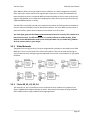
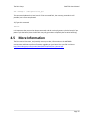
A wide variety of clocking topologies were considered when designing the DINAR1 interface. There
should be at least one clocking method possible that will meet your needs. A list of reasonable
clocking methods are listed and diagramed below.
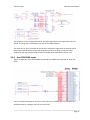
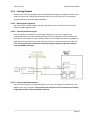
3.5.8.1 Manual phase alignment
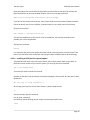
You can use a PLL inside the FPGA to manually align the phase of a clock that you send from the
FPGA to a DINAR1 daughter card.
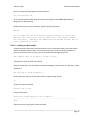
3.5.8.2 Source-Synchronous inputs
Since the signals to the daughter card are length-matched, you can rely on a tight timing
relationship between the clock and data that you send from the daughtercard to the FPGA. Since
the FPGA has a zero-hold-time input, sending a clock from the DINAR1 card whose rising edges are
aligned with the data transitions on your data lines will result in reliable communication with the
FPGA. Source-Synchronous interfaces are the preferred way of clocking a high-speed interface
across the DINAR1 connection.
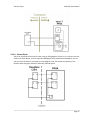
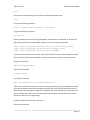
3.5.8.3 Source-synchronous outputs
You can repeat this setup in the opposite direction, as long as the hold time on the device on the
DINAR1 card is zero or negative. Source-Synchronous interfaces are the preferred way of clocking
a high-speed interface across the DINAR1 connection.
Page 26