1
Performance
6.2
UM1906
Multi buffering features
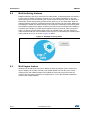
Multiple buffering is the use of more than one frame buffer, so that the display ever shows a
screen which is already completely rendered, even if a drawing operation is in process.
When starting the process of drawing the current content of the front buffer is copied into a
back buffer. After that all drawing operations take effect only on this back buffer. After the
drawing operation has been completed the back buffer becomes the front buffer. Making the
back buffer the visible front buffer normally only requires the modification of the frame buffer
start address register of the display controller. Now it should be considered that a display is
refreshed by the display controller approximately 60 times per second. After each period
there is a vertical synchronization signal, known as VSYNC signal. The best moment to
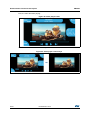
make the back buffer the new front buffer is this signal. If not considering the VSYNC signal
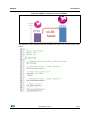
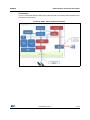
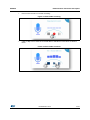
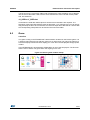
tearing effects can occur, as shown in Figure 21 below.
Figure 21. Example of tearing effect
6.3
Multi layers feature
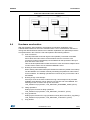
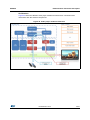
Windows can be placed in any layer or display, drawing operations can be used on any
layer or display. Since there are really only smaller differences from this point of view,
multiple layers and multiple displays are handled the same way (using the same API
routines) and are simply referred to as multiple layers, even if the particular embedded
system uses multiple displays.
34/67
DocID027941 Rev 2