1
NXP Semiconductors
JCOP 2.4.2 R3
Security Target Lite
PUBLIC
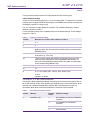
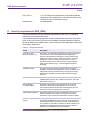
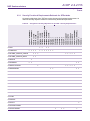
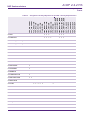
Finally, the objective OT.EXT-MEM provides access control for external memory and
therefore also contributes to counter this threat.
Identity Usurpation
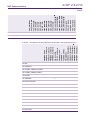
T.SID.1
As impersonation is usually the result of successfully
disclosing and modifying some assets, this threat is mainly countered by the objectives
concerning the isolation of application data (like PINs), ensured by the (OT.FIREWALL).
Uniqueness of subject-identity (OT.SID) also participates to face this threat. It should be
noticed that the AIDs, which are used for applet identification, are TSF data. In this
configuration, usurpation of identity resulting from a malicious installation of an applet on
the card is covered by the objective OT.INSTALL. The installation parameters of an
applet (like its name) are loaded into a global array that is also shared by all the
applications. The disclosure of those parameters (which could be used to impersonate
the applet) is countered by the objectives OT.GLOBAL_ARRAYS_CONFID and
OT.GLOBAL_ARRAYS_INTEG. The objective OT.CARD-MANAGEMENT contributes, by
preventing usurpation of identity resulting from a malicious installation of an applet on the
card, to counter this threat.
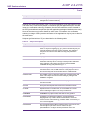
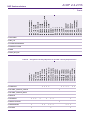
T.SID.2
This is covered by integrity of TSF data, subjectidentification (OT.SID), the firewall (OT.FIREWALL) and its good working order
(OT.OPERATE). The objective OT.INSTALL contributes to counter this threat by
ensuring that installing an applet has no effect on the state of other applets and thus can't
change the TOE's attribution of privileged roles. The objectives OT.SCP.RECOVERY
and OT.SCP.SUPPORT are intended to support the OT.OPERATE objective of the TOE,
so they are indirectly related to the threats that this latter objective contributes to counter.
Unauthorized Execution
T.EXE-CODE.1
Unauthorized execution of a method is prevented by
the objective OT.VERIFICATION. This threat particularly concerns the point (8) of the
security aspect #VERIFICATION (access modifiers and scope of accessibility for classes,
fields and methods). The OT.FIREWALL objective is also concerned, because it prevents
the execution of non-shareable methods of a class instance by any subject apart from
the class instance owner.
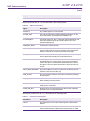
T.EXE-CODE.2
Unauthorized execution of a method fragment or
arbitrary data is prevented by the objective OE.VERIFICATION. This threat particularly
concerns those points of the security aspect related to control flow confinement and the
validity of the method references used in the bytecodes.
T.EXE-CODE-REMOTE
The OT.REMOTE security objective contributes to
prevent the invocation of a method that is not supposed to be accessible from outside the
card.
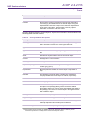
T.NATIVE
This threat is countered by OT.NATIVE which ensures
that a Java Card applet can only access native methods indirectly that is, through an API.
OE.APPLET also covers this threat by ensuring that no native applets shall be loaded in
post-issuance. In addition to this, the bytecode verifier also prevents the program counter
of an applet to jump into a piece of native code by confining the control flow to the
currently executed method (OE.VERIFICATION).
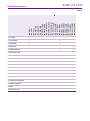
Denial of Service
T.RESOURCES
This threat is directly countered by objectives on
resource-management (OT.RESOURCES) for runtime purposes and good working order
(OT.OPERATE) in a general manner. Consumption of resources during installation and