1
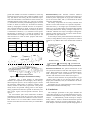
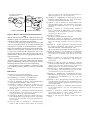
the meaning of the letters is
described in the text
book-
(c)
(d)
(b)
GUI
(a)
book- (c)
marks
(d)
(b)
(a)
browser
browser
Mosaic’s bookmarks
parts‘, Proceedings of the 17th International Conference on
Software Engineering, pp. 179-185, April 1995
GUI
dispatch
inner
state
Chimera’s bookmarks
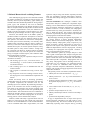
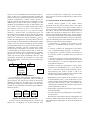
Figure 7. Mosaic’s and Chimera’s bookmark architecture
identify additional feature-specific subprograms along the
dependency graph. The combination of dynamic and static
information reduces the search space drastically.
In a case study, analyzing two web browsers, we could
recover a partial description of the software architecture
with respect to a specific set of related features. Commonalities and variabilities between these partial architectures
could be recovered quickly. Altogether, we found 16 and
6, respectively, feature-specific subprograms out of 701
subprograms for Mosaic and 3 and 24, respectively, out of
928 for Chimera. Only very few subprograms needed to be
inspected manually.
Deriving partial architectures with the described technique can support a more goal-oriented and cost-effective
program understanding and reverse engineering, thereby
facilitating feature-specific re-use and reengineering.
The approach is only applicable to externally visible
and executable features, primarily suited for functional
features.
References
[1] Bauhaus project, University of Stuttgart,
http://www.informatik.uni-stuttgart.de/ifi/ps/bauhaus.
[2] Brandenburg, F.J., ‘Graphlet’, Universität Passau,
http://www.infosun.fmi.uni-passau.de/Graphlet.
[3] Booch, G., Rumbaugh, Jacobson, J., ‘The Unified Modeling
Language Reference Manual’, Addison-Wesley.
[4] Canfora, G., Cimitile, A., De Lucia, A., Di Lucca, G.A., ‘A
Case Study of Applying an Eclectic Approach to Identify
Objects in Code’, Workshop on Program Comprehension, pp.
136-143, 1999.
[8] Graudejus, H., ‘Implementing a Concept Analysis Tool for
Identifying Abstract Data Types in C Code’, master thesis,
University of Kaiserslautern, Germany, 1998.
[9] Horwitz, S., Reps, T., Binkley, D., ‘Interprocedural slicing
using dependence graphs’, ACM Transactions on Programming Languages and Systems, vol. 12, no. 1, pp. 26-60, January 1990.
[10]Lindig, C., Snelting, G., ‘Assessing Modular Structure of
Legacy Code Based on Mathematical Concept Analysis’,
Proceedings of the International Conference on Software
Engineering, pp. 349-359, 1997.
[11]Lindig, C., Concepts,
ftp://ftp.ips.cs.tu-bs.de/pub/local/softech/misc.
[12]Koschke, R., Girard, J.-F., Würthner, M., ‘An Intermediate
Representation for Reverse Engineering Analyses’, Proceedings of the Working Conference on Reverse Engineering,
1998.
[13]Koschke, R., ‘Atomic Architectural Component Recovery
for Program Understanding and Evolution’, Dissertation,
Institut für Informatik, Universität Stuttgart, 2000,
http://www.informatik.uni-stuttgart.de/ifi/ps/rainer/thesis.
[14]Krone, M., Snelting, G., ‘On the Inference of Configuration
Structures From Source Code’, Proceedings of the International Conference on Software Engineering, pp. 49-57, May
1994.
[15]Kuipers, T., Moonen, L., ‘Types and Concept Analysis for
Legacy Systems’, Proc. Int. Workshop on Program Comprehension, 2001.
[16]Sahraoui, H., Melo. W, Lounis, H., Dumont, F., ‘Applying
Concept Formation Methods to Object Identification in Procedural Code’, Proceedings of the Conference on Automated
Software Engineering, pp. 210-218, November 1997.
[17]Siff, M., Reps, T., ‘Identifying Modules via Concept Analysis’, Proceedings of the International Conference on Software Maintenance, pp. 170-179, October 1997.
[18]Snelting, G., ‘Reengineering of Configurations Based on
Mathematical Concept Analysis’, ACM Transactions on Software Engineering and Methodology vol. 5, no. 2, pp. 146189, April 1997.
[19]Snelting, G., Tip, F., ‘Reengineering Class Hierarchies Using
Concept Analysis’, Proceedings of the ACM SIGSOFT Symposium on the Foundations of Software Engineering, pp. 99110, November 1994.
[20]van Deursen, A., Kuipers, T., ‘Identifying objects using cluster and concept analysis’, Proc. Int. Conf. Software Engineering, 1999.
[5] Chen, K., Rajlich, V., ‘Case Study of Feature Location Using
Dependence Graph’, Proc. of the 8th Int. Workshop on Program Comprehension, pp. 241-249, June 2000.
[21]Wilde, N., Scully, M.C., ‘Software Reconnaissance: Mapping Program Features to Code’, Software Maintenance:
Research and Practice, vol. 7, pp. 49-62, 1995.
[6] Eisenbarth, E., Koschke, R. Simon, D., ‘Feature-Driven Program Understanding Using Concept Analysis of Execution
Traces’, Proc. Int. Workshop on Program Comprehension,
2001, to appear.
[22]Wong, K., ‘The Rigi User’s Manual’, Version 5.4.4., June
1998.
[7] Garlan, D., Allen, R., Ockerbloom, J., ‘Architectural Mismatch or, Why it’s hard to build systems out of existing