1
6666
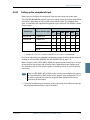
Setting up the interfaces
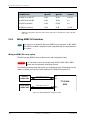
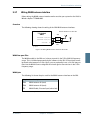
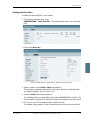
Local exchange
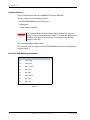
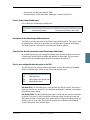
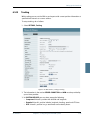
If you want to call a specific phone connected to the terminal, use the local exchange
function. With this function enabled, when you dial the mobile number of the terminal,
a recorded message instructs you to dial the number for the local phone you want to
call. Your call is then transferred to the requested phone and only the requested phone
rings. If the local exchange is not used, incoming calls will per default cause all
connected phones to ring.
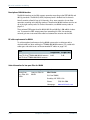
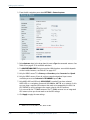
For a detailed description how to set up the local exchange function of the SBU from a
remote location see the AVIATOR 200/300/350 user manual.
6.5.9
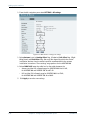
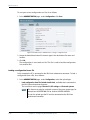
Configuring the discrete I/O interfaces
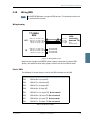
Overview
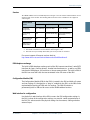
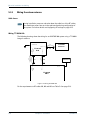
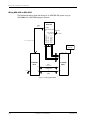
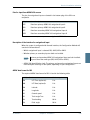
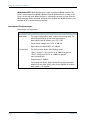
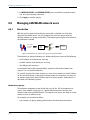
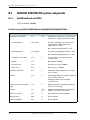
The SBU has 4 annunciators, 1 chime/lamp inhibit and 5 non-configurable discrete
inputs. The non-configurable discrete inputs are SBU nOn (remote on/off), SBU
Enable, WLAN Enable and two for Automatic Test Equipment (ATE). The ATE inputs are
only for factory use, do not connect them.
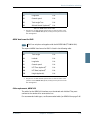
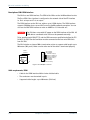
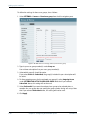
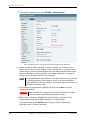
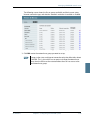
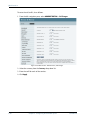
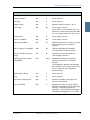
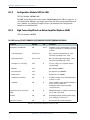
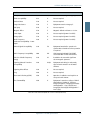
Each I/O pin that can be configured is displayed in the web interface. For more
information on the pins TP (Top Plug) and BP (Bottom Plug) see Pin-out for SBU rear
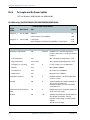
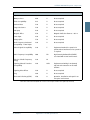
receptacle (top plug) on page 4-7 and Pin-out for SBU rear receptacle (bottom plug) on
page 4-8.
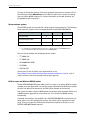
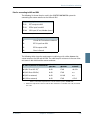
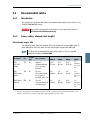
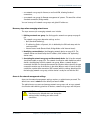
The functions of the I/O pins are as follows:
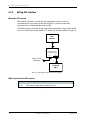
• Pin TP13: Input. Chime/Lamps Inhibit Input.
This discrete input is used to inhibit Satcom activation of the chime and call lights
during take-off and landing.
• Pin TP27: Output. Annunciator #3 “Service Available”.
Default behavior: Active low when the SwiftBroadband Service is logged on
• Pin TP28: Output. Annunciator #1 “Incoming call”.
Default behavior: Active low when a handset is ringing.
• Pin TP29: Output. Annunciator #2 “SBU Failed”.
Default behavior: Active low whenever a BITE with severity essential or fatal is
active on the SBU.
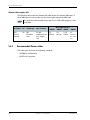
• Pin BP1: Output. Annunciator #4 “Message received”
This discrete output can be used to indicate that there is an unread message in the
SBU. Default behavior: Active low.
98-127093-E
Chapter 6: Configuring the AVIATOR system
6-31