1
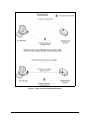
The primary catch with this method is that if the Dynamic C HTTP.LIB library is used, the HTTP
headers must be discarded by the server and by the Rabbit when reading from the socket during a
non-Web transmission.* This is fairly simple to do in practice (see the References below on the
HTTP protocol).
This strategy suffers from a potential denial-of-service attack, but limiting the number of connections to a single device in a specific period of time should alleviate some of this issue (this is only
one possible solution to the DOS attack problem — generally this problem is difficult to deal with
in any network situation and is not limited to Rabbit-based devices).
References
1. IETF RFC2616. Hypertext Transfer Protocol — HTTP v. 1.1.
2. World Wide Web Consortium (www.w3.org), Hypertext Transfer Protocol.
3. Internet Engineering Task Force (www.ietf.org).
4. Dynamic C TCP/IP User’s Manual, Volume 2, Chapters 2 and 4.
*
This is another reason why the developer needs access to the server.
Z-World, Inc.
Rabbit Semiconductor
2900 Spafford Street
Davis, California 95616-6809
USA
2932 Spafford Street
Davis, California 95616-6809
USA
Telephone: (530) 757-3737
Fax: (530) 757-3792
Telephone: (530) 757-8400
Fax: (530) 757-8402
www.zworld.com
www.rabbitsemiconductor.com
022-0110 Rev. A
3