1
Introduction to Python for Science, Release 1
Introduction to Python for Science, Release 1
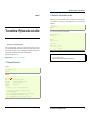
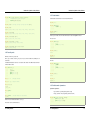
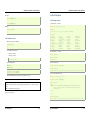
In [28]: r.
r.__add__
r.__class__
r.__contains__
r.__delattr__
r.__delitem__
r.__delslice__
r.__doc__
r.__eq__
r.__format__
r.__ge__
r.__getattribute__
r.__getitem__
r.__getslice__
r.__gt__
r.__hash__
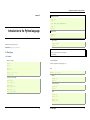
In [17]: l[::2]
Out[17]: [1, 3, 5]
In [18]: l[-3:]
Out[18]: [3, 4, 5]
Syntax: start:stop:stride
• Operations on lists:
Reverse l:
In [19]: r = l[::-1]
In [20]: r
Out[20]: [5, 4, 3, 2, 1]
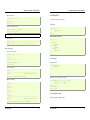
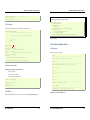
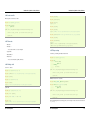
r.__iadd__
r.__imul__
r.__init__
r.__iter__
r.__le__
r.__len__
r.__lt__
r.__mul__
r.__ne__
r.__new__
r.__reduce__
r.__reduce_ex__
r.__repr__
r.__reversed__
r.__rmul__
r.__setattr__
r.__setitem__
r.__setslice__
r.__sizeof__
r.__str__
r.__subclasshook__
r.append
r.count
r.extend
r.index
r.insert
r.pop
r.remove
r.reverse
r.sort
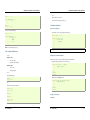
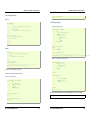
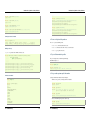
Append an item to r:
Dictionaries
In [21]: r.append(3.5)
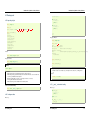
Dictionaries are a mapping between keys and values:
In [22]: r
Out[22]: [5, 4, 3, 2, 1, 3.5]
In [29]: d = {’a’: 1, ’b’:1.2, ’c’:1j}
Extend a list with another list (in-place):
In [30]: d[’b’]
Out[30]: 1.2
In [23]: l.extend([6, 7])
In [31]: d[’d’] = ’d’
In [24]: l
Out[24]: [1, 2, 3, 4, 5, 6, 7]
In [32]: d
Out[32]: {’a’: 1, ’b’: 1.2, ’c’: 1j, ’d’: ’d’}
Concatenate two lists:
In [33]: d.keys()
Out[33]: [’a’, ’c’, ’b’, ’d’]
In [25]: r + l
Out[25]: [5, 4, 3, 2, 1, 3.5, 1, 2, 3, 4, 5, 6, 7]
In [34]: d.values()
Out[34]: [1, 1j, 1.2, ’d’]
Sort r:
In [26]: r.sort()
Warning: Keys are not ordered
In [27]: r
Out[27]: [1, 2, 3, 3.5, 4, 5]
Note: Dictionnaries are an essential data structure
Note: Methods:
For instance to store precomputed values.
r.sort: sort is a method of r: a special function to is applied to r.
Strings
Warning: Mutables:
Lists are mutable types: r.sort modifies in place r.
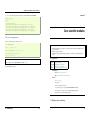
• Different string syntaxes:
Note: Discovering methods:
a = ’Mine’
a = "Chris’s"
a = ’’’Mine
and not his’’’
a = """Mine
and Chris’s"""
In IPython: tab-completion (press tab)
2.1. Basic types
6
2.1. Basic types
7