1
2
(ii) write confirmation – faced with the threat of transaction
generators (TG) [9] and cross-site scripting (XSS) attacks
[10], the server, s, would seek a confirmation for each
“write” to the user’s account state via p [11]. Instead of
relying on stolen credentials, a TG simply waits for the
user to login to her account and then issue transactions
on behalf of the user [9]. Cross-site scripting (XSS) is a
type of computer security vulnerability typically found in
web applications which allow code injection by malicious
web users into the web pages viewed by other users.
An exploited cross-site scripting vulnerability can be
used by attackers to bypass access controls such as the
same origin policy. In recent years XSS surpassed buffer
overflows to become the most common of all publicly
reported security vulnerabilities [12].
(iii) secure logoff – a periodic ping from the trusted device
[13] as well as an explicit logoff signal issued by the user
from p are two system actions that can ensure s about
the proper lifetime of a secure session. Since XSS attacks
rely on the existence of established secure sessions at
victim’s computer, enabling secure logoff is as important
as enabling the secure login.
adversary
Server
Account
(distrusted)
Terminal
(trusted
personal)
Device
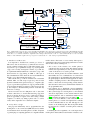
Fig. 1. Parties of interest in multi-factor authentication: a server s hosting
a user account, a terminal c assumed to be fully under the control of the
adversary, and a trusted device p in the hands of the account owner.
account so that all “writes” to the account state (i.e., stock
purchase, money transfer, sending an email, etc.) are confirmed
by a user action executed on p. Finally, p periodically (e.g.,
say every 30 seconds [13]) sends a “ping” signal to s over the
tunneled TLS to assure of the continuous proximity between
c and p. The user can logoff by either walking out on c at
which point the proximity between c and p is broken or by
specifically sending a “logoff” signal from p to s, again, via
the tunneled TLS.
The connectivity of the parties of interest in our protocol is
illustrated using Figure 1. Section II reviews the construction
and properties of the proposed protocol in detail.
We assume a broad threat model where among other assumptions we consider:
•
•
A virtual machine (VM) fully controlled by the adversary, is executing all operations on c, i.e., the VM can
manipulate the data and control flows of client’s browser
or any other resource at will.
A “ghost” user-interface is available to the malicious
party who is in control of c. The adversary can render an
instance of an on-going https:// session on a “ghost”
display – a display hidden from the user, possibly being
rendered on another computer, and under the full control
of the malicious party.
Within our objectives and considering the above security
assumptions further detailed in Section III, we formally verified the proposed protocol using a publicly available, off-theshelf package, AVISPA [15]. In a brute-force simulation of
considered adversarial scenarios, the verifier did not find a
single vulnerability. Section IV details this effort as the main
experimental result.
C. Preliminary Discussion
B. The Contribution
We address (i–iii) by proposing an authentication system
based upon a simple tunneled TLS2 connection from p to s.
The simplicity of the proposed protocol as well as the fact
that it addresses effectively several challenging and important
problems in authentication, represent the key contribution of
this work.
In our protocol, first c authenticates s using a standard
PKI-based TLS connection [14]. Next, c connects to p using
a local wired or wireless near-field communication channel
such as BlueTooth. We do not require that this connection
is authenticated and/or private, hence cumbersome trusted
pairing protocols are avoided. Then, s initiates a separate
TLS connection tunneled via c into p in order to achieve
the MFA objective: obtain a password, a device identifier,
and/or a biometric template from the user. As a consequence,
c never observes in plain-text the authentication credentials.
Upon validating the credentials, s grants c access to the user
2 We refer to the Transport Layer Security protocol and its predecessor,
the Secure Sockets Layer, as means of authentication via a public key
infrastructure.
Server change. A server must be cognizant of the fact
that a specific secure session is launched from a terminal
which the user does not trust; hence, the server in its own
as well as in the interest of the user, should restrict display
of identifying data on such a terminal (e.g., account number,
birthdate) as well as ask for a confirmation for each crucial
“write” to user’s account. Although most related work has
pursued authentication systems which do not pose demand
for server-side alterations (see Section V), we stress that this
objective is flawed as servers must address the fact that all
data sent to and from the browser that resides in c, is assumed
public. To that extent, we anticipate that reliable MFA would
require changes to s and thus, propose a protocol that also
asks for additional, minor steps from s.
Choice of trusted device. We acknowledge that the design
of the trusted personal device, p, could be realized so to reach
different security vs. cost configurations. The top end would
be represented by an intrusion-proof tamper-resistant dedicated
personal device with a full user I/O interface (e.g., keyboard
and display similar to a mobile phone) and a Web browser with
minimal HTML parsing/rendering capabilities (e.g., scripting
and dynamic content disabled). One of the least expensive