1
QUICKTIME VIRTUAL REALITY (QTVR)
The two FHWA studies just summarized were performed by the Non-Destructive Evaluation
Validation Center (NDEVC) and raise several important issues in need of further action to
improve routine bridge inspections, one of which is the collection and management of
inspection data. In this section, an approach using QuickTime Virtual Reality (QTVR) is
described for recording bridge inspection data at a high level of photographic detail. Highresolution photography also provides an excellent management tool for the review of
inspection reports by supervisors.
Virtual reality technology has been previously used to create virtual worlds of various
settings such as art museums, archaeological sites, city attractions, and natural surroundings,
to name a few. There are many other ways in which QTVR has been employed; however,
prior to this application for bridge inspection little has been done to address a specific
engineering problem.
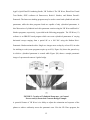
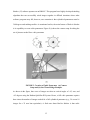
In QTVR, photographic images are moved from the flat, two-
dimensional world into a more immersive, three-dimensional environment complete with
interactive components (9). Thus, this technology provides the capability for an inspector or
engineer to explore and examine a bridge’s physical condition as if he/she were actually in
the field, with the simple use of a computer mouse in lieu of virtual reality equipment such as
goggles, headsets, or gloves (9).
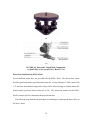
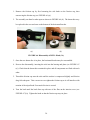
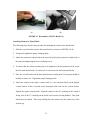
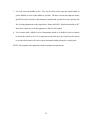
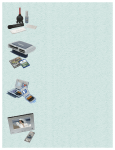
The amount of equipment needed for a virtual reality system is not extensive; a basic
system (excluding a laptop computer) should include a high-resolution digital camera, a
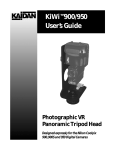
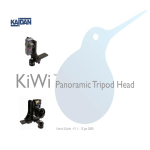
camera tripod, panoramic tripod heads, and virtual reality computer software. A list of
suitable hardware and software products is provided below (10).
•
Olympus C-5060 Digital Camera with wide angle lens (including memory cards)
5