1
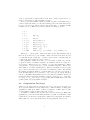
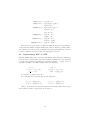
◇ operator is again used for translating “there is a moment”. The formula for
this question becomes ◇(EC(Centre, 0) ∨ PO(Centre, 0)), or in ATL:
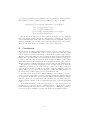
⟪days⟫◇((⟪city, zone⟫◇(⟪city⟫◻Centre ∧ ⟪zone⟫◻0) ∧
⟪city, zone⟫◇(Centre ∧ ¬0) ∧
⟪city, zone⟫◇(¬Centre ∧ 0)) ∨
(⟪city, zone⟫◻¬(⟪city⟫◻Center ∧ ⟪zone⟫◻0) ∧
⟪city, zone⟫◇(Centre ∧ 0)))
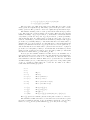
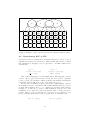
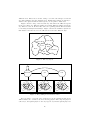
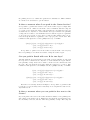
We already know that you can never park in the Centre for free. Meaning
there is no partial overlap between the centre and a free parking zone. But there
is a moment when the Centre and a free parking zone are externally connected.
Namely on Sunday you can park for free just east and just west of the Centre.
There is a moment when you can park for free next to the Centre.
6
Conclusion
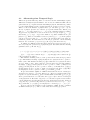
In this article we asked whether RCC relations could be represented into a
temporal logic and whether this could be done in such a way that the spatial
regions and the temporal relations can be used like in a spatio-temporal logic.
We have found that LTL can only represent the RCC relations DC, EQ and
NTPP. We found that CTL can represent all the RCC relations, but it is not
possible to also use temporal relations. We found that in ATL both the spatial
RCC relations and temporal relations can be used like in a spatio-temporal logic.
This is possible by making a distinction between temporal and spatial players.
We wanted to represent a spatial logic into a temporal logic so that the
existing model checker for the temporal logic could be used. However there is
only one model checker for ATL we are aware of and it’s difficult to use and
install. There are a lot more model checkers for LTL and CTL available. A
model checker for CTL could be used to check RCC models.
Because the model checker for ATL is difficult to use it might be better to
develop a spatio-temporal model checker instead of using an existing temporal
model checker. In this article we only discussed RCC as the spatial logic. Future
research could focus on representing other spatial logics into temporal logics.
Future research could also focus on other temporal logics to represent the spatial
logics.
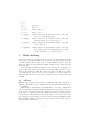
In artificial intelligence temporal logics is used to reason about time and
spatial logics to reason about space. In this article we combined some of these
temporal and spatial logics into a spatio-temporal logic. Making it possible to
reason about space changing over time, like in the given parking example.
18