1
1H
our
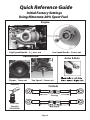
Base Start-up Settings from the Factory
High Speed Needle—23/4 turns out from bottom
Low Speed Needle—3 turns out from bottom
2H
Engine Tuning
After the engine is broken in, you can tune it for optimum
performance. When tuning, it is critical that you be cautious of
overheating as severe damage and premature wear can occur. You
want to make all carburetor adjustments in “one hour” increments.
r
ou
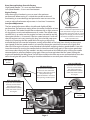
Low Speed Adjustment
The low speed adjustment affects the idle and slightly off idle
Carb Adjustments:
performance. The optimum setting allows the motor to idle for at least
Make
all
carburetor
adjustments in one
8−10 seconds. The model should then accelerate with a slight amount
hour increments. Imagine the slot in
of sluggishness and a noticeable amount of smoke. The simplest way
the needle is the hour hand on a clock.
to check this is to make sure the engine has been warmed up and let
Adjust it as though you were moving
the engine idle for 8−10 seconds. If the low speed mixture is so far off
the hour hand from one hour to the
next or previous one.
that the engine won’t stay running this long, turn the idle stop screw
clockwise, increasing the idle speed. With the engine at idle, pinch
and hold the fuel line near the carburetor, cutting off the flow of fuel, and listen closely to the engine
rpm (speed). If the low speed needle is set correctly, the engine speed will increase only slightly and
then die. If the engine increases several hundred rpm before stopping, the low speed needle is too rich.
Lean the mixture by turning the needle clockwise one hour and trying again. If the engine speed does
not increase but simply dies, the needle is too lean and needs to be richened up by turning the needle
counterclockwise one hour before trying again. After you have optimized the low speed setting, the
engine will probably be idling faster. You will have to adjust the idle stop screw counterclockwise to slow
down the engine idle speed. The engine should accelerate at a constant pace without hesitating.
Idle Speed
Needle
Low speed Needle
Idle Speed Screw
Slower
Faster
As you turn this clockwise,
it increases the carburetor
opening at idle and increases
idle speed. Turning it
counterclockwise decreases
the opening and idle speed.
As you turn this clockwise
(leaner), less fuel enters
the engine. Turning it
counterclockwise (richer)
allows more fuel to enter
the engine.
High speed Needle
As you turn this clockwise
(leaner), less fuel enters
the engine. Turning it
counterclockwise (richer)
allows more fuel to enter
the engine.
Richer
Leaner
Low speed
Needle
Richer
Leaner
High speed
Needle
Carb Opening
Page 4