1
Research Journal of Agricultural Science, 41 (1), 2009
USA. The difference is only in the name, and all these terms have the same meaning. The
water in a drip irrigation system flows in three forms: It flows continuously throughout the
lateral line; It flows from an emitter or dripper connected to the lateral line; It flows through
orifices perforated in the lateral line.
A well designed drip irrigation system can increase the crop yield due to following
factors: Efficient use of the water (It reduces the direct losses by evaporation, It does not cause
wetting of the leaves, It does not cause movement of drops of water due to the effect of wind, It
reduces consumption of water by grass and weeds, It eliminates surface drainage, It allows
watering the entire field until the edges, It allows applying the irrigation to an exact root depth
of crops, It allows watering greater land area with a specific amount of water), Reaction of the
plant (It increases the yield per unit (hectare-centimetre) of applied water, It improves the
quality of crop and fruit, It allows more uniform crop yield), Environment of the root (It
improves ventilation or aeration, It increases quantity of available nutrients, The conditions are
favourable for retention of water at low tension), Control of pests and diseases (It increases
efficiency of sprayings of insecticides and pesticides, It reduces development of insects and
diseases), Correction of problem of soil salinity (The increase in salts happens at a distance
away from the plant, It reduces salinity problems. A greater reduction is obtained by
increasing the water flow. Salts are limited to an outer periphery of a wetted zone), Weed
control (It reduces the growth of weeds in the shaded humid space), Agronomic
practices
(The activities of the irrigation do not interfere with those of the crop, the plant protection and
the harvesting, It reduces inter cultivation, since there is less growth of weeds, Helps to control
the erosion, It reduces soil compaction, It allows applying fertilizers through the irrigation
water- called fertigation, It increases work efficiency in fruit orchards, because the space
between the rows is maintained dry), Economic benefits (The cost is lower compared with
overhead sprinkler and other permanent irrigation systems, The cost of operation and
maintenance is low. The costs are high when the average row spacing is less than 3 meters, It
can be used in uneven terrains, The water application efficiency is high. Energy use per acre is
reduced due to smaller diameter pipes, and only 50 – 60% of water is used).
MATERIAL AND METHODS
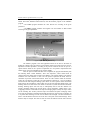
HydroCalc irrigation system planning software is designed to help the user to define
the parameters of an irrigation system. The user will be able to run the program with any
suitable parameters, review the output, and change input data in order to match it to the
appropriate irrigation system set up. Some parameters may be selected from a system list;
whereas other are entered by the user according to their own needs so they do not conflict with
the program’s limitations. The software package includes an opening main window, five
calculation programs, one language setting window and a database that can be modified and
updated by the user.
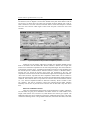
HydroCalc includes several sub-programs as:
- The Emitters program calculates the cumulative pressure loss, the average flow rate,
the water flow velocity etc. in the selected emitter. It can be changed to suit the desired
irrigation system parameters.
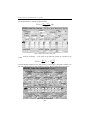
- The SubMain program calculates the cumulative pressure loss and the water flow
velocity in the submain distributing water pipe (single or telescopic). It changes to suit the
required irrigation system parameters.
- The Main Pipe program calculates the cumulative pressure loss and the water flow
velocity in the main conducting water pipe (single or telescopic). It changes to suit the required
irrigation system parameters.
421