1
2
Symbolic Semantics for CSP
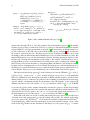
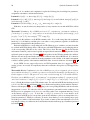
processes C and D. On process C it begins to run, but eventually faces a stack overflow; it claims that
process D exceeds the integer limit for FDR2, even though the FDR2 User Manual suggests that 32-bit
integers can be handled [8]. Also, when we directly input process C into the CSPM-based simulator
ProBE, the whole program crashed without leaving any information. However, the HCSP simulator we
have derived from the semantics given in this paper takes two or three seconds to list all the traces for all
four processes. From these examples, we can clearly see that the running time of FDR2 depends on the
size of the set in each process. These facts reflect, in part, that the original CSP and Machine-Readable
A.
(
l
x:x>0∧x<10
B.
(
l
SKIP)|[{k.x|x > 0 ∧ x < 100}]|(
x:x>0∧x<50
l
SKIP)|[{k.x|x > 0 ∧ x < 100 ∗ 103 }]|(
(
l
SKIP)|[{k.x|x > 0 ∧ x < 100}]|(
x:x>0∧x<1000
D. (
l
x:x>0∧x<10∗106
l
SKIP)
x:x>50∧x<100
l
SKIP) u (
SKIP) u (
x:x>0
l
l
SKIP)
x:x>50∗103 ∧x<100∗103
x:x>0∧x<50∗103
x:x>0∧x<10∗103
C.
l
SKIP) u (
SKIP)
x:x≥50
SKIP)|[{k.x|x > 0 ∧ x < 100 ∗ 106 }]|(
l
x:x>0∧x<50∗106
SKIP) u (
l
SKIP)
x:x>50∗106 ∧x<100∗106
Figure 1: Example
CSP (CSPM) semantics do not have rules for replicated operators (Replicated Internal Choice, Replicated
External Choice, etc). Instead, they view replicated operators as macros of their binary versions over sets.
This fact means that the original CSP and CSPM syntax cannot express a replicated operator if the set
of the replicated operator is infinite, such as the second and third Replicated Internal Choice operators
in process C. Even if the set is finite, the cost is very expensive for CSP-semantics-based tools to run a
small replicated process in a large macro, such as the process D. On the other hand, HCSP-semanticsbased tools can overcome this problem and run CSP processes regardless of the size of sets in replicated
operators. By using HCSP semantics, the four processes in the example will have the same number
of possible next moves. In addition, HCSP-semantics-based tools can expand the set of possible CSP
processes to execute, processes C and D above are examples of this fact. We will see that this fact is
useful in some real applications such as the medical mediator system in Gunter et al. [3].
This paper’s contribution is a new formalization of CSP (syntax in Section 2 and semantics in Section 3), which we have proved correct (proof sketched in Section 4) and supports simulation (Section 5).
Along with the semantics in Section 3, we will also talk about how to transfer a rule in original CSP
into HCSP by adding additional information to the transitions. Before that, we demonstrate the expressiveness and power of HCSP as compared to traditional CSP semantics by using examples. Finally, we
reason about where the power comes from in Section 7 and provide one more example in Section 6 to
show that there is a large collection of problems, which are hard to be analyzed in CSP framework, can
be reasoned in HCSP framework. All of the work described in this paper has been formalized and proved
in the interactive theorem prover Isabelle/HOL [9].
2
Syntax
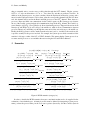
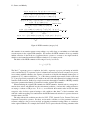
The syntax of HCSP is given in Figure 2. For the remainder of this paper, the following name conventions
will be used. We will use P and Q for processes. Lower case p refers to an HCSP process name. The