1
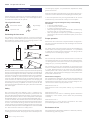
TEST INSTRUMENT SAFETY
TEST INSTRUMENT SAFETY
7
B+K Precision products are not authorized for use in any
application involving direct contact between our product and
the human body, or for use as a critical component in a life
support device or system. Here, „direct contact“ refers to
any connection from or to our equipment via any cabling or
switching means.A „critical component“ is any component
of a life support device or system whose failure to perform
can be reasonably expected to cause failure of that device
or system, or to affect its safety or effectiveness.
8
Never work alone. Someone should be nearby to render aid if
necessary. Training in CPR (cardio-pulmonary resuscitation)
first aid is highly recommended.
WARNING
Normal use of test equipment exposes you to a certain amount
of danger from electrical shock because testing must sometimes be performed where exposed high voltage is present.
An electrical shock causing 10 milliamps of current to pass
through the heart will stop most human heartbeats.Voltage as
low as 35 volts dc or ac rms should be considered dangerous
and hazardous since it can produce a lethal current under
certain conditions. Higher voltages are even more dangerous.
Your normal work habits should include all accepted practices
to prevent contact with exposed high voltage, and to steer current away from your heart in case of accidental contact with a
high voltage.
Observe the following safety precautions:
1
There is little danger of electrical shock from the dc output
of this power supply. However, there are several other
possible test conditions using this power supply that can
create a high voltage shock hazard:
1a If the equipment under test is the „hot chassis“ type, a serious shock hazard exists unless the equipment is unplugged
(just turning off the equipment does not remove the hazard),
or an isolation transformer is used.
1b If the equipment under test is „powered up“ (and that
equipment uses high voltage in any of its circuits), the power
supply outputs may be floated to the potential at the point
of connection. Remember that high voltage may appear
at unexpected points in defective equipment. Do not float
the power supply output to more than 100 volts peak with
respect to chassis or earth ground.
1c If the equipment under test is „off“ (and that equipment uses
high voltage in any of its circuits under normal operation),
discharge high-voltage capacitors before making connections or tests. Some circuits retain high voltage long after
the equipment is turned off.
2
Use only a polarized 3-wire ac outlet.This assures that the
power supply chassis, case, and ground terminal are connected to a good earth ground and reduces danger from
electrical shock.
3
Don’t expose high voltage needlessly. Remove housings
and covers only when necessary.Turn off equipment while
making test connections in high-voltage circuits. Discharge
high-voltage capacitors after removing power.
4
If possible, familiarize yourself with the equipment being
tested and the location of its high voltage points. However,
remember that high voltage may appear at unexpected
points in defective equipment.
5
Use an insulated floor material or a large, insulated floor
mat to stand on, and an insulated work surface on which to
place equipment; and make certain such surfaces are not
damp or wet.
6
When testing ac powered equipment, the ac line voltage is
usually present on some power input circuits such as the
on-off switch, fuses, power transformer, etc. „any time“ the
equipment is connected to an ac outlet.
2
Subject to change without notice