1
SeaFET Manual - Integration
with an External Pump
Real Time Data Acquisition
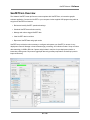
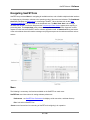
SeaFETCom can acquire data samples in real time from a connected SeaFET. Acquired data and data
statistics can be directed to the following destinations:
• The Time Series graph plots all acquired pH and temperature samples vs time.
• The Real Time Display shows the most recently acquired pH and temperature values in text format.
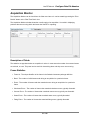
• The Acquisition Monitor counts number of data frames acquired and provides error statistics.
• Local log files: captured data frames are written to a file
Real time data acquisition via SeaFETCom is only possible when SeaFET is configured to operate in
Continuous mode or Periodic mode. Polled mode data acquisition is not supported in SeaFETCom. See
SeaFET Settings for more information on setting SeaFET operating modes.
Starting an Acquisition
To start a data acquisition:
1. Ensure SeaFET is powered by internal battery pack or external DC power supply.
2. Connect SeaFETCom to SeaFET per instructions in Connecting to SeaFET section.
3. In the General tab on the SeaFET Settings dialog, ensure that Operational Mode is set to
Continuous (preferred) or Periodic (for pre-deployment testing).
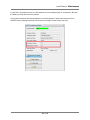
4. In the Telemetry tab on the SeaFET Settings dialog, ensure that Transmitted Frame Format is set to
FULL_ASCII.
5. Press the Start button on the dashboard.
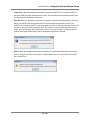
6. If SeaFET is in Periodic operating mode, press OK on the Periodic Acquisition dialog that shows the
next periodic sampling start time.
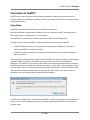
When a SeaFET is connected to SeaFETCom an acquisition can be started by pressing the Start button,
if no internal battery is present SeaFETCom will prompt to apply external power.
When starting an acquisition within SeaFETCom, the graphical data display allows monitoring of the
generated data in real time. Before deployment, it is advisable to confirm that the generated data are
within the expected range.
The procedure to acquire real time data via SeaFETCom is slightly different for the following Operational
Modes:
69 / 118