1
Orienteering Victoria
7.
Setting and Controlling Guidelines – as at May 2014
The first leg should not be too demanding, neither physically nor technically,
the competitors should be given an opportunity to become acquainted with
the map and the type of terrain.
8. On any course the last control should not be more difficult than average; as
the last control is often common to many courses, set the last control to the
standard of the least difficult class through the control. Keep the distance from
the last control to the Finish as short as possible. Plan the courses so that they
all approach the Finish from the same direction.
WATER ON COURSES
Please refer to separate Water Health and Safety document, and to Course Tables,
which set minimum provisions for water on courses.
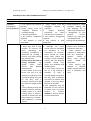
SUMMARY OF TECHNICAL STANDARDS
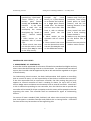
Very easy:
Course must follow handrails (tracks, creeks, but no contour handrails);
use large obvious features along handrails as control sites use many
controls. A control must be placed at every decision point. A compass
should not be necessary.
Easy:
Allow (in addition to above), easy contour handrails. Control sites may be
large, obvious features just off handrails. A compass may be needed but
accurate bearings not required. Some route choice may be given (eg
follow handrails around or cut across country). Back up features essential
for any cross country legs.
Moderate:
Cross country legs with route choice and good attack points close to
control; catching features behind the control. Compass bearings and pace
counting may be required. Easily-identified point features may be control
sites.
Hard:
Navigation and route choice as difficult as possible; use small point
features having no obvious attack points. Catching features not required.
4