1
48
FACHBEITRÄGE
2 Multiagent simulation system
Our first approach to implement a multi agent system was based on a combination
of VRML and Java technology (Jung & Milde, 1999). Unfortunately, the VRML
technology integrated into the standard WWW browsers has shown to be very
unstable and slow. It has been difficult to control the visualization process. Either
control was accurate, but slow, or the agents would move smoothly but almost
uncontrollably. Still the basic principle of separating visualization, world representation and agent control into three different processes seemed to be promising. We therefore switched from VRML to Java3D, which now is sufficiently
matured to implement a stable and fast system.
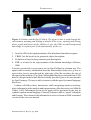
As Java3D is able to import geometric objects described in VRML, the reimplementation of the visualization was relatively easy. Lokutors geometric appearance is based on a standard HANIM 1.0 figure. The skeleton structure of HANIM
1.0 allows definition flexible articulated agents. The arms, legs, the upper body
and the head can all be moved seperately, making it possible to define realistic
animations of the agents.
The world server encodes most of the state information of the simulated virtual
world. Position and orientation of the agents are represented. The same holds
true for a number of parts of the car. Virtual objects, like sensors, are also represented here. Based on this information the world server is able to calculate the
current perceptual status of the agent. Lokutor is equipped with visual and tactile
sensors. It is also possible to request the current sensomotoric status of the
agent, mainly the joint angles of the limbs and wether the hand is open, closed or
in a pointing position. Any number of control clients can connect to the server.
This allows to control a number of interacting agents in the simulated environment. For the presentation task we only implemented one control client.
3 A hybrid control architecture
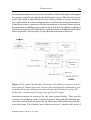
The control architecture (see figure 2) contains a deliberative system, which models „higher’’ cognitive competences, and a behavior-oriented5 base system,
which integrates language, perception and action on a lower level. This hybrid
architecture (Milde, 1997) allows the distribution of the necessary competence
and therefore the tasks of the whole system onto both subsystems. The deliberative system is responsible for the sequentialization of complex actions into simple
basic actions and schedules the execution of these actions. However, because of
LDV-Forum Bd. 17, Nr. 1/2, Jg. 2000