1
2
PRV Use For Leakage Reduction: Various Technical Solutions
.
Theoretical background
A first essential step, for any leakage control scheme, is gaining a fair understanding
of the sources for leakage and other real losses in the system.
The most common 'Real Losses' sources are:
Pipe ruptures
Leakage from fittings, joints and small pores in the distributing pipes.
Tanks and reservoirs overflow
Leakage from Storage tanks
Factors that influence the water loss volume and costs:
Infrastructure condition – Quality of materials, ground condition, water quality
and workmanship. Improving the infrastructure condition usually requires large
capital investments.
Awareness time (AT) – the average time between the start of the leak until the
water-company becomes aware of it. The total volume of water lost from a
single leak is the time delay from emergence to fixture multiplied by the average
leak flow rate. If a methodology for monitoring the system condition is applied,
large rupture would usually be characterized by a very short AT compared with
small leaks, that may be left un-noticed for years. Therefore, there is a need for
methods and solutions for minimizing the rate of the losses through these small
leakage points.
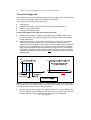
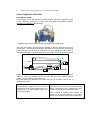
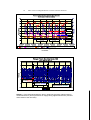
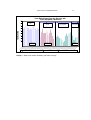
Figure 1. Comparing two water-loss types in a network, where the system is monitored and
well-maintained. The loss volume through many background leakage points may become
much larger than the volume lost due to large pipe breaks.
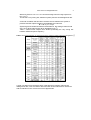
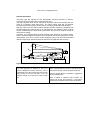
Average Zone Pressure (AZP) has significant influence on both leakage flow
rate and creation of new leakage points, and rupture occurrence rate. The ratio
between pressure reduction and leakage rate change is calculated by:
N1
Q1 = Q0 x (P1/P0)