1
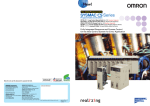
Going Beyond the Traditional Limits of PLCs with
PLC-based Process Control
Reducing the Total Cost of Ownership from Initial Costs through Running Costs.
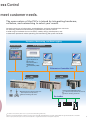
PLC-based Process Control Meets Customer Needs
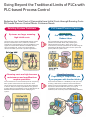
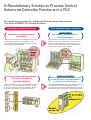
Existing System Problems
PLC-based Process Control
Systems are large, meaning
high initial costs.
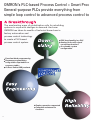
Cut costs, Save space,
Reduce labor
The over-spec nature of a distributed control system
(DCS) increased costs. PLCs, however, could not
provide the required process control capabilities, and
signal conversion with isolators and other devices
was required for I/O. It was just not possible to
achieve the ideal system for a specific application.
Running costs are high because
maintenance and modifications
require specialists.
The manufacturer must be relied upon for everything
from system construction to maintenance. Even
simple changes to parameters cannot be performed
in-house. And, it's nearly impossible to use generalpurpose devices and software (such as HMI devices or
Windows-based software) when modifying the
system.
4
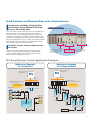
PLCs provide the some of the functions and
performance of DCS while also providing the
advanced features of PLCs: Open specs, easy
maintenance, and cost performance. A wide range of
Isolated-type Analog Units helps to save space and
greatly reduces system costs.
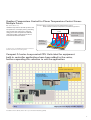
Engineering is simple when you
can program with function blocks.
Paste function blocks in a window just like you were
creating a flow sheet, and then connect the blocks
with the mouse to graphically program a wide range
of process control. And with a PLC, it's easy to
incorporate general-purpose HMI devices and
software (such as touch panels and SCADA software).