1
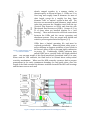
In response to these challenges, the authors2, 3 began work on a new concept for
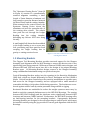
ICFD removal, shown in Figure 2. In this concept, a short portable tool would be
affixed to the well housings. The tool would contain two simple mechanisms – one
for pulling an ICFD wire from its well tube, and another to slice the wire into short
“particles”.
These particles would be transported from the tool to a smaller
shielded flask stationed away from any reactivity devices via a pneumatic vacuum
system. The device would be monitored and controlled remotely. Removal of each
detector would take only a few minutes.
After fabricating a proof-of-concept, the authors2, 3 brought the idea to the attention
of the Candu Owner’s Group (COG). A Joint Project [4] was initiated and Stern
Laboratories was contracted to develop the concept into a commercial IFCD
removal system meeting COG members’ specifications [5, 6, 7]. The first ICFD
“Chopper Tool” systems were manufactured in 2007, and used to successfully
remove detectors in the Wolsong and Bruce NPPs. Experience gained from these
campaigns [8, 9] led to the initiation of a second COG Joint Project [10] to develop a
“Mark II” ICFD Chopper tool. This paper will describe the design and operational
experience of Stern Labs’ Mark II ICFD removal tool.
1. Technical Description
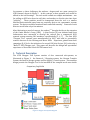
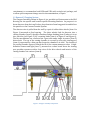
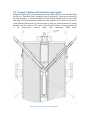
The ICFD Chopper Tool System consists of four connected sub-systems, as
illustrated in Figure 3: the Removal / Chopping system, the Vacuum Transfer
System, the Particle Storage system, and the Supply / Control system. This modular
design permits the Chopper Tool to be installed in the cramped work areas inside
Figure 3 Chopper Tool System Diagram