1
Implementing Activity Structures Process Modeling
On Top Of The
MARVEL Environment Kernel
Final Report for Software Design & Analysis, Inc.
Gail E. Kaiser, Israel Z. Ben-Shaul and Steven S. Popovich
Columbia University
Department of Computer Science
New York, NY 10027
CUCS-027-91
13 September 1991
Abstract
Our goal was to implement the activity structures model defined by Software Design & Analysis on top
of the MARVEL environment kernel. This involved further design of the activity structures process
definition language and enaction model as well as translation and run-time support in terms of facilities
provided by MARVEL. The result is an elegant declarative control language for multi-user software
processes, with data and activities defined as classes and rules in the previously existing MARVEL
Strategy Language. Semantics-based concurrency control is provided by a combination of the MARVEL
kernel’s lock and transaction managers and the send/receive synchronization primitives of the activity
structures model.
Copyright © 1991 Gail E. Kaiser, Israel Z. Ben-Shaul and Steven S. Popovich
This research was funded in part through a consulting contract with Software Design & Analysis. The
Programming Systems Laboratory is supported by National Science Foundation grants CCR-9106368,
CCR-9000930 and CCR-8858029, by grants from AT&T, BNR, DEC and SRA, by the New York State
Center for Advanced Technology in Computers and Information Systems and by the NSF Engineering
Research Center for Telecommunications Research. Popovich is supported in part by NASA grant NGT
50583.
1
1. Overview
1.1. Introduction
The basic goal is to implement activities structures [Riddle 91] on top of MARVEL [Kaiser 88, Kaiser 90],
as one approach to supporting a high-level software process control layer for MARVEL. But what does it
mean to ‘‘implement activities structures’’ and what does ‘‘on top of MARVEL’’ mean? There are many
approaches, for example, that might take advantage of MARVEL’s object-oriented data modeling but
effectively ignore the rule-based process modeling. We are primarily interested in approaches that exploit
the rule-based process modeling and enaction. Since our rules are treated as multi-methods, this implies
at least some use of the object-oriented data modeling as well.
Our high-level approach is then to translate activities structures into rules and enact activities structures
using forward and backward chaining. Then, what are ‘‘activities structures’’, what does it mean to
‘‘translate’’, and what does it mean to ‘‘enact’’?
We represent activities structures in a language consisting of the five structuring primitives of constrained
expressions and the send/receive synchronization primitives. Different portions of a software process are
defined in this language, called the Activity Structures Language (ASL), augmented by additional
constructs taken from the existing MARVEL Strategy Language (MSL).
A process is translated into MSL classes, rules and envelopes. In order to execute a process, there must be
some instantiation whereby activities are mapped to the corresponding data on which they will be carried
out and/or the user(s) who will be involved in carrying them out. This is done by creating first class
objects that represent the activity structures, assigning userids to attributes of these objects, and linking
data objects to attributes of these objects. A process is enacted by forward and backward chaining over
the generated rules, where the status attributes manipulated by the rules are represented as attributes of
activity structure objects. We thus map the three lifetime steps of (1) definition, (2) activation and (3)
invocation into (1) definition of activities structures in ASL and translation into MSL, (2) instantiation and
(3) enaction.
An important issue of scale arose during this investigation. MSL is intended to define a full software
development process undertaken by teams of personnel, although in practice only the coding and testing
portions of the lifecycle have been defined to date in C/Marvel, our main example. ASL strategies are
similarly intended to define full processes, but individual activity structures define only a tiny portion of a
process. Many activity structures instantiated by multiple users (or by the same user at different times or
simultaneously in different windows) are required to perform a practical subset of a large scale process.
1.2. Activity Structures
Activity structures are defined by an environment administrator rather than an end-user of the
environment (although it is not necessarily the case that these are always different people). The activity
structures are completely specified in advance of generating an environment in which the corresponding
process is enacted. This precludes the possibility of an administrator or user defining additional activity
structures or modifying the current ones, after the environment has been in real use, and then evolving the
environment on or off-line. (A small ‘‘test’’ objectbase is used in debugging the specifications, which are
typically modified significantly during debugging.) We are studying the feasibility of off-line evolution
2
for MSL rules, and have made some progress [Barghouti 91], but evolution for in-use objectbases is
outside the scope of this project.
An activity structure might be defined by either a single string or by multiple strings. The latter might
follow the approach described by Avrunin et al. [Avrunin 86], where there is a main system structure plus
additional constraint structures, and the constraints refine the set of activities traces that are consistent
with the intended process. We did not investigate the feasibility of translating and executing single
activity structures specified by multiple strings. Instead, multiple strings define distinct activity structures
that are each small portions of the process represented by the enclosing ASL strategy (i.e., file).
The administrator provides activity structures as strings in a textual format, for them to be parsed by a
lex/yacc parser into MSL classes, rules and envelopes. These are further translated by the MARVEL loader
into an internal representation that can be enacted through the MARVEL kernel.
Activities must be associated with corresponding data at some point in order to enact the process. This is
the major problem posed for this investigation. We have identified four possibilities:
1. There is no association at all of activities with data by the administrator. The users of the
environment are fully responsible for selecting the appropriate data at run-time without any
assistance or restriction from the environment.
2. There is no association of activities with data instances by the administrator, but the
activities are associated with formal parameters. These indicate the number and types of
expected arguments, with types mapping to MSL classes. The users of the environment
would be responsible for selecting appropriate data (MARVEL object instances) at run-time,
but the environment could perform type checking and provide appropriate error messages
regarding invalid choices of data.
3. There is no association of activities with data instances by the administrator, but the
activities are associated with formal parameters with more information content than above.
In particular, there would be some constraints among the multiple parameters of a single
activity and/or the parameters of multiple activities participating in the same structure. For
example, a C header file and the C source files including it (as opposed to unrelated C files)
might by controlled by the same activity structure.
4. Activities would be associated with specific data instances at definition-time by the
administrator, basically combining instantiation with definition. This implies a relatively
rigid process, as well as a priori knowledge that might not normally be available.
We implemented the second, typing approach, but with limited support for the third approach allowing
constraints across arguments of a single activity using the derived parameters already supported by MSL.
This does not imply that data cannot be associated with activities in advance; this may be done statically
during instantiation or dynamically during enaction, but not during definition.
1.3. Translation
We have identified four seemingly viable approaches to translating from ASL into MSL:
1. The Generation approach employs MARVEL’s forward chaining capabilities to ‘‘generate’’
an actual process given a single activity structure. Thinking of an individual activity
structure as defining a language, the translator would produce a generator of strings in the
language (i.e., traces of activities). Choices such as among alternatives or number of
repetitions could be chosen by the user in a ‘‘live’’ environment, or randomly in a
simulation.
3
2. In the Passive Recognition approach, MARVEL’s enforcement capabilities are used to
‘‘recognize’’ an actual process given a set of activity structures and strings of commands
selected by the users. The translator would produce a set of parsers for strings in the
language, for an a posteori analysis, or for string prefixes for parsing done on the fly as the
process unfolds.
3. An extension of the above option, Active Recognition, exploits MARVEL’s backward
chaining capabilities to enhance the basic function of recognizing a process. The difference
is that prefixes that would be disallowed by Passive Recognition might be allowed by
Active Recognition, if MARVEL were able to augment the strings of user commands by
inserting automatically triggered activities before the token (activity) where the recognizer
entered an ‘‘error state’’. This necessarily requires on the fly parsing of prefixes to be
meaningful.
4. In the Hybrid approach, Generation and Active Recognition are combined, approximating
MARVEL’s normal style of interaction. MARVEL waits for a user to enter a command before
doing anything, and then does backward chaining to attempt to enable the command
followed by forward chaining to attempt to carry out the implications of the command. It
then stops and waits for the next user command.
The distinctions among these options can be clarified by considering some possible translations of the
five operators, particularly the choices implied by alternation, repetition and concurrent repetition. For
example, the administrator can state a process as "A | B", but it is necessary to determine whether to do A
or instead do B; for "A*", it is necessary to determine how many times to actually do A. "A#" (concurrent
repetition) is even more complex, because the number of users or windows must be determined.
Considering alternation "A | B" for the Generation approach, the environment might ask the environment
user whether to do A or B, and then initiate the chosen activity (alternatively, for a process simulation, the
environment might randomly choose one). In both Recognition approaches, the user simply does A or
does B, that is, enters a command corresponding to selecting activity A or a command corresponding to
B, and the environment allows either case. There is no real difference between these and the Hybrid
approach for this simple example.
For repetition, e.g., "(A; B)*", a Generator environment would ask the user how many times to repeat,
and then do A automatically followed by (i.e., forward chained to) B, followed by (forward chaining back
to) A, and so on. A Passive Recognizer would allow the user to repeat "A; B" an arbitrary number of
times by hand, but would not permit B unless preceded by A; an Active Recognizer would behave the
same, except whenever the user attempted to do B without having already done A, the environment would
automatically (backward chain to) do A first. A Hybrid system would add the functionality of
automatically doing B whenever the user did A.
The Generation approach might handle "(A | B)#; C" by requesting of some distinguished user how many
concurrent repetitions and also which specific end-users should control the corresponding MARVEL
clients. (We discuss later on how multiple users are reflected in multiple MARVEL clients.) Then each of
these users would be asked to choose between A and B. The environment would determine when all these
A’s and B’s were done, and then do C in the client of the original user. (An alternative would be to
require each of the concurrent repetitions to make the same choice, but this does not make much sense for
practical processes.)
Passive Recognition might handle "(A | B)#; C" by allowing any number of end-users to do either A or B,
but not both, until some user happens to do C. After that, it would prevent any user from initiating either
4
A or B. Active Recognition could be achieved for "(A | B)#; C" by following an approach similar to that
suggested above for Generation: Say an user request to do C. Then the environment would backward
chain to spawn clients, but would have to ask the user who requested C regarding how many users and
which user in particular would take over control of each of the clients. There seem to be several possible
Hybrid models, one directly combining the Generation and Active Recognition behaviors as described
here. But another perhaps better approach might support a mixed mode, where a user could select either A
or B, initiating the forward chaining, or C, triggering backward chaining.
We have implemented the Passive Recognition model, from the viewpoint of the control embodied in
activity structure definitions, but also support the Hybrid model in the sense that standard MSL conditions
and effects can be associated with activities to trigger both forward and backward chaining.
1.4. Execution
The ASL implementation is based on the preliminary (unreleased) form of multi-user MARVEL 3.0 rather
than single-user MARVEL 2.65. Multiple clients for the same or different users are supported, for a single
centralized server.
The choice of the Passive Recognition approach to translation favors interleaving instantiation and
enaction. In particular, specific data selections might be made on the fly by the users participating in the
process rather than fully binding all activities to corresponding data and users up front. The latter
approach is not impossible in the context of Recognition, however, and the implementation supports both
static and dynamic binding of data, but only static binding of users. In particular, a user (or actually a
client) executes in the context of an explicitly activated activity structure, rather than being implicitly
bound according to the activities selected by the user.
A problem arises with Recognition, however, when the same activity (symbol) appears multiple times in
the same activity structure, as in "A; (B; (A | D))*", because the control is different for each case. In this
example, the condition for the first A activity is that it (A) has not occurred yet, but the condition for the
second A activity is that B has occurred and that no other A activity has occurred since the last B (as well
as D has not occurred). There must be additional support at run-time so that a user can select an activity
by name, for example, entering a command with the same name as the desired activity, rather than by
indicating an explicit position in the activity structure. But then the activity should be mapped internally
to the correct position in the current activity structure.
Our solution consists of two parts. First, the non-deterministic finite automata defined by the regular
expressions is converted to deterministic finite automata for the purpose of enforcing control. Second, a
run-time support package inserted in the MARVEL kernel augments the translation system, to track the
current activity structure instantiation.
This package represents special support for the ASL implementation, and can be turned on and off with
compiler directives. There is currently no general facility in MARVEL for an environment administrator to
add code to the MARVEL system, except in the sense of the arbitrary tools that can be invoked from
activity envelopes, and we do not anticipate adding such a facility.
The notion of activity atomicity when the activities execute on the same data is inherently supported by
the MARVEL kernel, by the transaction manager, so the possibility of replacing activities like edit with
begin-edit, end-edit, etc. does not come up. In particular, two shuffled activities edit(O) and proof(O)
5
executing on the same object O would be automatically serialized by the MARVEL kernel, because its
concurrency control protocol implicitly places write locks on all object arguments of activities after
evaluating the read-only conditions but prior to initiating the actual activities. Read locks are obtained
during the evaluation of the condition, as needed. (This behavior may in MARVEL version 3.1, which is
planned to incorporate many of Naser Barghouti’s thesis results [Barghouti 90, Barghouti 9x].)
In contrast, MARVEL permits any concurrency relationship among edit(X) and proof(Y), assuming there is
no containment relation between X and Y (MARVEL automatically places intention locks on enclosing
objects), so that they could in fact overlap in time and are thus non-atomic. Synchronization among
shuffled activities is supported by the send/receive synchronization primitives. However, if actually
atomic activities are desired, this is supported by an atomic directive (non-atomic is the default); this
approach is a preferred alternative to introducing begin-edit, end-edit, etc. Any activity structures where
such explicit synchronization is missing represents a ‘‘don’t care’’ scenario where true parallelism should
not be precluded.
A final execution issue involves the presentation view: How are in-progress activity structures
represented to the user? The alternatives seem to be:
• No user-visible presentation at all of activity structures.
• Textual presentation in some form, for example, by printing out a summary in MARVEL’s
Text window. This could be done with or without describing the actual data on which the
activities execute, and could support multiple modes, including a blow by blow listing of
activities as they happen, a history of past activities, and a model of possible near and far
future activities.
• Graphical presentation in the style of Steve Gaede’s environment [Gaede 91], presenting
activity structures only, with no conceptual or visible links to data.
• Graphical presentation of instantiated activity structures, including user-visible links to actual
data instances employed in activities.
The fourth option was followed, as the most user friendly, and also because it turned out to be necessary
for certain user interactions with the objects representing the activity structure instances. However, there
is no cursor indicating the current position(s) in the activity structure definition, and the user interface
leaves much to be desired.
1.5. Design and Implementation
The enaction requires some run-time representation of the activity structures, independent of visibility to
the end-user. An activity is of course always reflected by the envelope that actually implements that
activity, but additional information must be available during execution, such as the control state
indicating position in the currently instantiated activity structure.
• One possibility would be to make control entirely implicit in the rules, those generated to
encapsulate the activities and perform the control specified by the structure primitives, with
all state somehow reflected in attributes of the underlying data. We already have facilities in
MARVEL to instantiate multiple instances of the same rule with different data for the same or
different clients, i.e., rules are re-entrant.
• Another approach would involve explicit representation of activities and/or structures as
objects. These objects need not be visible to end-users, but they could maintain state. For
example, an activity object might include links to the actual data used in that particular
6
instantiation of the activity — where particular instantiation might refer to position in space
in the activity structure and/or to occurrence in time in a repetition or concurrent repetition
structure.
The first approach would give us a minor problem in mapping activities to rules. A potential solution
would be to have multiple rules with the same name, same activity and same formal parameters but
different conditions, each corresponding to a different position of the activity symbol in the full activity
structure. Then when an activity is selected, all the rules matching the name and formal parameters
would be evaluated in turn until a satisfied condition was found. This approach requires an extension to
the current MARVEL algorithm for mapping command names to rules, which was straightforward to
implement.
A variant of the second approach, however, actually helps us solve this mapping problem. If we used a
class (as opposed to an object) to distinguish each occurrence of an activity symbol, then we could use
MARVEL’s normal algorithm for mapping command names to rules, which supports overloading and
subtyping. "A; A" would result in two distinct A classes as opposed to two distinct objects. But it is not
clear how "(A; B)*" could be represented, or how to keep track of the current position in the overall
activity structure.
If all activities executed on the same data object, then the first approach would be sufficient, but this is
rarely the case in practical processes. Thus we introduced structure classes, whose objects represent an
entire structure (or a shuffle operand substructure), effectively combining the two alternatives. Their state
attributes represent the current position in the corresponding activity structure (or shuffle operand
subexpression). The structure classes are generated during the translation from activity structures to MSL,
with run-time instances representing the states of particular instantiations. The run-time support package
provides the underlying mechanisms for manipulation and operation of these objects.
1.6. Schedule
• May 27: Contract begins.
• May 30-31: Kickoff meeting.
• June 7: Proposal.
• June 23: Progress report.
• July 7: First design document.
• July 8-9: Meeting.
• July 31: Second design document.
• August 1-2: Meeting.
• August 6: Preliminary version available by ftp.
• August 12: Third design document.
• August 23: Fourth design document. Contract ends.
• September 16-17: Final report, installation and presentation.
7
2. MARVEL Concepts
The multi-user MARVEL system is based on a client/server architecture [Ben-Shaul 91], where the clients
communicate with the server via tcp/ip sockets. A MARVEL server can support zero or more clients
sharing access to the same objectbase. When some user starts a client (using the MARVEL executable), a
special daemon (marveld) installed in the operating system (/etc/inetd.conf on SunOS and Ultrix) checks
whether or not there is already a server running for that objectbase. If so, it connects them up and if not it
brings up a server on the same machine as the client. When all its clients have quit, the daemon shuts the
server down. The daemon triggers the installed version of the MARVEL server.
To test new versions of the server, the user must explicitly start the server (using the MARVEL_server
executable) or check that the appropriate server is already running before starting her client. Only one
server can execute for a given objectbase at a time, and a special file (.server_port) in the objectbase
indicates whether or not there is a server currently running and provides information that clients use
internally to connect to this server.
A MARVEL objectbase is stored persistently in a particular file system directory, known as a "MARVEL
environment". Invoking the MARVEL server or client executable while connected (cd) to such a directory
automatically associates the server or client with that objectbase. Otherwise, the user is prompted for the
file system pathname for the appropriate objectbase.
A MARVEL environment is a directory that contains a set of MARVEL Strategy Language (MSL) files, a set
of envelopes, a binary objectbase, an internal representation of the contents of the MSL files, a ‘‘hidden’’
file system for binary and text attributes, and some additional subdirectories and files for things like
failure recovery logs and maintaining a persistent counter for generating clientIDs. The binary
representation of the in-memory objectbase is stored in a dbm file, while file attributes (text and binary)
are stored in a ‘‘hidden’’ file system. This file system includes directories representing objects containing
set attributes.
All MARVEL environments are entirely independent of each other, and there is no identifier resolution of
any sort across environments. MARVEL environments are set up by ‘‘administrators’’, charged with
defining appropriate data organization and behavior for a (class of) software project, and the typical
end-user need know nothing about their contents. The administrator usually loads a set set of MSL files
into a MARVEL environment, and thereafter end-users simply use that environment without further
recourse to the load command.
MARVEL currently runs on Sun 3s (running SunOS 4.0.3), Sun 4s (SunOS 4.1.1) and DecStation 3100s
(Ultrix 3.1; an old version, note the most recent version distributed by Digital is something like 4.2).
There are no restrictions on mixing and matching clients, but an objectbase created by a server executing
on a particular architecture can only be accessed later by servers executing on the same architecture
because of binary incompatibility problems. However, a binary objectbase can be manually converted
from one architecture to another using the bin2ascii and ascii2bin utilities.
A MARVEL client corresponds one-to-one with an operating system process. A client is not intended to
be an abstraction of anything, but is instead a realization concept. A client is a very important concept
with respect to MARVEL’s implementation. Every client executes as a ‘‘session’’ running from its
invocation to its exit, where the session provides various client-specific information such as the
controlling user’s Unix environment variables. A client, i.e., a session, is in the middle of zero or one rule
8
chain at a time. A MARVEL server keeps a ‘‘context’’ for each session, and performs rule chaining with
respect to a session.
When a client is not in the midst of chaining, this does not mean it is inactive; a client may also execute
built-in commands. This includes load (the data and process models), quit (exit the client), help
(obvious), a large number of commands for browsing the objectbase (including commands related to
various display options), and another large number of commands for directly modifying the objectbase
(add, delete, move, copy, etc.).
There is currently no ability for a client to run anything in the background except through envelopes
(using the normal facilities of the operating system to fork new processes). It is possible, however, for an
envelope to invoke a new MARVEL client in batch mode, feeding it a script to execute, and then terminate
the client. It is not possible to create a client in this manner and hand it off to a human controller. Thus
batch clients cannot become interactive.
A MARVEL end-user may have multiple clients for the same server running under her userid, either on the
same or different machines. If the graphical front end is used, then multiple clients for the same server
belonging to the same user would correspond to multiple windows. The MARVEL graphical user interface
for a single client appears to have several subwindows, but from the X11 windows point of view, there is
exactly one window. The internal windows are manipulated by MARVEL itself and cannot be
manipulated using conventional X11 facilities. Even the top-level window does not respond normally to
X11 user commands provided by the user’s choice of window manager (because the MARVEL graphical
user interface is implemented directly in Xlib). An end-user can also interact with multiple clients through
the command line interface, by using operating system commands to move them between the background
and foreground, or separate user jobs controlled by multiple terminals (or X windows xterms). The
graphical user interface may conform to some common X window manager in a later MARVEL release.
A MARVEL user corresponds one-to-one with an operating system userid. A user is not intended to be an
abstraction of anything, but is instead a realization concept. If multiple humans are logged in under the
same userid, then they appear to be the same user. The notion of a user is not an important concept from
MARVEL’s viewpoint. Its only distinction is as a built-in type (and the corresponding CurrentUser
variable) for use by environment administrators in writing classes and rules. MARVEL itself does not
distinguish between clients controlled by the same versus different users.
The MARVEL server currently supports a fairly conventional scheduling mechanism among the clients.
The scheduler does not round robin among the clients, but instead feeds off a queue of messages from
clients. The messages might indicate either a new command (either built-in or a rule) or the completion
of an activity. The server takes a message from the queue. If it is a built-in, it executes the command
atomically — even if it is an extremely long duration command, notably Marvelizer [Sokolsky 91].
If the command is a rule, then any chaining among inference rules happens atomically in the server. An
inference rule has a null activity, and is used to derive values of attributes from related attributes. In
contrast, an activation rule as an activity, and is normally used to invoke a tool. The activity of an
activation rule encountered during chaining is sent to the client for execution. The server stores the
relevant chaining information and context switches to the client relevant for the next message.
If the top message in the queue is a return from an activity, the server restores that client’s chaining
context and continues where it left off. It asserts the indicated effect of the activity, which may
9
participate in an inprogress backward chain or initiate a new forward chain. In either case, any
inferencing is done atomically, but an activation rule again results in sending the activity’s arguments to
the client for execution and a context switch.
rules have two kinds of parameters, formal and derived. Formal parameters are just what one would
expect, with their names and types given in the rule header (or signature). The corresponding actual
parameters must be supplied explicitly by the user as arguments to a command, or determined by a
complex parameter passing process during chaining (this is the subject of [Heineman 91]).
MSL
Derived parameters are determined in the optional bindings portion of each rule (also known as the
"characteristic function", and not to be confused with data bindings for the Activity Structure Language
(ASL), discussed in section 9). Such parameters may be derived from the formal parameters via structural
relationships (ancestor/descendent, parent/child, linkto/linkfrom) represented explicitly in the objectbase,
perhaps filtered by associative properties such as an attribute in some binary relation to another attribute
or literal value.
Alternatively, derived parameters may be determined by associative queries, finding all instances of some
class with specified properties. Deriving parameters via structural relationships is reasonably efficient,
implemented using direct navigation. Associative access, however, is relatively expensive, involving
(nearly) global search; a MARVEL objectbase maintains a primary index based on class, but no secondary
indices based on attribute values.
In figure 2-1, f is a formal parameter and h is a derived parameter. The bindings (or characteristic
function) consists of all the text between the first and second colon (":"). This example uses only
structural relationships to determine the derived parameter, i.e., h is bound to all HFILEs linked to f
through its ref attribute. The text after the second colon is the property list, which is the proper condition
of the rule, one of whose two predicates may be satisfied by backward chaining. Bindings do not
participate in chaining, except for determining formal parameters of later rules in the chain. The two
mutually exclusive effects indicate the two possible results of the compilation activity.
compile [?f:CFILE]:
(forall HFILE ?h suchthat (linkto [?f.ref ?h]))
: (or (?f.compile_status = NotCompiled)
(?f.compile_status = Error))
{ COMPILER compile ?f.contents ?f.object_code ?h.contents }
(?f.compile_status = Compiled);
(?f.compile_status = Error);
Figure 2-1: Compile Rule
The rule in figure 2-2 uses an associative query in the characteristic function. The condition states that
the user can activate a designated activity structure (AS) instance if the user has been assigned as the
owner of that instance, the client being controlled by the user is not the current client of any other
instance, the instance does not have any other client assigned to it, and the state of the instance is that it
has never been previously activated or it was activated and later terminated. The associative query is
actually a hacking trick to consider all the activity structure instances in the objectbase, because it is
guaranteed that none of them have their ‘‘as_string’’ set to ResetUser (which is the null string). The
10
effect makes the user’s client the current client of the instance and sets its state to ready.
Activate [?SO:AS_1]:
(and (exists test ?parent suchthat (member [?parent.children1 ?SO]))
(forall ACTIVITY_STRUCTURE ?s suchthat (?s.as_string <> ResetUser)))
: (and (or no_forward(?SO.state0 = Inactive)
no_forward(?SO.state0 = Terminated))
no_forward(?SO.clientID = ResetClient)
no_forward(?SO.owner = CurrentUser)
no_forward(?parent.state0 = Active)
no_forward(?s.clientID <> CurrentClient))
{ }
(and no_backward(?SO.clientID = CurrentClient)
no_backward(?SO.state0 = Ready));
Figure 2-2: Activate Rule
The no_forward and no_backward directives restrict chaining as indicated. No rule can forward chain to
or from a no_forward predicate, or backward chain to or from a no_backward predicate. These directives
are useful for making sure that rules intended to match user commands are invoked only due to user
commands, not because their condition predicates are incidentally satisfied or their effect predicates are
desired to satisfy the condition of some other rule. The no_chain directive, not shown in this example,
covers both chaining directions.
The rule in figure 2-2 has no activity, and is thus an inference rule. The rule in the previous figure 2-1 has
a non-null activity, so it is an activation rule. The purpose of inference rules is to infer new states of
object attributes based on their relationships with the states of other attributes. Chaining to infer such
states is always atomic. Activation rules, in contrast, invoke activities in order to make their effects true.
An activity consists of the name of a tool, the name of an envelope corresponding to a particular option or
switch of that tool, and a collection of arguments to be provided to the envelope from among the
attributes of formal and derived parameters. (The envelope language is the subject of [Gisi 91].) One
important restriction is that the effects of a rule can only assign the attributes of formal parameters, not
derived parameters. Therefore, forward chaining to another rule with the desired formal parameter(s) is
often employed to undertake the desired side-effects of a command.
MARVEL 3.0’s concurrency control mechanism supports relatively conventional serializability among
multiple users. Rules are subtransactions and rule chains are nested transactions. Two-phase locking is
used to enforce serializability. The main difference from standard mechanisms is that a rule or rule chain
never blocks waiting for a lock, but instead is either terminated or aborted if it cannot acquire the
necessary locks.
A consistency chain, only between consistency predicates — a directive normally attached only to
predicates of inference rules — must be atomic by definition, and thus might be aborted (i.e., rolled back)
in the case of a conflict with another consistency chain. A consistency chain has precedence over an
automation chain. An automation chain would only be terminated with the most recent completed rule,
since by definition automation is done only on ‘‘best effort’’ basis. The MSL rules generated from ASL
input files use only automation predicates.
Thus if two activities attempt to acquire conflicting locks, one will be aborted or terminated, depending
on which reflect consistency and/or automation. This is independent of the atomic/non-atomic activities
11
issue discussed in a section 8, but this mechanism automatically enforces atomicity with respect to
activities requiring conflicting (read/write or write/write) access to the same data.
MARVEL 3.1 will support relaxation of serializability as defined by the administrator in the coordination
model, specified in terms of control rules, which describe how to handle conflicts among particular kinds
of rules. This is basically Naser Barghouti’s thesis work. Much of this code is actually already working
with MARVEL 3.0, but will not appear in the release because it is not yet sufficiently robust for external
distribution. MARVEL 3.1 is expected to be released around January 1992.
3. Executing Activity Structures Using MARVEL
An ASL file has the identical format as an MSL file, except for one addition to define the activity structures
at the end, between the activity structure and end activity structure keywords. The
format of an ASL file is shown in figure 3-1.
An ASL file can import arbitrarily many MSL files, by listing them after the import keyword. During
translation, import is like an Ada with clause rather than a C include. That is, classes and tools defined in
an imported MSL file may be used in the importing ASL file; however, rules defined in an imported MSL
file are not considered in any way by the translator. During loading, import is treated like an include, in
that all imported files (and the files they import, etc.) are automatically taken by the loader and converted
to MARVEL’s internal representation.
It is not meaningful to say anything except all following the exports keyword. (True export
restrictions have not been and probably never will be implemented in MARVEL.) Classes for data objects
are defined using the syntax for MSL classes, between the objectbase and end_objectbase
keywords.
strategy <name>
imports <names of imported MSL files, without .load extension>;
exports all;
objectbase
<class and tool definitions>
end_objectbase
rules
<activity definitions in the form of MSL rules>
activity structure
<name>: <activity structure definition>
...
end activity structure
Figure 3-1: Skeleton ASL File
The ASL implementation consists of a translator program and a run-time support module. The support
module is linked into the MARVEL kernel. The translator executes entirely independently of MARVEL.
The ASL translator takes a single ASL file as input and generates a single MSL file as output. Both ASL and
MSL files must have the ".load" filename extension, and are provided by the administrator on the
command line invoking the translator. The input ASL file, the output MSL file, all imported MSL files and
all envelopes named in their tool definitions must be located in the same directory, where this directory
represents a ‘‘MARVEL/ASL environment’’.
12
When an ASL file with one or more named activity structures is input to the ASL translator, it produces
several auxiliary files as well as an MSL file. There are two auxiliary files for each activity structure (AS)
named in the ASL file: if the AS is named foo, then these files are foo.gen and foo.ctr.
There are also four other auxiliary files generated for each ASL input file: instantiate.env, get_user.env,
send.env and receive.env. These files are the same for every input. When the instantiate activity is
executed, the envelope prompts the user for the name of the activity structure class (i.e., the name given
by the administrator in the ASL file). This is necessary because there may be arbitrarily many named
activity structures defined in the same ASL input file. If the name entered is foo, the instantiate envelope
then executes the foo.gen file with argument foo.
The foo.gen file assumes that the top-level SO is to be made a child of the root object in the objectbase, as
a member of the ‘‘as’’ set attribute. It executes the internal get_as_obj_name program to read the foo.ctr
file, to increment the persistent counter used in generating unique names for instances of the foo class —
foo_1, foo_2, etc. It then outputs a tailored script for input to MARVEL, named $ASclass.marvelrc, where
$ASclass is the class name of the top level SO.
This script uses built-in commands to add a new foo instance with the generated name, followed by
construction of a tree of structure objects, with each descendent structure object representing an
embedded shuffle subexpression (an operand of a shuffle operator). Instances of the class corresponding
to the AS are named foo_1, foo_2, etc., while instances of the internal structure objects are named AS_1,
AS_2, etc. Structure objects are explained in section 6. The foo.gen file returns to the instantiate
envelope, which then invokes a MARVEL batch client with this script. The envelope deletes the script
afterwards; it should not be reused since it employs the hardwired instance name.
The get_user.env envelope is explained in section 6 and the other two in section 7.
Additional information is provided in the instructions for running MARVEL/ASL and the release notes for
the ASL translator provided with the implementation tape.
4. Regular Expressions
We initially consider activity structure definitions composed of activity symbols connected only via the
regular expression operators: sequential (;), alternation (|) and repetition (*). (The shuffle and concurrent
repetition operators are introduced in sections 6 and 12, respectively). Each activity symbol is followed
by an ordered list of parameters, each of which indicates a parameter name (a symbol) and is typed with
the name of a class. Activities may have different parameters types for different occurrences in the same
activity structure definition, since overloading is supported, but then the parameter names must be
different (e.g., edit[?f:DOCFILE] and edit[?c:CFILE]) because of how data bindings are done (section 9).
There is a special epsilon (null) activity, with no arguments. Examples:
• (edit[?f:DOCFILE] ; (proof[?f:DOCFILE] | epsilon))*
• (edit[?c:CFILE] ; compile[?c:CFILE])* ; build[?m:MODULE]
Each activity is defined by an MSL rule. The header portion of the rule gives the activity name with
named and typed parameters. The names, order and types of parameters must match those used in the
activity structure definition. This apparently redundant information is necessary for matching overloaded
activities. The activity body portion of the rule consists of a tool name, an operation, and zero or more
13
arguments. The arguments must be references to attributes defined for the classes of the parameters.
Examples:
edit[?f:DOCFILE]:
:
{ EDITOR editor ?f.contents }
;
proof[?f:DOCFILE]:
:
{ EDITOR proof ?f.contents }
;
Non-null conditions and effects in activity definitions are considered in section 10.
Tool definitions must be provided for each tool name used in an activity. These are similar in syntax to
classes, and are all subclasses of the built-in TOOL superclass. Like classes, these are provided as part of
the ASL input file, between the objectbase and end_objectbase keywords. Operations
correspond to distinct envelopes, using the operation name given in the activity body. The envelopes
must reside in the MARVEL/ASL environment directory, with the extension ".env"; it is not possible to use
full or relative pathnames, but only the filename prefix. An example is shown in figure 4-1.
objectbase
EDITOR :: superclass TOOL;
editor: string = editor;
proof: string = proof;
end
end_objectbase
rules
edit[?f:DOCFILE]:
:
{ EDITOR editor ?f.contents }
;
proof[?f:DOCFILE]:
:
{ EDITOR proof ?f.contents }
;
Figure 4-1: Tool and Activity Definitions
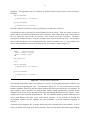
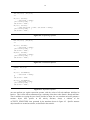
The translator implements control flow among ASL activities by generating appropriate conditions and
effects for the corresponding MSL rules. The examples in figures 4-2, 4-3 and 4-4 each show an activity
structure definition, followed by the rules similar to those that will be generated by the ASL translator. In
these examples, state1 and state2 are internal status attribute names automatically generated for the
translator; SO is always used as the name of the object representing the current activity structure. These
examples have been simplified for presentation. The ASL translator actually generates additional rules
where state0 indicates the status of the entire activity structure. It also includes no_forward and
no_backward directives on the condition and effect predicates, to prevent automatic triggering of
activities.
A structure object argument, SO, is always added to the rule’s argument list by the translator. Its class
name corresponds to the name of the activity structure. Each structure object class defines approximately
14
foo: A1[?a:C] ; A1[?a:C]
==>
A1[?a:C, ?SO:foo]:
: (SO.state1 = Ready)
{ A1 activity body... }
(SO.state1 = Done);
A1[?a:C, ?SO:foo]:
: (and (SO.state1 = Done) (SO.state2 = Ready))
{ A1 activity body... }
(SO.state2 = Done);
Figure 4-2: Sequencing Operator
bar: A1[?a:C] | A2[?b:D]
==>
A1[?a:C, ?SO:bar]:
: (SO.state1 = Ready)
{ A1 activity body... }
(SO.state1 = Done);
A2[?b:D, ?SO:bar]:
: (SO.state1 = Ready)
{ A2 activity body... }
(SO.state1 = Done);
Figure 4-3: Alternation Operator
mumble: A1[?a:C]*
==>
A1[?a:C, ?SO:mumble]:
: (SO.state1 = Ready)
{}
(SO.state1 = Done)
A1[?a:C, ?SO:mumble]:
: (SO.state1 = Done)
{ A1 activity body... }
(SO.state1 = Done);
Figure 4-4: Repetition Operator
one state attribute per regular expression operator, with the values of all such attributes initialized to
Inactive. This is done with an enumerated type, consisting of the three values Inactive, Ready and Done.
Thus in addition to copying the MSL classes provided as input, the ASL translator must also generate a
structure object class specific to the activity structure, always a subclass of the
ACTIVITY_STRUCTURE class generated by the translator (shown in figure 4-5. Specific structure
object instance are created at run-time, as described in the section 6.
15
ACTIVITY_STRUCTURE :: superclass ENTITY;
state0: (Ready,Done,Inactive,Active,Terminated) = Ready;
as_string: string;
owner: user;
clientID: clientid;
atomic_lock: (Shared,Exclusive,None) = None;
lock_counter: integer = 0;
end
Figure 4-5: ACTIVITY_STRUCTURE Superclass
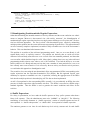
5. Disambiguating Nondeterministic Regular Expressions
Other than determining the intended semantics of activity structures and the recent confusion over what it
means to integrate "MARVEL’s data-centered view with activity structures", the disambiguation of
nondeterministic regular expressions has been our single greatest challenge as well as time-sink. We have
tried two different approaches. The first involved a non-deterministic parse, effectively maintaining
multiple position pointers into the current AS instance representing all possibilities. This approach turned
out to be extremely complex to implement, but enabled a fairly reasonable user view of the environment’s
behavior. This was abandoned after immense effort.
This problem is an artifact of the rule-based programming model. Once we set a state Ready, it will
remain Ready until it is explicitly removed. Our problem was basically that we could not tell the
difference between Ready states that were set as a result of the last command performed, and those that
were set earlier, which should no longer be valid. More clearly, perhaps, there is no way in the rule-based
programming model to detect cases where a rule is NOT matched. If we had the ability to set a state
Inactive whenever it is Ready and some activity that is not a member of some particular set is run, or to
have a Ready state revert to Inactive if it is not used by the next activity run from the activity structure,
we could make this approach to disambiguation work.
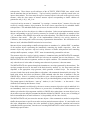
The second involves converting the non-deterministic finite state automaton (NFSA) corresponding to the
regular expression into the equivalent deterministic FSA (DFSA). But this approach requires extra
machinery to represent a reasonable user view, in particular, reflecting the aggregate state of the DFSA
back into the multiple positions in the underlying AS. This has not been implemented.
An AS is first translated to the corresponding NFSA (actually, it is not technically an NFSA due to the
presence of shuffle expressions with non-atomic activities). This NFSA is converted to a DFSA using a
standard algorithm. Then the DFSA is used to generate the control conditions and effects for the
activities.
6. Shuffle Expressions
For clarity in presentation, we have made the shuffle operator an N-ary prefix operator rather than a
binary infix operator. Thus the administrator must write "A&B&C" as "&(A,B,C)". The following
terminology is used in this document: A ‘‘shuffle expression’’ consists of a shuffle operator and two or
more operands. A ‘‘shuffle subexpression’’ or ‘‘shuffle child’’ is an operand of a shuffle expression.
The translator generates a new class for each distinct top-level activity structure and for each shuffle
16
subexpression. These classes are all subclasses of the ACTIVITY_STRUCTURE class, which is built
into the translator (but not into MARVEL). Top-level activity structures are explicitly named in the ASL
input to the translator. The class name for top-level structure objects is the same as the top-level activity
structure, while the class names of internal structure objects corresponding to shuffle children are
generated as AS_0, AS_1, AS_2, etc.
A top-level activity structure is ‘‘instantiated’’ by creating a ‘‘structure object’’ instance of its class and
recursively creating structure object instances for all the classes represented by its embedded shuffle
subexpressions. The embedded shuffle expressions are also then said to be instantiated.
Structure objects are first class objects in a MARVEL objectbase. In the current implementation, structure
objects corresponding to top-level activity structures are located in the objectbase as members of the
‘‘as’’ set attribute of the GROUP object at the root of the objectbase. The GROUP class is defined in the
C/MARVEL data model. (This part of the implementation effectively ties activity structures to
C/MARVEL, and at some point it will be necessary to parameterize the translator. We will also have to fix
MARVEL itself, which has GROUP hard-wired as its root class.)
Structure objects corresponding to shuffle subexpressions are members of a ‘‘childrenXXX’’ set attribute
of the structure object representing the immediately containing the shuffle expression. Since this
structure object may represent a top-level activity structure or shuffle subexpression itself containing
multiple shuffle operators, a unique ‘‘XXX’’ name is automatically generated for each one.
The structure object for a top-level activity structure is instantiated using the INSTANTIATE command,
which corresponds to the INSTANTIATE rule built into the translator (but not into MARVEL). This
INSTANTIATE rule takes no arguments, and has no explicit condition. The command could be selected
only when the user is in the midst of enacting some other activity structure, it does not matter.
The INSTANTIATE rule operates through the instantiate.env envelope (generated by the translator). The
envelope prompts the user for the name of the desired activity structure (i.e., the class name), and then
dispatches to the appropriate script generator, which generates a tailored script. The envelope then
executes a batch client on the current MARVEL objectbase, with commands determined by this script. The
batch script selects the built-in (to MARVEL) ADD command when the focus of attention is the root
GROUP object. Since it is currently not possible to pass a literal argument to a rule, the name of the
desired activity structure (and hence its class) has to be provided through the prompt from the envelope.
The prompt appears in the MARVEL ‘‘start-up’’ window (i.e., the X window — or the console — from
which the user started up her MARVEL client).
If the ADD command is used directly by the user to create a structure object, the result is undefined. It is
not immediately clear how to force MARVEL to prevent this. Overloading the ADD command seems
dubious given that the object argument would be a GROUP object rather than a structure object, but we
do not want to prevent using this command to add other children of GROUP. (In any case, overloading of
built-in commands does not work in MARVEL 3.0, but probably will in a later version.)
The INSTANTIATE rule just creates the structure objects. Other commands are needed to assign all the
shuffle subexpressions to specific users and to activate particular structure objects. It is not feasible to do
this in the instantiation envelope, due to the problems of choice (alternation, repetition) and recursion
(embedded shuffle expressions), since the user executing INSTANTIATE is often not the same user who
should assign specific tasks.
17
A shuffle subexpression may be ‘‘assigned’’ to a particular user as her task. The ASSIGN command
initiates a shuffle expression and associates one of the shuffle subexpressions with a particular user. An
owner attribute is included in each structure object class, and set through the effect of the ASSIGN rule.
The get_user.env envelope prompts for the userid. The parent structure object is automatically provided
as the last argument by the run-time support.
Once an assignment has been done, it stays in effect until the termination of the structure object (or
deactivation in the case of top-level). Absolutely everyone has the authority to make an assignment,
assuming there is no current assignment. Thus it would be best for the manager to assign a structure
object immediately after instantiating it (before anyone else is likely to know it exists). We made this
design decision because a fancy authorization scheme would take a lot of time and is not related to the
main goals of the project. Similarly, we do not allow assignment of a task to a group of users, any of
whom might undertake any portion of the task. This is another bell or whistle.
A shuffle subexpression is basically a regular expression, although possibly containing embedded shuffle
expressions. Ignoring embedded shuffle expressions for now, the translator generates a set of rules to
enact a shuffle subexpression by simulating a finite state automaton. The special ‘‘state0’’ attribute of the
corresponding structure object has the value Ready when the FSA is in its initial state and the value Done
when it is in a final state. Epsilon transitions in the FSA are implemented by inferencing rules, and all
other transitions are implemented by activation rules. When a structure object is created, i.e., instantiated,
its state0 attributes are initialized to a third value, Inactive. The state0 attribute is defined in the
ACTIVITY_STRUCTURE class, and is thus inherited by all structure object classes.
To put an instantiated and assigned structure object into its initial state, i.e., to set state0 to Ready, it is
necessary to ‘‘activate’’ the structure object. Until a structure object has been activated, it is not possible
to perform any of the activities in its corresponding activity structure or shuffle subexpression. The
activation process must be performed by the client intended to enact the corresponding activity structure
or shuffle subexpression. A top-level activity structure is always executed by one particular client, as is a
shuffle subexpression. (It is possible to explicitly change the client binding in mid-stream, as discussed
later on.)
The ACTIVATE command corresponds to a rule generated by the translator. The user must provide as an
argument the relevant structure object in the objectbase. The rule’s condition checks that the CurrentUser
is the user assigned to the task and the myclient attribute of the structure object is currently ResetClient
(i.e., null). The effect sets myclient’s value to CurrentClient, as well as setting state0 to Ready. The
condition should also check that the current client is not already enacting some other structure object.
This might be done by checking that forall structure objects (in the entire objectbase, not just the top-level
children of GROUP), the myclient attribute is not equal to CurrentClient. When activating a structure
object corresponding to a shuffle subexpression, the rule’s condition should check that the stateXXX
attribute for the enclosing shuffle expression is Active.
It is currently unclear what it would mean for a client to execute in the context of multiple activity
structures. This is particularly problematical when the client that instantiated the enclosing shuffle
expression is intended to enact one of its subexpressions. It is not the case, however, that the same user
cannot enact both a shuffle expression and one of its subexpressions, since the same user may control
multiple clients in different windows.
18
After a top-level activity structure or a shuffle subexpression has completed, the user should signal this by
‘‘terminating’’ the structure object. When all subexpressions of a shuffle expression have been
terminated, the state attribute for the shuffle expression is automatically set to Done (with respect to the
encompassing regular expression). Termination may be accomplished any time after the state attribute
changes by explicitly selecting the TERMINATE command. This corresponds to a TERMINATE rule
generated by the translator. Its only argument, the current structure object, is automatically provided by
the run-time support. The rule’s condition checks that the state0 attribute is Done, meaning the structure
object is in a final state (this check might trigger backward chaining through inferencing rules that set this
attribute to Done). The effect sets the current structure object’s state0 attribute to Terminated, and
reinitializes the owner and myclient attributes to ResetClient.
The INSTANTIATE, ASSIGN, ACTIVATE and TERMINATE rules intended to correspond to user
commands should have their condition predicates indicated no_forward and their effect predicates
indicated no_backward, so they are never automatically triggered without a user command. For example,
the TERMINATE command must inherently be explicit, never automatically triggered, because of the
ambiguity of final states for repetitions.
A previously instantiated, assigned, activated and terminated structure object can be ‘‘reused’’ by
activating it again. The termination condition in the examples of the next section removes the user
assignment, requiring an intermediate ASSIGN command, but this is not necessary. This approach
supports repetitions, as well as simply reenacting an entire top-level activity structure.
6.1. Shuffle Expression Translation
Let’s consider some examples. The simplest case of
<name>: &( A[?a:X], B[?b:Y], C[?c:Z] )
is shown in figure 6-1. Notice that the particular activity structure to instantiate is embedded in the name
of its INSTANTIATE command. An alternative approach would be to prompt the user for the class name
(<name>) in the body of the envelope. The hide directive prevents a rule from being displayed in the
user’s command menu. This is for internal rules intended only for chaining, as part of the ASL
implementation, not for direct user invocation. This is also generally useful for MSL. The hide rules are
available when one runs MARVEL as an administrator, for debugging purposes.
Instantiate[]:
:
{ INSTANTIATE instantiate }
;
Activate [?SO:ACTIVITY_STRUCTURE]:
(forall ACTIVITY_STRUCTURE ?s suchthat (?s.as_string <> ResetUser))
:
(and no_backward(?SO.owner = CurrentUser)
no_backward(?s.clientID <> CurrentClient))
{ }
no_forward(?SO.clientID = CurrentClient);
Terminate [?SO:test]:
:
(and no_backward(?SO.clientID = CurrentClient)
no_forward(?SO.active = Done))
{ }
(and no_backward(?SO.active = Terminated)
19
no_forward(?SO.clientID = ResetClient)
no_chain(?SO.state1 = Inactive)
no_chain(?SO.state2 = Inactive)
no_chain(?SO.state0 = Ready));
Terminate [?SO:AS_0]:
:
(and no_backward(?SO.clientID = CurrentClient)
no_forward(?SO.active = Done))
{ }
(and no_backward(?SO.active = Terminated)
no_forward(?SO.clientID = ResetClient)
no_chain(?SO.state0 = Inactive)
no_chain(?SO.state1 = Inactive));
Terminate [?SO:AS_1]:
:
(and no_backward(?SO.clientID = CurrentClient)
no_forward(?SO.active = Done))
{ }
(and no_backward(?SO.active = Terminated)
no_forward(?SO.clientID = ResetClient)
no_chain(?SO.state0 = Inactive)
no_chain(?SO.state1 = Inactive));
Terminate [?SO:AS_2]:
:
(and no_backward(?SO.clientID = CurrentClient)
no_forward(?SO.active = Done))
{ }
(and no_backward(?SO.active = Terminated)
no_forward(?SO.clientID = ResetClient)
no_chain(?SO.state0 = Inactive)
no_chain(?SO.state1 = Inactive));
hide finish_7 [?SO:test]:
:
(?SO.state2 = Inactive)
{ }
no_forward(?SO.active = Inactive);
hide finish_6 [?SO:test]:
:
(?SO.state2 = Ready)
{ }
no_forward(?SO.active = Done);
Assign [?child:AS_2, ?SO:test]:
:
no_forward(?SO.state0 = Ready)
{ ASSIGN get_user return ?uA }
no_backward(?child.owner = ?uA);
Assign [?child:AS_1, ?SO:test]:
:
no_forward(?SO.state0 = Ready)
{ ASSIGN get_user return ?uA }
no_backward(?child.owner = ?uA);
Assign [?child:AS_0, ?SO:test]:
:
no_forward(?SO.state0 = Ready)
{ ASSIGN get_user return ?uA }
no_backward(?child.owner = ?uA);
hide all_terminated [?SO:test]:
(forall ACTIVITY_STRUCTURE ?child suchthat (member [?SO.children1 ?child]))
:
20
(and (?child.active = Terminated)
(?SO.state1 = Ready))
{ }
(and (?SO.active = Inactive)
(?SO.state1 = Inactive)
(?SO.state2 = Ready));
hide all_assigned [?SO:test]:
(forall ACTIVITY_STRUCTURE ?child suchthat (member [?SO.children1 ?child]))
:
(and (?child.owner <> ResetUser)
(?SO.state0 = Ready))
{ }
(and (?SO.active = Active)
(?SO.state0 = Inactive)
(?SO.state1 = Ready));
hide finish_5 [?SO:AS_2]:
:
(?SO.state1 = Inactive)
{ }
no_forward(?SO.active = Inactive);
hide finish_4 [?SO:AS_2]:
:
(?SO.state1 = Ready)
{ }
no_forward(?SO.active = Done);
C [?set_c:Z, ?SO:AS_2]:
:
no_forward(?SO.state0 = Ready)
{ }
(and (?SO.state0 = Inactive)
(?SO.state1 = Ready));
Activate [?SO:AS_2]:
(and
(exists test ?parent suchthat (member [?parent.children1 ?SO]))
(forall ACTIVITY_STRUCTURE ?s suchthat (?s.as_string <> ResetUser))
)
:
(and (or no_forward(?SO.active = Inactive)
no_forward(?SO.active = Terminated))
no_forward(?SO.clientID = ResetClient)
no_forward(?SO.owner = CurrentUser)
no_forward(?parent.active = Active)
no_forward(?s.clientID <> CurrentClient))
{ }
(and no_backward(?SO.clientID = CurrentClient)
no_backward(?SO.state0 = Ready));
hide finish_3 [?SO:AS_1]:
:
(?SO.state1 = Inactive)
{ }
no_forward(?SO.active = Inactive);
hide finish_2 [?SO:AS_1]:
:
(?SO.state1 = Ready)
{ }
no_forward(?SO.active = Done);
B [?set_b:Y, ?SO:AS_1]:
:
no_forward(?SO.state0 = Ready)
21
{ }
(and (?SO.state0 = Inactive)
(?SO.state1 = Ready));
Activate [?SO:AS_1]:
(and
(exists test ?parent suchthat (member [?parent.children1 ?SO]))
(forall ACTIVITY_STRUCTURE ?s suchthat (?s.as_string <> ResetUser))
)
:
(and (or no_forward(?SO.active = Inactive)
no_forward(?SO.active = Terminated))
no_forward(?SO.clientID = ResetClient)
no_forward(?SO.owner = CurrentUser)
no_forward(?parent.active = Active)
no_forward(?s.clientID <> CurrentClient))
{ }
(and no_backward(?SO.clientID = CurrentClient)
no_backward(?SO.state0 = Ready));
hide finish_1 [?SO:AS_0]:
:
(?SO.state1 = Inactive)
{ }
no_forward(?SO.active = Inactive);
hide finish_0 [?SO:AS_0]:
:
(?SO.state1 = Ready)
{ }
no_forward(?SO.active = Done);
A [?set_a:X, ?SO:AS_0]:
:
no_forward(?SO.state0 = Ready)
{ }
(and (?SO.state0 = Inactive)
(?SO.state1 = Ready));
Activate [?SO:AS_0]:
(and
(exists test ?parent suchthat (member [?parent.children1 ?SO]))
(forall ACTIVITY_STRUCTURE ?s suchthat (?s.as_string <> ResetUser))
)
:
(and (or no_forward(?SO.active = Inactive)
no_forward(?SO.active = Terminated))
no_forward(?SO.clientID = ResetClient)
no_forward(?SO.owner = CurrentUser)
no_forward(?parent.active = Active)
no_forward(?s.clientID <> CurrentClient))
{ }
(and no_backward(?SO.clientID = CurrentClient)
no_backward(?SO.state0 = Ready));
Assign [?SO:test]:
:
{ ASSIGN get_user return ?uA }
no_backward(?SO.owner = ?uA);
Figure 6-1: Simplest Shuffle Expression
Notice also that although the three structure object instantiations are grouped into a single envelope,
22
through the script generation mechanism, we do not choose to group the three assignments. This is to
permit separate task assignments, and reassignments (discussed later), but is not mandatory — all
assignments could be done by a single rule with many arguments. The following examples, however,
omit the assignment issue for brevity.
It is not appropriate, however, to similarly group the corresponding three activations, since these are done
on behalf of three different clients. The user-controlled clients must execute the activations themselves,
to associate the correct clientID, so it would not be possible to do this in one or even three batch clients.
There is currently no way in MARVEL to change a batch client invoked on behalf of one user into a
user-controlled client for another user.
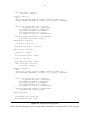
The full text of the embedded case
<name>: D[?d:U]; &( A[?a:X], B[?b:Y], C[?c:Z] ); E[?e:V]
is shown in the appendix.
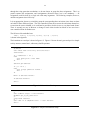
The instantiate.env envelope is shown in figure 6-2. Figure 6-3 shows the test1.gen envelope for a simple
activity structure, named test1, without any shuffle operators.
#!/bin/sh
echo "Enter name of Activity Structure Class "
read ASclass
if [ "x$ASclass" = "x" ]
then
echo "Must pick a class name"
exit 1
fi
$ASclass.gen $ASclass
if [ $? -ne 0 ]
then
echo "Script generator failed."
exit 1
fi
MARVEL -b $ASclass.marvelrc
rm $ASclass.marvelrc
exit 0
Figure 6-2: Instantiation Envelope
#!/bin/sh
#
echo "#!MARVEL script" > test1.marvelrc
ObjName=‘get_as_obj_name test1‘
#
# Top Level Instance
#
echo "add -hi as $ObjName test1" >> test1.marvelrc
exit 0
Figure 6-3: Simple Generation Envelope
23
6.2. Shuffle Expression Runtime Support
The ASL run-time support is in the form of an activity structure manager. This module is linked into the
MARVEL kernel. Its main job is to intercept every command corresponding to a rule and add the client’s
activity structure object, if any, at the end of the argument list. It finds the client’s structure object by the
rather inefficient mechanism of searching through the structure objects in the objectbase until it finds one
whose myclient field matches CurrentClient. This approach works because there is no more than one
structure object at a time per client.
This approach was taken to minimize changes to MARVEL. A more efficient approach might be to extend
the internal context description with administrator-defined fields, which could be specified in MSL in the
form of attributes declared for a new built-in CONTEXT class. If it were also possible to assign links in
the effects of rules, then each client’s context description could be linked directly to its corresponding
activity structure, and thus search would be avoided.
In any case, if there is no structure object activated for the current client, the command will be passed
through as is to the rule processor. This allows activity structure definitions to be mixed and matched
with standard MARVEL rules, and in fact MARVEL rules might even have the same names and parameter
signatures as the rules generated for the activity structure definitions. This works with the current
MARVEL rule overloading support because of the implicit parameter.
There is one significant extension to MARVEL that we do plan for immediate implementation: Originally,
the overloading process returned the single rule that best matches the actual parameters according to
inheritance and subtyping. This has been changed to return all equally close matching rules in a list. In
the main rule processing loop, the condition of the first rule on the list is evaluated, including backward
chaining if one or more predicates are not marked no_chain (or no_backward). But if the condition
cannot be satisfied, then instead of halting at this point the evaluation repeats with the next rule in the list,
and so on.
This change allows multiple rules with the same name and arguments, but different conditions. This new
facility provides a nice means for differentiating multiple occurrences of the identical activity in different
places within an activity structure, where different condition and effects are needed to govern control
flow. An example was shown in the previous section, with "A1; A1".
To complete this change, the MARVEL loader was modified to no longer disallow such rules, which were
previously considered to be ‘‘conflicting’’. (An earlier facility to automatically ‘‘merge’’ the conditions
and effects of multiple rules with the same name, parameters and activities had been removed long ago.)
The MARVEL kernel automatically associates a clientID with each client. This clientID is used within the
server to determine the session context (e.g., its in-progress rule chain). Unfortunately, clientID’s can
currently be reused, through distinct server processes executing at different times for the same MARVEL
objectbase.
This becomes a problem since the ACTIVATE rule involves persistent storage of clientID’s in the
myclient attribute of structure objects. An incidental reuse of a clientID could accidently associate the
corresponding client within an activity structure previously activated by another client, now defunct, that
happened to have the same clientID. The original client might have been explicitly exited, or might have
crashed. Thus it is necessary to guarantee unique clientID’s (for the same MARVEL objectbase) over all
time. This can be done by making the clientID counter persistent, saved within the objectbase directory,
24
rather than transient within the server.
There are several other problems with associating particular clientID’s with structure objects. Most
notably, when a user exits her client or a client crashes, the objectbase retains the previous clientID and
imagines that it is still controlled by that client. To prevent the corresponding structure object from being
left dangling forever, we need an ATTACH command/rule generated by the translator. This would set the
myclient field of the selected structure object to the current client’s ID.
This approach does not afford any protection, however, since an arbitrary client could suddenly take over
from an in-progress client. (There can be only one client per activity structure instance and only one
activity structure instance per client.) We could add a DETACH command, whose rule sets the myclient
field to ResetClient (i.e., null), and then ATTACH would check this condition. But this works only for
the explicit exit case, assuming the user remembers to give the DETACH command, and certainly not for
failure recovery.
It does not seem possible to solve this problem without augmenting the run-time support. In particular,
the MSL rule language could be extended to provide an operator that checks whether a given client ID
(from a myclient attribute) is a member of the set of currently active clients (ActiveClients).
Alternatively, the ATTACH (and perhaps also DETACH) commands could be explicitly included in the
run-time support rather than generated by the translator, but this seems overly intrusive on the MARVEL
kernel — and in any case the active clients check might be useful for other applications. Note that
DETACH/ATTACH take the place of the previously discussed RESUME/SUSPEND commands.
ATTACH and DETACH rules are shown in figure 6-4.
Attach [?SO:ACTIVITY_STRUCTURE]:
(forall ACTIVITY_STRUCTURE ?s suchthat (?s.as_string <> ResetUser))
:
(and no_chain(?SO.owner = CurrentUser)
no_chain(?s.clientID <> CurrentClient))
{ }
no_forward(?SO.clientID = CurrentClient);
Detach [?SO:ACTIVITY_STRUCTURE]:
:
no_chain(?SO.clientID = CurrentClient)
{ }
no_forward(?SO.clientID = ResetClient);
Figure 6-4: Attach and Detach Rules
It might also be useful to have a DEACTIVATE command, as shown in figure 6-5, which resets a
structure object to the same state as the ACTIVATE command — but without requiring previous
termination. In a real rule within the context of an activity structure, there would be several predicates
setting all the ‘‘stateXXX’’ attributes except state0 to Inactive. The DEACTIVATE command is very
dangerous, since there are no conditions. It works as a catch-all to get out of any problem, but if used
arbitrarily might create more problems than it solves. Realistic failure recovery and general robustness
issues are outside the scope of this project.
Here is an activity structure describing the appropriate usage of these activity structure management
commands with respect to a single activity structure instance. Each concurrent repetition would be over a
25
Deactivate [?SO:test3]:
: no_backward(?SO.clientID = CurrentClient)
{ }
(and no_backward(?SO.active = Inactive)
no_forward(?SO.clientID = ResetClient)
no_chain(?SO.stateXXX = Inactive)
no_chain(?SO.state0 = Ready));
Figure 6-5: Deactivate Rule
distinct instance.
(( instantiate; &((assign | epsilon), (bind)*); activate;
((detach | epsilon); attach)*; (terminate | deactivate) )*;
delete)#
7. Synchronization in Shuffle Expressions
Now let’s consider the possibility of SEND and RECEIVE activities, where each SEND should be
matched by a RECEIVE in some other descendent subexpression of their parent shuffle expression. It is
important to point out that we have no intention of introducing actual interprocess communications
among clients, since such an approach would be seriously at odds with the MARVEL client/server
architecture. Instead, the SENDs and RECEIVEs must be virtual, through operations on the shared
objectbase to which all clients are connected.
SEND and RECEIVE pairs are matched according to syntax in the original activity structure definition
that indicates ‘‘channels’’. Each channel is represented in the objectbase by a distinct attribute of the root
structure object (of the enclosing activity structure). Its value operates as a semaphore.
Both SENDs and RECEIVEs are treated as entirely asynchronous, since it is not reasonable to block the
human user who selects either command. This is easiest for SEND, since the user can give this command
at any time (permitted by the enclosing regular expression) and then go on to her next activity. But the
RECEIVE user must implement her own busy-wait loop, to retry RECEIVE repeatedly until there is a
matching SEND. Only after the match can she continue to the next activity in the sequence, although in
the case of where the RECEIVE is one alternative of an alternation, the other alternative could be
attempted instead. (Also, the user can carry out unrelated activities not mentioned in the top-level activity
structure.)
To ameliorate the problem of receive busy-waiting, we added a notification scheme. This is done by
generating a second rule for each occurrence of send and receive. In the receive case, the condition of the
second rule checks that a matching send had not already been selected. In this case, the envelope adds the
email address of the current user to the end of a file (this assumes an email attribute in the corresponding
user object — or the owner field of the current structure object could be used). In the send case, the
condition would check whether there had previously been a matching receive. If so, the envelope would
send mail to the first email address in the file and delete this line from the file. Alternatively, the
envelope could send mail to all the email addresses in the file, and clear the file. Then these users could
race to execute RECEIVE, with one winner and the others added back to the file. The latter approach has
been followed.
One approach to selecting the SEND and RECEIVE commands would require the users to find and select
26
the correct channel object in the objectbase (using objects rather than attributes). Our alternative
approach provides for a distinctly named SEND command for each channel, and likewise for RECEIVE.
The generated rules find the appropriate channel attribute of the root structure object. The user does not
need to give any argument, since the current structure object is provided automatically by the run-time
support and the root is reached via forward chaining. The channels could be named or numbered by the
administrator, and given in the ASL input via use of ‘‘SEND XXX’’ and ‘‘RECEIVE XXX’’ activities.
We use numbers, as done in the original activity structure work.
7.1. Synchronization Translator
The example in figure 7-1 uses a counting semaphore, to allow multiple senders and receivers on the
same channel.
The send.env and receive.env envelopes are used for the notification.
7.2. Synchronization Runtime Support
The MARVEL kernel supports rule ‘‘overloading’’, meaning that there may be any number of rules with
the same name (e.g., edit an object of this type, edit an object of that type). But rules with the same name
normally have different parameters and/or conditions. In the case of different parameters (i.e., number
and types — types of rule parameters are always classes rather than built-in types or sets), the rule
resolution mechanism normally returns the closest match using multi-method inheritance and subtyping.
However, there may be multiple rules that are equally ‘‘close’’ by the definition above, but with different
conditions. The resolution mechanism returns all such rules. These rules are considered in some order,
and the first one whose condition can be satisfied through backward chaining is executed.
8. Atomic and Non-Atomic Activities
The default is for an activity to be non-atomic, meaning that other activities can be performed
concurrently by other clients. This reflects the practical reality of long-duration activities such as edit and
compile.
But it is sometimes desirable for an activity to be atomic with respect to other activities within the same
top-level activity structure. An alternative would be atomicity with respect to all other activities on the
same objectbase (i.e., the same MARVEL environment), but this was not implemented. Note that
atomicity is meaningful only in activity structures containing shuffles operators (or concurrent repetition
operators).
Atomic activities are implemented by associating a two attributes with the structure object representing
the top-level AS. One, the ‘‘atomic_lock’’ attribute, has three possible values: Exclusive, Shared and
None. The other, ‘‘lock_counter’’, is an integer.
Before attempting to execute an activity marked as atomic in the activity structure definition, the run-time
support attempts to obtain the lock in Exclusive mode. If this is not possible, because the lock is already
held in either Exclusive or Shared mode, then the activity is dis-allowed. If it is possible to obtain the
Exclusive lock, then the activity is performed and afterwards the run-time support restores the lock to
None.
27
Receive_1 [?SO:AS_1]:
(exists test3 ?root suchthat (ancestor [?root ?SO]))
:
(and no_chain(?SO.state0 = Ready)
no_chain(?root.channel1_semaphore = 0))
{ }
no_backward(?SO.channel1_receive = Waiting);
Receive_1 [?SO:AS_1]:
(exists test3 ?root suchthat (ancestor [?root ?SO]))
:
(and no_chain(?SO.state0 = Ready)
no_chain(?root.channel1_semaphore > 0))
{ }
(and no_backward(?SO.channel1_receive = Ready)
(?SO.state0 = Inactive)
(?SO.state1 = Ready));
hide do_receive_1 [?root:test3]:
(exists ACTIVITY_STRUCTURE ?child suchthat (ancestor [?root ?child]))
:
no_backward(?child.channel1_receive = Ready)
{ }
no_backward(?root.channel1_semaphore -= 1);
hide dont_receive_1 [?root:test3]:
(exists ACTIVITY_STRUCTURE ?child suchthat (ancestor [?root ?child]))
:
no_backward(?child.channel1_receive = Waiting)
{ RECEIVE recv_wait "1" }
no_chain(?root.channel1_waiting += 1);
hide after_receive_1 [?child:ACTIVITY_STRUCTURE]:
(exists test3 ?root suchthat (ancestor [?root ?child]))
:
(and (or no_backward(?child.channel1_receive = Ready)
no_backward(?child.channel1_receive = Waiting))
no_chain(?root.channel1_semaphore >= 0))
{ }
no_chain(?child.channel1_receive = Done);
Send_1 [?SO:AS_0]:
:
no_forward(?SO.state0 = Ready)
{ }
(and (?SO.channel1_send = Ready)
(?SO.state0 = Inactive)
(?SO.state3 = Ready));
hide do_send_1 [?root:test3]:
(exists ACTIVITY_STRUCTURE ?child suchthat (ancestor [?root ?child]))
:
no_backward(?child.channel1_send = Ready)
{ SEND send_waiting "1" }
no_backward(?root.channel1_semaphore += 1);
hide after_send_1 [?child:ACTIVITY_STRUCTURE]:
(exists test3 ?root suchthat (ancestor [?root ?child]))
:
(and no_backward(?child.channel1_send = Ready)
no_backward(?root.channel1_semaphore > 0))
{ }
no_chain(?child.channel1_send = Done);
Figure 7-1: Send and Receive Rules
28
In order to guarantee atomicity with respect to non-atomic activities as well as other atomic activities, it is
necessary that all non-atomic activities obtain the lock in Shared mode. If the lock is in None mode, the
run-time support sets the lock to Shared and increments the lock_counter from 0 to 1. When a nonatomic activity ends, the lock_counter is decremented. If it is now 0, the lock is restored to None. Thus
an atomic activity cannot begin if one or more non-atomic activities are already in progress. Both Shared
and Exclusive locks are obtained after the condition has been evaluated and any new bindings done, but
before beginning execution of the activity envelope.
An activity is indicated as atomic by the atomic keyword, as follows:
<name>: &( atomic A[?a:X], B[?b:Y])
In this example, A is atomic and B is non-atomic.
There is no notion of blocking in order to wait for a lock. Only the condition of the rule is executed, and
failure to subsequently obtain the lock simply prevents the actual activity part of the rule from being
initiated.
Different occurrences of the same activity A (with the same parameters) in an AS cannot be an arbitrary
mixture of atomic and non-atomic. As explained in the section 5, disambiguation results in effectively
merging multiple occurrences of the same activity when it is not possible to distinguish the states at this
point in the recognition process. Thus it is necessary that all merged occurrences are atomic, or all are
non-atomic. This is enforced by the translator.
9. Binding Data to Activity Structures
The basic issue is that an instance of an activity structure should be recognized with respect to a particular
data item, or set of related data items, rather than with respect to an objectbase. The problem becomes
clear by considering the example
( edit[CFILE]; compile[CFILE] )*
Say an edit is applied to CFILE X. Then its AS instance should be matched against a compile applied to
CFILE X, not to say, CFILE Y.
This simplistic explanation is misleading, however, since it is rare that practical ASs would be applied
only to a single data item. Consider
( edit[HFILE]; compile[CFILE] )*
where the intent is to compile a CFILE that includes the HFILE. The arguments of the two activities are
not the same data item, and may not even be attributes of the same composite object since arbitrarily
many HFILEs including standard libraries may be included by a CFILE.
Actually, it is probably desirable to recompile all the CFILEs that include this HFILE, not just one. The
appropriate AS is
( edit[HFILE]; (compile[CFILE])* )*
But here the CFILE must be different on each iteration of the compile.
Our approach is to add parameter names as well as types to the activity structures, to indicate ‘‘bindings’’
of data items. The formal parameter names are hereafter called symbols. Bindings would be implemented
by associating a symbol table with each root structure object, an instance of a named activity structure
class. The symbol table is represented by a collection of link attributes, with the name of each attribute
identifying the corresponding symbol. Those symbols that can take on multiple values, as in the
29
HFILE/CFILE example above, would be represented by set attributes linking to all objects permitted as
actual parameters. (Bindings are handled in a slightly different way when we consider concurrent
repetition in a later section, to permit different bindings in different repetitions.)
Consider the simplest example:
foo: ( edit[?C:CFILE]; compile[?C:CFILE] )*
The symbol table for the AS instance would consist of exactly one entry, C. To apply this particular
instance to a particular CFILE, O, the user would have to first instantiate the foo AS using the
INSTANTIATE command described in the previous document, creating a structure object named
something like foo1. Then the AS is assigned to a particular user with the ASSIGN command and
activated with respect to a particular client controlled by that user with the ACTIVATE command. This
process does not, however, undertake the binding. (Actually, the assignment could be optional. The
condition of the activate rule would check whether or not the desired structure object had been assigned;
if so, then the condition would require the current user to be the one assigned (or a member, if this is done
as a set), but if not, then any user can activate.)
In order to execute edit or compile with respect to the client’s current structure object, it is necessary to
bind some object to C. The user would bind the O object to foo1 using a new BIND command to install a
link from the C attribute of foo1 to the selected object O (it was necessary to add assignments to links in
the effects of rules in order to support BIND). From this point on (until the link is changed) all edits and
compiles are governed by this AS to be restricted to O. Edits and compiles on other objects remain
unaffected. Additional structure objects for the same AS would have to be instantiated, assigned, bound
and activated in order to constrain them. A client can have only one activated structure object at a time,
but assigned and previously activated structure objects can be detached and attached to change between
them as desired.
Now consider
bar: ( edit[?H:HFILE]; (compile[multiset ?C:CFILE])* )*
The symbol table consists of two entries, H and C, with C represented as a set — indicated by the
multiset option. Representing C as a single value would imply that only one CFILE could include the
HFILE, which is not practical. The user would have to bind the H attribute of the client’s current
structure object before editing it, and would have to bind the C set attribute accordingly before compiling
each CFILE, in order to associate these edits and compiles with that AS instance.
There is a difficulty with binding set attributes, because this cannot be done in a single command —
MARVEL does not have any way of allowing a variable number of arguments. Instead, there must be
multiple invocations of the BIND command for each member of the set, and it must be indicated which of
possibly many set symbols (or other symbols) is intended.
The latter might be accomplished by prompting the user in the envelope, but it would be easier from an
implementation standpoint to have multiple distinct rules for each symbol. Thus the BIND rules
generated by the translator would be named distinctly, in the form BIND-classname-symbolname, where
the classname is the name of the top-level activity structure (this will not work for concurrent repetitions,
discussed in section 12, since separate bindings must be made for distinct repetitions). Alternatively, we
could have names of the form BIND-symbolname, with the classname distinguished by the class of the
actual argument (i.e., normal overloading resolution). We chose the latter, to avoid a user menu filled
with an immense number of BIND-xxx commands.
30
The ASL translator would generate the following BIND and UNBIND commands from the bar input. An
UNBIND must be done after a BIND in order to accomplish a later (re)BIND. This does not have to be
enforced in the conditions of rules, because the underlying implementation gives an error message if one
attempts to link a single-valued attribute that is already linked. (In the case of a multi-valued attribute, the
link is added if it is not already there.) The relevant rules are shown in figure 9-1.
<name>: ( edit[?H:HFILE]; (compile[multiset ?C:CFILE])* )*
==>
Unbind_C [?SO:<name>]:
(exists CFILE ?C suchthat (linkto [?SO.C ?C]))
:
{ }
(unlink [?SO.C ?C]);
Bind_C [?C:CFILE, ?SO:<name>]:
:
{ }
(linkto [?SO.C ?C]);
Unbind_H [?SO:<name>]:
(exists HFILE ?H suchthat (linkto [?SO.H ?H]))
:
{ }
(unlink [?SO.H ?H]);
Bind_H [?H:HFILE, ?SO:<name>]:
:
{ }
(linkto [?SO.H ?H]);
Unbind [?SO:<name>]:
(and
(exists CFILE ?C suchthat (linkto [?SO.C ?C]))
(exists HFILE ?H suchthat (linkto [?SO.H ?H]))
)
:
{ }
(and (unlink [?SO.H ?H])
(unlink [?SO.C ?C]));
Bind [?H:HFILE, ?C:CFILE, ?SO:<name>]:
:
{ }
(and (linkto [?SO.H ?H])
(linkto [?SO.C ?C]));
Figure 9-1: Bind and Unbind Rules
It would of course be better to have only a single overloaded BIND name, with the symbolname provided
as a literal (string) argument by the user. The problem is that MARVEL currently does not support any
arguments to commands that are not objects. Adding literal arguments sounds easy, but would be
amazingly complex because we would have to radically change our entire approach to preprocessing
31
commands in the client and shipping them to the server. This may be done for MARVEL 3.1, since literal
arguments would be nice to have (literal arguments are already permitted for activities themselves, but
must be hardwired into the corresponding rules, since there is no way to pass them into rules). The single
UNBIND command unbinds all the parameters.
9.1. Dynamic Binding
The above describes a static binding process, where all possible parameters must be determined in
advance by the user prior to activation of an activity structure instance. Binding can be restricted to occur
only before an activation and between a later deactivation and a future activation by adding yet another
flag to the conditions and effects of BIND, ACTIVATE and DEACTIVATE rules. Note that this prevent
intermediate BIND commands that might override the dynamic bindings explained below. (Actually,
there is nothing preventing the user from changing the bindings at any time using the normal built-in link
command, since MARVEL does not currently support overloading of built-in commands to add a condition
to prevent this. Such a facility might be added in MARVEL 3.1.)
We believe static binding alone provides a poor user interface. We therefore augment this mechanism
with a dynamic binding process, so that some symbols might be bound in advance but others could be
determined on the fly according to the needs of the user.
We therefore add the set and use options to parameters. In
foo: ( edit[set ?C:CFILE]; compile[use ?C:CFILE] )*
an edit command applied by the user to a particular CFILE would check whether the current SO already
had its C binding set. If so, then the system enforces whether the current argument is the same as the
bound one. An edit on another CFILE could not be applied in the context of this particular SO. If,
however, the C binding were not already set, then the edit command would implicitly set the binding to
the argument provided by the user. All future occurrences of edit with respect to this SO would find the C
symbol already bound. If the edit is permitted to occur in the context of the SO, the SO’s state is
advanced to indicate a compile command is expected.
When the user enters the compile command for a particular argument, the use option indicates that the C
binding must already have been set. If the argument is the same as the one bound, then the compile
occurs in the context of the current SO, advancing its state to expect another edit. If the argument is not
the same as the one bound, or if there is as yet no binding, then the compile can occur only outside the
context of this SO.
The notion of ‘‘context of this SO’’ is subtle. A given client may or may not have a currently activated
structure object (SO). If there is no current SO, then there are no restrictions whatsoever on control or
data of activities beyond those defined in the conditions and effects of normal MSL rules. That is, ASL
definitions are not considered in any way. Set, use, etc. options are meaningless when there is no current
SO, and are totally disregarded by the system.
There is a current SO whenever there has been an ACTIVATE command that was not later followed by a
DEACTIVATE, TERMINATE, DETACH (this SO) or ATTACH (to a different SO). Every activity
attempted by the user is considered in the context of the current SO. If the arguments provided by the
user are acceptable considering the bindings of the current SO and the set, use, etc. options employed in
the activity structure definition, then and only then do control restrictions specified in the AS come into
32
play. That is, data restrictions are considered first.
If the arguments provided by the user are not acceptable given the current SO, then the activity may still
be performed (if there is a normal MSL rule defining the activity) but outside the context of any SO. It is
not possible to automatically switch to the ‘‘correct’’ SO. First, such automatic switching among activity
structures would be extremely complicated to present to the user, and in many cases would not be desired
by the user (for the same reasons a lot of computer users do not like DWIM features that automatically do
something apparently at random when a user mistypes a command). Second, there is unlikely to be a
single correct SO since the same data may be bound in multiple SO’s (in fact this is necessary for the
semantics of shuffle operators, since a distinct SO represents each shuffle operand). It would be
necessary to apply the activity in the context of all the correct SO’s, in the sense of control restrictions,
but actually carry out the activity only one time. This would require substantial changes to our current
implementation.
Now consider
bar: ( edit[set ?H:HFILE]; (compile[set ?C:CFILE])* )*
The H parameter is dynamically bound by the first edit with respect to a corresponding SO, and the C
parameter is bound by the first compile. But this does not permit a collection of possible CFILEs, and we
need some additional syntax to indicate that a set attribute is required. Thus we add the multiuse option,
to support
bar: ( edit[set ?H:HFILE]; (compile[multiuse ?C:CFILE])* )*
Note that this example requires the C symbol to have been bound using the static BIND command, since
it is not set in the activity structure definition.
This approach does not permit the case where different bindings can be used on each iteration. Thus we
add the reset option, which should be used instead of set when the administrator writes the activity
structure, in order to indicate this is permitted.
foo: ( edit[reset ?C:CFILE]; compile[use ?C:CFILE] )*
Reset works as follows. The edit command dynamically rebinds C to its current argument, whether or not
C was previously bound (by a previous edit or by BIND). Then the following compile is restricted to this
argument.
We could get a multiset-like effect by employing reset.
bar: ( edit[set ?H:HFILE]; (compile[reset ?C:CFILE])* )*
Each iteration of the compile resets the single C binding, not a set here, to the new CFILE argument. But
this does not permit maintenance of a collection of CFILEs, as desired for the reasons explained above.
Thus a real multiset is desirable, to dynamically add the current argument to the collection only if it is not
already there.
We also add the multireset option, to replace the entire collection by the single new argument provided by
the user. Additional items can still be added through later multiset options. Thus the "multi" component
of the option keyword alerts the ASL translator and run-time support that a set attribute should be used to
represent the binding, rather than a single-valued attribute.
To get the effect of a ‘‘don’t care’’ option throughout an activity structure, the reset option may be used
with all symbols.
When ASL strategies import MSL strategies, a conceptual issue arises because the parameters passed in
33
chains do not currently consider the ASL bindings. This issue does not cause an implementation
problem, per se, because rules generated for ASL do not chain into normal MSL rules. This is because we
generally translate into no_forward and no_backward predicates, and the exceptions are special cases
intended for chaining into other generated rules. The exceptions can be distinguished from normal MSL
rules by their extra parameter, which must be an instance of a subclass of ACTIVITY_STRUCTURE.
MSL
Actually, the above is true only when the administrator provides a bare MSL skeleton, with only header
and activity, and no condition and effects. If the administrator includes condition and effects, then the
output MSL rule (let’s call it an ASL rule to lower confusion) will include both the control predicates added
by the translator and it’s original predicates. These predicates might cause it to backward and forward
chain with respect to normal MSL rules imported in other files. There is a subtle problem with this,
because it may turn out that an activity is permitted through an MSL rule when it was not permitted by the
ASL rule. Or, alternatively, that an activity happens twice, once through forward chaining to the MSL rule
and one due to forward chaining into the ASL rule (as described below). Another possibility is that the
ASL rule forward chains into an MSL rule that changes the objectbase to a state such that the ASL rule’s
condition is not satisfied, when it was satisfied before the MSL rule was inadvertently considered first.
The last problem can be solved easily: when more than one rule can be fired, fire first those with the most
parameters. All ASL rules have an extra parameter, the implicit activity structure instance, added by the
translator. Making this ordering a general feature of the MARVEL kernel does not seem to break anything,
and might even be desirable. But the other two problems can only be solved by disallowing import of
MSL rules into ASL files. This seems problematic, we would lose all the C/MARVEL MSL rules needed to
define a realistic C programming process. But there is a solution.
Let’s consider how we might truly integrate activity structures and normal MSL rules, assuming these MSL
rules are included directly in the ASL file rather than imported. Perhaps MSL’s bindings obtained through
dynamic parameter passing could be integrated by treating the ASL bindings as ‘‘constraints’’ on MSL
chaining. Set could still be the default (although we might want to think about this some more). Then a
potential MSL chain would be restricted to obeying the previous ASL bindings. If a particular parameter
passing would violate the bindings, then it wouldn’t happen. But if a parameter passing could set a
previous unbound symbol, it would be a allowed, and this binding would hold for later rules executed in
the context of the then-current SO. Thus only a subset of possible MSL chains would occur.
The above addresses only data restrictions. The current SO further implies control restrictions, based on
the various state variables. In addition to the normal conditions of the MSL rule, the state conditions must
be satisfied in order to execute the rule in the context of the current SO. So even though chaining is
triggered by normal MSL predicates in effects and conditions, the chaining is constrained by the
corresponding activity structure. Again, only a subset of possible MSL chains would occur.
This seems a reasonable interpretation of "integration" of ASL and MSL. And surprise, surprise, this is
what we implemented.
9.2. Run-time Support for Data Bindings
The implementation is rather complicated, because of the way that commands are resolved to rules.
Normally in MARVEL, rules may be overloaded provided there are different signatures and/or conditions
(actually, the support for multiple conditions with the same signature was added due to issues that came
34
up previously in the ASL project, but is also generally useful). The kernel finds the closest matches
considering multiple inheritance and multiple arguments, and the collection of equally close rules is
passed to the rule processor. It considers the conditions one by one, trying to satisfy them via backward
chaining (this is complex due to the interactions with automation versus consistency predicates, and
no_forward, no_backward and no_chain directives on predicates). The rule processor sends to the client
for execution the activity for the first such rule whose condition can be satisfied.
For the ASL run-time support, we have added a capability to automatically add the current SO as the last
parameter, in order to match against rules generated by the ASL translator to enforce the indicated control.
The resolution process is now attempted twice, once with the current SO to find any matching rules when
this argument is considered for the signature, and then if no matching rules are found this argument is
dropped and only the regular MSL rules are considered.
There may be multiple equally close rules with different set/reset options (regular MSL rules are implicitly
set option, since the same syntax is used as this default case, but they would never be executed in the
context of a SO since this parameter does not appear in their signatures). We want to rebind (for reset) or
disavow (for set when the argument does not match the binding) according to the options of a particular
rule only if that rule’s condition is actually satisfied, since otherwise it may actually be another rule in the
equally close collection that will be matched and fired. Further, in the case of disavowal, we want to
consider the equally close collection without the SO argument in the signature. But none of this can be
known until after backward chaining is attempted by the rule processor. (This problem is quite subtle.)
When a command argument does not match the binding of the current SO, then there are two possible
courses of action. The first is to not allow the command to be executed at all. This is what will happen if
that activity is defined in the ASL input file but not in any of the imported MSL files. In this case, the only
corresponding rules will be generated by the ASL translator, with conditions and effects to manipulate the
SO state. Thus a SO argument must be supplied, and it is not possible to execute the activity on
arguments not bound to the current SO.
The second option is to permit the command to be executed, but not affect the state of the SO in any way.
This can be accomplished if an imported MSL file defines its own rules with the same name and signature
as the activity definition. These rules do not require a SO argument. One implication of this option is
that an activity disallowed at this point by the activity structure might actually be allowed because it
matches a normal MSL rule. There is no way to prevent this behavior except to prevent importation of
MSL rules with the same names and parameters as MSL rules contained in the ASL file (to which structure
object arguments will be added). This is not enforced by the ASL transaction, so it is up to the
environment administrator to avoid inclusion of conflicting rules in a MARVEL/ASL environment.
We change the resolution process for ASL to collect the equally close rules both with and without the SO
argument, and concatenate the two lists for presentation to the rule processor. This permits the behavior
where if a command should not be executed with respect to the current SO because its arguments do not
match the bindings, it is still executed but outside this context if it matches a normal MSL rule.
This requires changes to the rule processor, to pass its N+1 arguments to any rules on the list taking N+1
parameters, and only pass the first N for the remaining rules. Another change is that the rule processor
must carry out the bindings in those cases where there is a structure object argument. Set bindings are
processed by first checking whether the symbol is already bound in the SO’s symbol table (i.e., collection
35
of link attributes). If so, then it checks whether the actual parameter to the command is the same as this
bound object. If yes, it continues with the other parameters and then attempts to fire this rule. If not, then
this rule fails and the rule processor goes on to the next possible rule in its list.
Set bindings on a set attribute are processed by checking whether the formal parameter’s set attribute is
already bound to one or more objects. If not, then this rule fails (another rule, with the same symbol and
type as this one but without the special SO parameter, might succeed). If so, then the system checks
whether the actual parameter is a member of this set. If it is, then the rule processor continues with the
other parameters and attempts to fire this rule. If the actual argument is not a member of the bound set,
then the rule fails. Reset (multireset) bindings are processed by replacing (adding) the new argument to
the parameter attribute if not already there.
Once binding processing is completed with respect to a particular rule, the normal MARVEL backward
chaining is initiated to attempt to satisfy the condition. If the condition can be satisfied, the activity is
executed in the client and then the effects asserted in the server.
But if the condition cannot be satisfied, it is necessary to undo any new bindings that were made during
the binding process, before considering the next rule. Otherwise, the chance ordering of rules in the ASL
input file would result in different behaviors, since a failed rule could actually force a change in binding.
Consider the example
foo: ( edit[set ?C:CFILE]; compile[set ?C:CFILE] )*
If a failed rule could permanently set the binding, then executing the compile command on a CFILE O
before doing the edit command would have the side-effect of binding C to O even though the compile
command would not have been executed with respect to the structure object! Of course, the undo process
must not affect any previous bindings, whether static or dynamic, only those considered specifically with
respect to the failed rule.
10. Argument Constraints Across Multiple Activities
One problem with the HFILE/CFILE example above is it does not constrain the CFILEs to be related to
the HFILE in any way. We would like to compile all the CFILEs whose ‘‘includes’’ set attribute links to
the HFILE, but only those CFILEs. Some syntax like the following might be employed:
( edit[?H:HFILE];
(compile[?C:CFILE suchthat (linkto [?C.includes ?H])])* )
However, any a priori binding of the set of possible ?Cs with respect to this activity structure would not
permit co-existence of the following activity structure, with respect to the same or another user.
edit[?D:CFILE]
The issue here is not the C versus D symbol. The problem is that the user can employ this rule to edit a
CFILE in some way to change which particular HFILEs it includes. This should be reflected in the
objectbase by changing the HFILEs linked via the CFILE’s includes set attribute. (Either the end-user
would have to update the links using BIND, or an appropriate set of rules would be needed to update the
links.) But then the previously bound set C for the HFILE activity structure would be wrong. The only
possible repairs are to rebind C, either implicitly or explicitly. This could be handled through either the
static rebinding approach using a BIND command or dynamically using the multireset option on the C
parameter — but now with the actual resets restricted to those CFILEs whose includes attribute already
linked to the object bound to H.
36
We did not have time to design and implement this kind of argument constraint, using structural
information, and limit constraints to employing only the parameter name.
There is also the issue of non-null conditions and effects in the original activity definitions. Non-null
conditions permit expression of additional activity arguments obtained through binding queries from the
command arguments, as well as additional constraints stated in the property list on both formal and
derived parameters. Non-null effects express the multiple possible results of black-box external tools.
The translator supports these by ANDing together the generated bindings and property list of a rule with
the bindings and property list provided by the administrator. The effect generated for a rule is ANDed
with *each* of effects provided by the administrator.
Non-null conditions and effects in the MSL rules provided as part of the ASL file must be used with care,
because it is easy to create a situation where a rule required to continue the activity structure cannot be
executed because its condition requires a predicate that appears in an effect of a rule corresponding to
another part of the activity structure. For example, in
((edit[reset ?h:HFILE] | edit[multiset ?c:CFILE]);
(compile[multiuse ?c:CFILE]))*
it is possible that the recompile of a particular CFILE after a CFILE edit has set the status attributes of the
CFILE in such a way that it cannot be recompiled again after editing an HFILE. The administrator must
take care that the HFILE edit also effects the status attributes in such a way that the compile is re-enabled.
11. User View
All structure objects have a special string attribute, called ‘‘as_string’’, which gives in string form the
corresponding activity (sub-)structure corresponding to that structure object. Printing the structure object
to look at this attribute is the best way for a user to tell one un-activated structure object from another.
Printing the structure object to look at its class name also indicates the name of the corresponding toplevel activity structure, but does not provide useful discrimination among non-root SO’s since the class
names are automatically generated using a counter. The print is displayed in the MARVEL text window,
below the graphical display of the objectbase (i.e., print is a MARVEL built-in command, unfortunately
named, that does not do anything remotely relevant to generating hardcopy).
There is no good way, however, to distinguish between two non-root structure objects at the same level in
the hierarchy if they happen to have the identical activity substructure. Consider
&(A, B, C) | &(A, D, E)
In the internal implementation, the first A structure object is a member of the children1 set attribute and
the second a member of children2. But the MARVEL objectbase displays only the six component objects
in the order A, B, C, A, D, E without any indication of which are members of which attribute. This is
because the current graphics support does not leave any room to display attribute names. (The MARVEL
user interface has a lot of known problems, and this is one that probably will not be fixed even in
MARVEL 3.1.)
For an activated structure object for the current client, the user can display the activity sub-structure as a
string using the SHOW command, which is implemented by the following rule. The current SO argument
is automatically added by the implementation. If there is no current SO, then no such argument will be
provided, and the rule will not be matched. But if the user provides an SO argument explicitly, then there
is no check that this is the current SO; its string is simply displayed.
37
SHOW[?SO:ACTIVITY_STRUCTURE>]
:
{ envelope to display ?SO.as_string }
;
The display is necessarily in the MARVEL startup window (from which the MARVEL client was invoked)
rather than the MARVEL text window. There is no way for an envelope or an external process
implemented any other way to display in the internal (to MARVEL) text window due to the way X works.
It is not possible to show the user a cursor into the activity structure string showing her SO’s current
position, for two reasons. First, there may be multiple possible current positions because of the ambiguity
problem. But we cannot even show all the possible current positions due to the second problem: the
translation from non-deterministic to deterministic FSA inherently loses this information when it
combines multiple states into one. It is possible only to distinguish a superset, i.e., a set of positions that
do include the actually possible ones, but also other positions. This seems more likely to be confusing to
the user than helpful, so we have not attempted to implement it.
12. Concurrent Repetition
The concurrent repetition operator, #, could be handled similarly to the shuffle operator. The top-level
AS is represented by a concurrent repetition object (CR object) rather than a structure object (renamed
shuffle object, still called SO for short). Each occurrence of a CR expression is translated to a new
‘‘CR_n’’ set attribute, where each member of the set is a child CR object representing one of the
repetitions.
The main differences between CR objects and SO objects is regarding instantiation and symbol tables.
By definition, when a structure operator is defined, there is a specific number of known operands. Not so
with concurrent repetition operators. Arbitrarily many operands can be instantiated on the fly. Thus it is
not appropriate to generate the full hierarchy when the top-level activity structure is instantiated. This
recursive process must stop whenever a concurrent repetition operator is encountered, and then zero or
more operands would be explicitly instantiated as needed.
Thus some mechanism is necessary to explicitly instantiate (add) a new CR object to the hierarchy. The
user must be able to name the particular CR expression desired, and then assign and activate the new
instance as previously described for SOs. Persistent counters would be needed for generating object
names, or perhaps the user can be prompted for a human-meaningful name as part of the instantiation
envelope. Different instantiation envelopes must be generated for each occurrence of a CR expression
within a top-level AS.
There is a serious problem with knowing when a CR expression is ‘‘done’’. Consider the following
simple example:
A; (B)#; C
We have already agreed that when a user attempts to initiate the C activity, she is forced to wait until after
all currently activated B’s are done. But the attempt to initiate the C activity should prevent any clients
from activating any new B’s (it is unclear what it means, actually, to deactivate and reactivate a
previously instantiated CR object).
Thus there must be some means to record that some user attempted to start up C, even though that user is
not blocked — and can undertake other activities outside this AS. This would have to be considered in
38
the condition of the activate rule, to prevent further initiations of B’s. This raises the possibility that a
user might ‘‘change her mind’’ about the request for C, and in a good user view would have some way of
removing this recording, so that additional B’s can be permitted.
There is also a problem of assigning users to CR objects. It might be desirable for a managing user to
somehow instantiate a CR expression, and give the set of users expected to instantiate individual CR
subexpressions. Perhaps C could then be pending on all of these users activating and terminating
(deactivating) their CR objects, without other users not in the assigned set being permitted to instantiate
or activate new CR objects for this CR expression. If this approach is taken, there is no ambiguity as to
when the CR expression has ended.
Returning to the problem of symbol tables, the other major distinction between SOs and CRs is that a
distinct symbol table is needed for the subset of symbols used only in that CR (as opposed to in the
surrounding AS). Recall that a single symbol table at the root is sufficient for handling an SO hierarchy.
But now a new symbol table must be associated with each CR object, but with inheritance from any
ancestor CR objects. Distinguishing which particular symbols are employed only within a single CR
expression requires either additional syntax for ASL, or a second pass in the translator.
So binding, whether static or dynamic, must be done within the projected CR hierarchy (i.e., ignoring the
SO hierarchy for the same AS instance). This requires a more involved user view for the static approach,
so the end-user can accurately choose the right CR object for making links. Queries such as asking what
is the current CR object seem warranted, but MARVEL does not currently support ad hoc queries (as
opposed to browsing).
Dynamic binding, on the other hand, is relatively simple — the bindings (characteristic function) clause
of a rule simply searches up the hierarchy for the containing CR object with the right set of link attributes
(representing its symbol table). This means the translator must associate the appropriate link attributes
only with the right CR classes (whose names must be automatically generated, or provided in the ASL
syntax).
Note that although new symbols are generated for each CR object, the entire projected tree of CR objects
shares the same channels. Thus channels are still implemented as attributes of the root, as described in
the previously design document.
The concurrent repetition operator obviously opens many new questions, and we just did not have time to
consider them.
Acknowledgments
Bill Riddle, Brian Nejmeh and Steve Gaede contributed substantially to the contents of this document.
Naser Barghouti also made some helpful suggestions.
References
[Avrunin 86]
George S. Avrunin, Laura K. Dillon, Jack C. Wileden and William E. Riddle.
Constrained Expressions: Adding Analysis Capabilities to Design Methods for
Concurrent Software Systems.
IEEE Transactions on Software Engineering SE-12(2):278-292, February, 1986.
39
[Barghouti 90]
Naser S. Barghouti and Gail E. Kaiser.
Modeling Concurrency in Rule-Based Development Environments.
IEEE Expert 5(6):15-27, December, 1990.
[Barghouti 91]
Naser S. Barghouti and Gail E. Kaiser.
Scaling Up Rule-Based Development Environments.
In 3rd European Software Engineering Conference. Milano, Italy, October, 1991.
In press. Available as Columbia University Department of Computer Science,
CUCS-047-90, January 1991.
[Barghouti 9x]
Naser S. Barghouti.
Concurrency Control in Rule-Based Software Development Environments.
PhD thesis, Columbia University, 199x.
[Ben-Shaul 91]
Israel Z. Ben-Shaul.
An Object Management System for Multi-User Programming Environments.
Master’s thesis, Columbia University, April, 1991.
[Gaede 91]
Steven L. Gaede, Brian Nejmeh and William E. Riddle.
Interim Report Process Management: Infrastructure Exploration Project.
Technical Report 7-48-5, Software Design & Analysis, March, 1991.
[Gisi 91]
Mark A. Gisi and Gail E. Kaiser.
Extending A Tool Integration Language.
In 1st International Conference on the Software Process. Los Angeles CA, October,
1991.
In press. Available as Columbia University Department of Computer Science
CUCS-014-91, April 1991.
[Heineman 91]
George T. Heineman, Gail E. Kaiser, Naser S. Barghouti and Israel Z. Ben-Shaul.
Rule Chaining in MARVEL: Dynamic Binding of Parameters.
In 6th Knowledge-Based Software Engineering Conference. Syracuse NY, September,
1991.
In press. Available as Columbia University Department of Computer Science
CUCS-022-91, May 1991.
[Kaiser 88]
Gail E. Kaiser, Peter H. Feiler and Steven S. Popovich.
Intelligent Assistance for Software Development and Maintenance.
IEEE Software 5(3):40-49, May, 1988.
[Kaiser 90]
Gail E. Kaiser, Naser S. Barghouti and Michael H. Sokolsky.
Experience with Process Modeling in the Marvel Software Development Environment
Kernel.
In Bruce Shriver (editor), 23rd Annual Hawaii International Conference on System
Sciences, pages 131-140. Kona HI, January, 1990.
[Riddle 91]
William E. Riddle.
Activity Structure Definitions.
Technical Report 7-52-3, Software Design & Analysis, March, 1991.
[Sokolsky 91]
Michael H. Sokolsky and Gail E. Kaiser.
A Framework for Immigrating Existing Software into New Software Development
Environments.
Software Engineering Journal , 1991.
In press. Available as Columbia University Department of Computer Science
CUCS-027-90, May 1990.
40
strategy test
input file:
I. Full Example
ASL
imports data_model;
exports all;
objectbase
# EDITOR, in this test example, represents a tool used both for editing
# and for proofreading. The two actions, however, are regarded as being
# separate activities.
FORMATTER :: superclass TOOL;
format : string = format;
end
PRINTER :: superclass TOOL;
spool : string = print;
end
DEBUGGER :: superclass TOOL;
exec : string = execute;
end
BUILD :: superclass TOOL;
build_program : string = build;
end
EDITOR :: superclass TOOL;
editor: string = editor;
proof: string = proof;
end
# COMPILER, in this test example, represents the C compiler.
;
proof[?f:DOCFILE]:
:
{ EDITOR proof ?f.contents ?f.spellfile }
;
# proof[?d:DOCUMENT]:
# :
# { EDITOR proof ?d.assembled }
# ;
(and (?c.compile_status = NotCompiled)
(?c.timestamp = CurrentTime));
(?c.analyze_status = NotAnalyzed)
no_chain (?c.reservation_status = CheckedOut) ;
{ EDITOR editor ?c.contents }
# if the file has been reserved, you can go ahead and edit it
:
(?c.reservation_status = CheckedOut)
edit[?c:CFILE]:
#
#
#
compile [?f:CFILE]:
(forall HFILE ?h suchthat (linkto [?f.ref ?h])):
# if the C file has been analyzed successfuly but not yet compiled,
# you can compile it. The compilation changes the status of the C
# file to either compiled or error.
(or ( ?f.compile_status = NotCompiled)
( ?f.compile_status = Error ))
{ COMPILER compile ?f.contents ?f.object_code ?h.contents }
COMPILER :: superclass TOOL;
compile : string = compile;
end
(?f.compile_status = Compiled);
[?f.compile_status = Error];
assemble [?d:DOCUMENT]:
(and
(forall DOCFILE ?Docf suchthat (member [?d.docfiles ?Docf]))
(exists DOCFILE ?head suchthat (member [?d.header
?head])))
;
exec_prog [?p:PROGRAM]:
:
(?p.build_status = Built)
{ DEBUGGER exec ?p.exec }
(?p.build_status = Built);
(?p.build_status = NotBuilt);
build[?p:PROGRAM]:
(and
(forall MODULE ?m suchthat (member [?p.modules ?m]))
(forall CFILE
?c suchthat (member [?m.cfiles ?c])))
:
(?c.compile_status = Compiled)
{ BUILD build_program ?c.object_code ?p.exec }
ASSEMBLE :: superclass TOOL;
assemble: string = assemble;
end
end_objectbase
rules
format[?f:DOCUMENT]:
:
{ FORMATTER format ?f.assembled ?f.formatted }
;
printdoc[?f:DOCUMENT]:
:
{ PRINTER spool ?f.formatted }
;
edit[?f:DOCFILE]:
:
{ EDITOR editor ?f.contents }
;
edit[?h:HFILE]:
:
{ EDITOR editor ?h.contents }
41
MSL
;
:
{ ASSEMBLE assemble ?head.contents ?Docf.contents ?d.assembled }
objectbase
#
#
#
#
GROUP is the top-level class. An instance of GROUP contains several
projects.
The fact that it is top level is set in the user’s
environment as part of the startup of Marvel. So a Marvel objectbase
can contain several group objects.
activity structure
PROGRAM is important to distinguish from PROJECT. A PROGRAM is a single
executable unit, whereas a PROJECT is a collection of PROGRAMs, and other
entities. PROGRAMs thus contains things like documents, cfiles, modules,
if it is large, and include files.
MODULE :: superclass ENTITY;
archive_status : (Archived,NotArchived) = NotArchived;
afile : binary = ".a";
cfiles : set_of CFILE;
# Typically, Libraries contain several organizational MODULEs, each of which
# contain .c and possibly .h files.
end
LIB :: superclass ENTITY;
archive_status : (Archived,NotArchived) = NotArchived;
modules : set_of MODULE;
# LIB is a shared archive type library. It consists of modules, which in
# turn contain c files. The ultimate representation of a library is a
# .a file, that is, an archive format file.
end
PROGRAM :: superclass ENTITY;
build_status : (Built,NotBuilt,Error) = NotBuilt;
debug_status : (OK,NeedsDebugging) = OK;
docs : set_of DOC;
modules: set_of MODULE;
incs : set_of INC;
exec : binary;
#
#
#
#
end
PROJECT :: superclass ENTITY;
status : (Release,Maintenance,Development) = Development;
archive_status : (Archived,NotArchived) = NotArchived;
build_status : (Built,NotBuilt) = NotBuilt;
libraries : set_of LIB;
programs : set_of PROGRAM;
doc : set_of DOC;
incs : set_of INC;
# PROJECT is an entity that defines much of the structure of a typical
# software project. PROJECTs can contain libraries, binaries, programs
# documents and includes in this example.
end
GROUP :: superclass ENTITY;
build_status : (Built,NotBuilt) = NotBuilt;
projects : set_of PROJECT;
as : set_of ACTIVITY_STRUCTURE;
&((proof[?df1:DOCFILE] | atomic edit[?df1:DOCFILE] |
send 1; receive 2 |
receive 3; proof[?df2:DOCFILE]; send 4)*,
(proof[?df2:DOCFILE] | atomic edit[?df2:DOCFILE] |
send 3; receive 4 |
receive 1; proof[?df1:DOCFILE]; send 2)* );
assemble[?doc:DOCUMENT]
# test1:
#
edit[?doc:DOCFILE];
#
(proof[?doc:DOCFILE] | edit[?doc:DOCFILE])*;
#
proof[?doc:DOCFILE]
# test3:
#
#
#
#
#
#
test2:
(((edit[multiset ?c:CFILE] | edit[multiset ?h:HFILE]);
(compile[multiuse ?c:CFILE])*)* ; build[?p:PROGRAM] ;
(exec_prog[?p:PROGRAM] | epsilon))*
&(
(edit[reset ?a:DOCFILE] ;
( send 1 ; receive 3 ; (edit [reset ?a:DOCFILE] | epsilon))*)
,
(edit[reset ?b:DOCFILE] ;
( send 2 ; receive 4 ; (edit [reset ?b:DOCFILE] | epsilon))*)) ;
assemble[?doc:DOCUMENT] ;
format[?doc:DOCUMENT] ;
printdoc[?doc:DOCUMENT]
(( receive 1 ; proof[use ?a:DOCFILE] ; send 3) |
( receive 2 ; proof[use ?b:DOCFILE] ; send 4))*)
test4: &(
,
end activity structure
Copyright 1991
The Trustees of Columbia University
in the City of New York
All Rights Reserved
Marvel Software Development Environment
file imported into the ASL strategy:
#
#
#
#
#
#
#
#
This strategy contains all the class definitions needed for a typical
C environment. The class definitions are imported by all other
strategies that define various aspects of the process model for
C/Marvel.
strategy data_model
#
#
#
#
# Interface with other strategies. Since this is a basic data model that
# all other strategies import, we don’t specify anything.
imports none;
exports all;
# Class definitions
42
end
# FILE is the generic class for anything that is represented as a unix
# file. There are specializations (subtypes) for CFILE, HFILE and DOCFILE
# in this system.
FILE :: superclass ENTITY;
name : string ;
owner : user;
timestamp : time;
reservation_status : (CheckedOut,Available,Error) = Available;
version : text;
contents : text;
end
# Extra information is needed to record the state of compilation and
# analysis (lint, in our case) for CFILEs.
contents : text = ".c";
object_code : binary = ".o";
ref : set_of link HFILE;
uses : set_of link CFILE;
CFILE :: superclass FILE;
compile_status : (Compiled,NotCompiled,Error) = Error;
analyze_status : (Analyzed,NotAnalyzed,Error) = Error;
end
# For HFILEs, we only want to know if they have been modified recently,
# which will cause a global recompilation.
HFILE :: superclass FILE;
recompile_mod : (Yes,No) = No;
contents : text = ".h";
end
# DOCUMENT represents a complete individual document, such as a user’s manual
# or technical report.
DOCUMENT :: superclass ENTITY;
name : string;
type : (LaTex, Scribe, Troff, Text, ps, Unknown) = Unknown;
header
: DOCFILE;
docfiles : set_of DOCFILE;
assembled: text;
formatted: text = ".ps";
end
# INC represents a set of include (.h) files.
INC :: superclass ENTITY;
name : string;
archive_status : (Archived,NotArchived) = NotArchived;
hfiles : set_of HFILE;
end
# BIN represents a place where binaries for PROGRAMs (parts of a PROJECT) are
# kept.
BIN :: superclass ENTITY;
name : string;
executable : binary;
end
end_objectbase
Copyright 1991
The Trustees of Columbia University
in the City of New York
All Rights Reserved
Marvel Software Development Environment
The following are all envelopes in the Shell Envelope Language:
#
#
#
#
#
#
#
# assemble envelope
#
SHELL sh;
ENVELOPE assemble;
# For DOCFILEs, we only want to know if they have been reformatted recently,
# so we can reformat the document.
INPUT
set_of text: header;
set_of text: files;
text: outfile;
RETURN "0";
END
Copyright 1991
Marvel Software Development Environment
cat $header $files > $outfile
BEGIN
OUTPUT
none;
DOCFILE :: superclass FILE;
reformat_doc : (Yes,No) = No;
spellfile
: text = ".spl";
end
# DOC is a class that represents an entire set of documents, typically for
# a PROJECT or PROGRAM. A DOC can contain individual documents, and files
# of it’s own.
DOC :: superclass ENTITY;
name : string;
files : set_of DOCFILE;
documents : set_of DOCUMENT;
end
#
#
#
43
#
#
#
#
# build envelope
#
ENVELOPE build;
SHELL sh;
The Trustees of Columbia University
in the City of New York
All Rights Reserved
INPUT
set_of binary: ofiles;
binary: execfile;
OUTPUT
none;
BEGIN
cc $ofiles -o $execfile
if [ $? -ne 0 ]
then
echo "Build failed."
RETURN "1";
fi
mkdir $tmp_dir
# Now the header files
for i in $hfiles
do
ln -s $i $tmp_dir
done
echo "cc -g -c -ll -lc -lm -lX11 -I$tmp_dir -in: $thefile -out:$thebinary"
cc -g -c -I$tmp_dir $thefile -ll -lc -lm -lX11 -o $thebinary
CCSTATUS=$?
if [ "x$tmp_dir" != "x" ]
then
rm -r $tmp_dir
fi
if [ $CCSTATUS -eq 0 ]
then
echo compile successful
RETURN "0";
else
echo compile failed
RETURN "1";
fi
ENVELOPE
#
#
#
#
#
#
#
#
#
#
#
#
#
#
#
#
Marvel Software Development Environment
#
#
Marvel Software Development Environment
#
#
Copyright 1989
#
The Trustees of Columbia University
#
in the City of New York
#
All Rights Reserved
#
# compile envelope
#
# usage: compile [CFILE]
#
ENVELOPE
OUTPUT
END
SHELL ksh;
;
RETURN "0";
INPUT
text
: thefile;
binary
: thebinary;
set_of HFILE : hfiles;
OUTPUT
none;
BEGIN
END
BEGIN
echo
echo Editing source file in $thefile ...
Created="YES"
SaveReport=‘ls -l $thefile‘
if [ $? -eq 0 ]
then
INPUT
text : thefile;
SHELL sh;
This edits the chosen file, and sends along the library which has
power over it so that emacs will read in the TAGS file associated
with it. This also incorporates a simple locking mechanism by
making the file writable when it edits it, and removing this capability
when it leaves.
Copyright 1991
The Trustees of Columbia University
in the City of New York
All Rights Reserved
thedir=‘dirname $thefile‘
FILENAME=‘basename $thefile‘
editor envelope
echo "$0 $thefile on ‘date‘"
echo
usage: edit [FILE]
echo "$0 $1 on ‘date‘"
echo
# we need to make the -I list
tmp_dir=/tmp/compile$$
44
fi
Created="NO"
# Edit the file.
#
Check to make sure on an X Terminal.
emacs -fn 9x15 -geometry 80x55 $thefile
vi $thefile
if [ "x$EDITOR" = "x" ]
then
else
fi
#
#
#
#
#
#
# format envelope
#
ENVELOPE format;
SHELL sh;
INPUT
text: input;
text: output;
OUTPUT
none;
BEGIN
Copyright 1991
The Trustees of Columbia University
in the City of New York
All Rights Reserved
echo "Formatting $input into $output."
# Check to make sure that the file really existed.
#
if [ $Created = "YES" ]
then
echo "File $FILENAME Created."
exit 0
fi
scribe $input -remote
mv $input.ps $output
RETURN "0";
END
#
#
#
#
#
#
#
# print envelope
#
SHELL sh;
ENVELOPE print;
INPUT
text: file;
OUTPUT
none;
BEGIN
RETURN "0";
END
#
#
Copyright 1991
The Trustees of Columbia University
in the City of New York
All Rights Reserved
Marvel Software Development Environment
if [ "x$PRINTER" = "x" ]
then
PRINTER=copyrm
export PRINTER
fi
lpr $file
echo "Printing $file."
Marvel Software Development Environment
NewReport=‘ls -l $thefile‘
Copyright 1991
The Trustees of Columbia University
in the City of New York
All Rights Reserved
Marvel Software Development Environment
if [ "$SaveReport" = "$NewReport" ]
then
echo "No Changes Made"
exit 1
else
echo "Changes Made and saved."
exit 0
fi
END
#
#
#
#
#
#
#
# execute envelope
#
ENVELOPE execute;
SHELL sh;
INPUT
text: executable;
OUTPUT
none;
BEGIN
Marvel Software Development Environment
echo "Executing $executable."
$executable
RETURN "0";
END
#
45
#
#
#
#
#
#
#
#
#
#
#
#
#
#
proof envelope
usage: proof [FILE]
Copyright 1991
The Trustees of Columbia University
in the City of New York
All Rights Reserved
This edits the chosen file, and sends along the library which has
power over it so that emacs will read in the TAGS file associated
with it. This also incorporates a simple locking mechanism by
making the file writable when it edits it, and removing this capability
when it leaves.
ENVELOPE
SHELL sh;
INPUT
text : thefile;
text : spellfile;
OUTPUT
none;
BEGIN
echo
echo Proofing file in $thefile ...
FILENAME=‘basename $spellfile‘
spell $thefile > $spellfile
if [ $? -ne 0 ]
then
RETURN "1";
fi
if [ "x$EDITOR" = "x" ]
then
vi $thefile $spellfile
else
echo "(switch-to-buffer-other-window \"$FILENAME\")" > /tmp/proof.el
echo "(other-window 1)" >> /tmp/proof.el
emacs -fn 9x15 -geometry 80x55 $spellfile $thefile -l /tmp/proof.el
rm /tmp/proof.el
fi
RETURN "0";
END
strategy test
The following is the MSL output of the ASL translator:
imports data_model;
exports all;
objectbase
ASSIGN :: superclass TOOL;
get_user: string = get_user;
end
FORMATTER :: superclass TOOL;
format: string = format;
end
PRINTER :: superclass TOOL;
spool: string = print;
end
DEBUGGER :: superclass TOOL;
exec: string = execute;
end
BUILD :: superclass TOOL;
build_program: string = build;
end
EDITOR :: superclass TOOL;
editor: string = editor;
proof: string = proof;
end
COMPILER :: superclass TOOL;
compile: string = compile;
end
ASSEMBLE :: superclass TOOL;
assemble: string = assemble;
end
SEND :: superclass TOOL;
send_waiting: string = send_waiting;
end
RECEIVE :: superclass TOOL;
recv_wait: string = recv_wait;
end
ACTIVITY_STRUCTURE :: superclass ENTITY;
channel4_send: (Ready,Waiting,Done) = Done;
channel2_receive: (Ready,Waiting,Done) = Done;
channel3_send: (Ready,Waiting,Done) = Done;
channel1_receive: (Ready,Waiting,Done) = Done;
channel4_receive: (Ready,Waiting,Done) = Done;
channel2_send: (Ready,Waiting,Done) = Done;
channel3_receive: (Ready,Waiting,Done) = Done;
channel1_send: (Ready,Waiting,Done) = Done;
active: (Inactive,Active,Done,Terminated) = Inactive;
state0: (Ready,Done,Inactive) = Ready;
as_string: string;
owner: user;
clientID: clientid;
as_lock: (Shared,Exclusive,None) = None;
lock_counter: integer = 0;
channel1_semaphore: integer = 0;
channel1_waiting: integer = 0;
channel3_semaphore: integer = 0;
channel3_waiting: integer = 0;
channel2_semaphore: integer = 0;
channel2_waiting: integer = 0;
channel4_semaphore: integer = 0;
channel4_waiting: integer = 0;
end
test2 :: superclass ACTIVITY_STRUCTURE;
state1: (Ready,Done,Inactive) = Inactive;
state2: (Ready,Done,Inactive) = Inactive;
as_string: string =
"(((edit[multiset ?c:CFILE] | edit[multiset ?h:HFILE]);
46
(compile[multiuse ?c:CFILE])*)*; build[set ?p:PROGRAM];
(exec_prog[set ?p:PROGRAM] | epsilon))*";
p: link PROGRAM;
h: set_of link HFILE;
c: set_of link CFILE;
end
test4 :: superclass ACTIVITY_STRUCTURE;
state1: (Ready,Done,Inactive) = Inactive;
state2: (Ready,Done,Inactive) = Inactive;
as_string: string =
"&(&((edit[reset ?a:DOCFILE]; (Send_1; Receive_3;
(edit[reset ?a:DOCFILE] | epsilon))*),
(edit[reset ?b:DOCFILE]; (Send_2; Receive_4;
(edit[reset ?b:DOCFILE] | epsilon))*));
assemble[set ?doc:DOCUMENT]; format[set ?doc:DOCUMENT];
printdoc[set ?doc:DOCUMENT], ((Receive_1;
proof[use ?a:DOCFILE]; Send_3) | (Receive_2;
proof[use ?b:DOCFILE]; Send_4))*)";
children1: set_of ACTIVITY_STRUCTURE;
a: link DOCFILE;
b: link DOCFILE;
doc: link DOCUMENT;
end
AS_0 :: superclass ACTIVITY_STRUCTURE;
state0: (Ready,Done,Inactive) = Inactive;
state1: (Ready,Done,Inactive) = Inactive;
state2: (Ready,Done,Inactive) = Inactive;
state3: (Ready,Done,Inactive) = Inactive;
state4: (Ready,Done,Inactive) = Inactive;
state5: (Ready,Done,Inactive) = Inactive;
as_string: string =
"&((edit[reset ?a:DOCFILE]; (Send_1; Receive_3;
(edit[reset ?a:DOCFILE] | epsilon))*),
(edit[reset ?b:DOCFILE]; (Send_2; Receive_4;
(edit[reset ?b:DOCFILE] | epsilon))*));
assemble[set ?doc:DOCUMENT]; format[set ?doc:DOCUMENT];
printdoc[set ?doc:DOCUMENT]";
children1: set_of ACTIVITY_STRUCTURE;
end
AS_1 :: superclass ACTIVITY_STRUCTURE;
state0: (Ready,Done,Inactive) = Inactive;
state1: (Ready,Done,Inactive) = Inactive;
state2: (Ready,Done,Inactive) = Inactive;
state3: (Ready,Done,Inactive) = Inactive;
as_string: string = "(edit[reset ?a:DOCFILE];
(Send_1; Receive_3; (edit[reset ?a:DOCFILE] | epsilon))*)";
end
AS_2 :: superclass ACTIVITY_STRUCTURE;
state0: (Ready,Done,Inactive) = Inactive;
state1: (Ready,Done,Inactive) = Inactive;
state2: (Ready,Done,Inactive) = Inactive;
state3: (Ready,Done,Inactive) = Inactive;
as_string: string = "(edit[reset ?b:DOCFILE];
(Send_2; Receive_4; (edit[reset ?b:DOCFILE] | epsilon))*)";
end
AS_3 :: superclass ACTIVITY_STRUCTURE;
state0: (Ready,Done,Inactive) = Inactive;
state1: (Ready,Done,Inactive) = Inactive;
state2: (Ready,Done,Inactive) = Inactive;
state3: (Ready,Done,Inactive) = Inactive;
state4: (Ready,Done,Inactive) = Inactive;
as_string: string =
"((Receive_1; proof[use ?a:DOCFILE]; Send_3) |
(Receive_2; proof[use ?b:DOCFILE]; Send_4))*";
end
INSTANTIATE :: superclass TOOL;
instantiate: string = instantiate;
end
end_objectbase
rules
Instantiate[]:
:
{ INSTANTIATE instantiate }
;
Activate [?SO:ACTIVITY_STRUCTURE]:
(forall ACTIVITY_STRUCTURE ?s suchthat (?s.as_string <> ResetUser))
:
(and no_backward(?SO.owner = CurrentUser)
no_backward(?s.clientID <> CurrentClient))
{ }
(and no_forward(?SO.clientID = CurrentClient)
no_forward(?SO.active = Inactive));
Deactivate [?SO:test2]:
:
no_backward(?SO.clientID = CurrentClient)
{ }
(and no_backward(?SO.active = Inactive)
no_forward(?SO.clientID = ResetClient)
no_chain(?SO.state1 = Inactive)
no_chain(?SO.state2 = Inactive)
no_chain(?SO.state0 = Ready));
Terminate [?SO:test2]:
:
(and no_backward(?SO.clientID = CurrentClient)
no_forward(?SO.active = Done))
{ }
(and no_backward(?SO.active = Terminated)
no_forward(?SO.clientID = ResetClient)
no_chain(?SO.state1 = Inactive)
no_chain(?SO.state2 = Inactive)
no_chain(?SO.state0 = Ready));
Deactivate [?SO:test4]:
:
no_backward(?SO.clientID = CurrentClient)
{ }
(and no_backward(?SO.active = Inactive)
no_forward(?SO.clientID = ResetClient)
no_chain(?SO.state1 = Inactive)
no_chain(?SO.state2 = Inactive)
no_chain(?SO.state0 = Ready));
Terminate [?SO:test4]:
:
(and no_backward(?SO.clientID = CurrentClient)
no_forward(?SO.active = Done))
{ }
(and no_backward(?SO.active = Terminated)
no_forward(?SO.clientID = ResetClient)
no_chain(?SO.state1 = Inactive)
no_chain(?SO.state2 = Inactive)
no_chain(?SO.state0 = Ready));
47
Deactivate [?SO:AS_0]:
:
no_backward(?SO.clientID = CurrentClient)
{ }
(and no_backward(?SO.active = Inactive)
no_forward(?SO.clientID = ResetClient)
no_chain(?SO.state0 = Inactive)
no_chain(?SO.state1 = Inactive)
no_chain(?SO.state2 = Inactive)
no_chain(?SO.state3 = Inactive)
no_chain(?SO.state4 = Inactive)
no_chain(?SO.state5 = Inactive));
Terminate [?SO:AS_0]:
:
(and no_backward(?SO.clientID = CurrentClient)
no_forward(?SO.active = Done))
{ }
(and no_backward(?SO.active = Terminated)
no_forward(?SO.clientID = ResetClient)
no_chain(?SO.state0 = Inactive)
no_chain(?SO.state1 = Inactive)
no_chain(?SO.state2 = Inactive)
no_chain(?SO.state3 = Inactive)
no_chain(?SO.state4 = Inactive)
no_chain(?SO.state5 = Inactive));
Deactivate [?SO:AS_1]:
:
no_backward(?SO.clientID = CurrentClient)
{ }
(and no_backward(?SO.active = Inactive)
no_forward(?SO.clientID = ResetClient)
no_chain(?SO.state0 = Inactive)
no_chain(?SO.state1 = Inactive)
no_chain(?SO.state2 = Inactive)
no_chain(?SO.state3 = Inactive));
Terminate [?SO:AS_1]:
:
(and no_backward(?SO.clientID = CurrentClient)
no_forward(?SO.active = Done))
{ }
(and no_backward(?SO.active = Terminated)
no_forward(?SO.clientID = ResetClient)
no_chain(?SO.state0 = Inactive)
no_chain(?SO.state1 = Inactive)
no_chain(?SO.state2 = Inactive)
no_chain(?SO.state3 = Inactive));
Deactivate [?SO:AS_2]:
:
no_backward(?SO.clientID = CurrentClient)
{ }
(and no_backward(?SO.active = Inactive)
no_forward(?SO.clientID = ResetClient)
no_chain(?SO.state0 = Inactive)
no_chain(?SO.state1 = Inactive)
no_chain(?SO.state2 = Inactive)
no_chain(?SO.state3 = Inactive));
Terminate [?SO:AS_2]:
:
(and no_backward(?SO.clientID = CurrentClient)
no_forward(?SO.active = Done))
{ }
(and no_backward(?SO.active = Terminated)
no_forward(?SO.clientID = ResetClient)
no_chain(?SO.state0 = Inactive)
no_chain(?SO.state1 = Inactive)
no_chain(?SO.state2 = Inactive)
no_chain(?SO.state3 = Inactive));
Deactivate [?SO:AS_3]:
:
no_backward(?SO.clientID = CurrentClient)
{ }
(and no_backward(?SO.active = Inactive)
no_forward(?SO.clientID = ResetClient)
no_chain(?SO.state0 = Inactive)
no_chain(?SO.state1 = Inactive)
no_chain(?SO.state2 = Inactive)
no_chain(?SO.state3 = Inactive)
no_chain(?SO.state4 = Inactive));
Terminate [?SO:AS_3]:
:
(and no_backward(?SO.clientID = CurrentClient)
no_forward(?SO.active = Done))
{ }
(and no_backward(?SO.active = Terminated)
no_forward(?SO.clientID = ResetClient)
no_chain(?SO.state0 = Inactive)
no_chain(?SO.state1 = Inactive)
no_chain(?SO.state2 = Inactive)
no_chain(?SO.state3 = Inactive)
no_chain(?SO.state4 = Inactive));
Attach [?SO:ACTIVITY_STRUCTURE]:
(forall ACTIVITY_STRUCTURE ?s suchthat (?s.as_string <> ResetUser))
:
(and no_chain(?SO.owner = CurrentUser)
no_chain(?s.clientID <> CurrentClient))
{ }
no_forward(?SO.clientID = CurrentClient);
Detach [?SO:ACTIVITY_STRUCTURE]:
:
no_chain(?SO.clientID = CurrentClient)
{ }
no_forward(?SO.clientID = ResetClient);
Unbind_doc [?SO:AS_3]:
(and (exists DOCUMENT ?doc suchthat (linkto [?root.doc ?doc]))
(exists test4 ?root suchthat (ancestor [?root ?SO])))
:
{ }
(unlink [?root.doc ?doc]);
Bind_doc [?doc:DOCUMENT, ?SO:AS_3]:
(exists test4 ?root suchthat (ancestor [?root ?SO]))
:
{ }
(linkto [?root.doc ?doc]);
Unbind_b [?SO:AS_3]:
(and (exists DOCFILE ?b suchthat (linkto [?root.b ?b]))
(exists test4 ?root suchthat (ancestor [?root ?SO])))
:
{ }
(unlink [?root.b ?b]);
Bind_b [?b:DOCFILE, ?SO:AS_3]:
(exists test4 ?root suchthat (ancestor [?root ?SO]))
48
:
{ }
(linkto [?root.b ?b]);
Unbind_a [?SO:AS_3]:
(and (exists DOCFILE ?a suchthat (linkto [?root.a ?a]))
(exists test4 ?root suchthat (ancestor [?root ?SO])))
:
{ }
(unlink [?root.a ?a]);
Bind_a [?a:DOCFILE, ?SO:AS_3]:
(exists test4 ?root suchthat (ancestor [?root ?SO]))
:
{ }
(linkto [?root.a ?a]);
Unbind [?SO:AS_3]:
(and (exists DOCUMENT ?doc suchthat (linkto [?root.doc ?doc]))
(exists DOCFILE ?b suchthat (linkto [?root.b ?b]))
(exists DOCFILE ?a suchthat (linkto [?root.a ?a]))
(exists test4 ?root suchthat (ancestor [?root ?SO])))
:
{ }
(and (unlink [?root.a ?a])
(unlink [?root.b ?b])
(unlink [?root.doc ?doc]));
Bind [?a:DOCFILE, ?b:DOCFILE, ?doc:DOCUMENT, ?SO:AS_3]:
(exists test4 ?root suchthat (ancestor [?root ?SO]))
:
{ }
(and (linkto [?root.a ?a])
(linkto [?root.b ?b])
(linkto [?root.doc ?doc]));
Unbind_doc [?SO:AS_2]:
(and (exists DOCUMENT ?doc suchthat (linkto [?root.doc ?doc]))
(exists test4 ?root suchthat (ancestor [?root ?SO])))
:
{ }
(unlink [?root.doc ?doc]);
Bind_doc [?doc:DOCUMENT, ?SO:AS_2]:
(exists test4 ?root suchthat (ancestor [?root ?SO]))
:
{ }
(linkto [?root.doc ?doc]);
Unbind_b [?SO:AS_2]:
(and (exists DOCFILE ?b suchthat (linkto [?root.b ?b]))
(exists test4 ?root suchthat (ancestor [?root ?SO])))
:
{ }
(unlink [?root.b ?b]);
Bind_b [?b:DOCFILE, ?SO:AS_2]:
(exists test4 ?root suchthat (ancestor [?root ?SO]))
:
{ }
(linkto [?root.b ?b]);
Unbind_a [?SO:AS_2]:
(and (exists DOCFILE ?a suchthat (linkto [?root.a ?a]))
(exists test4 ?root suchthat (ancestor [?root ?SO])))
:
{ }
(unlink [?root.a ?a]);
Bind_a [?a:DOCFILE, ?SO:AS_2]:
(exists test4 ?root suchthat (ancestor [?root ?SO]))
:
{ }
(linkto [?root.a ?a]);
Unbind [?SO:AS_2]:
(and (exists DOCUMENT ?doc suchthat (linkto [?root.doc ?doc]))
(exists DOCFILE ?b suchthat (linkto [?root.b ?b]))
(exists DOCFILE ?a suchthat (linkto [?root.a ?a]))
(exists test4 ?root suchthat (ancestor [?root ?SO])))
:
{ }
(and (unlink [?root.a ?a])
(unlink [?root.b ?b])
(unlink [?root.doc ?doc]));
Bind [?a:DOCFILE, ?b:DOCFILE, ?doc:DOCUMENT, ?SO:AS_2]:
(exists test4 ?root suchthat (ancestor [?root ?SO]))
:
{ }
(and (linkto [?root.a ?a])
(linkto [?root.b ?b])
(linkto [?root.doc ?doc]));
Unbind_doc [?SO:AS_1]:
(and (exists DOCUMENT ?doc suchthat (linkto [?root.doc ?doc]))
(exists test4 ?root suchthat (ancestor [?root ?SO])))
:
{ }
(unlink [?root.doc ?doc]);
Bind_doc [?doc:DOCUMENT, ?SO:AS_1]:
(exists test4 ?root suchthat (ancestor [?root ?SO]))
:
{ }
(linkto [?root.doc ?doc]);
Unbind_b [?SO:AS_1]:
(and (exists DOCFILE ?b suchthat (linkto [?root.b ?b]))
(exists test4 ?root suchthat (ancestor [?root ?SO])))
:
{ }
(unlink [?root.b ?b]);
Bind_b [?b:DOCFILE, ?SO:AS_1]:
(exists test4 ?root suchthat (ancestor [?root ?SO]))
:
{ }
(linkto [?root.b ?b]);
Unbind_a [?SO:AS_1]:
(and (exists DOCFILE ?a suchthat (linkto [?root.a ?a]))
(exists test4 ?root suchthat (ancestor [?root ?SO])))
:
{ }
(unlink [?root.a ?a]);
Bind_a [?a:DOCFILE, ?SO:AS_1]:
(exists test4 ?root suchthat (ancestor [?root ?SO]))
:
{ }
(linkto [?root.a ?a]);
Unbind [?SO:AS_1]:
49
(and (exists
(exists
(exists
(exists
:
{ }
(and (unlink
(unlink
(unlink
DOCUMENT ?doc suchthat (linkto [?root.doc ?doc]))
DOCFILE ?b suchthat (linkto [?root.b ?b]))
DOCFILE ?a suchthat (linkto [?root.a ?a]))
test4 ?root suchthat (ancestor [?root ?SO])))
[?root.a ?a])
[?root.b ?b])
[?root.doc ?doc]));
Bind [?a:DOCFILE, ?b:DOCFILE, ?doc:DOCUMENT, ?SO:AS_1]:
(exists test4 ?root suchthat (ancestor [?root ?SO]))
:
{ }
(and (linkto [?root.a ?a])
(linkto [?root.b ?b])
(linkto [?root.doc ?doc]));
Unbind_doc [?SO:AS_0]:
(and (exists DOCUMENT ?doc suchthat (linkto [?root.doc ?doc]))
(exists test4 ?root suchthat (ancestor [?root ?SO])))
:
{ }
(unlink [?root.doc ?doc]);
Bind_doc [?doc:DOCUMENT, ?SO:AS_0]:
(exists test4 ?root suchthat (ancestor [?root ?SO]))
:
{ }
(linkto [?root.doc ?doc]);
Unbind_b [?SO:AS_0]:
(and (exists DOCFILE ?b suchthat (linkto [?root.b ?b]))
(exists test4 ?root suchthat (ancestor [?root ?SO])))
:
{ }
(unlink [?root.b ?b]);
Bind_b [?b:DOCFILE, ?SO:AS_0]:
(exists test4 ?root suchthat (ancestor [?root ?SO]))
:
{ }
(linkto [?root.b ?b]);
Unbind_a [?SO:AS_0]:
(and (exists DOCFILE ?a suchthat (linkto [?root.a ?a]))
(exists test4 ?root suchthat (ancestor [?root ?SO])))
:
{ }
(unlink [?root.a ?a]);
Bind_a [?a:DOCFILE, ?SO:AS_0]:
(exists test4 ?root suchthat (ancestor [?root ?SO]))
:
{ }
(linkto [?root.a ?a]);
Unbind [?SO:AS_0]:
(and (exists DOCUMENT ?doc suchthat (linkto [?root.doc ?doc]))
(exists DOCFILE ?b suchthat (linkto [?root.b ?b]))
(exists DOCFILE ?a suchthat (linkto [?root.a ?a]))
(exists test4 ?root suchthat (ancestor [?root ?SO])))
:
{ }
(and (unlink [?root.a ?a])
(unlink [?root.b ?b])
(unlink [?root.doc ?doc]));
Bind [?a:DOCFILE, ?b:DOCFILE, ?doc:DOCUMENT, ?SO:AS_0]:
(exists test4 ?root suchthat (ancestor [?root ?SO]))
:
{ }
(and (linkto [?root.a ?a])
(linkto [?root.b ?b])
(linkto [?root.doc ?doc]));
Unbind_doc [?SO:test4]:
(exists DOCUMENT ?doc suchthat (linkto [?SO.doc ?doc]))
:
{ }
(unlink [?SO.doc ?doc]);
Bind_doc [?doc:DOCUMENT, ?SO:test4]:
:
{ }
(linkto [?SO.doc ?doc]);
Unbind_b [?SO:test4]:
(exists DOCFILE ?b suchthat (linkto [?SO.b ?b]))
:
{ }
(unlink [?SO.b ?b]);
Bind_b [?b:DOCFILE, ?SO:test4]:
:
{ }
(linkto [?SO.b ?b]);
Unbind_a [?SO:test4]:
(exists DOCFILE ?a suchthat (linkto [?SO.a ?a]))
:
{ }
(unlink [?SO.a ?a]);
Bind_a [?a:DOCFILE, ?SO:test4]:
:
{ }
(linkto [?SO.a ?a]);
Unbind [?SO:test4]:
(and (exists DOCUMENT ?doc suchthat (linkto [?SO.doc ?doc]))
(exists DOCFILE ?b suchthat (linkto [?SO.b ?b]))
(exists DOCFILE ?a suchthat (linkto [?SO.a ?a])))
:
{ }
(and (unlink [?SO.a ?a])
(unlink [?SO.b ?b])
(unlink [?SO.doc ?doc]));
Bind [?a:DOCFILE, ?b:DOCFILE, ?doc:DOCUMENT, ?SO:test4]:
:
{ }
(and (linkto [?SO.a ?a])
(linkto [?SO.b ?b])
(linkto [?SO.doc ?doc]));
Unbind_c [?SO:test2]:
(exists CFILE ?c suchthat (linkto [?SO.c ?c]))
:
{ }
(unlink [?SO.c ?c]);
Bind_c [?c:CFILE, ?SO:test2]:
:
{ }
50
(linkto [?SO.c ?c]);
Unbind_h [?SO:test2]:
(exists HFILE ?h suchthat (linkto [?SO.h ?h]))
:
{ }
(unlink [?SO.h ?h]);
Bind_h [?h:HFILE, ?SO:test2]:
:
{ }
(linkto [?SO.h ?h]);
Unbind_p [?SO:test2]:
(exists PROGRAM ?p suchthat (linkto [?SO.p ?p]))
:
{ }
(unlink [?SO.p ?p]);
Bind_p [?p:PROGRAM, ?SO:test2]:
:
{ }
(linkto [?SO.p ?p]);
Unbind [?SO:test2]:
(and (exists CFILE ?c suchthat (linkto [?SO.c ?c]))
(exists HFILE ?h suchthat (linkto [?SO.h ?h]))
(exists PROGRAM ?p suchthat (linkto [?SO.p ?p])))
:
{ }
(and (unlink [?SO.p ?p])
(unlink [?SO.h ?h])
(unlink [?SO.c ?c]));
Bind [?p:PROGRAM, ?h:HFILE, ?c:CFILE, ?SO:test2]:
:
{ }
(and (linkto [?SO.p ?p])
(linkto [?SO.h ?h])
(linkto [?SO.c ?c]));
hide after_receive_4 [?child:ACTIVITY_STRUCTURE]:
(exists test4 ?root suchthat (ancestor [?root ?child]))
:
(and (or no_backward(?child.channel4_receive = Ready)
no_backward(?child.channel4_receive = Waiting))
no_chain(?root.channel4_semaphore >= 0))
{ }
no_chain(?child.channel4_receive = Done);
hide dont_receive_4 [?root:test4]:
(exists ACTIVITY_STRUCTURE ?child suchthat (ancestor [?root ?child]))
:
no_backward(?child.channel4_receive = Waiting)
{ RECEIVE recv_wait "4" }
no_chain(?root.channel4_waiting += 1);
hide do_receive_4 [?root:test4]:
(exists ACTIVITY_STRUCTURE ?child suchthat (ancestor [?root ?child]))
:
no_backward(?child.channel4_receive = Ready)
{ }
no_backward(?root.channel4_semaphore -= 1);
hide after_send_4 [?child:ACTIVITY_STRUCTURE]:
(exists test4 ?root suchthat (ancestor [?root ?child]))
:
(and no_backward(?child.channel4_send = Ready)
no_backward(?root.channel4_semaphore > 0))
{ }
no_chain(?child.channel4_send = Done);
hide do_send_4 [?root:test4]:
(exists ACTIVITY_STRUCTURE ?child suchthat (ancestor [?root ?child]))
:
no_backward(?child.channel4_send = Ready)
{ SEND send_waiting "4" }
(and no_backward(?root.channel4_semaphore += 1)
no_chain(?root.channel4_waiting = 0));
hide after_receive_3 [?child:ACTIVITY_STRUCTURE]:
(exists test4 ?root suchthat (ancestor [?root ?child]))
:
(and (or no_backward(?child.channel3_receive = Ready)
no_backward(?child.channel3_receive = Waiting))
no_chain(?root.channel3_semaphore >= 0))
{ }
no_chain(?child.channel3_receive = Done);
hide dont_receive_3 [?root:test4]:
(exists ACTIVITY_STRUCTURE ?child suchthat (ancestor [?root ?child]))
:
no_backward(?child.channel3_receive = Waiting)
{ RECEIVE recv_wait "3" }
no_chain(?root.channel3_waiting += 1);
hide do_receive_3 [?root:test4]:
(exists ACTIVITY_STRUCTURE ?child suchthat (ancestor [?root ?child]))
:
no_backward(?child.channel3_receive = Ready)
{ }
no_backward(?root.channel3_semaphore -= 1);
hide after_send_3 [?child:ACTIVITY_STRUCTURE]:
(exists test4 ?root suchthat (ancestor [?root ?child]))
:
(and no_backward(?child.channel3_send = Ready)
no_backward(?root.channel3_semaphore > 0))
{ }
no_chain(?child.channel3_send = Done);
hide do_send_3 [?root:test4]:
(exists ACTIVITY_STRUCTURE ?child suchthat (ancestor [?root ?child]))
:
no_backward(?child.channel3_send = Ready)
{ SEND send_waiting "3" }
(and no_backward(?root.channel3_semaphore += 1)
no_chain(?root.channel3_waiting = 0));
hide after_receive_2 [?child:ACTIVITY_STRUCTURE]:
(exists test4 ?root suchthat (ancestor [?root ?child]))
:
(and (or no_backward(?child.channel2_receive = Ready)
no_backward(?child.channel2_receive = Waiting))
no_chain(?root.channel2_semaphore >= 0))
{ }
no_chain(?child.channel2_receive = Done);
hide dont_receive_2 [?root:test4]:
(exists ACTIVITY_STRUCTURE ?child suchthat (ancestor [?root ?child]))
:
no_backward(?child.channel2_receive = Waiting)
{ RECEIVE recv_wait "2" }
no_chain(?root.channel2_waiting += 1);
51
hide do_receive_2 [?root:test4]:
(exists ACTIVITY_STRUCTURE ?child suchthat (ancestor [?root ?child]))
:
no_backward(?child.channel2_receive = Ready)
{ }
no_backward(?root.channel2_semaphore -= 1);
hide after_send_2 [?child:ACTIVITY_STRUCTURE]:
(exists test4 ?root suchthat (ancestor [?root ?child]))
:
(and no_backward(?child.channel2_send = Ready)
no_backward(?root.channel2_semaphore > 0))
{ }
no_chain(?child.channel2_send = Done);
hide do_send_2 [?root:test4]:
(exists ACTIVITY_STRUCTURE ?child suchthat (ancestor [?root ?child]))
:
no_backward(?child.channel2_send = Ready)
{ SEND send_waiting "2" }
(and no_backward(?root.channel2_semaphore += 1)
no_chain(?root.channel2_waiting = 0));
hide after_receive_1 [?child:ACTIVITY_STRUCTURE]:
(exists test4 ?root suchthat (ancestor [?root ?child]))
:
(and (or no_backward(?child.channel1_receive = Ready)
no_backward(?child.channel1_receive = Waiting))
no_chain(?root.channel1_semaphore >= 0))
{ }
no_chain(?child.channel1_receive = Done);
hide dont_receive_1 [?root:test4]:
(exists ACTIVITY_STRUCTURE ?child suchthat (ancestor [?root ?child]))
:
no_backward(?child.channel1_receive = Waiting)
{ RECEIVE recv_wait "1" }
no_chain(?root.channel1_waiting += 1);
hide do_receive_1 [?root:test4]:
(exists ACTIVITY_STRUCTURE ?child suchthat (ancestor [?root ?child]))
:
no_backward(?child.channel1_receive = Ready)
{ }
no_backward(?root.channel1_semaphore -= 1);
hide after_send_1 [?child:ACTIVITY_STRUCTURE]:
(exists test4 ?root suchthat (ancestor [?root ?child]))
:
(and no_backward(?child.channel1_send = Ready)
no_backward(?root.channel1_semaphore > 0))
{ }
no_chain(?child.channel1_send = Done);
hide do_send_1 [?root:test4]:
(exists ACTIVITY_STRUCTURE ?child suchthat (ancestor [?root ?child]))
:
no_backward(?child.channel1_send = Ready)
{ SEND send_waiting "1" }
(and no_backward(?root.channel1_semaphore += 1)
no_chain(?root.channel1_waiting = 0));
hide finish_11 [?SO:test4]:
:
(?SO.state2 = Inactive)
{ }
no_forward(?SO.active = Inactive);
hide finish_10 [?SO:test4]:
:
(?SO.state2 = Ready)
{ }
no_forward(?SO.active = Done);
Assign [?child:AS_3, ?SO:test4]:
:
no_forward(?SO.state0 = Ready)
{ ASSIGN get_user return ?uA }
no_backward(?child.owner = ?uA);
Assign [?child:AS_0, ?SO:test4]:
:
no_forward(?SO.state0 = Ready)
{ ASSIGN get_user return ?uA }
no_backward(?child.owner = ?uA);
hide all_terminated [?SO:test4]:
(forall ACTIVITY_STRUCTURE ?child suchthat (member [?SO.children1 ?child]))
:
(and (?child.active = Terminated)
(?SO.state1 = Ready))
{ }
(and (?SO.active = Inactive)
(?SO.state1 = Inactive)
(?SO.state2 = Ready));
hide all_assigned [?SO:test4]:
(forall ACTIVITY_STRUCTURE ?child suchthat (member [?SO.children1 ?child]))
:
(and (?child.owner <> ResetUser)
(?SO.state0 = Ready))
{ }
(and (?SO.active = Active)
(?SO.state0 = Inactive)
(?SO.state1 = Ready));
hide finish_9 [?SO:AS_3]:
:
(?SO.state0 = Inactive)
{ }
no_forward(?SO.active = Inactive);
hide finish_8 [?SO:AS_3]:
:
(?SO.state0 = Ready)
{ }
no_forward(?SO.active = Done);
Send_3 [?SO:AS_3]:
:
no_forward(?SO.state4 = Ready)
{ }
(and (?SO.channel3_send = Ready)
(?SO.state4 = Inactive)
(?SO.state0 = Ready));
proof [?use_a:DOCFILE, ?SO:AS_3]:
:
no_forward(?SO.state3 = Ready)
{ EDITOR proof ?use_a.contents ?use_a.spellfile }
(and (?SO.state3 = Inactive)
(?SO.state4 = Ready));
Receive_1 [?SO:AS_3]:
(exists test4 ?root suchthat (ancestor [?root ?SO]))
52
:
(and no_chain(?SO.state0 = Ready)
no_chain(?root.channel1_semaphore = 0))
{ }
no_backward(?SO.channel1_receive = Waiting);
Receive_1 [?SO:AS_3]:
(exists test4 ?root suchthat (ancestor [?root ?SO]))
:
(and no_chain(?SO.state0 = Ready)
no_chain(?root.channel1_semaphore > 0))
{ }
(and no_backward(?SO.channel1_receive = Ready)
(?SO.state0 = Inactive)
no_backward(?SO.state3 = Ready));
Send_4 [?SO:AS_3]:
:
no_forward(?SO.state2 = Ready)
{ }
(and (?SO.channel4_send = Ready)
(?SO.state2 = Inactive)
(?SO.state0 = Ready));
proof [?use_b:DOCFILE, ?SO:AS_3]:
:
no_forward(?SO.state1 = Ready)
{ EDITOR proof ?use_b.contents ?use_b.spellfile }
(and (?SO.state1 = Inactive)
(?SO.state2 = Ready));
Receive_2 [?SO:AS_3]:
(exists test4 ?root suchthat (ancestor [?root ?SO]))
:
(and no_chain(?SO.state0 = Ready)
no_chain(?root.channel2_semaphore = 0))
{ }
no_backward(?SO.channel2_receive = Waiting);
Receive_2 [?SO:AS_3]:
(exists test4 ?root suchthat (ancestor [?root ?SO]))
:
(and no_chain(?SO.state0 = Ready)
no_chain(?root.channel2_semaphore > 0))
{ }
(and no_backward(?SO.channel2_receive = Ready)
(?SO.state0 = Inactive)
no_backward(?SO.state1 = Ready));
Activate [?SO:AS_3]:
(and (exists test4 ?parent suchthat (member [?parent.children1 ?SO]))
(forall ACTIVITY_STRUCTURE ?s suchthat (?s.as_string <> ResetUser)))
:
(and (or no_forward(?SO.active = Inactive)
no_forward(?SO.active = Terminated))
no_forward(?SO.clientID = ResetClient)
no_forward(?SO.owner = CurrentUser)
no_forward(?parent.active = Active)
no_forward(?s.clientID <> CurrentClient))
{ }
(and no_backward(?SO.clientID = CurrentClient)
no_backward(?SO.state0 = Ready));
hide finish_7 [?SO:AS_0]:
:
(?SO.state5 = Inactive)
{ }
no_forward(?SO.active = Inactive);
hide finish_6 [?SO:AS_0]:
:
(?SO.state5 = Ready)
{ }
no_forward(?SO.active = Done);
Assign [?child:AS_2, ?SO:AS_0]:
:
no_forward(?SO.state0 = Ready)
{ ASSIGN get_user return ?uA }
no_backward(?child.owner = ?uA);
Assign [?child:AS_1, ?SO:AS_0]:
:
no_forward(?SO.state0 = Ready)
{ ASSIGN get_user return ?uA }
no_backward(?child.owner = ?uA);
printdoc [?set_doc:DOCUMENT, ?SO:AS_0]:
:
no_forward(?SO.state4 = Ready)
{ PRINTER spool ?set_doc.formatted }
(and (?SO.state4 = Inactive)
(?SO.state5 = Ready));
format [?set_doc:DOCUMENT, ?SO:AS_0]:
:
no_forward(?SO.state3 = Ready)
{ FORMATTER format ?set_doc.assembled ?set_doc.formatted }
(and (?SO.state3 = Inactive)
(?SO.state4 = Ready));
assemble [?set_doc:DOCUMENT, ?SO:AS_0]:
(and (forall DOCFILE ?Docf suchthat (member [?set_doc.docfiles ?Docf]))
(exists DOCFILE ?head suchthat (member [?set_doc.header ?head])))
:
no_forward(?SO.state2 = Ready)
{ ASSEMBLE assemble ?head.contents ?Docf.contents ?set_doc.assembled }
(and (?SO.state2 = Inactive)
(?SO.state3 = Ready));
hide all_terminated [?SO:AS_0]:
(forall ACTIVITY_STRUCTURE ?child suchthat (member [?SO.children1 ?child]))
:
(and (?child.active = Terminated)
(?SO.state1 = Ready))
{ }
(and (?SO.active = Inactive)
(?SO.state1 = Inactive)
(?SO.state2 = Ready));
hide all_assigned [?SO:AS_0]:
(forall ACTIVITY_STRUCTURE ?child suchthat (member [?SO.children1 ?child]))
:
(and (?child.owner <> ResetUser)
(?SO.state0 = Ready))
{ }
(and (?SO.active = Active)
(?SO.state0 = Inactive)
(?SO.state1 = Ready));
Activate [?SO:AS_0]:
(and (exists test4 ?parent suchthat (member [?parent.children1 ?SO]))
(forall ACTIVITY_STRUCTURE ?s suchthat (?s.as_string <> ResetUser)))
:
53
(and (or no_forward(?SO.active = Inactive)
no_forward(?SO.active = Terminated))
no_forward(?SO.clientID = ResetClient)
no_forward(?SO.owner = CurrentUser)
no_forward(?parent.active = Active)
no_forward(?s.clientID <> CurrentClient))
{ }
(and no_backward(?SO.clientID = CurrentClient)
no_backward(?SO.state0 = Ready));
hide finish_5 [?SO:AS_2]:
:
(and (?SO.state1 = Inactive)
(?SO.state3 = Inactive))
{ }
no_forward(?SO.active = Inactive);
hide finish_4 [?SO:AS_2]:
:
(or (?SO.state1 = Ready)
(?SO.state3 = Ready))
{ }
no_forward(?SO.active = Done);
Send_2 [?SO:AS_2]:
:
no_forward(?SO.state3 = Ready)
{ }
(and (?SO.channel2_send = Ready)
(?SO.state3 = Inactive)
(?SO.state2 = Ready));
edit [?reset_b:DOCFILE, ?SO:AS_2]:
:
no_forward(?SO.state3 = Ready)
{ EDITOR editor ?reset_b.contents }
(and (?SO.state3 = Inactive)
(?SO.state1 = Ready));
no_forward(?SO.state0 = Ready)
{ EDITOR editor ?reset_b.contents }
(and (?SO.state0 = Inactive)
(?SO.state1 = Ready));
Activate [?SO:AS_2]:
(and (exists AS_0 ?parent suchthat (member [?parent.children1 ?SO]))
(forall ACTIVITY_STRUCTURE ?s suchthat (?s.as_string <> ResetUser)))
:
(and (or no_forward(?SO.active = Inactive)
no_forward(?SO.active = Terminated))
no_forward(?SO.clientID = ResetClient)
no_forward(?SO.owner = CurrentUser)
no_forward(?parent.active = Active)
no_forward(?s.clientID <> CurrentClient))
{ }
(and no_backward(?SO.clientID = CurrentClient)
no_backward(?SO.state0 = Ready));
hide finish_3 [?SO:AS_1]:
:
(and (?SO.state1 = Inactive)
(?SO.state3 = Inactive))
{ }
no_forward(?SO.active = Inactive);
hide finish_2 [?SO:AS_1]:
:
(or (?SO.state1 = Ready)
(?SO.state3 = Ready))
{ }
no_forward(?SO.active = Done);
Send_1 [?SO:AS_1]:
:
no_forward(?SO.state3 = Ready)
{ }
(and (?SO.channel1_send = Ready)
(?SO.state3 = Inactive)
(?SO.state2 = Ready));
edit [?reset_a:DOCFILE, ?SO:AS_1]:
:
no_forward(?SO.state3 = Ready)
{ EDITOR editor ?reset_a.contents }
(and (?SO.state3 = Inactive)
(?SO.state1 = Ready));
Receive_3 [?SO:AS_1]:
(exists test4 ?root suchthat (ancestor [?root ?SO]))
:
(and no_chain(?SO.state2 = Ready)
no_chain(?root.channel3_semaphore = 0))
{ }
no_backward(?SO.channel3_receive = Waiting);
Receive_4 [?SO:AS_2]:
(exists test4 ?root suchthat (ancestor [?root ?SO]))
:
(and no_chain(?SO.state2 = Ready)
no_chain(?root.channel4_semaphore = 0))
{ }
no_backward(?SO.channel4_receive = Waiting);
Receive_4 [?SO:AS_2]:
(exists test4 ?root suchthat (ancestor [?root ?SO]))
:
(and no_chain(?SO.state2 = Ready)
no_chain(?root.channel4_semaphore > 0))
{ }
(and no_backward(?SO.channel4_receive = Ready)
(?SO.state2 = Inactive)
no_backward(?SO.state3 = Ready));
Receive_3 [?SO:AS_1]:
(exists test4 ?root suchthat (ancestor [?root ?SO]))
:
(and no_chain(?SO.state2 = Ready)
no_chain(?root.channel3_semaphore > 0))
{ }
(and no_backward(?SO.channel3_receive = Ready)
(?SO.state2 = Inactive)
no_backward(?SO.state3 = Ready));
Send_1 [?SO:AS_1]:
Send_2 [?SO:AS_2]:
:
no_forward(?SO.state1 = Ready)
{ }
(and (?SO.channel2_send = Ready)
(?SO.state1 = Inactive)
(?SO.state2 = Ready));
edit [?reset_b:DOCFILE, ?SO:AS_2]:
:
54
:
no_forward(?SO.state1 = Ready)
{ }
(and (?SO.channel1_send = Ready)
(?SO.state1 = Inactive)
(?SO.state2 = Ready));
edit [?reset_a:DOCFILE, ?SO:AS_1]:
:
no_forward(?SO.state0 = Ready)
{ EDITOR editor ?reset_a.contents }
(and (?SO.state0 = Inactive)
(?SO.state1 = Ready));
Activate [?SO:AS_1]:
(and (exists AS_0 ?parent suchthat (member [?parent.children1 ?SO]))
(forall ACTIVITY_STRUCTURE ?s suchthat (?s.as_string <> ResetUser)))
:
(and (or no_forward(?SO.active = Inactive)
no_forward(?SO.active = Terminated))
no_forward(?SO.clientID = ResetClient)
no_forward(?SO.owner = CurrentUser)
no_forward(?parent.active = Active)
no_forward(?s.clientID <> CurrentClient))
{ }
(and no_backward(?SO.clientID = CurrentClient)
no_backward(?SO.state0 = Ready));
Assign [?SO:test4]:
:
{ ASSIGN get_user return ?uA }
no_backward(?SO.owner = ?uA);
hide finish_1 [?SO:test2]:
:
(and (?SO.state0 = Inactive)
(?SO.state1 = Inactive))
{ }
no_forward(?SO.active = Inactive);
hide finish_0 [?SO:test2]:
:
(or (?SO.state0 = Ready)
(?SO.state1 = Ready))
{ }
no_forward(?SO.active = Done);
edit [?multiset_c:CFILE, ?SO:test2]:
:
no_forward(?SO.state0 = Ready)
{ EDITOR editor ?multiset_c.contents }
(and (?multiset_c.compile_status = NotCompiled)
(?multiset_c.timestamp = CurrentTime)
(?SO.state0 = Inactive)
(?SO.state2 = Ready));
edit [?multiset_h:HFILE, ?SO:test2]:
:
no_forward(?SO.state0 = Ready)
{ EDITOR editor ?multiset_h.contents }
(and (?SO.state0 = Inactive)
(?SO.state2 = Ready));
edit [?multiset_c:CFILE, ?SO:test2]:
:
no_forward(?SO.state1 = Ready)
{ EDITOR editor ?multiset_c.contents }
(and (?multiset_c.compile_status = NotCompiled)
(?multiset_c.timestamp = CurrentTime)
(?SO.state1 = Inactive)
(?SO.state2 = Ready));
edit [?multiset_c:CFILE, ?SO:test2]:
:
no_forward(?SO.state2 = Ready)
{ EDITOR editor ?multiset_c.contents }
(and (?multiset_c.compile_status = NotCompiled)
(?multiset_c.timestamp = CurrentTime));
edit [?multiset_h:HFILE, ?SO:test2]:
:
no_forward(?SO.state2 = Ready)
{ EDITOR editor ?multiset_h.contents }
;
compile [?multiuse_c:CFILE, ?SO:test2]:
(forall HFILE ?h suchthat (linkto [?multiuse_c.ref ?h]))
:
(and (or (?multiuse_c.compile_status = NotCompiled)
(?multiuse_c.compile_status = Error))
no_forward(?SO.state2 = Ready))
{ COMPILER compile ?multiuse_c.contents ?multiuse_c.object_code ?h.contents }
(?multiuse_c.compile_status = Compiled);
[?multiuse_c.compile_status = Error];
build [?set_p:PROGRAM, ?SO:test2]:
(and (forall MODULE ?m suchthat (member [?set_p.modules ?m]))
(forall CFILE ?c suchthat (member [?m.cfiles ?c])))
:
(and (?c.compile_status = Compiled)
no_forward(?SO.state2 = Ready))
{ BUILD build_program ?c.object_code ?set_p.exec }
(and (?set_p.build_status = Built)
(?SO.state2 = Inactive)
(?SO.state1 = Ready));
(and (?set_p.build_status = NotBuilt)
(?SO.state2 = Inactive)
(?SO.state1 = Ready));
edit [?multiset_h:HFILE, ?SO:test2]:
:
no_forward(?SO.state1 = Ready)
{ EDITOR editor ?multiset_h.contents }
(and (?SO.state1 = Inactive)
(?SO.state2 = Ready));
build [?set_p:PROGRAM, ?SO:test2]:
(and (forall MODULE ?m suchthat (member [?set_p.modules ?m]))
(forall CFILE ?c suchthat (member [?m.cfiles ?c])))
:
(and (?c.compile_status = Compiled)
no_forward(?SO.state1 = Ready))
{ BUILD build_program ?c.object_code ?set_p.exec }
(?set_p.build_status = Built);
(?set_p.build_status = NotBuilt);
exec_prog [?set_p:PROGRAM, ?SO:test2]:
:
(and (?set_p.build_status = Built)
no_forward(?SO.state1 = Ready))
{ DEBUGGER exec ?set_p.exec }
(and (?SO.state1 = Inactive)
(?SO.state0 = Ready));
55
build [?set_p:PROGRAM, ?SO:test2]:
(and (forall MODULE ?m suchthat (member [?set_p.modules ?m]))
(forall CFILE ?c suchthat (member [?m.cfiles ?c])))
:
(and (?c.compile_status = Compiled)
no_forward(?SO.state0 = Ready))
{ BUILD build_program ?c.object_code ?set_p.exec }
(and (?set_p.build_status = Built)
(?SO.state0 = Inactive)
(?SO.state1 = Ready));
(and (?set_p.build_status = NotBuilt)
(?SO.state0 = Inactive)
(?SO.state1 = Ready));
Assign [?SO:test2]:
:
{ ASSIGN get_user return ?uA }
no_backward(?SO.owner = ?uA);
The translator also generates two .gen files:
#!/bin/sh
#
echo "#!marvel script" > test2.marvelrc
ObjName=‘get_as_obj_name test2‘
#
# Top Level Instance
#
echo "add -hi as $ObjName test2" >> test2.marvelrc
exit 0
#!/bin/sh
#
echo "#!marvel script" > test4.marvelrc
ObjName=‘get_as_obj_name test4‘
#
# Top Level Instance
#
echo "add -hi as $ObjName test4" >> test4.marvelrc
ObjName=‘get_as_obj_name AS_0‘
#
# -- begin set
#
echo " add -hi children1 $ObjName AS_0" >> test4.marvelrc
ObjName=‘get_as_obj_name AS_1‘
#
# -- begin set
#
echo " add -hi children1 $ObjName AS_1" >> test4.marvelrc
ObjName=‘get_as_obj_name AS_2‘
echo "change -up" >> test4.marvelrc
echo "add -hi children1 $ObjName AS_2" >> test4.marvelrc
#
# -- end set
#
echo "change -up" >> test4.marvelrc
#
# Changing Back to $ObjName
#
echo "change -up" >> test4.marvelrc
ObjName=‘get_as_obj_name AS_3‘
#
# -- begin set
#
echo " add -hi children1 $ObjName AS_3" >> test4.marvelrc
#
# -- end set
#
echo "change -up" >> test4.marvelrc
exit 0
#!/bin/sh
This is the instantiate shell script:
echo "Enter name of Activity Structure Class "
read ASclass
if [ "x$ASclass" = "x" ]
then
echo "Must pick a class name"
exit 1
fi
$ASclass.gen $ASclass
if [ $? -ne 0 ]
then
echo "Script generator failed."
exit 1
fi
marvel -b $ASclass.marvelrc
rm $ASclass.marvelrc
exit 0
Copyright 1991
The Trustees of Columbia University
in the City of New York
All Rights Reserved
Marvel Software Development Environment
Finally, these three Shell Envelope Language envelopes are used in every ASL environment:
#
#
#
#
#
#
#
# assign envelope
#
ENVELOPE pu;
SHELL sh;
INPUT
none;
OUTPUT
string : ret_string;
BEGIN
echo "Enter userid to be assigned:"
read ret_string
if [ "x$ret_string" = "x" ]
then
echo "Must specify a user id"
RETURN "1" : "" ;
fi
Marvel Software Development Environment
RETURN "0" : $ret_string;
END
#
56
RETURN "0";
rm -f channel$channelNum.wait /tmp/asl-channel$channelNum.tmp
END
echo -n "now, unless another user receives " >> /tmp/asl-channel$channelNum.tmp
echo "it first." >> /tmp/asl-channel$channelNum.tmp
/usr/ucb/mail -s "Message Available" ‘cat channel$channelNum.wait‘ \
< /tmp/asl-channel$channelNum.tmp
#
#
#
#
#
#
# recv_wait envelope
#
Copyright 1991
The Trustees of Columbia University
in the City of New York
All Rights Reserved
ENVELOPE pu;
SHELL sh;
INPUT
int: channelNum;
OUTPUT
none;
BEGIN
if [ ! -f channel$channelNum.wait ]
then
touch channel$channelNum.wait
fi
grep -s "^$LOGNAME\$" channel$channelNum.wait
if [ $? != 0 ]
then
echo $LOGNAME >> channel$channelNum.wait
fi
RETURN "0";
END
#
Marvel Software Development Environment
#
#
Copyright 1991
#
The Trustees of Columbia University
#
in the City of New York
#
All Rights Reserved
#
# send_waiting envelope
#
ENVELOPE pu;
SHELL sh;
INPUT
int: channelNum;
OUTPUT
none;
BEGIN
-n "There is a message available on " > /tmp/asl-channel$channelNum.tmp
"channel $channelNum in the" >> /tmp/asl-channel$channelNum.tmp
"$PWD Marvel/ASL database." >> /tmp/asl-channel$channelNum.tmp
-n "You may receive this message " >> /tmp/asl-channel$channelNum.tmp
if [ ! -r channel$channelNum.wait ]
then
RETURN "0";
fi
echo
echo
echo
echo