Download user manual
Transcript
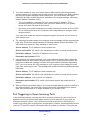
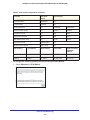
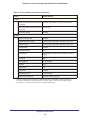
N600 Wireless Dual Band Gigabit VDSL2 Modem Router DGND3800B • Will either endpoint use fully qualified domain names (FQDNs)? FQDNs supplied by Dynamic DNS providers (see Use a Fully Qualified Domain Name (FQDN) on page 154) can allow a VPN endpoint with a dynamic IP address to initiate or respond to a tunnel request. Otherwise, the side using a dynamic IP address has to always be the initiator. • Which method will you use to configure your VPN tunnels? - The VPN Wizard using VPNC defaults (see the following table) - The typical automated Internet Key Exchange (IKE) setup (see Use Auto Policy to Configure VPN Tunnels on page 126) - A manual keying setup in which you have to specify each phase of the connection (see Use Manual Policy to Configure VPN Tunnels on page 133) Table 4. Parameters recommended by the VPNC and used in the VPN Wizard • • Parameter Factory Default Setting Secure Association Main Mode Authentication Method Pre-Shared Key Encryption Method 3DES Authentication Protocol SHA-1 Diffie-Hellman (DH) Group Group 2 (1024 bit) Key Life 8 hours IKE Life Time 1 hour What level of IPSec VPN encryption will you use? - DES. The Data Encryption Standard (DES) processes input data that is 64 bits wide, encrypting these values using a 56-bit key. Faster but less secure than 3DES. - 3DES. Triple DES achieves a higher level of security by encrypting the data three times using DES with three different, unrelated keys. What level of authentication will you use? - MDS. 128 bits, faster but less secure. - SHA-1. 160 bits, slower but more secure. VPN Tunnel Configuration There are two tunnel configurations and three ways to configure them: • Use the VPN Wizard to configure a VPN tunnel (recommended for most situations): - See Set Up a Client-to-Gateway VPN Configuration on page 105. - See Set Up a Gateway-to-Gateway VPN Configuration on page 116. Virtual Private Networking 104