1
D
D
D
D
D
R
R
R
R
R
A
A
A
A
A
FT
FT
FT
FT
UM<nnnnn>
FT
D
R
R
FT
FT
FT
FT
P89LPC9201/9211/922A1/9241/9251 User manual
A
A
A
A
R
R
D
D
D
NXP Semiconductors
D
R
R
A
FT
FT
FT
A
A
R
R
D
D
D
D
R
A
F
FT
FT
A
A
R
R
D
D
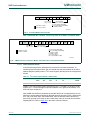
the 9th data bit goes into RB8 in Special Function Register SCON and the stop bit is not
saved. The baud rate is programmable to either 1⁄16 or 1⁄32 of the CCLK frequency, as
determined by the SMOD1 bit in PCON.
D
FT
FT
A
A
R
R
D
D
D
10.4 Mode 3
R
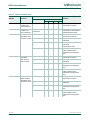
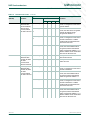
A
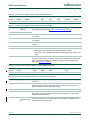
Table 51.
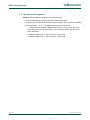
UART SFR addresses
Register
Description
SFR location
PCON
Power Control
87H
SCON
Serial Port (UART) Control
98H
SBUF
Serial Port (UART) Data Buffer
99H
SADDR
Serial Port (UART) Address
A9H
SADEN
Serial Port (UART) Address Enable
B9H
SSTAT
Serial Port (UART) Status
BAH
BRGR1
Baud Rate Generator Rate High Byte
BFH
BRGR0
Baud Rate Generator Rate Low Byte
BEH
BRGCON
Baud Rate Generator Control
BDH
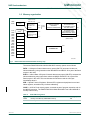
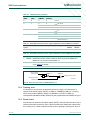
10.6 Baud Rate generator and selection
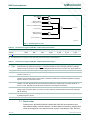
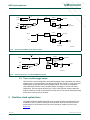
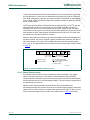
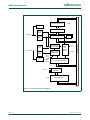
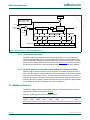
The P89LPC9201/9211/922A1/9241/9251 enhanced UART has an independent Baud
Rate Generator. The baud rate is determined by a value programmed into the BRGR1 and
BRGR0 SFRs. The UART can use either Timer 1 or the baud rate generator output as
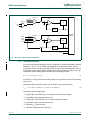
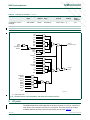
determined by BRGCON[2:1] (see Figure 24). Note that Timer T1 is further divided by 2 if
the SMOD1 bit (PCON.7) is set. The independent Baud Rate Generator uses CCLK.
10.7 Updating the BRGR1 and BRGR0 SFRs
The baud rate SFRs, BRGR1 and BRGR0 must only be loaded when the Baud Rate
Generator is disabled (the BRGEN bit in the BRGCON register is logic 0). This avoids the
loading of an interim value to the baud rate generator. (CAUTION: If either BRGR0 or
BRGR1 is written when BRGEN = 1, the result is unpredictable.)
<Document ID>
User manual
© NXP B.V. 2009. All rights reserved.
Rev. 01.xx — 5 February 2009
62 of 136
A
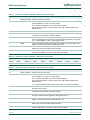
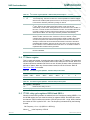
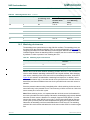
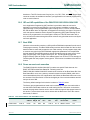
The UART SFRs are at the following locations:
R
10.5 SFR space
D
In all four modes, transmission is initiated by any instruction that uses SBUF as a
destination register. Reception is initiated in Mode 0 by the condition RI = 0 and REN = 1.
Reception is initiated in the other modes by the incoming start bit if REN = 1.
FT
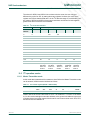
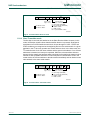
11 bits are transmitted (through TXD) or received (through RXD): a start bit (logic 0), 8
data bits (LSB first), a programmable 9th data bit, and a stop bit (logic 1). Mode 3 is the
same as Mode 2 in all respects except baud rate. The baud rate in Mode 3 is variable and
is determined by the Timer 1 overflow rate or the Baud Rate Generator (see Section 10.6
“Baud Rate generator and selection”).