1
Sine Wave Output
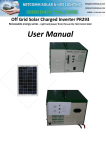
Depending on the model you have purchased, it can either be a modified Sine Wave or a Pure Sine
Wave. The unit converts the 12V DC from the battery to 230V AC using power electronics. The AC
can be used to power up a number of mains equipment. It is important that you do not overload the
inverter. In the case that the inverter is overloaded, it will shut down, and will require you to switch
the unit off, remove the loads, and switch on again. Reconnect the loads one a time to see which load
is over loading the inverter. If the inverter you have is too small for your application, then you may
have to purchase an inverter which can handle a higher load. Speak to your supplier to see what other
solutions that they may have for your application.
Modified Sine Wave – Suitable for most loads such as TVs, P.C.s, decoders, LED and CFL lamps,
cell phone chargers.
Pure Sine Wave – Suitable for devices with electric motors, fans, micro waves, gate controllers,
audio equipment, TVs, P.C.s, decoders, LED and CFL lamps, cell phone chargers.
Operation
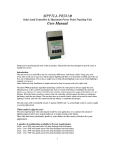
The inverter output is controlled by the On/Off switch at the base of the DB unit. When the mains is
available, there is power through the switch over control, through the DIN rail mounted circuit
breakers and directly to the loads connected to the DB unit, irrespective if the switch is in the On or
Off position. When the mains fails, and the switch is in the ‘Off’ position, the inverter is disconnected
and there is no power to the load. When the mains returns, the internal switch will immediately pass
the mains to the loads again.
In the case that the switch is in the ‘On’ position, while mains is available, there is power through the
switch over control, through the DIN rail mounted circuit breakers and directly to the loads connected
to the DB unit. When there is a mains failure, the internal relay switches over, and the inverter starts,
and approximately 2 seconds later, there will be power through the changeover switch, through the
panel mounted circuit breakers and the load is powered by the inverter. When the mains returns, the
internal relay immediately transfers the mains to the loads, and switches the inverter off.
This ensures that the inverter only works when the user wishes to have battery backup, and preserves
the battery should there be a mains failure during a time the user is not making use of the battery
backup, thereby preserving the battery for when it is required by the user.
When the switch is in the Off position, the inverter does not run, placing the unit in a low power drain
mode preserving the energy in the battery for when you need it.
Whenever there is power from the grid, the battery is always maintained at full power via the internal
battery charger.
Mains Input
The Mains Input is used to charge the battery, but it also supplies power to the load, irrespective of the
state of charge of the battery through the changeover switch..
Ensure that the On/Off switch is in the ‘Off’ position before connecting
A grid supply circuit monitors the mains, and while the grid is supplying power, the grid power is
passed onto the load through the changeover switch. As soon as the grid supply falls away due to load
2