1
1. Introduction - What is Cpipe?
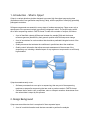
Cpipe is a variant detection pipeline designed to process high throughput sequencing data
(sometimes called "next generation sequencing" data), with the purpose of identifying potentially
pathogenic mutations.
Software components are essential to every stage of modern sequencing. Cpipe covers only a
specific part of the process involved in producing a diagnostic result. The scope begins with a
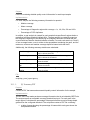
set of short sequencing reads in FASTQ format. It ends with a number of outputs, as follows:
•
•
•
•
A set of identified variants (differences between the sample DNA and the human
reference genome) identified by their genomic position and DNA sequence change
A set of annotations for each mutation that describe a predicted biological context of the
mutations.
Quality measures that estimate the confidence in predictions about the mutations
Quality control information that allows accurate assessment of the success of the
sequencing run, including a detailed report of any regions not sequenced to a sufficiently
high standard
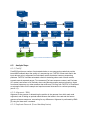
Mutations FASTQ Reads Software Pipeline (Cpipe) Annotations Quality Control Measures Cpipe does not currently cover:
•
•
Software processes that occur prior to sequencing, that are part of the sequencing
machines or steps after sequencing that are used to produce reads in FASTQ format.
Software that is used to view, manipulate, store or interpret mutations downstream from
the variant data is output by this process
2. Design Background
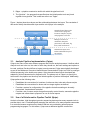
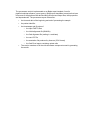
Cpipe uses an architecture that is comprised of three separate layers:
1. A set of core bioinformatics tools that are executed to perform the analysis