1
mle 2.1 manual
Distribution of gestational age
Parameter file: hammes.mle
Input data file name: hammes.dat
Output file name: hammes.out
3 variables read.
18 lines read from file hammes.dat
18 Observations kept and 0 observations dropped for each variable.
ROW
topen
tclose
frequency
MEAN
258.722222 253.555556 144.111111
VAR
5338.56536 6032.37908 51267.3987
STDEV 73.0654868 77.6683918 226.423052
MIN
0.00000000 -1.0000000 0.00000000
MAX
329.000000 329.000000 724.000000
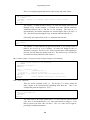
Model 1 Run 1 : Distribution of gestational age
METHOD = DIRECT
Maximum Iterations MAXITER = 50
Maximum function evaluations MAXEVALS = 100000
Convergence at EPSILON = 0.0000001000
LogLikelihood: -6459.238 AIC: 12922.476 Del(LL): 0.0000000000
Iterations: 3 Function evaluations: 146 Converged normally
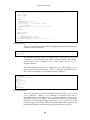
PDF NORMAL with 2 free parameters
Name Form
Estimate
mean
279.1204377949
stdev
23.02007362180
Variance/covariance matrix:
0.13694904596 -0.0586570132
-0.0586570132 0.13394679920
Std Error
0.370066272387
0.365987430388
t
against
754.244465444
0.0
62.8985361530
0.0
Likelihood CI Results:
Log Likelihood = -5915.1352 after 4 iterations. Delta(LL)=0.00000000
PDF NORMAL with 2 free parameters
Name Form
Estimate
Lower CI
Upper CI
mean
279.7654969512
279.1863052702
280.3447034638
stdev
13.04605798312
12.64289497881
13.47052893809
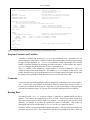
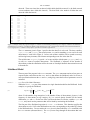
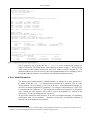
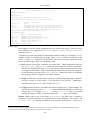
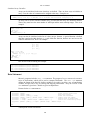
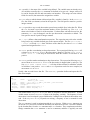
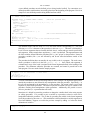
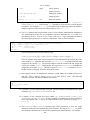
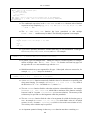
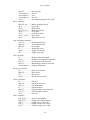
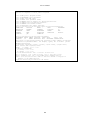
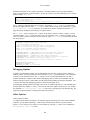
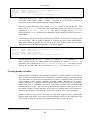
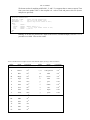
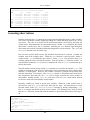
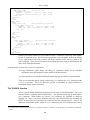
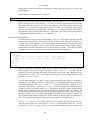
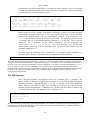
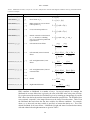
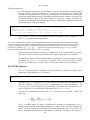
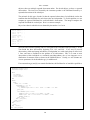
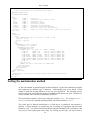
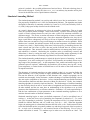
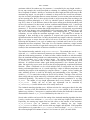
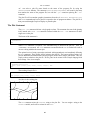
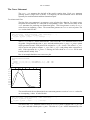
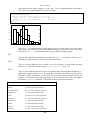
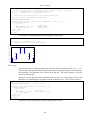
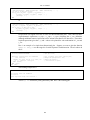
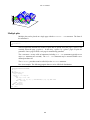
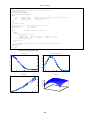
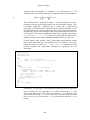
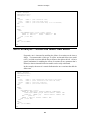
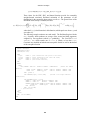
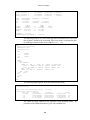
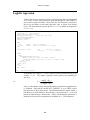
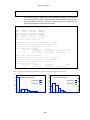
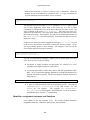
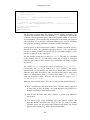
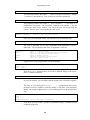
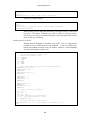
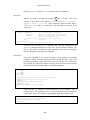
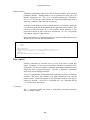
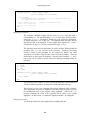
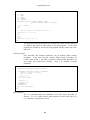
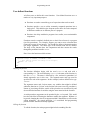
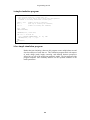
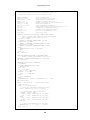
Figure 3. Output generated by the program in Figure 1.
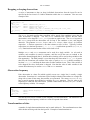
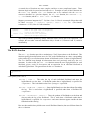
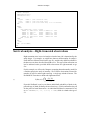
The mle program is run by typing the line mle hammes.mle at the command line prompt (see
Chapter 2 for details). The results written to the output file are shown in Figure 3. The first section
of the output provides summary statistics for each of the variables read from the data file. The
parameter estimates are given in two ways: once with estimated standard errors (including a t-test of
the hypothesis that the estimate is zero) and once with likelihood confidence intervals.
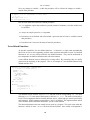
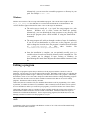
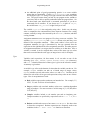
A Note About Parameters
The ultimate goal of putting together a likelihood model is to estimate one or more parameters of
the model. In mle, the PARAM...END function defines parameters to be estimated. This use of the
word "parameter" can be confusing, so lets clear up the issue. In any mathematical language, we
can refer to a function's arguments as "parameters". For example, in the statement a = sin(b), sin()
is a function with one "parameter", b. This manual will avoid the word "parameter" in this general
sense. Instead, the word argument will be used to refer to the arguments of a function in this
general sense. So, the sin() function has the argument b.
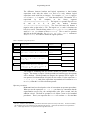
As used in this manual, the word parameter in mle refers to an unknown quantity of a probability
model whose value is to be estimated.2 Parameters, in this sense, are frequently arguments to
functions, but not all arguments are parameters.
2
A more accurate definition of a parameter is an unknown quantity whose distribution of values is to be estimated. The standard errors or
confidence intervals provide information about the distribution of possible parameter values.
7