1
C-48
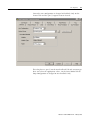
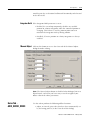
Axis Properties
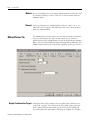
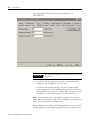
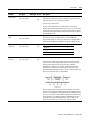
Proportional (Position) Gain
Position Error is multiplied by the Position Loop Proportional Gain, or
Pos P Gain, to produce a component to the Velocity Command that
ultimately attempts to correct for the position error. Too little Pos P
Gain results in excessively compliant, or mushy, axis behavior. Too
large a Pos P Gain, on the other hand, can result in axis oscillation
due to classical servo instability.
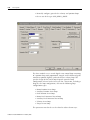
To set the gain manually, you must first set the appropriate output
scaling factor (either the Velocity Scaling factor or Torque Scaling
factor) in the Output tab of this dialog. Your selection of External
Drive Configuration type – either Torque or Velocity – in the Servo tab
of this dialog determines which scaling factor you must configure
before manually setting gains.
If you know the desired loop gain in inches per minute per mil or
millimeters per minute per mil, use the following formula to calculate
the corresponding P gain:
Pos P Gain = 16.667 * Desired Loop Gain (IPM/mil)
If you know the desired unity gain bandwidth of the position servo in
Hertz, use the following formula to calculate the corresponding P
gain:
Pos P Gain = Bandwidth (Hertz) * 6.28
The typical value for the Position Proportional Gain is ~100 Sec-1.
Integral (Position) Gain
The Integral (that is, summation) of Position Error is multiplied by the
Position Loop Integral Gain, or Pos I Gain, to produce a component to
the Velocity Command that ultimately attempts to correct for the
position error. Pos I Gain improves the steady-state positioning
performance of the system. Increasing the integral gain generally
increases the ultimate positioning accuracy of the system. Excessive
integral gain, however, results in system instability.
In certain cases, Pos I Gain control is disabled. One such case is when
the servo output to the axis’ drive is saturated. Continuing integral
control behavior in this case would only exacerbate the situation.
When the Integrator Hold parameter is set to Enabled, the servo loop
automatically disables the integrator during commanded motion.
While the Pos I Gain, if employed, is typically established by the
automatic servo tuning procedure (in the Tuning tab of this dialog),
the Pos I Gain value may also be set manually. Before doing this it
must be stressed that the Output Scaling factor for the axis must be
established for the drive system. Once this is done, the Pos I Gain can
Publication LOGIX-UM002A-EN-P - February 2006