1
US 8,392,890 B2
5
6
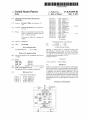
structure and organization are shown in FIG. 5. This diagram
determined by the user, so that the search can be made of one
or more Websites or sub-Websites, as speci?ed by a starting or
“root” URL and as constrained according to the claimed
limits and constraints, so that data can be collected on full
Websites or sub-Websites according to the Wishes and expec
tations of the user.
identi?es the relationships betWeen the externally vieWed
product features:
1. Recorded scripts 500 are created by and read and
executed (played back) but the test enabled broWser 501,
Which can be edited 502 and converted into load test logs
503.
4. Cross-Page Dependency Lists
2. Playback operation involves the creation of various
Page to page dependency capture based on the dynamic
links Within the current page (Web page) can be performed.
The page to page dependency tree can be kept internally in a
linked list of parent-child dependencies. Those pages at/be
event logs 504 and their subsets, such as the Perfor
mance Log 505, the Message Log 506, and the Timing
log 507.
3. When multiple copies 508 of the test enabled broWser are
running then a special 509 LoadTest log is used to cap
ture details of individual playbacks.
4. Scans of Websites using the spider/ search function create
reports 510 the relate to Whole-site analysis.
F. Internal Embodiments Based on DOM Operations
Additional applications of the invention’s ability to ana
lyze the DOM structure of a broWser page include the folloW
ing. For example, one or more embodiments can provide
loW an established root can be considered a subWebsite.
A characteristic of the implementation of this feature is that
the interface betWeen the analysis function and the database
function is one that can use standard database interface com
ponents, such that alternative database systems can be used to
contain the information that is captured Without any loss of
20 information or content.
Detailed Page Analysis For Properties.
BeloW various embodiments of a test enabled broWser are
1. Client Perspective
One aspect of test enabled Web broWsers is that they can
scan “over the Wire” and “from the client perspective”ia
signi?cant technical advantage. Access to the DOM for ana
lytic purposes is assured because the test enabled Web
broWser uses standard broWser components, among Which is
an interface to the DOM for each Web page that is broWsed. A
characteristic of the implementation of this feature is that the
resulting analysis and/ or spidering of the Web page is depen
discussed. In particular, embodiments of the invention can
provide, support or use one or more of: AJAX Synchroniza
25
Adaptive Playback; Programming Language Interface; URL
Sequence Capture; and/or Page Analysis and Structure
30
nization, layout, and content of the Web page. The operation
is sWeeping the technical community. Based on advanced use
35
tion about individual pages and their interactions and depen
dencies, such that the database can be used for later o?line
synchronize playback of test scripts in an environment Which
2. Link Extraction
40
complete detail, extract anything, and use that information in
a database is available using standard broWsing components
and standard DOM models, such as are typically employed in
available general purpose Web broWsers of several kinds and
45
50
activities, so that one or more synchronization activities or
1. Representative Implementation
55
This command can alloW for synchronization of playback
based on the appearance of a particular value for a speci?ed
DOM element on a page. The command can also support
Adaptive Playback to provide for intelligent behavior even
When the page changes slightly.
The folloWing commands are indicative of the kinds of
actions that can be included in the invention, but they are not
elements, its DOM properties, and its links to other pages.All
of this information is available because, in one embodiment,
that is broWsed. A characteristic of the implementation of this
is that the origin of the search process described above can be
the test enabled Web broWser has multi-threaded access to the
DOM of the current page, or has the capability of simulta
neous access of the DOM in concert With other broWsing
processes can proceed in parallel With other asynchronous
activities that may be operating Within the browser.
3. DOM Spidering
the test enabled Web broWser uses standard broWser compo
nents, among Which is an interface to the DOM for each page
bility to synchronize inherently asynchronous processes to
reproduce user input.
A characteristic of the implementation of this feature is that
types.
More selective inclusion and exclusion of links in the
Work-to-be-done list/tree. This is key to a successful and
useful scan, being able to decide based on page properties,
mainly the URL but also on other internal criteria, Whether to
add it to the Work list. If you did not do this you Would have
to scan everything you ?nd, and you may not Want that. User
control is important. The criteria for inclusion and exclusion
are inclusive of any property of the page, its component
is inherently asynchronous. Advanced test script playback
synchronization, virtually a necessity for AJAX implementa
tions, can be implemented in the subject invention With
DOM-based methods. Locking in this capability adds capa
Website comparison activities. The analysis of properties is
assured because of the architecture of the test enabled Web
broWser. All of this information is available because the test
enabled Web broWser uses standard broWser components,
among Which is an interface to the DOM for each page that is
broWsed. A characteristic of the implementation of this fea
ture is that that the information that is collected and stored in
of JavaScript, AJAX represents competition to the less ?ex
ible capabilities available in such products as Adobe/FLEX.
For functional testing the challenge imposed by AJAX is to
analysis.
The test-enabled Web broWser can see in the pages in
Extraction.
A. AJAX Synchronization
AJAX (Asynchronous JavaScript and XML), is a technol
ogy for rich-client broWser-based applications. This approach
dent on hoW the page actually exists at the time it is served to
the test enabled Web browser, and does not include or exclude
any details or effects that are pertinent to the structure, orga
of the search and scan activity creates a database of informa
tion; Page Face Motion Playback; Page Element/Event
Stimulation; Page Element Validation; Page Get/Put Opera
tion; Page Navigation Header Manipulation; DOM-Based
65
exclusive. The examples beloW are present in the representa
tive implementation but similar commands or variants of
them Would be present in other implementations. The sense
and behavior of the commands is independent of the imple
mentation.