1
US006470349B1
(12)
(54)
United States Patent
(10) Patent N0.:
Heninger et al.
(45) Date of Patent:
SERVER-SIDE SCRIPTING LANGUAGE AND
PROGRAMMING TOOL
5,727,156 A
3/1998 Herr-Hoyman
5,737,592 A
_
,
Rama Rasmussen’ Ogden’ UT
.
(73) Assrgnee: Browz, Inc., Salt Lake City, UT (US)
(
)
,
Notlcel
_
_
,
et
a1.
4/1998 Nguyen et al. ........... .. 395/604
2
g“ ‘1’: a1
00
5,812,134 A
.
.
Oct. 22, 2002
.......................................................................... .. 395/200.49
(75) Inventors: Troy Heninger, South Ogden, UT
*
US 6,470,349 B1
man e
a ~~~~~~~~~~~~
.
......... ~~
..
9/1998 Pooser et a1. ............. .. 345/356
5,890,170 A
*
3/1999
5,898,835 A
*
4/1999
5,987,523
*
11/1999
'
5,963,952 A * 10/1999
_
A
sublectto aHyd1SC1a1m@r>_th@termofthls
6,073,160 A *
6/2000 Grantham et a1. ........ .. 709/200
patent 1s extended or adjusted under 35
6,119,166 A
*
9/2000 Bergman et a1. .......... .. 709/232
U.S.C. 154(1)) by 0 days.
6,178,439 B1 *
1/2001 Feit .......................... .. 709/204
* cited by examiner
(21) Appl. N0.: 09/266,357
_
Primary Examiner—David Jung
(22) Flled:
Mar‘ 11’ 1999
(74) Attorney, Agent, or Firm—Kirton & McConkie;
(51)
Int. c1.7 .............................................. .. G06F 17/00
Mlchael F- Kneger
(52)
US. Cl. ...................... .. 707/102; 707/513; 717/143
(57)
(58)
Field of Search ........... .. 707/1—529; 709/100—322;
345/716_749; 717/143
ABSTRACT
_
_
Software loads scr1pt ?le and strips markup language tags.
This software can be located on a server. In order to prepare
(56)
References Cited
for operation, markup language pages are created. Then,
special tags containing script commands are placed in the
US- PATENT DOCUMENTS
pages. These tags are replaced dynamically With the result of
5 530 852 A
6/1996 Meske Jr_ et aL ________ __ 395/6OO
the command execution When the script is requested by a
5,537,586 A
7/1996 Amram et a1. ..... ..
395/600
browser and eXecllted by the Server
5,708,825 A
1/1998 Sotomayor ...... ..
395/762
5,708,826 A
1/1998 Ikeda et a1. ............... .. 395/762
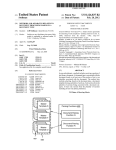
146 \
140
1 Claim, 11 Drawing Sheets
<p> . . .</p>
db cllents
148 \
[quote(var.text)]
<p>{!p while #n db clientsselect * from TABLE where NAME =
[quote(var.text)]}</p>
[!p while #n...}
144
Select * from TABLE
where NAME =
150
U.S. Patent
Oct. 22, 2002
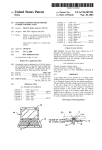
RAM/ROM Memory
Sheet 1 0f 11
<——~>
US 6,470,349 B1
Display
\
14
CPU
pm
12
l/O Processors
f
Keyboard
Hard Disk
Figure 1
U.S. Patent
0a. 22, 2002
Sheet 2 0f 11
US 6,470,349 B1
16
16
Client
Client
Network
,,
Database
24
/
2R
Server
22
\ v1‘
Database
Figure 2
18
U.S. Patent
//—
32
0a. 22, 2002
Sheet 3 0f 11
US 6,470,349 B1
Client Browser
i
/- Internet or Intranet
34
/—
36
l
Web Server
l
/— Request Interpreter
yes
42 /’—-
Load Script File
l
44 /—
Parse Script
‘K46
Execute Script
48
Send Results
to Client
Figure 3
U.S. Patent
0a. 22, 2002
Sheet 4 0f 11
US 6,470,349 B1
Client Browser \
Internet or Intranet \
36
K 38
Novel Script Interpreter
File
System
50
Databases
Programmatic
Objects
52
54
Figure 4
U.S. Patent
0a. 22, 2002
Sheet 5 0f 11
/—-
Load Script File
/—
Parse Script
60
62
f
l
Execute Toke-n Sequence
64
{-
Client Browser
32
Figure 5
US 6,470,349 B1
U.S. Patent
/—
72
0a. 22, 2002
Sheet 6 0f 11
HTML Parser
l
/ Command Parser
/— Expression Parser
76
Figure 6
US 6,470,349 B1
U.S. Patent
0a. 22, 2002
Sheet 7 0f 11
US 6,470,349 B1
82
LSta'tement Interpreter
Scan Inter reter
/'____p_
Array Interpreter
84
K
89
Dir Interpreter
86
V
/
SQL Interpreter
A
Database SQL
87
\
88
Interpreter
Figure 7
U.S. Patent
Oct. 22, 2002
/
90
Sheet 8 0f 11
For each command token
For each attached expression tree
Walk the tree, executing in depth first
94
order .
V
Insert each expression tree result into
the parameter statement
V
Execute the resulting statement
98
\
Execute the command token,
using the statement as the
100
parameter
V
102 \ Insert the command result into the
output buffer
104
Return the output buffer to the
client
Figure 8
US 6,470,349 B1
U.S. Patent
0a. 22, 2002
Sheet 9 0f 11
US 6,470,349 B1
/ Request for a Script
120
v
’\
1 16
Execute Script
i
\ Result Return to
Client Browser
Figure 9
+—
Parse Script
/
U.S. Patent
Oct. 22, 2002
Sheet 10 0f 11
US 6,470,349 B1
122 \
—>
136
Execute Script
<
Swltch t9
source scrlpt
A
124
K 134
Source
command
Is source
- ntcountered'?
ile newer’?
K 132
126
Target
Return output
command
to client browser
- ncountered
yes
Save ouput as
target script
130
V
Switch to
target script
Figure 10
U.S. Patent
0a. 22, 2002
Sheet 11 0f 11
US 6,470,349 B1
142
146
<p> . . .</p>
148
\
140
\
db clients
[quote(var.text)]
<p>{!p while #n db clientsselect * from TABLE where NAME =
[quote(var.text)]}</p>
[!p while #n...}
SeIEELrJrSQJQELE
144 /
\ 150
Figure 11
US 6,470,349 B1
1
2
SERVER-SIDE SCRIPTING LANGUAGE AND
PROGRAMMING TOOL
This is the typical procedure used for static Web pages that
exist as unchanging ?les on a server storage device.
Web pages may also exist as dynamic documents that
change or update themselves When conditions are met.
BACKGROUND OF THE INVENTION
Dynamic documents may update themselves each time they
are accessed. This is achieved by alloWing the server to
execute a program When a given URL is accessed.
1. The Field of the Invention
The present invention relates generally to the ?eld of
A current standard for enabling dynamic pages is the
dynamic computer document creation and ?le serving. In
particular, the present invention relates to a scripting lan
10
guage and method of use Which provides for the use of
inventive script codes in a document formatted for an
independent application. The present invention is particu
larly Well suited for creating dynamic HTML documents
With database information using inventive scripting com
mands.
2. The Relevant Technology
15
“server side” programs. After these programs are run and the
page is modi?ed thereby, the neWly modi?ed “dynamic”
page is sent to the broWser Which requested the page so it can
be displayed to the user.
The Internet is a World-Wide netWork of computers Which
Another method for providing a dynamic Web page
employs programs Which are not operating system speci?c.
is noW accessible to almost any potential user With a
computer and a means for netWork access. Hundreds of
These programs can be executed on any operating system
Internet Service Providers (ISP’s) have emerged to provide
supported by the programming language. One very popular
example is the Java programming language created by Sun
Internet access to millions of users Who noW use the Internet
for personal and business communications, information
retrieval, advertising, publishing, sales and document deliv
ery.
Common GateWay Interface (CGI) Which alloWs a server to
run programs Which can change, update or customiZe the
Web page as it is being accessed.
Programs Which reside on the server and are invoked by
requests from client broWser applications are referred to as
25
In order to better implement many of these applications,
the World Wide Web (W or Web), Was created. The Web
alloWs access to information and documents using “hyper
media” or “hypertext” links embedded into the document.
This linking system alloWs documents to be accessed and
Microsystems, Inc. With Java, a programmer can create
programs and include them in her Web site Where the
programs Will run When the site is accessed by other
computers on the Web. The programs Will run Whether the
accessing computer uses an operating system identical to
that of the Web site or another operating system supported
by Java. Java programs Which are embedded in a site and
executed by the accessing computer are called “applets.”
linked in a “non-linear” fashion. Non-linear access alloWs a
Java programs Which are executed by the site server When
user to “jump” from one point in a document to another
the site is accessed by another computer are called “servlets”
or more generically, “server side programs.” A specialiZed
simply by selecting the link. It also alloWs jumping from one
document to another Whether the documents are on the same
programming language Which operates exclusively With
computer or across the World. Documents available on the 35 scripts interpreted by server side programs may be referred
WWW include text, sound, graphics images and even full
Hypertext Markup Language (HTML), a specialiZed
to as a “server side scripting language.”
CGI and other dynamically enabled servers can alloW
dynamic pages to access date or time information, Weather
document formatting language, is typically used to create
and format documents for vieWing and linking on the Web.
pages. They may also alloW access to databases stored on the
motion video.
information, ?les With pricing or inventory data or other Web
HTML uses special tags or codes embedded into a text
same server or at another location on the Internet or a local
document that format the document and alloW linking to
netWork. This capability greatly enhances the utility of Web
other documents or other locations in the same document.
These links may also access ?les, such as sound ?les or
graphics ?les Which are played or displayed upon selection
45
pages and alloWs access to databases containing huge quan
tities of information.
SUMMARY AND OBJECTS OF THE
INVENTION
of a link. A document in HTML format that is available on
the Web is typically referred to as a “Web page” or “Web
site.”
The present invention is a server side scripting language
The W also implements a unique addressing system
and programming tool designed to simplify programming
Which allocates an address or Uniform Resource Locator
for Web pages using databases or other dynamic informa
(URL) for each document on the Web so that Web docu
tion. The present invention is implemented by adding inven
ments may be selectively accessed, sorted and indexed.
tive script to a normal text-based document, such as an
A computer With a dedicated connection to the Internet
HTML document, a spreadsheet, a Word processing docu
and specialiZed server softWare that enables Web access is 55 ment or any other text-based document Which can bene?t
called a “Web server.” Web documents are located on
from a dynamic document architecture. The document is
storage devices connected to Web servers. Aperson seeking
subsequently processed by the interpreter of the present
access to a Web page uses a computer With “Web broWser”
softWare Which alloWs access to speci?ed URL’s as Well as
invention to access database or other information When the
document is requested by a broWser or at some other time or
searching and other functions.
interval speci?ed by the programmer.
Generally, When a user accesses a speci?c Web page, the
user enters the URL of the desired Web page into a computer
present invention, the interpreter processes the document by
When a broWser requests a document enhanced by the
scanning for the inventive script commands. When a script
command is encountered, the interpreter executes the script
Which is running broWser softWare. The broWser softWare,
then, sends a request across the internet to the server at the
destination designated by the URL. The destination server
Will then send an electronic copy of the desired document to
the broWser computer Where it can be displayed to the user.
65
command, typically by retrieving or processing database
information, returns the result to the Web page and strips the
executable script command from the resulting “pure-format”
US 6,470,349 B1
3
4
document. Once all executable script commands have been
executed and stripped, the resulting document is in a “pure
1 through 11, is not intended to limit the scope of the
invention, as claimed, but it is merely representative of the
presently preferred embodiments of the invention.
The presently preferred embodiments of the invention
Will be best understood by reference to the draWings,
Wherein like parts are designated by like numerals through
format” form. In the case of a typical Web page, the
“pure-format” form Would be a pure HTML document
containing no extraneous tags or commands. This “pure
format” document is, then, sent by the server to the client
computer Whose broWser initiated the document request.
Due to the text-based format of the present invention, the
novel script commands may be added, deleted or edited from
out.
The preferred embodiment of the present invention is a
a typical HTML or Web page editor or from a Word 10
processor or text editor.
In order that the manner in Which the above-recited and
present invention is to create an initial HTML document
15
only a typical embodiment of the invention and are not
therefore to be considered to be limiting of its scope, the
invention Will be described and explained With additional
script commands of the preferred embodiment of the present
25
computer as used in the implementation of a preferred
embodiment of the present invention.
tion utiliZes a Java servlet to interpret the novel script
commands. Accordingly, the server must support servlets for
this embodiment. Servlets may be supported natively or
implement a preferred embodiment of the present invention.
FIG. 3 is a How chart shoWing a dynamic document
access process of a preferred embodiment of the present
invention Wherein a caching process is used to speed per
through the use of plug-in programs Which are common in
35
FIG. 4 is a data How chart shoWing data requests and ?le
transfer betWeen components of a preferred embodiment of
the present invention.
FIG. 5 is a How chart depicting the process Whereby the
Runtime Environment (JRE) or the Java Development Kit
support. The Java environment also provides compatibility
With virtually all established operating systems in use today.
The presently preferred embodiment of the present inven
tion is entirely contained Within one or more ?les stored in
sent to the client.
a standard ?le system thereby eliminating the need for a
FIG. 6 is a How chart shoWing details of the script parsing
process.
45
FIG. 7 is a How chart shoWing details of statement
handling or interpreting.
bulky, cumbersome database for program operation and
functionality. This structure can improve performance and
eliminate the need for licensing of third party database
technology.
This implementation may be quickly and easily employed
FIG. 8 is a How chart shoWing the process of interpreting
for many applications, hoWever, if more speed is required or
if speed takes precedence over ease of implementation,
expressions and tokens.
FIG. 9 is a How chart shoWing hoW a caching process of
another embodiment may be used Which employs a server
the present invention is implemented.
add-on using the Common GateWay Interface (CGI) stan
FIG. 10 is a How chart shoWing the function of TARGET
dard or a server plug-in using the Internet Server Application
Programming Interface—Dynamic Load Library (ISAPI—
55
command as used in a HTML document.
DLL) standard.
When the presently preferred embodiment of the present
invention is used to provide database connectivity to Web
DETAILED DESCRIPTION OF THE
PREFERRED EMBODIMENTS
pages or other documents, a Java Database Connectivity
(JDBC) or Open Database Connectivity (ODBC) driver is
The ?gures listed above are expressly incorporated as part
of this detailed description.
It Will be readily understood that the components of the
present invention, as generally described and illustrated in
the Figures herein, could be arranged and designed in a Wide
variety of different con?gurations. Thus, the folloWing more
detailed description of the embodiments of the system and
apparatus of the present invention, as represented in FIGS.
the industry. The majority of these plug-in programs require
that a version of Java be installed on the server. The Java
(JDK) may be installed on the server to enable servlet
inventive script of the preferred embodiment of the present
invention is loaded, parsed, interpreted and executed and
and SOURCE commands in script execution.
FIG. 11 illustrates the components of an inventive script
invention. These inventive script commands, Which are
input by a programmer, contain commands Which add
functionality to the Web page being created. Some of these
commands may implement procedures Which are executed
When the resulting Web page is accessed thereby creating a
dynamic Web page.
The currently preferred embodiment of the present inven
FIG. 2 is computer hardWare diagram shoWing the inter
connection of prior art client and server hardWare used to
formance When a client accesses a dynamic document.
With the desired structure, layout and format de?ned by
HTML code. After the initial HTML document is complete,
the inventive commands of the scripting language of the
preferred embodiment of the present invention are added to
the initial HTML document to transform the initial HTML
document into a mixed-format scripted document. This
mixed-format scripted document contains the HTML code
of the initial HTML document combined With the inventive
draWings. With the understanding that these draWings depict
speci?city and detail through the use of the accompanying
draWings in Which:
FIG. 1 is a computer hardWare diagram of prior art
including Web database applications.
The ?rst step in using the preferred embodiment of the
BRIEF DESCRIPTION OF THE DRAWINGS
other advantages and objects of the invention are obtained,
a more particular description of the invention brie?y
depicted above Will be rendered by reference to a speci?c
embodiment thereof Which is illustrated in the appended
server side scripting language and programming tool Which
greatly simpli?es programming of many types of Web pages
utiliZed to communicate With the database. Currently, JDBC
is the preferred driver as it provides better performance With
the preferred softWare embodiment.
A preferred embodiment of the present invention gener
65
ally utiliZes computers in a netWork environment. These
computers, as basically illustrated in FIG. 1 may be
mainframes, mini-computers, micro-computers or other
variations, hoWever, the most commonly used variations
US 6,470,349 B1
5
6
Will employ a central processing unit (CPU) 12, With RAM
?les or combinations of ?le formats such as graphics or other
and/or ROM memory 2, a display device 14 such as a
cathode ray tube (CRT), one or more input/output processors
4, a hard drive 6 or other mass storage device, a pointing
device such as a keyboard 10 and various other peripherals
?les embedded in HTML documents. A script ?le may be
any ?le Which contains the novel script commands of the
present invention.
Once the script ?le is loaded, the interpreter of the
preferred embodiment of the present invention parses the
or other devices.
A simple networking environment is illustrated in FIG. 2
script 62 thereby creating sequentially ordered tokens for
Where one or more client computers 16 is connected to a
each element of the ?le. These elements comprise HTML
computer netWork 18. This computer netWork 18 may be a
tags, text, inventive script commands of the present
invention, and expressions used by these inventive com
localiZed netWork or intranet or may utiliZe a Wide-area
netWork structure or the Internet to communicate With a
server 20. Server 20 may communicate With a database
engine 22 Which can be physically located on the server
hardWare itself or elseWhere. In some embodiments, server
20 may communicate directly With database engine 22 or
may employ the netWork or Internet communications capa
bility to access the database engine. In a preferred embodi
ment of the present invention, as shoWn in FIG. 3, a client
computer running Web broWser softWare 32 is connected to
15
the token sequence 64 creates a neW “pure-format” or
“pure-HTML” document that is sent to the client broWser
that requested the document 32. Accordingly, a dynamic
document is created as the page is updated or recreated each
the Internet or an intranet 34. The client Web broWser
initiates a request for a speci?c Web page represented by a
URL address. The request is sent over the Internet or intranet
34 to the Web server 36 Where the URL is located. The Web
server 36 ?nds the document associated With the requested
URL and, in a preferred embodiment, checks the ?le exten
sion of the document Which indicates Whether inventive
script commands of the present invention are contained
therein. If the inventive script commands are not present in
the document, the document is immediately sent to the client
Web broWser in its current form.
If the inventive script commands are present in the
document, the document is sent to the interpreter 38 of the
25
time the page is requested.
When a script ?le is initially loaded 70, the elements of
the ?le are parsed by a series of parsers Which recogniZe and
process individual types of commands and their related
expressions. The HTML parser 72 distinguishes betWeen
HTML tags and inventive script commands in the ?le and
creates tokens for contiguous HTML blocks. The Command
parser 74 recogniZes the inventive script commands of the
present invention and creates tokens for each of these
commands. When an inventive script command contains one
or more expressions, the expression portion of the inventive
script command is sent to the expression parser 76 Which
creates an expression tree for the expression Which is passed
present invention. At this point, the request interpreter 38
back to the command parser 74 and incorporated into the
token for the inventive script command.
checks to see if the script has already been loaded and parsed
making it ready for execution. This may have taken place
during a prior request for the Web page. If so, the script Will
mands such as database or ?le locations. After the ?le
elements have been converted to executable tokens they are
assembled into an executable token sequence Which Will be
executed immediately and cached so it may be re-executed
each time the page is requested in the future. Execution of
35
be held in a RAM cache or otherWise stored in an executable
The statement interpreting process occurs at the time the
token ?le is executed 80. This occurs each time a statement
is encountered While executing a script. At this point, the
statement interpreter 82 determines the type of statement
and sends the statement to the interpreter appropriate for that
form 40 and Will be immediately executed 46 When the page
is requested. If the ?le has not been previously accessed, the
script Will have to be loaded 42 and parsed 44 before
execution 46.
The data How characteristics of the preferred embodiment
of the present invention is shoWn in FIG. 4 Where a client
broWser 32 is again shoWn making a request over the
statement.
When a scan statement is encountered by the statement
interpreter, the statement is sent to the Scan interpreter 84
Which interprets the statement by extracting designated
Internet or an intranet 34 for a speci?c document. The server 45 Words from strings as indicated in the statement.
When a directory statement is encountered by the state
ment interpreter, the statement is sent to the Dir interpreter
86 Which Will interpret the statement and enumerate the ?les
Within a directory.
36 receives the request and, When the ?le extension indicates
that inventive script commands are not present in the
document, accesses the ?le system 50 to retrieve the
requested document and deliver it to the requesting broWser
32. When the inventive script commands of the present
invention are present in the document, the request is passed
The statement interpreter Will, likeWise, ?nd array state
ments and send them to the Array interpreter 89 Which Will
interpret those statements by iterating through the desig
to the novel script interpreter 38. The script interpreter 38
interprets the inventive script commands in the document
and, depending on the nature of the script commands, may
nated arrays.
SQL and database related commands are sent by the
access ?les in the ?le system 50, access one or more 55 statement interpreter 82 to the SQL interpreter 87 Which Will
databases 52 or execute one or more programmatic objects
directly interpret a database sWitching modi?er. Other data
54. A detailed list of the inventive script commands of the
base commands or the remainder of a statement containing
present invention and the actions they invoke is given beloW.
The script processing method of the preferred embodi
ment of the present invention begins by loading the script
?le 60. In the Web application of the preferred embodiment,
a database sWitching command Will be forWarded by the
SQL interpreter 87 to a Database SQL interpreter 88 Which
is external to the preferred embodiment of the present
invention and typically resides in a database driver or engine
this ?le Will be an HTML document that contains, in
addition to text and HTML code, novel script commands.
program.
HoWever, in other embodiments of the present invention, the
novel script commands may be used to enhance other types
of ?les. By Way of example and not by limitation, these ?les
may be spreadsheet ?les, Word processor ?les or graphics
each command token is processed sequentially. If expression
During the script execution process, as detailed in FIG. 8,
65
trees are attached to command tokens, they are also pro
cessed in the order encountered. Expression trees 92 folloW
an expression hierarchy or tree structure. When the result of
US 6,470,349 B1
7
8
an expression is dependent upon another, the script execu
tion process of the preferred embodiment of the present
invention executes the expressions in order 94 starting With
the outermost expressions on the expression tree. The
expression results are, then, inserted into the expressions of
the next order until all expressions have been processed and
the main parameter statement is ready to execute 96. This
statement is subsequently executed 98 by the statement
interpreter 82 to the appropriate interpreter Which executes
the command token 100 thereby returning a result Which is
An example line of code is shoWn 140 With various tags and
commands therein. Within the code are some HTML tags
10
sent to an output buffer 102 Where it is combined With the
results of other tokens to form the resulting dynamic Web
page Which is sent to the client 104.
offered as an example of the inventive commands of the
preferred embodiment of the present invention and is not to
be construed as a limitation to the scope of the claims of this
patent.
20
stored in RAM cache 112, if so, the script is immediately
executed 114 and the resulting HTML document is sent to
the client broWser 116. If the script is not stored in RAM
descriptions. Also example scripts use Courier Font.
25
A programmer may use the Source command or Target
is to greatly simplify programming for many types of Web
database applications. To use it, create normal HTML pages,
to relate script ?les. Using the inventive scripting language
commands Which, When executed, create a neW script ?le.
The ?le from Which the neW ?le Was created is referred to
as a source ?le. The Source command initiates a comparison
betWeen the current ?le and an associated source ?le from
Which the current ?le Was created. When a Source command
is encountered during execution, the creation date of the
current ?le is compared With the creation date of the
then place special tags containing BroWZ Script commands
30
35
associated source ?le. The ?le With the most recent date, the
neWer ?le, is selected for execution.
When a Target command is encountered during script
execution, the output of the execution process is Written to
a target ?le Which may be another script ?le Which can be
in the pages. These tags are replaced dynamically With the
result of the command execution When the script is
requested by a broWser and executed by the server. Several
of the commands execute SQL statements against a
database, and others retrieve data from the resulting roWs
and columns. BroWZ Script takes full advantage of the
poWer of SQL and relies heavily on the resulting data.
BroWZ Script also supports the retrieving of data from
HTML page forms as Well as arguments passed after a
question mark ‘?’ at the end of an Internet address or URL.
40
BroWZ Script has extra features for ease of programming,
such as alloWing you to use your favorite Web page designer
and editor for adding and editing of your script tags. Some
knoWledge of HTML is needed to take advantage of this
feature.
subsequently executed.
The operation of the Target and Source commands may be
more fully understood by reference to FIG. 10. During the
The server-side scripting language and programming tool
of the present invention is called BroWZ Script. Its purpose
command to control program execution for ?le caching and
of the present invention, a script ?le may contain script
0.1 Standards
The format of this listing is as folloWs: syntax is in italics,
and commands and functions are bolded Within paragraph
0.2 Introduction
Cache, the script ?le is loaded 118, and parsed 120 before
execution 114 and, ?nally, sent to the client broWser 116.
Will be sent to the database SQL interpreter 88 for process
mg.
In order to more fully demonstrate the capabilities of the
preferred embodiment of the present invention, the folloW
ing list of program properties, commands and functions is
presented along With an explanation of each. This listing is
In order to increase performance, the preferred embodi
ment of the present invention utiliZes caching techniques. A
RAM cache technique is used to speed response time When
a dynamic document is requested by a client. A ?le cache
may also be used to increase performance.
When an inventive script document is requested 110, as
shoWn in FIG. 9, the server checks to see if the script is
142 Which Will be differentiated and processed by the HTML
parser 72. Script command syntax 144 is parsed and pro
cessed by the command parser 74. Database sWitching
syntax 146 Within the code line is parsed and sent to the SQL
interpreter 87 for processing. When found in the code,
expression syntax 148 is parsed and sent to the expression
parser 76 for processing. When database access and manipu
lation is performed, SQL syntax 150 Will be present. This
Whether the source or current ?le is neWer 134. If the source
1.0 Installation
1.1 Server
BroWZ Script is implemented as a Java servlet. So, your
Web server must support servlets, either natively or by use
?le is neWer, the execution process sWitches to the source
?le 136 and executes the source ?le 122. If the current ?le
of a server plug-in or CGI. If your server does not have
built-in servlet support you must install one of several server
is neWer, execution of the current ?le proceeds. The Source
plug-ins. Most of these servlet add-ons are free or inexpen
command can, therefore, be used to ensure that the most
current version of a ?le is used.
you have a version of Java installed on your server. This can
45
execution of a script ?le 122, if a source command is
encountered 124, a comparison is made to determine
sive. Most of these plug-ins, hoWever, Will also require that
If a target command is not encountered 126 during
execution of a script ?le, the output of the script execution
55
be freely doWnloaded from Sun’s Java Web site, WWW.j ava
soft.com. You’ll need to doWnload and install the JRE (Java
Will be sent to a client broWser 132 or other source Which
Runtime Environment) or the JDK (Java Development Kit).
initiated the scripted document request. When a Target
command is encountered the output of the script ?le execu
BroWZ Script is implemented in Java therefore you can
run it on any operating system platform for Which the Java
tion process Will be Written to a target ?le rather than being
sent to the client 128. The execution process Will then sWitch
runtime is available, Which includes just about all of the
60 modern ones.
to the target script ?le and execute the target ?le. The Target
1.2 Files
command alloWs intermediate ?les, Which may be more
BroWZ Script is entirely contained Within the BZScript.j ar
easily edited, to be created and programmed. It also alloWs
?le. You’ll need to con?gure your server (or the server
?le execution to become an iterative process and alloWs for
the dynamic document to be cached in a ?le.
In FIG. 11, the syntax of the scripting language of the
preferred embodiment of the present invention is illustrated.
plug-in) by adding this ?le to its Java CLASSPATH. Some
65
servers may Work if you simply copy this ?le into the
Servlets folder. Check With your server or plug-in for proper
installation of servlets.
US 6,470,349 B1
9
10
1.3 Database
verbose, but more useful. The trace variable is only useful if
you have the BroWZ Script source code. It Will shoW you
every function Which Was called. The recent debug/trace log,
if any, Will be attached to the bottom of the each script
output. This log is also appended to a ?le called BZScript
.log on the server. This log ?le is cleared each time BroWZ
Script is restarted. The example beloW turns on all debug and
BroWZ Script requires a JDBC (Java DataBase
Connectivity) or ODBC (Open DataBase Connectivity)
driver to be able to communicate With your database. It is
usually fastest if you have a J DBC driver for your particular
database, but an ODBC driver Will Work ?ne if you do not.
If you are using JDBC you’ll need to knoW the JDBC URL
to your database. Look in your driver’s user manual for the
proper URL to use for each of your databases. If you choose
to use ODBC, you must set up a DSN (Data Source Name)
for each database you Wish to communicate With. The JDBC
URL you Will use Will be as folloWs: “odbczyouridsn”.
trace features in BroWZ Script. It is strongly recommend,
10
open.debug=1 # Logs all statement executions
open.trace=1 # Logs all internal statement related func
tion calls
2.0 Properties Files
These ?les give information to BroWZ Script concerning
all of the ?les in a directory and the databases With Which
they plan to connect. For every folder in Which BroWZ script
is going to process ?les there must be a properties ?le called
“BZScript.properties”. This is a plain text ?le usually con
15
20
Driver defaults to sun.jdbc.odbc.JdbcOdbcDriver.
The database parameter de?nes the JDBC URL to the
calls
session.debug=1 # Logs all session variable accesses
session.trace=1 # Logs all internal session related func
tion calls
One last thing, the properties ?le is not limited to just the
variables detailed above. You may place many other param
eters in this ?le, and retrieve them from any script in the
same directory, using the prop object. See section 3.5.3 for
more information on prop object.
30
3.0 Language
This section details the language of BroWZ Script. To
begin With, you need to knoW that BroWZ Script ?les are
usually just normal HTML ?les, containing one or more
BroWZ Script commands. These commands may be placed
anyWhere Within the HTML document, but it is usually Wise
your database requires a user name and passWord to access
the database. You may include a space character, if needed,
accesses
prop.debug=1 # Logs all property variable accesses
prop.trace=1 # Logs all internal property related function
The driver parameter de?nes Which Java driver to load. In 25
this case, We are loading the built-in ODBC driver. If you
use another driver you Would place its class name here.
database. This is dependent on the driver you use and the
database you are connecting to. Since We used the ODBC
driver We speci?ed an ODBC URL containing the DSN.
The username and passWord parameters are used When
var.debug=1 # Logs all input and temporary variable
var.trace=1 # Logs all internal var related functions calls
taining four de?nitions, similar to the folloWing:
driver=sun.jdbc.odbc.JdbcOdbcDriver
database=odbc:MyDSN
username=MyUser
passWord=MyPassWord
hoWever, that you never use all of these together. open.debug
and var.debug are usually the most useful.
35
Within the value, but do not surround it by quotation marks,
as you might think. Also, do not put spaces or tabs on either
to place them in such a Way that you do not break any of the
HTML syntax rules. This recommendation becomes a
requirement if you use an HTML page editor, such as
side of the equal sign ‘=’. The name, the equals sign, and the
Microsoft FrontPage, Adobe PageMill, or Netscape Com
value must be run together With no White space.
BroWZ script is not limited to only one database as
described above. In order to support connections With more
than one database the contents of the BZScript.properties
?le has to be changed a little. Let’s start With an example and
poser to add or edit your BroWZ Script ?les.
then explain the differences:
databases=customers, ?nance
40
tested.
45
3.1.1 Brace Delimiters
Commands are delimited by curly brace characters, ‘{’
and ‘}’, at the beginning and end of each. When you’re
?nance.driver=sun.jdbc.odbc.JdbcodbcDriver
?nance.database=odbc:FINAN CE
debugging, alWays make sure that these braces appear at the
beginning and end of each command.
?nance.username=MyUser
?nance.passWord=MyPassWord
Note: In BroWZ Script 1.0 the tilde " character Was used
to delimit BroWZ Script commands. These Were harder to
read and match up When lots of commands Were placed close
55
together, so the change Was made to curly braces. HoWever,
the tilde characters are still supported in 1.2, and you may
see some BroWZ Script ?les using them. But, these charac
ters Will not be supported in future versions of BroWZ Script
so it is strongly recommended that you use the preferred
60
curly braces, and begin ?xing all 1.0 BroWZ Script ?les.
3.1.2 HTML Tag Stripping
them, specifying the database to Which they belong. Unless
otherWise speci?ed, BroWZ Scripts assume a connection
With only one database. This default database Will alWays be
the ?rst one listed in the databases parameter. To commu
nicate With another database the programmer Will have to
specify the connection change Within each script needing it.
FolloWing the open brace is an optional exclamation
point, ‘V, and an html tag name. BroWZ Script alWays strips
This can be done With the db command or With the db
modi?er in any command using SQL.
There are other variables alloWed in this ?le that Will
enable verbose debugging features of BroWZ Script. To
enable these features you should set the object and either the
debug or trace variable to 1. The debug variable is less
3.1 Syntax
‘{’ [‘ ! ’ <html tag>] <command> [‘#’ <name>]
[<parameters>] ‘]>’
customers.driver=sun.jdbc.odbc.JdbcOdbcDriver
customers.database=odbc:CLIENTS
First notice the databases parameter. This is Where you list
all of the databases With Which you Wish to connect. All
other parameters have the database name and a period before
BroWZ Script is designed to be case insensitive, but this
has not been thoroughly tested yet. Only fully loWer case
commands, functions, objects, and variables have been
65
the entire command from the output. HoWever, in order to
maintain the normal rules of HTML sometimes you have to
place commands Within a paragraph or table cell. There are
HTML tags that get added to the document by the editor
US 6,470,349 B1
11
12
which surround the BrowZ Script command. However, you
Of course you can avoid this entire problem by simply
using a text editor rather than an HTML editor, and disregard
usually do not want these extraneous tags to appear in the
output. You can specify that you wish them striped by adding
the rules of HTML. In this case you would have written the
the exclamation point, ‘V, and the name of tag you wish to
be stripped. Sometimes there is more than one tag that
surrounds your command. An example of this is when you
following simpler script to produce the same output:
{while select * from PROJECTS where PROJ=‘My
place a command in a cell of a table. If you want the entire
Project’}
row removed, rather than just the cell you are in, you would
use ‘!tr’ as the tag to strip. All tags and text including the one
you specify the BrowZ Script command and those following
the command until the trailing tag will be stripped.
In order for this to work properly you must specify the tag
10
Don’t try to load this script into an editor which knows
HTML, because it will de?nitely complain, or worse,
attempt to correct the problem. The command itself is not
using the same case as the HTML tag. HTML is not case
sensitive but BrowZ Script is in this instance. Also, there
must be a matching trailing tag. Some page editors do not
add the trailing tag in some instances but this is required for
BrowZ Script stripping, and it follows that the case of the
trailing tag must match also. The best and sometimes only
optional. Also commands are not case sensitive. Each com
15
mand is itemiZed in section 3.2.
3.1.3 Name
You may optionally name any statement using a single
word or number. This is used when you need to refer to the
way to use this feature properly is to switch to HTML mode
results of a previous SOL command, after executing another,
temporarily to see what the ?rst tag you wish to strip is and
but is not needed to refer to the results of the current SOL
command. See the row object for more information.
Here’s an example:
to note its case.
Here is an example to illustrate how this stripping works:
<p>{!p while select * from MyTable}</p>
In this example the matching paragraph tags as well as the
BrowZ Script command will be stripped from the output.
Since while commands output no text by themselves the
<p>List of items found:</p>
25
<p>{!p while #tb select * from TABLE}</p>
<p>{!p if select * from ANOTHER where AiSTATE=‘
output will contain no evidence that the command was even
there. Here is another example:
<tr><td><p>{!tr while select * from PROJECTS where
In this example we’re printing the TiNAME ?eld from
TABLE, but only if the value of that record’s TiSTATE
?eld is found somewhere in the AiSTATE ?eld of the
PROJ=‘My Project’}</p></td></tr>
ANOTHER table. If we didn’t use the #tb name, we would
In this more complicated example the programmer wished
to completely remove the rows containing the if and end
only have been able to print ?elds from the ANOTHER
table, using the row object. See section 3.5.4 for an expla
nation of the row object. We could have accomplished the
same thing by storing the TiNAME ?eld into a temporary
commands, not just the commands themselves. Also, by
using the while command BrowZ Script will repeat every
thing between the while and end commands for each record
variable, using the var object, so we could access it from
within the if command. See section 3.5.6 for an explanation
of the var object.
Note also the use of the row object within the parameter
of the if. Access to ?elds of the row object does not change
found in the database, which in effect adds a row for each.
The output of this script would look something like this:
until the closing brace of the next command containing a
45 statement. This means that row continues to refer to the
current record of the while command until the closing brace
of the if command, at which point it changes to the row
returned from the result of the if. Row again switches back
to the row from the while command after the ?rst end, which
ends the if and closes the statement’s results. See section
<tr><td>Prepare the packaging</td></tr>
</table>
If the programmer had not put in both ‘!tr’ options the
output would have looked like the following, which is
de?nitely not correct HTML:
3.2.5 for more details on the end command.
3.1.4 Parameters
The parameters to a command vary depending on the
command used. Usually, the parameters are a statement,
55
such as SOL. Note, one or more expressions may be used
anywhere within the parameters section. See section 3.4 for
information on how to add and use expressions of objects
and functions.
3.1.5 Special Characters and Sequences
Since HTML empowers certain characters with special
meanings BrowZ Script has to be ?exible in its interpreta
65
tion and use of these. If your HTML editor inserts a &It;
instead of a less-than character ‘<’ into your SQL statement,
BrowZ Script will properly convert it to a less-than character
‘<’ before attempting to execute it. The following are all of
the automatic translations made by BrowZ Script.
US 6,470,349 B1
13
14
A percent sign ‘%’ followed by tWo hex digits Will be
converted into the corresponding ASCII character.
statement results in 1 or more roWs, and false if it results in
no roWs. The condition Will be true if an SQL insert, delete,
or update statement results in 1 or more roWs being modi?ed
and false if no roWs Were modi?ed.
If you specify an expression as the parameter to if then the
condition is based on the results of the expression. If the
expression results in a number, then 0 or a negative number
mean false, and 1 or greater mean true. If the expression
results in a string then a null or Zero length string mean false,
These Will be converted into less than ‘<’, greater than
‘>’, space ‘ ’, and ampersand ‘&’, respectively.
When you need BroWZ Script to ignore any special
meaning of a character in your scripts simply precede the
character by a backslash ‘\’.
10
and a string containing 1 or more characters mean true,
<br>, Carriage Return and Line Feed
Carriage returns and/or line feeds Within commands Will
including the Word “false” so be careful. If the expression
results in any other object, then a null means false, and any
be converted to a space. This is because HTML editors insert
object means true. Here is an example of the use of an if
command.
spaces in arbitrary positions Within long lines. HoWever, if
you really do Want carriage returns Within a command, such
15
as Within quoted text, use an HTML line break, <br>. All
<br> tags founds Within commands Will get converted to a
<p>Record # {[var.id]} has been saved.</p>
carriage return and line feed.
3.2 Commands
Here is a list of commands in BroWZ Script, grouped by
<p>Error: Record #{[var.id]} does not exist.</p>
relationships.
FloW Control
Inter-?le
Assignment
File
Do-end
Insert
Set
Copy
If you do not include a parameter of any kind then the
condition is based on the previous statement executed, such
as a previous do, if, or While command, though the most
common of these is the do command. This may be useful
25
If-else-end
Redirect
Unset
While-else-end
Target
Default
Db
Source
<p>{ !p if update MyTable set TiNAME=[quote(var.name)]
When you Wish to execute a command previous to Where you
Want to conditionally execute other commands or HTML.
3.2.3 While Command
Syntax: While [<statement>| ‘[’expression ‘]’|], [else], end
The While command is similar to the if command, except
that it repeats in a loop until the condition becomes false. It
3.2.1 Do Command
also increments the roW in the results of the statement When
Syntax: do <statenment>, [end]
a statement returns more than one roW. Everything after the
The do command executes a statement unconditionally.
While command to the end or else Will be output or executed
for each roW returned in the result. If there is an else and the
Any statement may be executed, including SQL, scan, dir,
and array statements. See section 3.3 for more information 35 statement results in an empty table or no roWs affected then
on statements. The do command produces no direct output
everything after the else command to the end command is
A matching end command, Which should folloW the do
output once, the same as an if command. If an expression is
command someWhere in the script, closes the statement. It is
used as the only parameter then the While Will continue as
not necessarily required to have a matching end command
because all open statements Will be automatically closed
When a script completes, but it is better to explicitly end
(close) each statement When you are done With it. The end
long expression evaluates to true. See the if command for
details on hoW objects are evaluated to a true or false. Here
is an example of the use of the While command.
<p>{!p While select * from MyTable Where TiNAME like
command is required if you need to access results from an
outer statement, if or While command When you nest more
than one. Here is an example of the use of the do command. 45
<p>Name: {[roW.TiNAME]}, Phone: {[roWTi
<p>{!p do insert into MyTable (TiNAME, TiPHONE,
TiDATE) values ([quote(var.name)], [quote(var.phone)],
<p>No names Were found containing ‘{[var.name]}’ .</p>
<p>A neW record Was added to the database.</p>
Note: mn BroWZ Script 1.1 and previous this command
Was named sql. In 1.2 sql is still alloWed but is deprecated
If no statement or expression is included then the While
in favor of do, because statements are no longer limited to
just SQL any more. Please use do instead of sql and ?x your
old scripts, because a future version of BroWZ Script Will not
support the sql command.
55
3.2.2 If Command
Syntax: if [<statement>| ‘[’expression‘]’|], [else], end
commands.</p>
The if command executes a statement unconditionally. It
also controls the output and execution of HTML and com
mands Which folloW it. If the statement or expression results
in a true condition all html and commands after the if until
<tr><td Width=2>{!tr While} Notice the lack of a state
the matching else and/or end command are executed and
output. A matching else command is not required, but if
used, the HTML and commands betWeen the else and the
end are executed and output if the condition is false.
The condition is based on the results of the statement or
the value of the expression. The condition Will be true if a
Will be executed based on the result of the previous SQL
executed in the ?le. This is useful, for instance, When you
Want to execute part of your script a single time, if any roWs
are returned, and part of your script repeatedly, for each roW
returned. BeloW is an example of this:
<p>{!p if select * from MyTable Where TiNAME like
‘%[var.name]’} Here is the select for both the if and While
65
US 6,470,349 B1
15
16
<p>{!p else} Matches the if.</p>
not continue if a redirect occurs in the inserted script. In fact,
redirect aborts all multiple levels of insert. There is no
problem, hoWever, for a redirected script to redirect or insert
other scripts, as you so desire.
<p>No names Were found containing ‘{[var.name]}’ .</p>
<p>{!p end} This ends the if.</p>
3.2.4 Else Command
3.2.9 Target Command
Syntax: if else end
Or: While else end
The else command is used only in conjunction With the if
or While commands. It is alWays optional and speci?es
Where to start outputting if the condition of the if or While
10
is initially false. Any parameters added to this command are
It is possible, and sometimes very useful, for the gener
ated ?le to also, contain BroWZ Script commands. These
ignored so the parameter may be used as a comment.
3.2.5 End Command
Will execute the same as if the ?le had been requested
Syntax: do end
Or: if else end
Or: While else end
directly by the client. One very nice use for the target
15
placed in your target script referring back to the source
script. This ensures that the target stays synchroniZed With
if, or While commands. For the all of these commands end
speci?es the end of the conditional or repeated output. It
closes the statement, if any Were opened in the matching do,
the source. See section 3.2.10 for more information on the
source command.
if, or While command. In the case of the While command, it
The parameter of this command is either a ?le path or a
dot extension. The ?le path may be absolute or relative to the
currently executing scripts folder. If you use a dot extension
closes the statement once the last roW has been retrieved and
all statements are closed When the script completes.
command is in the caching of dynamic pages, Which change
much less often than they are requested. In the case of
caches, it is also useful to generate a source command to be
The end command is used only in conjunction With the do,
the last loop has completed. End is recommended, but not
necessarily required, for use With the do command, because
The target command tells the execution engine to create
a ?le and Write the output of the current script to it, once the
script completes. The output is not sent to client, but once
the neW script ?le is Written this neW script is then executed
itself, and any output it generates Will be sent to the client.
25 parameter then the neW script Will have the same name as the
current one, but With the extension changed to What you
HoWever, if you nest more than one do, if or While you Will
be required to have an end statement before you can access
specify.
The target command may be placed anyWhere Within the
currently executing script. If it is placed Within a conditional
results from the outer command. Any parameters added to
this command are ignored so the parameter may be used as
part of your script, such as betWeen if, else, or end then it
Will only take effect if the condition alloWs the target
command to actually execute. If it is skipped, for Whatever
a comment.
3.2.6 Db Command
reason, the current output Will be sent to the requesting client
Syntax: db <database>
and no ?le Will be Written, just as if the target command Was
The db command sWitches the current database to the one
you specify by name. This name must match the name you 35 not there.
I have not tested this yet, but it should be possible to
used in the properties ?le. All folloWing SQL statements Will
create a one-shot script, a script that overWrites itself. When
be executed With the neW database. Individual SQL state
the script executes it changes itself, permanently. A good
ments may override this by specifying a database explicitly.
application of a one-shot script is left as an exercise to the
reader.
3.2.10 Source Command
See section 3.3.4 for more information on specifying a
database from Within an SQL statement.
Note: if you used the single database format for the
properties ?le then the db command Will not Work and
The source command tells the execution engine that the
should not be used.
3.2.7 Insert Command
Syntax: insert <?le path>
current script Was created by another script. BroWZ Script
45
The insert command loads and runs another script. All
objects, variables and their values are available to the
inserted script. The remainder of the current script is also run
after the inserted ?le executes, except in the case of redirect.
See section 3.2.8 for more information on redirect. Any
variables that Were modi?ed in the inserted script Will keep
betWeen the tWo ?les. See section 3.2.9 for more information
on the target command.
The parameter of this command is either a ?le path or a
dot extension. The ?le path may be absolute or relative to the
their modi?ed values after the insert completes and the
current script continues. Insert is someWhat similar to a
function or subroutine call in other languages. Inserted
scripts may also insert other scripts, to as many levels as you
desire. This command is useful When you need to execute
Will check the dates of the tWo ?les. If the current script is
older than the source script then the current script is aborted
and the source script is executed instead. Its is mainly useful
When the script contains a target command. It alloWs the
target script to refer to its source to maintain synchroniZation
currently executing scripts folder. If you use a dot extension
parameter then the source script Will have the same name as
55
and/or output the same or similar things from more than one
script.
3.2.8 Redirect Command
the current one, but With the extension as you speci?ed.
3.2.11 Set Command
The set command Will set the value of a variable. Once
set, a variable holds and returns its value for the rest of the
script, or until the script sets it again. Input and temporary
another ?le and aborts the current script. All objects, vari
variables are accessed through the var object. Currently, you
may only set variables of the session or var objects. If you
do not specify Which object the member belongs to, the var
ables and their values are available to the redirected script.
object is assumed.
Syntax: redirect <?le path>
The redirect command loads and runs a script from
set <[object.]variable> [=] ‘[’ <expression> ‘]’
Any output from the current script already created is dis
carded and not sent to the client. If the current script had
been executed via an insert from yet another script, that
insert is aborted also. In other Words, the inserting script Will
65
This variation sets a variable With the value returned by
the expression. The brackets are required and signal BroWZ
Script to not execute a statement.