1
3.4
Annotation pattern
The annotation pattern differs from other patterns in AspectMatlab in that
it does not match on Matlab code itself. Instead, we allow for programmers
to write annotations which take the form of structured comments in their base
code. The annotate pattern then matches these specially formatted comments.
To specify that a particular comment should be recognized as an annotation,
it is marked using the ‘@’ symbol, and is followed by an identifier that gives the
name of the annotation. Following the identifier is a list of arguments, whose
values can be exposed as context in an action definition.
There are four types of arguments that can be exposed as context, var
(IDENTIFIER), str (STRING LITERAL), num (CONSTANT), and arrays of
other arguments. Exposure of a var provides the value of that variable as
context to the aspect code. str exposes a string, and num a numeric value as
a double. Arrays of arguments will expose a cell array containing the context
exposed by those arguments. All arguments adhere to standard Matlab syntax.
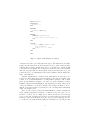
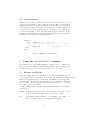
An example annotation is shown in Figure 8. It is designated as an annotation with the ‘@’ symbol, has the name ”type”, and has 3 arguments, the
variable R, the string ’double’, and an array containing the values 1 and 3.
%@type R 'double' [1,3] %matrix of radius vectors
Figure 8: Example of an AspectMatlab Annotation
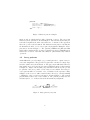
The annotate pattern matches annotations based on their name and arguments. The pattern takes as argument the name of the annotation it should
match, as well as the arguments it expects the annotation to have. In Figure
9, we see pattern pAnnoType matches the annotation given in Figure 8 - it
matches all annotations which have the name type, and which have a var, a
char, and an array as arguments.
patterns
pAnnoType : annotate(type(var, char, [*]) ;
end
Figure 9: Example of Annotation Pattern
3.5
Type patterns
AspectMatlab features two patterns which match based on the runtime
types, the type pattern and the dimension pattern. Both of these patterns
6