1
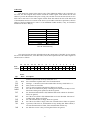
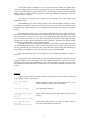
The loopback mode is intended as a way to test the transceiver. Setting the loopback mode
connects the output directly to the input, bypassing the line drivers, filters and transformers. Signals
from the serial data input are ignored when LB is set, but data sent is still passed to the serial data
output. Setting or clearing this mode generally confuses the Manchester demodulator and a new
training sequence is required.
The carrier bit is derived from a detector circuit connected to the clock output of the
Manchester decoder.
The RxERR flag is set when a framing or parity error is detected during reception of a frame.
Everything received prior to detection of the error is left in the receiver FIFO. The remainder of the
erroneous frame is ignored. Parity is even. A framing error corresponds to the detection of a non-zero
stop bit.
The RxFE flag is updated only at each read operation from the receiver FIFO. This has the
unfortunate effect that upon consultation of the control register, the receiver FIFO might seem empty,
even though it does contain data. It’s only after a read attempt that the RxFE flag takes on the correct
value. It is therefore necessary to issue a data read operation if one finds the FIFO flagged as empty,
and then check its status again to obtain the true state of the FIFO. No data are lost because of this.
The software described below is written with this in mind.
A similar problem affects the RxFF flag. When the receiver FIFO is full, the RxFF flag will be
set. Reading data from the receiver will not clear the flag until at least one more word is received. In
this case, unfortunately, one word will be lost, because the FIFO will not accept data with RxFF set.
These oddities will probably be removed in some future version of the VMOD-TRX.
The TxFF and TxFE flags are not afflicted by such problems and function as might be
expected.
Data written into the transmit FIFO will stay there until the transmitter is explicitly started by
setting the TXB bit in the control register. The whole contents of the FIFO are sent in a single frame.
Data added to the FIFO while the transmitter is busy will be appended to the frame being sent. Once
the transmitter has emptied the FIFO, it will halt and a new write into the TXB bit is required to start
it again.
Software
A few simple C functions have been written to drive the TRX in the PS control environment
[10]. A short description is given below:
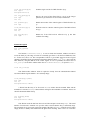
trx *trx_open(n)
int n;
Return a pointer associated with TRX logical channel n, to be
used with subsequent calls, or NULL upon failure.
void trx_close(n)
Close TRX logical channel n.
void putd(tp,n,data)
trx *tp;
int n;
unsigned short *data;
Send n words of the array data to TRX module referred to by the
pointer tp.
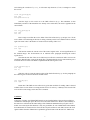
int getd(tp,data)
trx *tp;
unsigned short *data;
Receive from TRX referred to by pointer tp, and put words in
array data. Return number of words read.
5