1
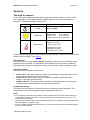
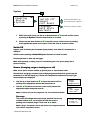
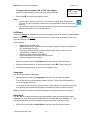
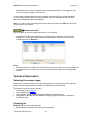
EASYSENSE Vu Reference Manual DO241 (1) A cross will indicate that an error occurred. Click on the update window to go back to the start screen and reprogram. Step 4. Exit the program. Practical information for Vu’s plug-in Temperature sensor • • • • • • • • The sensor has a particularly low thermal inertia. The thermistor is housed at the end of the stainless steel tube, so it is the tip of the sensor that is most sensitive to temperature. Lay the sensor on its side, not its end, when measuring a surface temperature. Do NOT put any part of the sensor in a direct flame or on a hot plate. Temperatures higher than 150ºC will damage the sensor. The PVC insulation on the connecting cable has a working range of -10 to 85ºC, so keep this cable away from the source of heat. Avoid submerging the sensor beyond the stainless steel portion. Wash the sensor thoroughly after use. The boiling point of water will vary with changes in air pressure. At one atmosphere of pressure (101.3 kPa, 1013 mBar) pure water boils at 100ºC. Water boils when the vapour pressure of water equals the pressure of the gases above water, so if the pressure changes, then the temperature that the water boils at will also change. Boiling Point of Water vs. Pressure Pressure in kPA 101.3 99.5 97.8 96.0 94.4 92.7 Pressure in mBar 1013 995 978 960 944 927 Temperature in ºC 100.0 99.5 99.0 98.5 98.0 97.5 For Advanced Users Resolution 0.1˚C (0.1˚F) Accuracy ± 0.5˚C at 0 - 70˚C, rising to ±1˚C at extremes of range. • The 3 mm by 200 mm AISI 316 stainless steel tube has a high resistance to corrosion from a wide variety of weak acids and alkalis. Some environments e.g. saltwater may cause some discolouration to the stainless steel tube but this will have no effect on the sensor’s performance. • The sensor can be left in an alkaline solution such as Sodium Hydroxide (NaOH) for up to 48 hours, with only minor discoloration. We do not recommend use in a solution whose concentration is greater than 3 mol dm-3. • The maximum length of time recommended for exposure to an acid is dependent on the acid’s concentration. In general, we do not recommend that temperature © Data Harvest Group Ltd. 28