Download warning - LUCKINSlive
Transcript
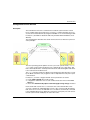
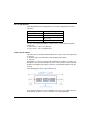
Entering Safety Mode There are 4 ways of entering Safety Mode: when the Safety PLC is powered up z when the Safety Mode is entered from Maintenance Mode z when the key is locked z when Unity Pro XLS is disconnected either by the customer or because of a broken connection z When the Safety PLC is powered up, it automatically enters Safety Mode. NOTE: After power up and if there is a valid application, the PLC only performs cold start. Thus, the project is reinitialized and the system performs: z the initialization of data with the initial values defined in the project z the initialization of elementary function blocks (EFBs) based on initial data z the initialization of data declared in the EFBs z the initialization of system bit and words z the cancellation of any forcing, see also Forcing, page 94 Switching from Maintenance Mode to Safety Mode is only possible if the PLC is not debugging. NOTE: Data forced before switching to Safety Mode stay forced after switching, see also Forcing, page 94. Details concerning the transition from Maintenance Mode to Safety Mode can be found in the chapter "Switching Between Safety and Maintenance Mode" (see Unity Pro XLS Software, Operating Mode Manual, Safety PLC Specifics) in the Unity Pro XLS Operating Mode Manual Safety PLC Specifics. Automatic Start in Run Option You have the possibility to let your project automatically enter Safety Mode’s run state after power up. To do this, activate the option Automatic start in Run, see also the chapter "Configuration of Quantum Processors" (see Unity Pro, Operating Modes) in the Unity Pro Operating Modes Manual. However, Schneider Electric recommends using the Run command instead of the Automatic start in Run option for a SIL3 project to enter run state. WARNING UNINTENDED EQUIPMENT OPERATION Avoid using the Automatic start in Run option. If you use this feature, it is your responsibility to program and configure the system in such a way that it behaves correctly after restart. Failure to follow these instructions can result in death, serious injury, or equipment damage. 33003879 04/2013 91