1
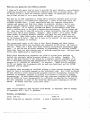
What are our goals for our computer system?
I think we'd all agree that we want to provide the most reliable, cost-effective
computing possible to the University community and then to outside users. And
we should strive to make the computer system simple to understand and thus to
use so that we open it up to more people, not less.
Why then do we feel compelled to follow CDC's software mistakes which are now
running contrary to cost-effective computing? I refer to mistakes which are
software systems that: 1) most importantly make the computer system morecomplex and obscure and thus less simple to maintain, document, and to use,
and 2) consume computer system resources (run slower and larger). Example:
Record Manager. If it weren't for MNF and MSUIO, record manager would have
dealt a serious blow to the 6400's timesharing performance. Little things add
up. When you have to swap lOK extra for a dozen interactive jobs all·the time,
you've lost .!OK of your machine. Example: Cyber Loader - it's easily 50-100
times slower in loading absolute overlays and takes far more memory for any
kind of load. Make Cyber Loader default on MERITSS and you'll be looking up
at six fathoms of water. What has it done to the Cybers? We just lost another
chunk of our machine to overhead.
The conventional reply to all this is that Record Manager and Cyber Loader
provide features which were desirable and requested by CDC sites. My reply to
this is: "Fine, but I doubt that those features necessitated performance that
poor." If one can sum up recent advances in programming, it has been clearly
shown that there are much simpler ways of getting computing done. Software need
not be this complicated or inefficient.
Quite often contradictory arguments are given in system group meetings to
provide the rationale behind proposed changes to the system. Example: ·~e
want to add this feature to the system as a separate control statement so as
not to invalidate existing CDC documentation and to avoid altering a similar
program (e.g., CATLSYS vs. CATLIST)." In contrast: "ROUTE must be modified
to fit our needs; the X parameter will be made non-functional and the COPYAP
parameter will be added."
My opinion after watching us vacillate without a clear systems strategy for four
years is that it certainly depends on the individual case. But I feel we should
be less afraid to alter existing CDC programs (control statements)l, because the
plethora of redundant programs is proving to be harder to explain in general
documentation. We have demonstrated that with important programs like DISPOSE
and now ROUTE our local documentation is sufficient to describe the feature to
the user community in spite of the erroneous description remaining in the NOS
manual. We should take this course more often.
III/III/II
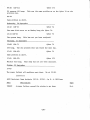
Cyber 74/172 Deadstart Dump Analysis from Monday, 11 September 1978 to Sunday,
24 September 1978 - by K. C. Matthews
Tuesday·, 12 September
16:40 (DD-17)
Export hung with no apparent activity.
Cyber 74
A level 3 deadstart was required.
-154-