1
442
EXPERIMENT 30
/ The Prism Spectrometer: Dispersion and the Index of Refraction
EXPERIMENTAL PROCEDURE
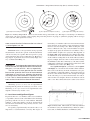
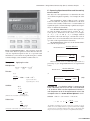
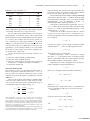
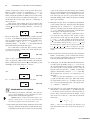
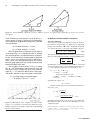
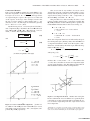
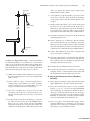
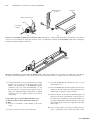
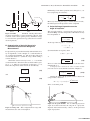
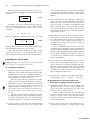
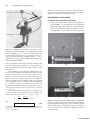
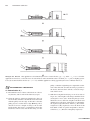
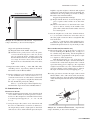
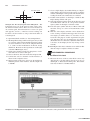
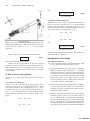
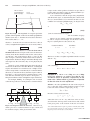
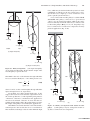
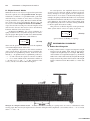
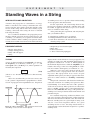
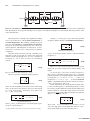
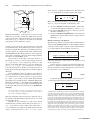
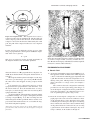
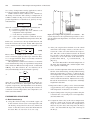
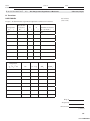
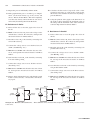
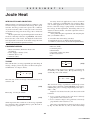
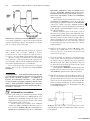
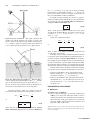
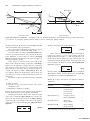
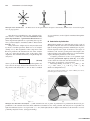
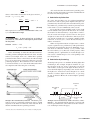
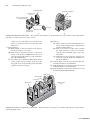
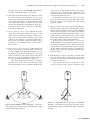
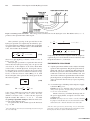
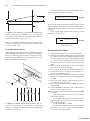
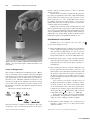
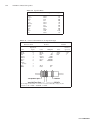
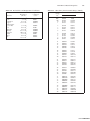
Figure 30.2 Minimum angle of deviation. The geometry for
determining the minimum angle of deviation Dm for a light
ray. See text for description.
between the original direction of the beam and an emergent
component of the beam is called the angle of deviation D;
it is different for each color or wavelength.
As the angle of incidence is decreased from a large
value, the angle of deviation of the component colors
decreases, then increases, and hence goes through an
angle of minimum deviation, Dm. The angle of minimum
deviation occurs for a particular component when the
component ray passes through the prism symmetrically,
that is, parallel to the base of the prism if the prism is
isosceles (● Fig. 30.2).
The angle of minimum deviation and the prism angle
A are related to the index of refraction of the prism glass
(for a particular color component) through Snell’s law by
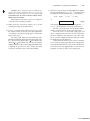
the relationship
n5
sin 3 1 A 1 Dm 2 /2 4
sin (A/2)
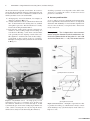
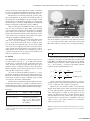
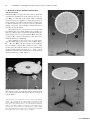
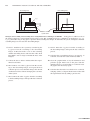
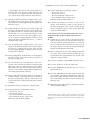
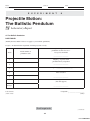
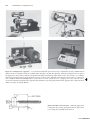
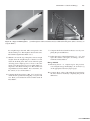
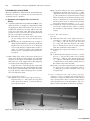
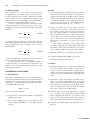
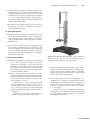
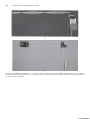
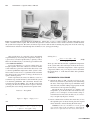
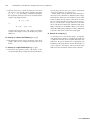
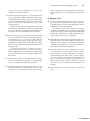
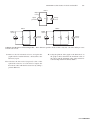
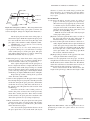
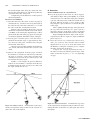
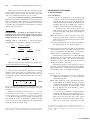
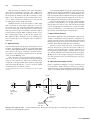
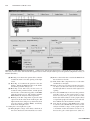
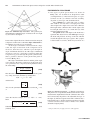
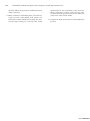
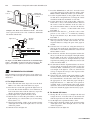
1. Two types of prism spectrometers are shown in
● Fig. 30.3, one of which is an adapted force table
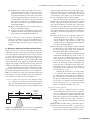
(see Experiment 5).* The four basic parts of a spectrometer are the (a) collimator and slit assembly,
(b) prism, (c) telescope, and (d) divided circle.
The collimator is a tube with a slit of adjustable width at one end and a converging lens at the
other. Light from a light source enters the collimator.
The length of the collimator tube is made equal to the
focal length of the lens so as to make the rays of the
emerging light beam parallel.
The prism deviates and disperses the beam into a
spectrum. The objective lens of the telescope converges
the beam and produces an image of the slit, which is
viewed through the telescope eyepiece. The eyepiece
is fitted with cross hairs, which may be fixed on a
(a)
(30.2)
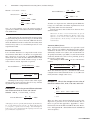
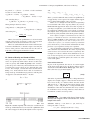
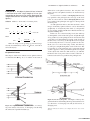
The derivation of this equation can be seen from the geometry of Fig. 30.2. Note from the top triangle that
2(90° 2 u 2) 1 A 5 180°
and therefore
u2 5
A
2
(30.3)
Also, for the symmetric case, it can be seen that Dm 5 2d,
or
Dm
d5
2
(30.4)
(Note the interior triangle, 2d 1 a 5 180° 5 a 1 Dm.)
Then
u1 5 u2 1 d 5
Dm
A 1 Dm
A
1
5
2
2
2
(30.5)
Substituting Eqs 30.3 and 30.5 into Snell’s law (Eq. 30.1)
yields Eq. 30.2.
(b)
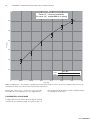
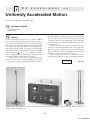
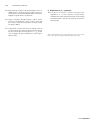
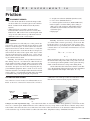
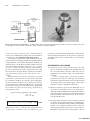
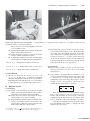
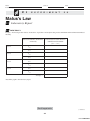
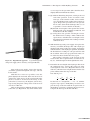
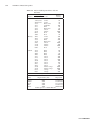
Figure 30.3 Prism spectrometer. (a) Simple spectrometer.
The prism rests on a graduated (divided) circle used for angle
measurements. Light directed into the collimator tube on the
left is refracted by the prism to the adjustable telescope on
the right. (b) Advanced spectrometer. The collimator has a
built-in light source, and the angular measurement scale has
a vernier scale that can be read to 1 minute of arc. (Fisher
Scientific Company, LLC.)
* Some procedures may not apply to the force table apparatus.
www.ATIBOOK.ir