1
Rosetta
RPC-UserManual
Reference
Issue
Date
Page
: RO-RPC-UM
: Draft
Rev.
: 0.987
: February 20,2002
: 221
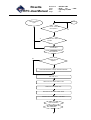
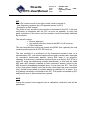
The Control sequence is a special sequence used to check the
working state of the experiment when MIP is set on. It is automatically
run once, before the science sequences. Its tasks are the reception
and decoding of the commands coming from the PIU (configuration
table) and a check-out of the experiment.
The Table sequence is defined to decode the commands which arrive
during a science MIP or LDL sequence. This case occurs for example
when MIP is set first in MIP modes and then in LDL mode. This
sequence is like a Control sequence without experiment check-out.
Each LDL mode has to be preceded by MIP science mode.
MIP has only two operating modes :
- MIP mode,
- LDL mode (common with LAP).
Each operating mode can be set with one of the 3 telemetry rates.
MIP has no special test or calibration mode.
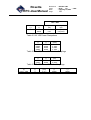
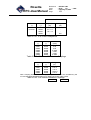
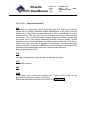
The total telemetry data, HK + science, transmitted to the S/C
(CCSDS formatted) are :
- in minimum rate : 66 bytes every 32 s, rate of 16.5 b/s,
- in normal rate : 246 bytes every 32 s, rate of 61.5 b/s,
- in burst rate : 1248 bytes every 32 s, rate of 312 b/s.
The nominal power consumption (secondary) is :
- in minimum rate : 1190 mW,
- in normal and burst rates : 1625 mW.
The operational modes have to be defined within RPC
4.2.2.6
MAG
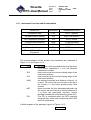
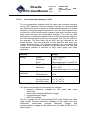
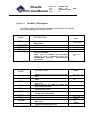
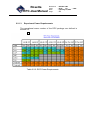
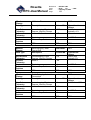
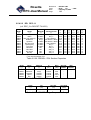
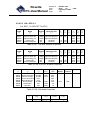
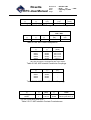
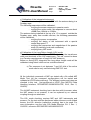
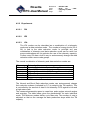
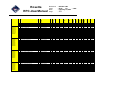
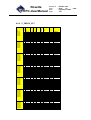
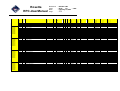
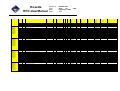
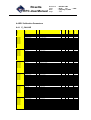
The MAG Science Data Modes are defined as follows:
Science
Mode
SID 1
Sample
Rate
1/32 Hz
SID 2
1 Hz
SID 3
20 Hz
SID 4
5 Hz
Packet
Period
1024 s
Packet
Length
32 OB vec
1 IB vec
32 s 32 OB vec
1 IB vec
16 s 320 OB vec
16 IB vec
32 s 160 OB vec
Bit Rate
Name
2 bits/s Minimum Mode
66 bits/s
Normal Mode
1344 bits/s
Burst Mode
322 bits/s