1
PacBio SampleNet – Shared Protocol
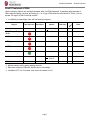
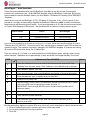
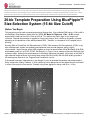
A good shearing strategy is also key to constructing a good 20-kb library using a 15-kb cutoff. Use the
shearing procedure outlined in the “Fragment and Concentration” section. An example of sheared DNA using
the recommended procedure is shown in Figure 2. Ideally, the m ode of fragm ent distribution should be on or
larger than the 17-kb marker. Perform tests to determine the best shearing condition for your sample. Overshearing will result in very low yield.
With 15 kb as the size cutoff, 10 µg sheared gDNA going into the repair steps will typically generate sufficient
size-selected libraries for large-genome sequencing projects. This procedure is optimized for 5 µg of sheared
gDNA. If working with 10 µg of sheared gDNA, scale all the reaction volumes proportionally (e.g., if the input
amount of DNA is double the amount set forth in this procedure, double all the reaction volumes listed in the
tables).
Figure 2: Bioanalyzer trac e of a 20-k b E. c oli sheared DNA. Ideally, fragm ent distribution should m igrate on, or be larger than, the 17kb m arker (12000 ladder). If the m ode is smaller than 17 k b, a m ajority of the sam ple may be los t w hen us ing a 15-kb size s election
cutoff.
If using this protocol for the first time, we strongly recommend that you process a control sample first. Using
the DNA shearing methods and subsequent AMPure PB bead purification steps described below, you should
recover approximately 50%-80% of your input DNA (by m ass). Typical yields, from pre-purified DNA (where
smaller fragments are already eliminated as a result of the shearing process) are between 80-100%.
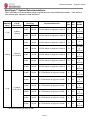
Insert Size Target
20 kb
Insert Size Range
Sheared and
Concentrated DNA
Amount
Ligation
5 μg
Blunt
15 kb to 20 kb (size-selected
using BluePippin system)
DNA Handling:
When constructing large insert libraries, we highly recommend using gentle mixing instead of vortexing.
Vigorous vortexing can potentially damage large fragments. Gentle mixing can be done on a rotator (same
rotator used for MagBead binding) at room temperature for 20 minutes.
Page 2