1
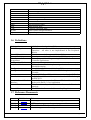
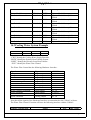
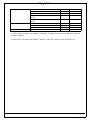
IEC61131-3 Language Name Ladder Diagram (LD) Function Block Diagram (FBD) Structured Text (ST) Instruction list (IL) Sequential function Chart (SFC) Siemens Equivalent Ladder Logic (LAD) Function Block Diagram (FBD) Structured Control Language (SCL) Statement List (STL) Sequential Control System (SCS) Siemens CFC (Flow Charts) will not be allowed in conventional controllers. First it is not defined in IEC 61131-3, second it has the major drawback that you can not mix CFC with other languages. TBC. But CFC will be used for redundant architectures, deployed in Interlock and Safety. This topic is not covered in this document. Siemens HiGraph (Petri Nets) will not be allowed either because it is not defined in IEC 61131-3. You can almost implement anything in any language. Meanwhile, every language has its own characteristics and has been created in order to solve some type of problems. The following rules has to be applied in order to keep the PLC Program as clean and readable as possible: LAD and FBD will be used to implement boolean logic and interlocking. Typically all the logic required to start/stop a device will be implemented in LAD. No complex numerical computation allowed in LAD and FBD. The choice of LAD or FBD is left to the programmer. Usually electrical engineers use LAD and electronic engineers use FBD. It doesn’t make any difference as we can switch the representation from LAD to FBD in STEP7. See later in the paragraph. SCS will be used to implement sequences (GRAFCET). But outputs will not be written directly in Grafcets. See §11.4. SCL will be used to implement complex numerical algorithms, loop algorithms, complex state machines ore Petri nets where a sequence (SCS) is not sufficient to express it. As SCL is a structured language quite close to Pascal, it makes it much more readable than STL. STL will be avoided as far as we can, as assembler is not really easy to read and to maintain for the people that didn’t write the code. It will be used only in cases where for example a specific instruction is not available in SCL or optimization of performances is required. The Mix of languages is allowed in one block as far as it respects the rules defined in §11.4. and in § 11.8. Organization of languages in STEP7. The base language in STEP 7 is STL. All other graphical languages and meta-languages are built as an abstraction of the STL language. If you create a program in LAD, FBD, SCL or SFC, they will end up in LIST blocks after eventual compilation. The same editor is used to program in LAD, FBD and STL. You can switch very easily from graphical languages LAD and FBD to LIST without recompilation. The other way is not so obvious, STL can be shown in LAD or FBD only if some rules are respected. Page 49 of 60