1
Customer Service or Technical Service:
In the U.S. Phone: 1-888-837-4436 (toll free)
OR E-Mail: [email protected]
Outside the U.S.: Contact your local Nanosphere distributor
i www.e-labeling.eu/NAN024
Assay Controls
Verigene RP Flex is a ‘sample-to-result’ detection system wherein nucleic acids are isolated from respiratory
specimen and specific detection is performed on an oligonucleotide array housed within the Test Cartridge. To
prevent reagent dispensing errors, all reagents are prepackaged in single-use consumables. Several layers of
controls built into RP Flex ensure that failures at any step within RP Flex are identified during the procedure or in
the end-point image analysis of the Substrate.
Internal Processing Controls
An artificial DNA construct serves as a target hybridization control and is referred to as the Internal Processing
Control 1 (INT CTL 1). If the INT CTL1 is not valid, a ‘No Call – INT CTL 1’ result will be obtained and the test
should be repeated.
The bacteriophage MS2 serves as a specimen extraction, amplification & hybridization control and is referred to
as the Internal Processing Control 2 (INT CTL 2). This control is automatically added by the Processor SP to
each specimen prior to the extraction step. If the INT CTL 2 is not valid a ‘No Call – INT CTL 2’ result will be
obtained and the test should be repeated. The following exception exists: INT CTL 1 detection alone is sufficient
for a valid call if any of the viral or bacterial targets are also detected; there is no requirement for INT CTL 2 to
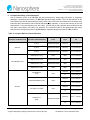
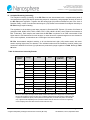
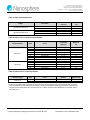
also be detected. Table 4 summarizes the two internal processing controls.
If both INT CTL 1 and INT CTL 2 are ‘Not Detected’, a ‘No Call – INT CTL’ result will be obtained.
Additional positive and negative controls are immobilized on the Substrate. These are used to determine that
hybridization was performed correctly. RP Flex algorithm requires that these controls be valid before decisions
regarding the presence or absence of any other target on the panel can be determined. If these controls are not
valid a No Call result will be obtained and the test should be repeated.
Table 4: Internal Processing Controls
Control
Description
Function
Internal Processing Control
(INT CTL 1)
Artificial DNA construct with detection
oligonucleotides.
Controls for target hybridization-related issues.
Internal Processing Control
(INT CTL 2)
Intact MS2 Phage along with primers and detection
oligonucleotides. Added to each test specimen.
Controls for lysis, extraction, target amplification
& hybridization.
External Controls
Good laboratory practice recommends running external positive and negative controls regularly. For example,
viral transport medium may be used as the external Negative Control, and previously characterized positive
samples or negative sample spiked with well characterized target organisms may be used as external Positive
Controls. Regardless of the choice of quality control materials, external controls should be used in accordance
with local, state, federal accrediting organizations, as applicable.
TROUBLESHOOTING
Refer to the Troubleshooting section of the Verigene System User’s Manual.
Page 21 of 59
®
Verigene Respiratory Pathogens Flex Nucleic Acid Test (RP Flex)
027-00050-01, Rev. B; September 2015